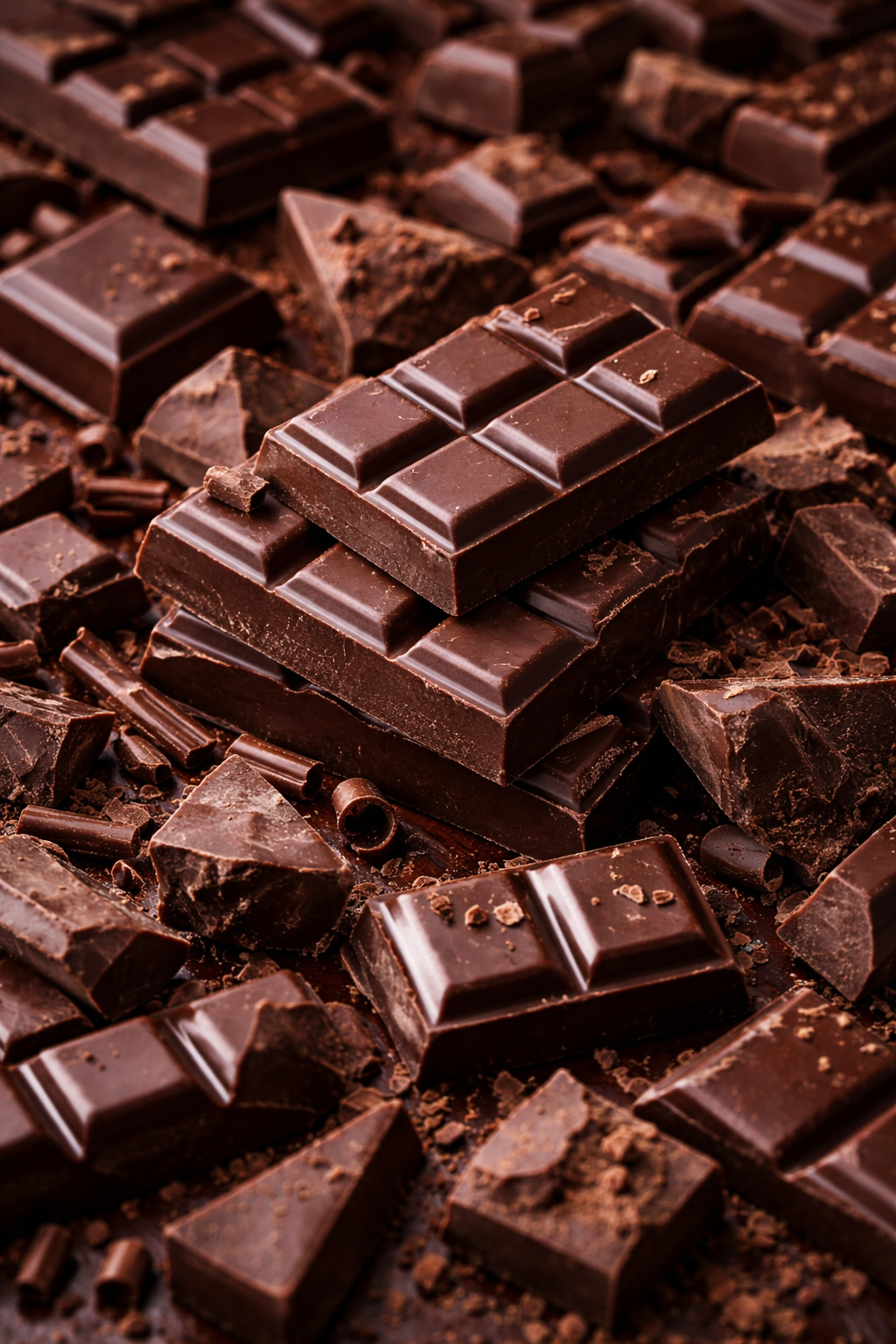

The phrase usually appears at the exact moment someone breaks off two squares instead of four.
Not a candy bar grabbed at a gas station. Not the oversized movie-theater slab with caramel running through it. Dark chocolate, specifically—something wrapped in matte paper, labeled 70% or 85%, spoken about in a tone usually reserved for olive oil or red wine. People do not just eat it. They justify it, compare cacao percentages, and mention antioxidants with a faint look of relief.
That is how dark chocolate became the dessert most likely to be recast as a health habit.
Some of that reputation is deserved. Some of it is marketing dressed as nutritional literacy. Most of it sits in the messier middle, where foods become popular not only because of what they contain, but because of what they allow people to believe about themselves. Dark chocolate is a useful case study because it is neither nonsense nor miracle. It is a rich food with real qualities that make it easier to talk about like a sensible indulgence rather than a straight-up sweet.
The better question is not “Is dark chocolate healthy?” That is too blunt to be useful. A more honest question is why dark chocolate, out of all treats, is the one so often framed as the intelligent snack—the disciplined pleasure, the respectable craving, the dessert with a résumé.
The reputation starts with cacao, not virtue
Dark chocolate gets its health-minded image from the fact that it contains more cacao solids than milk chocolate. That difference matters.
Cacao solids contain compounds called flavanols, part of a broader family of polyphenols found in foods like tea, berries, and red wine. These compounds are one reason dark chocolate is discussed in the same breath as antioxidants. There is some evidence that cocoa flavanols may support blood vessel function and have modest cardiovascular benefits under certain conditions. That sounds impressive because it is, at least in a limited and careful way.
Milk chocolate contains cacao too, but generally less of it and more sugar, more milk solids, and a softer, sweeter profile. White chocolate contains cocoa butter but no cacao solids, which means it misses most of the compounds people are usually referring to when they talk about dark chocolate’s “benefits.”
This is the first reason dark chocolate gets singled out: it has a plausible nutritional argument built into the ingredient list. The darker the chocolate, at least in broad terms, the more of the cacao-derived compounds it tends to contain.
That does not automatically turn it into a health food. It does, however, explain why people do not make the same case for frosting.
Why it feels different from ordinary candy
Dark chocolate does not just taste different. It behaves differently.
It is more bitter, often less sweet, and usually richer in a way that slows people down. You can eat milk chocolate absentmindedly. Dark chocolate tends to resist that. Even people who love it often eat it in smaller amounts, not because they are morally superior, but because the flavor is denser and the experience saturates faster.
That matters.
A food starts to acquire a “healthier” reputation when it naturally encourages some restraint. Not perfect restraint. Not universal restraint. Just enough that a portion of it feels like a portion rather than a warm-up act.
A square or two of dark chocolate after dinner can genuinely satisfy the desire for something sweet without setting off the same momentum as a bag of candy-coated chocolates or a sleeve of cookies. This is one reason it keeps showing up in nutrition advice that is trying to be realistic. It offers pleasure, but it also has edges. Bitterness is part of the control system.
There is a practical elegance in that. Foods that combine pleasure with friction tend to survive longer in sensible eating patterns than foods designed to disappear as fast as possible.
What dark chocolate actually contains
The “healthy snack” talk around dark chocolate usually circles around a handful of points: flavanols, minerals, lower sugar than milk chocolate, and satiety.
Those points are not invented. Dark chocolate can contain useful amounts of minerals such as iron, magnesium, copper, and manganese. It also contains fat, mostly from cocoa butter, along with some fiber depending on the cacao content. Compared with many other sweets, it can be less sugar-heavy gram for gram.
That is the favorable case.
The less flattering part is that dark chocolate is still calorie-dense, still a treat, and still often sweetened. Even a good-quality dark chocolate bar is not a salad in disguise. It is better understood as a richer confection with some nutritional assets, not a supplement you happen to chew.
This distinction gets lost because people like binary labels. Junk or superfood. Guilty pleasure or clean eating. Dark chocolate refuses to fit neatly into either box, which is part of why it gets talked about so much. It lets people stand in the middle without feeling sloppy.
The percentage game: useful, but not as precise as people think
One of the rituals of dark chocolate is the cacao percentage. Seventy percent sounds modestly serious. Eighty-five percent sounds like a personal philosophy. Ninety percent sounds like either discipline or punishment, depending on the person.
These numbers do mean something, but not always what consumers imagine.
The percentage refers to how much of the chocolate comes from cacao ingredients—cacao solids and cocoa butter combined. Higher percentages generally mean less sugar and a more intense flavor. They may also indicate more of the plant compounds that give dark chocolate its health halo.
But percentage alone does not tell you everything. An 85% bar from one maker can taste fruity and balanced; another can taste harsh, dusty, or oddly flat. Processing matters. Origin matters. Roasting matters. So does what is left in after production. Some cocoa-processing methods reduce flavanol content significantly, which means two bars with similar percentages may not be nutritionally identical.
This is one of the more surprising truths behind the dark chocolate story: the thing consumers use as the main indicator of quality and healthfulness is only a rough guide. It helps, but it does not settle the matter.
A bar with a higher percentage is not automatically the better choice if it tastes so severe that you end up overeating other sweets later just to compensate.
A practical example: when dark chocolate works well
One place dark chocolate earns its reputation is the late-evening dessert problem.
A lot of people want something sweet after dinner, not because they are deeply hungry but because the meal feels unfinished without contrast. Fruit helps sometimes, yogurt helps sometimes, but neither always scratches the particular itch for richness.
A couple of squares of dark chocolate paired with a few almonds can do that job unusually well. The chocolate provides flavor intensity and sweetness; the almonds add crunch, fat, and a little staying power. It feels complete, not improvised.
That is a practical strength, and it explains some of the “healthy snack” language around dark chocolate. It can function as a portion-controlled dessert that actually feels like dessert. That is harder to find than wellness marketing would suggest.
Dark chocolate also works well chopped into oatmeal, shaved over plain yogurt, or paired with strawberries. In those settings, it plays less like a candy and more like a strong ingredient. A small amount goes a long way. That matters because foods become more nutritionally useful when they can add satisfaction without requiring bulk.
One common mistake: treating dark chocolate as unlimited because it is “good for you”
This is probably the most predictable error.
Once a food is discussed in terms of antioxidants and heart health, people start mentally subtracting consequences. The dark chocolate bowl becomes the healthy bowl. The expensive bar becomes exempt from ordinary rules of portion. A nightly square quietly becomes half a bar because the category has shifted from “candy” to “wellness.”
That is how a sensible habit gets distorted.
Dark chocolate may be a smarter choice than many desserts, but it is still concentrated. A small amount brings a lot of flavor, fat, and calories. That is part of its appeal, not a flaw. The trouble starts when nutritional nuance gets translated into permission.
Another mistake is assuming that all dark chocolate deserves the same reputation. Some products marketed as dark chocolate are still heavy on sugar, additives, or candy-like mix-ins. Others are so stuffed with caramel, cookies, or toffee that “dark chocolate” is basically just a wrapper around a confection. The label matters less than the actual composition.
This is true of many fashionable foods. Once a category becomes associated with health, the market fills with products eager to borrow the glow.
The non-obvious reason people trust dark chocolate
There is a cultural reason dark chocolate sounds healthier, and it has little to do with micronutrients.
It signals adulthood.
Milk chocolate is widely coded as sweet, soft, nostalgic, maybe even childish. Dark chocolate carries bitterness, complexity, and a little severity. It seems chosen rather than craved. People hear “dark chocolate” and imagine taste, moderation, maybe a bookshelf nearby.
That image is superficial, but not irrelevant. Foods gain reputations through culture as much as chemistry. Dark chocolate benefits from being associated with restraint, discernment, and slightly expensive habits. It feels less impulsive than other sweets, even when the calories are not dramatically different.
This is one reason it became the confection most acceptable in health-conscious circles. It lets pleasure pass through the customs checkpoint by looking serious enough.
There is a lesson in that. People do not judge foods only by nutrient panels. They judge them by symbolism, by packaging, by who seems to eat them, and by whether the act feels like appetite or taste. Dark chocolate has been unusually good at wearing the costume of taste.
But the health case is not pure fantasy
It would be too easy to dismiss all of this as clever branding. Dark chocolate’s reputation did not come from nowhere.
Cocoa flavanols have been studied for potential effects on vascular function and blood flow. Some research suggests modest benefits in specific contexts, particularly when cocoa products retain higher levels of these compounds. Dark chocolate can also be more satisfying than many other sweets, which may indirectly help people manage cravings or portion sizes.
There is also the simple fact that a food can be “better than the usual alternative” without being ideal in the abstract. Much of good eating operates on that level. If the realistic comparison is not kale but a frosted brownie, dark chocolate may well be the better option.
That kind of judgment is more useful than theological arguments about purity. Very few people build a sustainable diet by eating only the foods that win laboratory beauty contests. They build it by finding foods that are good enough, enjoyable enough, and self-limiting enough to fit everyday life. Dark chocolate often qualifies.
If you are wondering about sugar and caffeine
This is where people tend to hesitate, and reasonably so.
Yes, dark chocolate contains sugar, though usually less than milk chocolate. The darker the bar, the lower the sugar tends to be, but lower does not mean absent. If someone is trying to cut back on added sugar aggressively, the label still deserves a look.
It also contains caffeine and theobromine, both naturally present in cocoa. For most people, the amounts in a modest serving are not dramatic. But if you are especially sensitive to stimulants, a generous serving late at night may not be as sleep-friendly as its luxurious image suggests.
That is one of those practical details that gets ignored when people talk about dark chocolate in broad, glowing terms. Timing matters. Quantity matters. The same food can be a calm after-dinner pleasure for one person and a mildly jittery mistake for another.
Why dark chocolate often feels more satisfying than sweeter desserts
One underappreciated reason dark chocolate works as a “healthier” indulgence is sensory concentration.
It is intense. Bitter, floral, fruity, roasted, earthy—sometimes all within a small square. That concentration means you can get a strong eating experience from a relatively small amount. Many ultra-sweet foods do the opposite: they deliver volume and sugar but not much complexity, so the brain keeps reaching for another bite looking for something more complete.
Dark chocolate, especially good dark chocolate, can create a cleaner stop signal.
That does not happen for everyone. Some people simply do not enjoy bitter chocolate, and forcing the issue usually backfires. But for those who do, it offers something unusual in the world of treats: enough flavor to feel like an event, not just intake.
This is not a trivial point. Satisfaction is one of the most important and least respected concepts in nutrition. Foods that leave people technically fed but psychologically unconvinced tend to invite compensation later. Dark chocolate can sometimes close the loop better than “lighter” desserts that sound healthier but feel thin.
Quality changes the whole conversation
A cheap dark chocolate bar can be waxy, overly sweet, or bitter in a blunt, joyless way. A better one can taste layered and deliberate.
That difference matters because the idea of dark chocolate as a measured pleasure depends on the chocolate being good enough to want slowly. If it tastes mediocre, people either eat more to chase satisfaction or decide the entire category is a wellness scam.
You do not need artisanal bean-to-bar chocolate with tasting notes about cedar and red plum. But quality does affect how the food functions. Chocolate that melts cleanly, tastes balanced, and has enough depth to reward attention is more likely to be eaten in the small, appreciative way that sustains its reputation.
This is one reason dark chocolate works better as a staple treat than as a bargain impulse buy. The quality threshold is higher because the whole point is that a little should feel like enough.
Why it keeps getting described as a healthy snack
Dark chocolate is not really a health food, and it is not just candy either. It sits in a category people find especially comforting: the indulgence with arguments.
It earns that status because there are actual things to point to—cacao-derived compounds, minerals, less sugar than milk chocolate, a more self-limiting flavor profile. It keeps that status because the experience supports the story. Dark chocolate is richer, more adult, less prone to mindless overconsumption, and easier to fit into a generally decent diet than many other sweets.
That does not make every dark chocolate bar virtuous. It does not erase sugar, calories, or the tendency people have to overuse the word antioxidant until it means “permission.” It simply means dark chocolate occupies a plausible middle ground.
And that middle ground is where a lot of modern eating decisions actually happen.
People do not want nutrition advice that treats pleasure as failure. They also do not want to be conned by packaging and percentages into believing dessert became medicine. Dark chocolate survives because it offers a compromise with some integrity. It can be a treat that still contains something of value. It can be a sweet that does not flatten the palate. It can be a snack, sometimes, if the portion is sensible and the expectations are sane.
That is why it gets talked about like a healthy indulgence. Not because it transcends being chocolate, but because it remains chocolate while asking a little more of the eater—and giving a little more back.
As an Amazon Associate I earn from qualifying purchases.
Leave a Reply