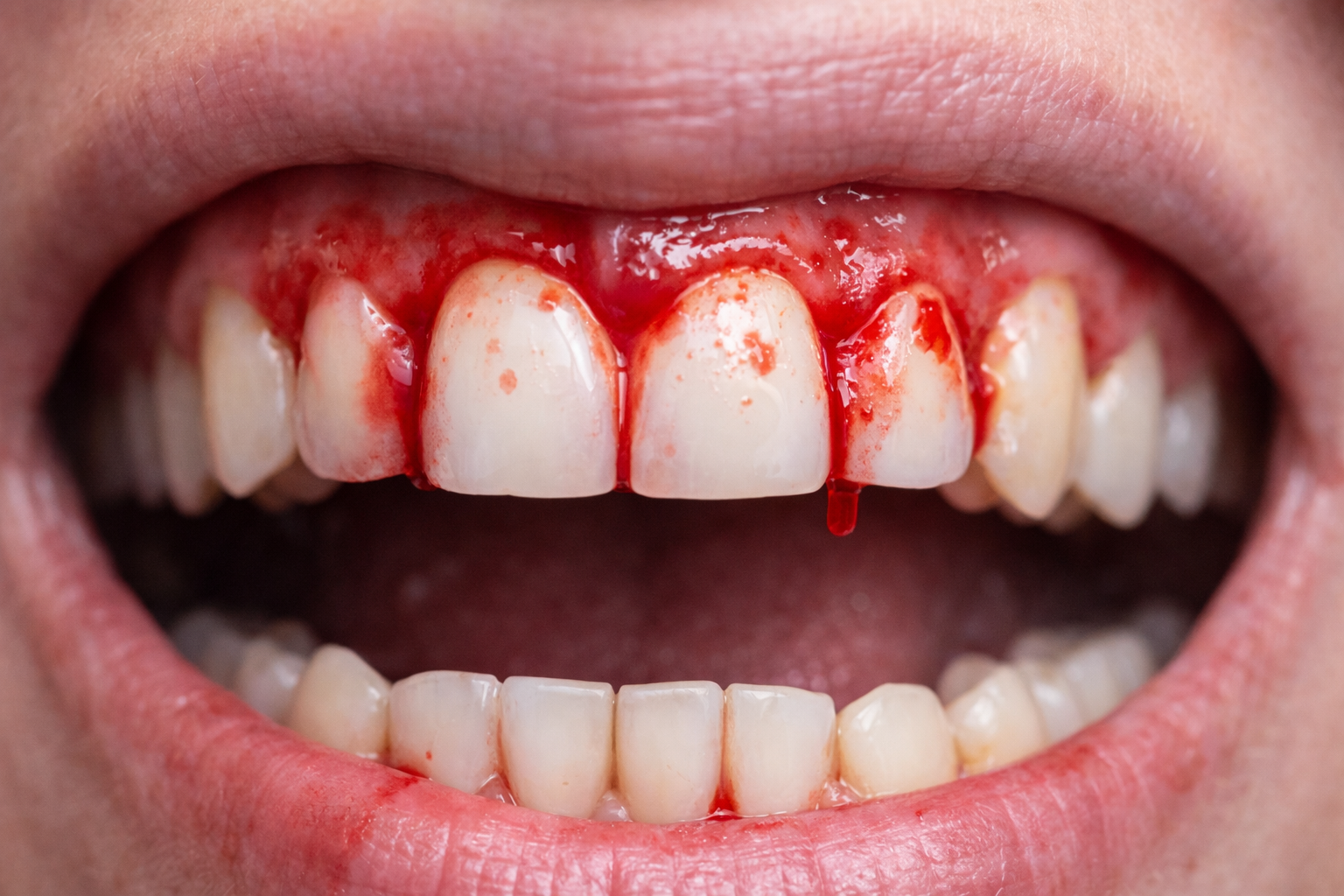

When your gums bleed once after brushing too hard, it is easy to shrug it off. But when the bleeding keeps happening—while brushing, flossing, eating, or even for no obvious reason—it starts to feel different. Most people naturally assume it must be a dental issue, and very often that is true. Gum disease is one of the most common reasons for bleeding gums. But it is not the only reason, and that is exactly why repeated gum bleeding should not always be treated as a small, isolated mouth problem.
The mouth is not separate from the rest of the body. Gums can reflect plaque buildup and gingivitis, but they can also reflect medication effects, vitamin deficiencies, hormone changes, diabetes, and in rarer cases, bleeding or blood-related disorders. MedlinePlus specifically lists bleeding disorders, leukemia, scurvy, blood thinners, and vitamin K deficiency among possible causes of bleeding gums, alongside everyday dental causes such as plaque and gingivitis.
That does not mean repeated bleeding gums should send you into panic mode. In many cases, the explanation really is dental: plaque at the gumline leads to inflamed gums, which bleed more easily. Still, the reason it is worth paying attention to repeated bleeding is that the symptom can sit at the border between oral health and overall health. Sometimes the gums are the first place the body shows that something broader is going on.
The most common explanation is still gum disease
It is important to start here, because this is the most likely cause. NHS says gum disease is very common and can make gums red, swollen, sore, and prone to bleeding. CDC similarly notes that gingivitis, the mildest form of gum disease, can cause red, swollen, or easily bleeding gums. MedlinePlus explains that plaque buildup at the gumline is the main cause of bleeding gums and can lead first to gingivitis and later to periodontitis if not addressed.
That matters because many people misread early gum bleeding. They see blood and assume they should brush or floss less. In reality, when plaque is the problem, the gums are bleeding because they are inflamed, not because they are “too delicate to clean.” Gum disease in its early stage is often preventable and reversible with proper oral hygiene and dental care. So yes, repeated gum bleeding may be dental. In fact, it often is. But that is only the first layer of the story.
Why “it’s probably just the gums” is not always enough
The problem with repeated gum bleeding is that it can look deceptively simple. The same visible symptom—blood at the sink—can come from very different causes. One person may have early gingivitis from plaque. Another may have gum irritation made worse by a blood thinner. Another may have poorly controlled diabetes that is making gum inflammation worse and slower to heal. Another may have a vitamin deficiency or a bleeding tendency that shows up in the mouth first.
This is why repeated bleeding matters more than isolated bleeding. A one-time episode can happen after aggressive flossing or a minor irritation. A pattern that keeps returning suggests that either the local gum inflammation is ongoing, or something is making the gums unusually likely to bleed. That second possibility is where the “not just a dental problem” idea becomes important.
Medications can make gums bleed more easily
One of the clearest examples is medication. MedlinePlus lists blood thinners as a cause of bleeding gums, and NHS notes that people taking rivaroxaban may notice gum bleeding more easily than usual. That does not automatically mean the medication is dangerous or that it should be stopped, but it does mean the gums may bleed more even from ordinary brushing or flossing.
This is a key reason gum bleeding is not always purely a dental problem. A person may indeed have mild gum inflammation, but if they are also on an anticoagulant, the amount of bleeding can seem out of proportion to the dental issue. In other words, the mouth may be where you notice the symptom, but the reason it is happening so visibly may have more to do with blood clotting than with teeth alone.
Diabetes can show up in the gums too
Another major example is diabetes. CDC says diabetes can make gum disease more severe, cause gums to become inflamed and bleed often, and make oral infections take longer to heal. It also notes that gum disease can make diabetes harder to manage, which means the relationship goes both ways.
This is one of the best examples of why repeated gum bleeding should not be viewed too narrowly. The bleeding may still involve gum disease, but the reason it keeps returning or seems unusually stubborn may be tied to blood sugar and immune response, not just brushing technique. The mouth is not separate from metabolic health. When diabetes is in the picture, the gums may become one of the earliest places where that imbalance becomes visible.
Vitamin deficiencies are rare, but they matter
People do not always realize that nutritional deficiencies can affect the gums. MedlinePlus lists vitamin K deficiency and scurvy, caused by vitamin C deficiency, as possible causes of bleeding gums. Mayo Clinic notes that vitamin C deficiency can lead to scurvy, which can cause anemia, bruising, poor wound healing, and bleeding gums.
These causes are less common than gingivitis, but they are important because they remind us that gum tissue reflects overall body function. Gums are delicate, vascular tissue. When the body lacks nutrients involved in tissue repair and blood vessel integrity, the gums can become one of the places where the deficiency shows itself. So repeated bleeding is not always a sign that someone needs only a dental cleaning. In some cases, it points toward what the body is not getting.
Hormones can make gums more vulnerable
Hormonal shifts can also play a role. MedlinePlus lists hormonal changes during pregnancy as a cause of bleeding gums, and NHS notes that pregnancy can make gums more vulnerable to plaque, leading to swollen or bleeding gums.
This is a good reminder that gum bleeding can be both dental and systemic at the same time. Pregnancy-related gum bleeding often still involves plaque and gum inflammation, but the body’s hormonal environment makes the gums more reactive. In that case, the symptom is happening in the mouth, but the reason it becomes more noticeable comes from a whole-body change.
Sometimes the clue is a bleeding tendency, not just gum inflammation
Repeated gum bleeding becomes more concerning when it appears along with bleeding or bruising elsewhere. NHS says von Willebrand disease can cause bleeding gums, frequent nosebleeds, easy bruising, heavy periods, and prolonged bleeding after injury. MedlinePlus also notes that thrombocytopenia—an abnormally low platelet count—is associated with abnormal bleeding because platelets help blood clot.
That changes the interpretation of the symptom. If someone’s gums bleed repeatedly and they are also bruising easily, getting frequent nosebleeds, or noticing unusually prolonged bleeding from small cuts, the question is no longer just “What’s happening in the gums?” It becomes “Is the body clotting normally?” That is a very different kind of question, and it moves the issue beyond routine dentistry.
In rarer cases, bleeding gums can be part of a blood disorder or leukemia picture
This is not the most common explanation, but it is one of the reasons repeated gum bleeding should not be ignored when it comes with other warning signs. MedlinePlus includes leukemia among possible causes of bleeding gums. NHS lists unusual and frequent bleeding such as bleeding gums or nosebleeds among symptoms of acute myeloid leukemia, along with fatigue, frequent infections, bruising, weight loss, and breathlessness. Mayo Clinic also lists bleeding from the nose or gums without clear cause as a possible leukemia symptom.
The important point here is not to imply that bleeding gums usually mean cancer. They usually do not. The practical lesson is narrower and more useful: when gum bleeding is repetitive and comes with broader symptoms like easy bruising, nosebleeds, unusual fatigue, recurrent infections, paleness, or unexplained weight loss, it should not be written off as a simple flossing issue. In that context, the gums may be revealing a blood-related problem rather than a purely dental one.
The pattern matters more than people think
One of the smartest ways to read repeated gum bleeding is to look at the pattern.
If it happens mostly when brushing or flossing and the gums are red, swollen, or tender, gum disease becomes the most likely explanation. If it continues despite improved oral care, or if there is bad breath, gum recession, or loose teeth, the dental explanation becomes even stronger and a dentist should check it. NHS and CDC both describe those as signs of gum disease.
But if the bleeding seems unusually easy, happens along with bruising, nosebleeds, or heavy menstrual bleeding, or appears in someone taking anticoagulants, then the picture widens. If the person also has diabetes, poor wound healing, or dry mouth, the repeated bleeding may be part of a bigger health pattern. If diet is poor or there are signs of deficiency, nutrition enters the conversation too.
When to think beyond the dentist’s chair
Repeated gum bleeding should definitely be discussed with a dentist, because gum disease is common and often treatable. NHS explicitly advises seeing a dentist if your gums bleed when you brush or eat hard foods. But there are times when the symptom deserves more than a dental lens.
It is especially worth thinking beyond a local dental cause when:
- the bleeding is frequent and out of proportion to brushing
- you also bruise easily or get frequent nosebleeds
- you take blood thinners
- you have diabetes or symptoms suggesting poor blood sugar control
- you have fatigue, paleness, recurrent infections, or other bleeding symptoms
- the gums bleed despite decent oral hygiene and dental care
That does not mean jumping straight to worst-case scenarios. It simply means recognizing that repeated gum bleeding can be a local symptom with a broader explanation.
Final thoughts
Repeated bleeding gums are often caused by plaque, gingivitis, or gum disease. That is still the most common starting point, and it is why dental evaluation matters. But the reason bleeding gums are not always just a dental problem is that gums sit at the intersection of oral health and whole-body health. Medications can make bleeding easier. Diabetes can worsen gum inflammation and healing. Vitamin deficiencies can weaken gum tissue. Bleeding disorders can show up in the mouth. And in rarer cases, blood cancers can include gum bleeding among their warning signs.
The most useful takeaway is simple: do not ignore a pattern. A little blood once is one thing. Repeated bleeding is information. Sometimes it points to your gums. Sometimes it points beyond them. And that is exactly why it deserves attention rather than assumption.
Leave a Reply