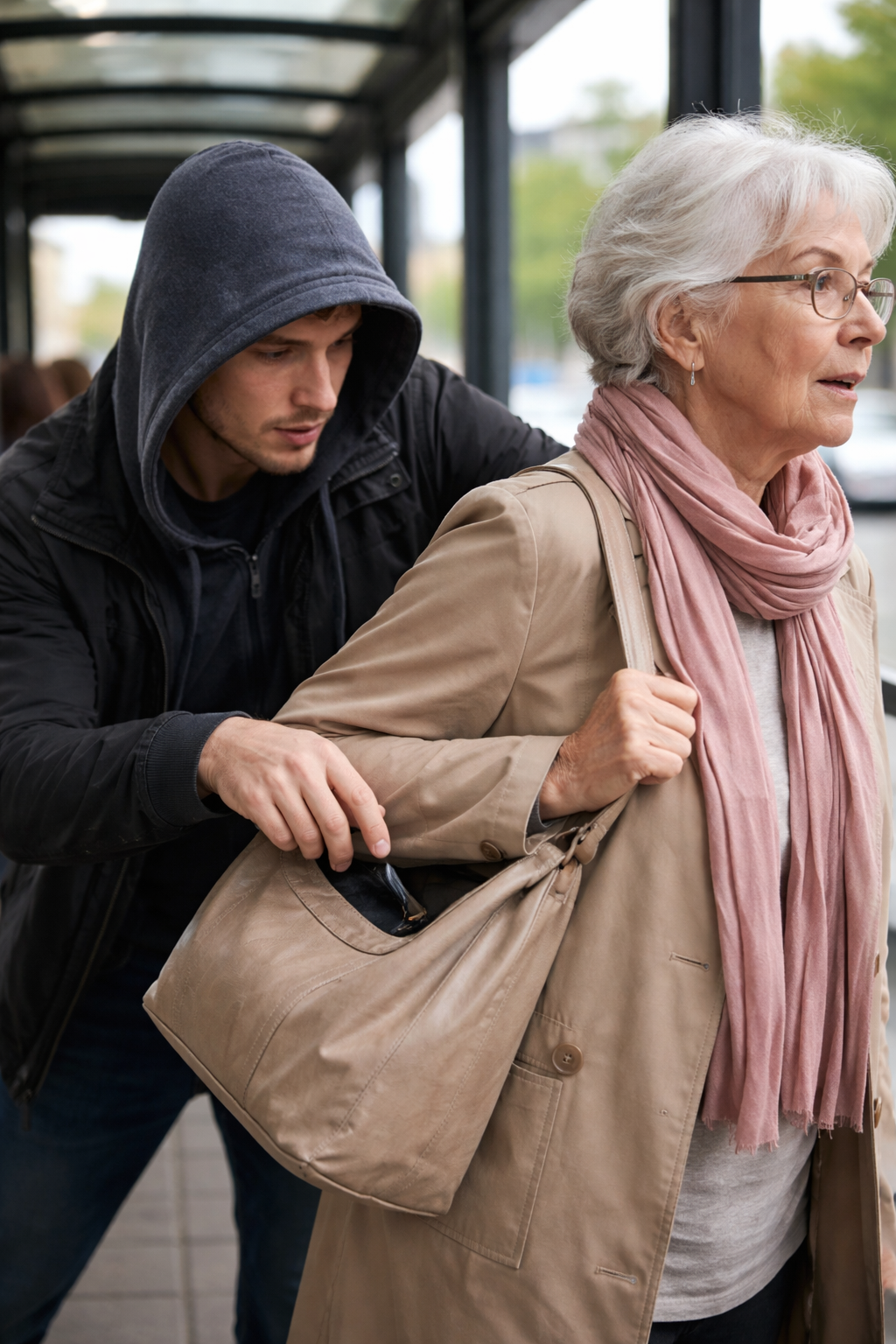

Bus stations and train stations are some of the most useful places in any city. They move huge numbers of people, connect neighborhoods, and make travel possible even when you do not know the local roads at all. But they also create the exact conditions that opportunistic criminals like most: crowds, distraction, luggage, fatigue, confusion, and people handling phones, wallets, passports, and tickets all at once. U.S. State Department travel guidance repeatedly warns that crimes of opportunity such as pickpocketing, purse snatching, and theft of unattended property are especially common on public transportation and in train stations, particularly in crowded areas and during busy travel periods.
That does not mean every station is dangerous, or that travelers should treat every commute like a high-risk situation. Most people pass through stations without any problem at all. But it does mean that bus terminals and rail hubs reward awareness more than almost any other travel environment. You are often arriving tired, leaving in a rush, looking up directions, checking platform numbers, counting bags, and trying not to miss a departure. That combination makes even careful people easier targets than usual. British Transport Police advises passengers in and around railway stations to avoid poorly lit areas, stay near other people or CCTV coverage, and protect valuables from pickpockets, luggage thieves, and “gadget grabbers.”
Why stations attract crime in the first place
Stations are built for movement, not control. People are arriving, departing, queuing, eating, dozing, arguing over tickets, and dragging luggage through narrow spaces. That means thieves do not need much time. They only need a few distracted seconds. State Department advisories for multiple countries note the same pattern again and again: crowded public transportation hubs are common locations for pickpocketing, theft of unattended items, and other crimes of opportunity.
Another reason stations are attractive is that many people in them are visibly unfamiliar with the environment. Tourists often stop suddenly, hold tickets and passports in the open, pull out cash, check route maps with both hands occupied, or place bags on the ground while they reorganize. Even experienced travelers become easier to read when they are stressed. State Department crime guidance advises travelers to stay aware of their surroundings, be discreet when organizing belongings on arrival, and avoid leaving bags unattended on transportation or in public areas.
Late-night timing adds to the risk. U.S. guidance for travelers in Germany, for example, notes that crime is more common in large metropolitan subway systems and train stations, with most crimes occurring during late night or early morning hours. That pattern is not unique to one country. Stations can feel very different at 11 a.m. than they do at 11 p.m., especially if staffing is lighter and crowds thin out.
The most common crime is not dramatic violence
When people imagine danger in a station, they often picture something dramatic: an assault, a robbery with a weapon, a violent confrontation. Those things can happen, depending on the city and the specific area, but the more common risk is far less cinematic. It is the phone that disappears when the doors open. It is the backpack pocket unzipped in a queue. It is the suitcase left beside a bench for one minute too long. It is the wallet gone after a jostle in a crowd. State Department advisories repeatedly identify pickpocketing, purse snatching, and theft of unattended belongings as the main criminal risks on public transportation and in stations.
This matters because the prevention strategy is different. Most station crime is about opportunity, not personal targeting in the Hollywood sense. Criminals are usually looking for the easiest opening, not the most dramatic one. British Transport Police specifically advises travelers to keep bags closed and secure, carry them in front or diagonally across the chest, and zip them back up quickly after using wallets or cards.
Doors, crowds, and platform confusion are high-risk moments
One of the most useful transit-safety tips in recent State Department guidance is surprisingly specific: avoid standing near bus or train doors, because thieves often strike as the doors open and then disappear into the crowd or onto the platform. That advice appears in current guidance for Greece and Portugal, and it reflects how quickly grab-and-run theft can happen in the confusion of boarding and exiting.
That detail explains a lot about how station theft works. The criminal does not need to control the whole environment. They only need the exact second when everyone shifts position. Doors open, passengers pivot, luggage catches, people glance up at signs, and a phone or bag is suddenly within reach. The victim often realizes what happened just after the doors close or just after the thief has stepped back into a crowd.
The same principle applies around escalators, ticket barriers, platform bottlenecks, and luggage racks on buses or trains. Any place where attention narrows to movement or timing becomes a better place for theft. State Department guidance also warns that pickpockets take advantage of crowds getting on and off public transportation and use busy conditions as cover.
Unattended bags are an invitation, not a neutral choice
Travelers often think of an unattended bag as a mistake that might matter “if someone really wanted to steal it.” In stations, that thinking is too relaxed. U.S. travel guidance explicitly says not to leave bags unattended, especially on public transportation, and station-focused safety advice from transport police says much the same thing.
The reason is simple. Stations normalize temporary separation from luggage. People set a bag down to buy coffee, help a child, check a screen, use the restroom, or reach for a ticket. But to a thief, “only for a minute” is often enough. It also creates another problem: an unattended bag may trigger a security response because in many transport systems it is treated not just as theft risk but as a suspicious item. British Transport Police’s “See it. Say it. Sorted.” campaign specifically encourages passengers to report unusual items or activity on the railway.
So the safest habit is the simplest one: if your bag matters, it stays physically connected to you.
Scams and con artists belong in stations too
Not all station crime is a straight theft. Some of it is social engineering. State Department guidance for Bulgaria specifically warns that con artists may work on public transportation and in bus and train stations, alongside pickpocketing and purse snatching.
That can look like fake assistance with tickets, distracting conversation while someone else lifts a wallet, suspicious offers to “help” with a machine, overfriendly strangers steering you toward a taxi or unofficial transport, or fake urgency around payments and bookings. FTC travel-scam guidance warns travelers to be cautious with vague or pressure-driven travel offers and to avoid paying by wire transfer, gift card, payment app, or cryptocurrency when a seller or organizer is pushing those methods.
The digital version matters too. Scammers increasingly use text messages and spoofed sites to push urgent payments or steal financial information. FTC alerts on transportation-related phishing scams note that scam texts may claim immediate payment is needed and direct users to fake sites designed to collect bank or card information. Even though those alerts are not station-specific, the lesson transfers well to transit travel: urgency plus a link plus payment pressure is a bad combination.
Phones are one of the easiest things to lose
A modern station thief does not necessarily want your suitcase. They may want your phone. British Transport Police explicitly warns rail passengers about gadget grabbers, and that makes sense. Phones are valuable, easy to resell, easy to snatch, and constantly in hand in stations because travelers use them for tickets, maps, translation, messaging, and payment.
This is why standing at the platform edge or near the doors while holding a phone loosely is riskier than many people realize. State Department guidance about avoiding door areas ties directly into this pattern. Once the device is gone, the loss is bigger than the hardware. Your tickets, banking apps, ride apps, email, travel documents, and two-factor authentication may all be tied to that one device.
A practical habit helps here: when you finish checking a platform or ticket, put the phone away fully. Not “just hold it for a second.” Away.
Harassment and unwanted contact are risks too
Crime in stations is not only about property. State Department guidance for women travelers notes that crowded buses and train cars can create opportunities for inappropriate or unwanted physical contact, and that crowding also makes pickpocketing easier.
That matters because travelers sometimes dismiss bad behavior in crowded transport spaces as something they simply have to tolerate. They do not. If a platform, terminal corridor, or train car feels wrong, moving toward staff, families, well-lit areas, or CCTV-covered zones is a sensible response, and British Transport Police explicitly recommends staying in sight of cameras or close to other people in and around stations.
Late-night stations change the risk calculation
A crowded station at rush hour can be stressful, but an almost empty station late at night creates a different set of problems. The main threat may shift from pickpocketing to isolation, harassment, or simple lack of help if something goes wrong. British Transport Police advises avoiding poorly lit areas in and around stations and staying near CCTV or other people. U.S. travel guidance also points out that crimes in transport hubs often cluster in late-night and early-morning periods.
This does not mean no one should ever use late transport. It means the strategy changes. Keep the route simple, wait near staffed or visible areas, have your exit plan ready before arrival, and avoid broadcasting confusion by unpacking your whole life on a platform bench.
How to lower your risk without looking paranoid
The best station safety habits are quiet ones. Keep your bag zipped and in front of you in dense crowds. Do not stand by doors with your phone exposed. Do not leave bags on the floor behind you. Get your ticket or payment method ready before you reach the choke point. Stay near lighting, staff, cameras, and other travelers if the area feels thinly populated. Report suspicious items or activity rather than assuming someone else will. Those recommendations line up closely with transport police and State Department guidance.
It also helps not to advertise that you are overloaded. State Department crime guidance advises being discreet when discussing plans and organizing belongings upon arrival. In practice, that means stepping aside before opening a wallet, not counting cash in the open, and not saying your whole itinerary out loud while holding passport and phone in the same hand.
What to do if something feels off
You do not need proof that something is wrong before acting more cautiously. If a person is hovering too close, move. If someone is trying to distract you while another person closes in, end the interaction. If an item seems suspicious or abandoned, report it. If a station area feels poorly lit or oddly empty, relocate toward staff or cameras. Public rail safety campaigns specifically encourage reporting unusual items or activity, and transport police emphasize visible, populated areas as the safer choice.
And if theft does happen, speed matters. Cancel cards, secure your phone accounts, alert station staff or police, and document the time and place while it is fresh. The faster you shift from shock to action, the better.
Final thoughts
Bus stations and train stations are not automatic danger zones, but they are classic environments for opportunistic crime. The main risks are usually theft, pickpocketing, unattended-bag loss, phone snatching, con-artist distractions, and harassment in crowded or poorly supervised spaces. Those risks rise in crowds, around doors, during late-night travel, and whenever a traveler is visibly tired, overloaded, or confused.
The upside is that the prevention habits are simple. Stay aware. Keep your valuables secured and close. Avoid door-area chaos when possible. Do not leave bags unattended. Be skeptical of pressure and “help” from the wrong people. Move toward staff, lighting, and cameras when something feels off. Those small decisions are usually what separate a routine transit day from a trip story you never wanted.
Leave a Reply