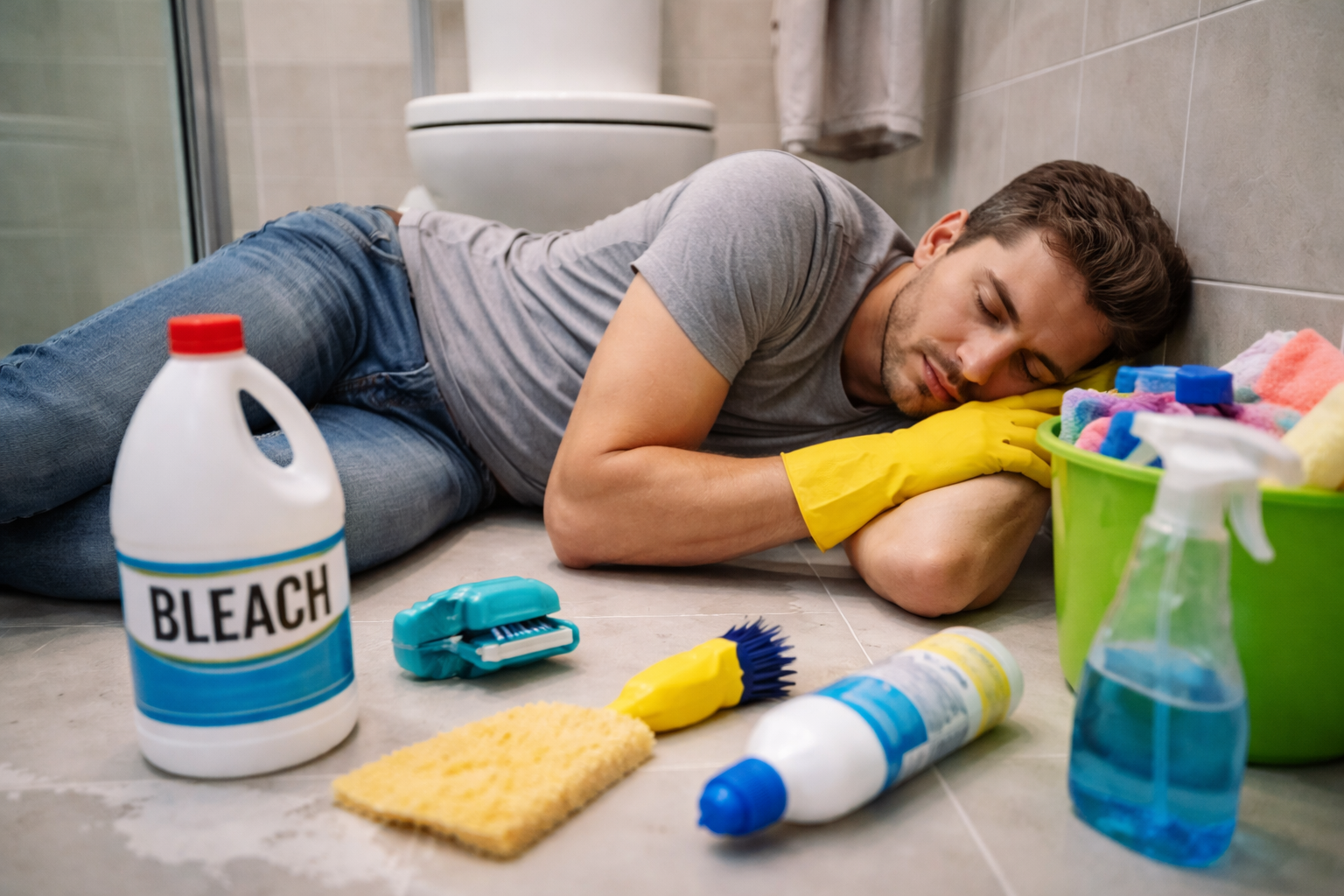

Bleach is one of those household products people use almost automatically. It is cheap, familiar, and widely trusted for disinfecting bathrooms, kitchens, laundry rooms, and mold-prone corners of the home. Because it feels ordinary, many people forget that bleach is also a strong chemical. Used in a small space without proper airflow, it can quickly become overwhelming. One of the most common early symptoms is dizziness.
If you have ever scrubbed a bathroom with bleach, closed the door, kept cleaning through the strong smell, and then suddenly felt lightheaded, foggy, or nauseated, you are not imagining it. Bleach fumes can irritate the eyes, nose, throat, and lungs, and in some people they can also lead to headaches, dizziness, chest discomfort, and breathing difficulty. Sometimes the symptoms improve quickly once you get fresh air. Sometimes they are more serious and need medical attention.
This post explains why dizziness happens after bleach cleaning without ventilation, what symptoms are normal, what warning signs should never be ignored, and how to respond safely.
Why bleach can make you dizzy in the first place
Bleach gives off strong fumes, especially when used in enclosed spaces like bathrooms, laundry rooms, storage closets, and windowless kitchens. Those fumes can irritate your airways almost immediately. Even if the exposure is not severe enough to cause collapse or major poisoning, it can still make you feel unwell surprisingly fast.
Dizziness after bleach cleaning usually happens for a few reasons at once. First, the fumes irritate the nose, throat, and lungs, which can make breathing feel shallow or uncomfortable. That alone can leave you feeling weak or lightheaded. Second, the strong odor can trigger headache, nausea, and a sense of pressure in the head. Third, if you were cleaning in a hot, humid room while bending, scrubbing, or standing up repeatedly, the physical strain can add to the effect.
Many people also keep working longer than they should because they assume the smell is unpleasant but harmless. That is where problems start. A little exposure may cause only mild irritation. Longer exposure in a poorly ventilated room can turn mild discomfort into real symptoms.
What dizziness from bleach exposure usually feels like
Not everyone describes it the same way. Some people say they feel “off” or “floaty.” Others describe a spinning sensation, pressure in the head, a heavy forehead, or a sudden wave of weakness. Some feel dizzy and nauseated at the same time. Others notice a headache first, followed by lightheadedness when they stand or walk.
This kind of dizziness may come with:
- burning eyes
- runny nose
- scratchy throat
- coughing
- chest tightness
- nausea
- headache
- unusual fatigue
- trouble focusing
In mild cases, the symptoms begin while cleaning or shortly after finishing. Once the person leaves the area and gets fresh air, the dizziness often starts easing within minutes to a few hours. But that does not mean it should be dismissed automatically. Even a short exposure can hit hard, especially in small rooms or for people with asthma or other lung sensitivity.
Why poor ventilation makes the situation much worse
Ventilation is the difference between manageable product use and unnecessary chemical exposure. When you clean with bleach in a room with open windows, a running fan, or good airflow, fumes disperse more quickly. In a closed space, they build up.
A lot of people clean bathrooms with the door shut, sometimes to keep pets or children out, or simply out of habit. Then they spray bleach or pour a bleach-based cleaner into the toilet, tub, floor, sink, and grout all at once. That concentrated use in a sealed space can create an intense cloud of fumes. The room may feel “strong” immediately, but many people keep going because they want to finish the job quickly. The body, however, is already reacting.
Hot water can make this worse. So can vigorous scrubbing, using too much product, or lingering in the room after cleaning is done. The stronger the buildup of fumes, the more likely dizziness becomes.
The dangerous mistake many people make: mixing bleach with other cleaners
This is where the risk level rises sharply. Bleach should never be mixed with certain other cleaning products, especially ammonia, acidic cleaners, toilet bowl cleaners, or vinegar in some situations. These combinations can release dangerous gases that are far more harmful than bleach fumes alone.
A surprising number of people mix products without realizing it. They may spray one cleaner, then another, assuming more cleaning power means better results. Or they may use a toilet cleaner first and add bleach afterward. Sometimes the label is ignored because the person has used both products before without a problem.
If dizziness happened after using bleach and another cleaner together, that is much more concerning. In that case, symptoms such as coughing, choking, chest pain, shortness of breath, severe eye irritation, vomiting, or confusion need immediate attention. The issue may no longer be simple bleach irritation. It may be significant chemical exposure.
Mild symptoms vs. warning signs
A mild reaction often includes an unpleasant smell, brief lightheadedness, mild headache, slight nausea, watery eyes, or throat irritation that improves after leaving the area. These symptoms still matter, but they usually settle with fresh air and rest.
The warning signs are different. Seek urgent help if dizziness comes with any of the following:
- trouble breathing
- wheezing
- severe coughing that does not stop
- chest pain or chest tightness getting worse
- vomiting
- confusion
- fainting or near-fainting
- severe weakness
- bluish lips or unusual paleness
- severe eye pain or vision changes
These symptoms suggest the exposure may be more serious than ordinary irritation. They should not be minimized, especially if the exposure happened in a small room or involved mixed chemicals.
What to do immediately if you feel dizzy after cleaning with bleach
The first step is simple but important: get away from the fumes. Leave the room right away and move to fresh air. Open windows and doors if you can do so without staying in the exposure area too long. If there is an exhaust fan, turn it on as you leave.
Sit down somewhere safe. Do not keep cleaning to “finish quickly.” That instinct is common, but it is the wrong move. Continued exposure can make symptoms worse.
If your clothing smells strongly of bleach, changing clothes may help you feel better, especially if the exposure was heavy. Wash your hands and any skin that had direct contact with the product. If your eyes are burning, rinse them gently with clean water.
Then pay attention to how you feel over the next several minutes. Are you improving once you are in fresh air, or are symptoms staying the same or getting worse? That pattern matters.
Hydrating and resting may help if the dizziness is mild and already improving. But rest alone is not enough if you feel chest tightness, breathing trouble, worsening nausea, or confusion.
When the dizziness lingers longer than expected
This is the part people often second-guess. They assume that if they are not collapsing, they must be fine. But lingering symptoms deserve respect. If several hours pass and you still feel dizzy, foggy, short of breath, or nauseated, you should not just push through it.
Sometimes the airway irritation continues after the initial exposure ends. The lungs and throat may remain inflamed, especially if the fumes were strong. Some people, particularly those with asthma, allergies, or sensitive airways, react more intensely and recover more slowly.
A lingering headache is also common, but if it is severe or paired with continued dizziness, that is worth medical advice. The same goes for any feeling that your breathing is not normal, even if you can still walk and talk.
People who should be extra cautious
Not everyone has the same risk. Certain people are more likely to react strongly to bleach fumes or have a harder time recovering.
Children are more vulnerable because they are smaller and may inhale a higher dose relative to body size. Older adults may also be more affected, especially if they have heart or lung conditions. People with asthma, chronic bronchitis, COPD, allergies, or a history of chemical sensitivity should be especially careful. Pregnant individuals may also want to be more cautious with any significant fume exposure.
Even healthy adults can feel very unwell after using bleach in a poorly ventilated space, but people in these higher-risk groups should take symptoms more seriously from the start.
What not to do after bleach-related dizziness
One of the biggest mistakes is returning to the same room too soon. If the air still smells strongly of bleach, the exposure is not really over. Go back only after the space has aired out properly.
Another mistake is assuming more fragrance will solve the problem. Spraying air freshener or another cleaner over bleach fumes is not a good fix. It may add more respiratory irritation and make the air even harder to tolerate.
Do not ignore the possibility that you mixed products. If you used more than one cleaner and now feel dizzy or short of breath, do not downplay that detail. It is extremely relevant.
And do not try to “sweat it out” or continue with chores, exercise, or cooking if you still feel lightheaded. Dizziness increases the risk of falls, poor judgment, and delayed recognition of worsening symptoms.
How doctors think about this kind of exposure
When someone seeks care for bleach-related dizziness, the key questions are usually straightforward. How long were you exposed? Was the area ventilated? Did you mix bleach with anything else? Are you having trouble breathing? Do you have asthma or other lung problems? Are your symptoms improving in fresh air or getting worse?
Mild cases may need nothing more than observation, symptom management, and instructions to avoid more exposure. More serious cases may require oxygen, breathing treatments, eye irrigation, or further evaluation depending on what symptoms are present. If other chemicals were involved, the approach may change.
That is why details matter. “I cleaned with bleach and felt dizzy” is useful, but “I sprayed bleach in a small bathroom with no window for 30 minutes and also used toilet bowl cleaner” is much more important.
How to clean safely with bleach next time
The easiest way to avoid this problem is to treat bleach with more respect than most people give it. It is not enough to know it is strong. You need to use it like it is strong.
Start with airflow. Open windows if possible. Keep the door open. Use an exhaust fan. Avoid cleaning tiny enclosed spaces with bleach if there is no ventilation at all.
Use only the amount directed on the product label. More is not better. Excess product just creates stronger fumes and more residue.
Never mix bleach with other cleaners. Not with ammonia. Not with toilet cleaners unless the label clearly says it is safe. Not with random homemade solutions. Not with “a little bit of this and that.”
Take breaks. If the smell feels overwhelming, your body is already telling you something. Step out, breathe fresh air, and let the room clear.
Wearing gloves is a good idea for skin protection. In some cases, people also consider masks, but the most important step remains ventilation. You cannot rely on simply tolerating the smell.
A common misunderstanding: “If I can smell it, that means it’s working”
This idea causes a lot of unnecessary exposure. Strong smell is not proof of better cleaning. It is simply a sign that fumes are present. Many people associate that harsh scent with cleanliness, especially in bathrooms, but that mindset can lead them to stay in unhealthy conditions too long.
A room does not need to smell overpowering to be disinfected. In fact, if the smell is making your eyes water or your head feel strange, that is not a sign of effective cleaning. It is a sign to reduce exposure.
Can bleach dizziness cause long-term damage?
Most mild household exposures improve without lasting effects once the person gets fresh air and avoids further contact. That is the good news. But this should not lead to complacency. More intense exposure, repeated exposure, or mixing bleach with other chemicals can be much more serious.
If someone develops persistent breathing problems, ongoing cough, chest tightness, or worsening symptoms after the incident, medical evaluation becomes more important. The majority of cases are not catastrophic, but they are still worth taking seriously in the moment.
Final thoughts
Feeling dizzy after cleaning with bleach in a poorly ventilated space is not rare, and it is not something to laugh off. Sometimes it is a mild chemical irritation that improves with fresh air and rest. Sometimes it is the first sign that the exposure was too strong, the room was too closed off, or another product was mixed in and made the situation more dangerous.
The main thing is to respect the symptom. Dizziness is your body saying the environment may not be safe. Leave the area, get fresh air, and pay attention to what happens next. If symptoms fade, that is reassuring. If they linger, intensify, or come with breathing trouble, chest pain, vomiting, confusion, or severe coughing, medical help should not be delayed.
Bleach may be common, but it is still a chemical. Used carelessly, especially without ventilation, it can turn an ordinary cleaning session into a real health scare.
Leave a Reply