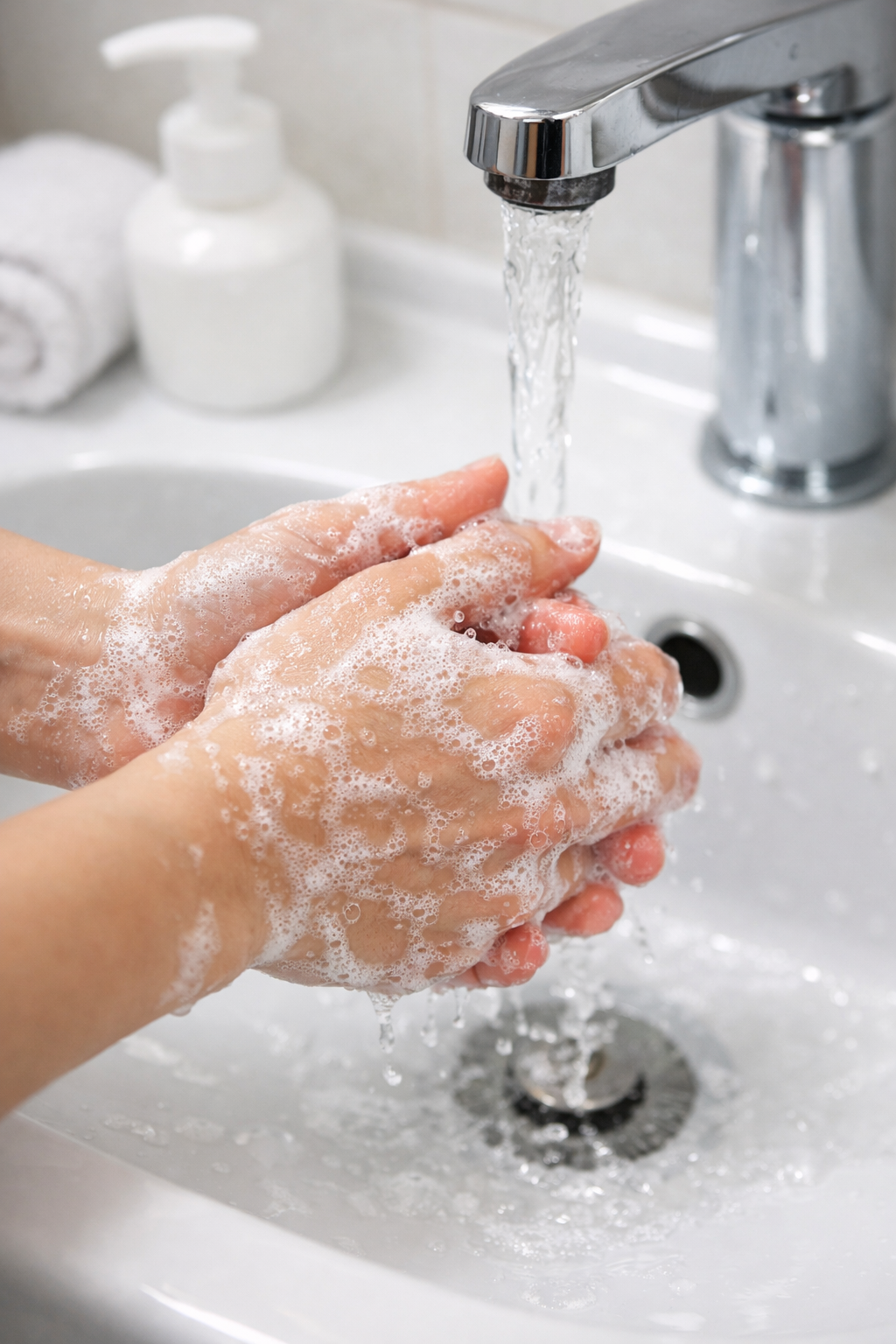
The Easiest Way to Start Washing your hands properly
Proper handwashing does not need to feel fussy or complicated. Here is a simple, realistic way to do it better in everyday life and make the habit stick.
Handwashing is one of those things people assume they already know how to do.
And to be fair, most of us do know the basic idea. Water. Soap. Rub a bit. Rinse. Done.
The problem is that “technically washing your hands” and actually washing them well are not always the same thing. A lot of people are doing a quick drive-by at the sink. Five rushed seconds, maybe some soap, maybe not enough, then a shake of the hands and off they go to touch their phone, their face, the fridge handle, or the sandwich they are about to eat.
This is not a moral failure. It is just real life. People are busy. They are distracted. They are half awake in the morning, in a hurry at work, wrangling kids, carrying groceries, or thinking about ten other things while standing at the sink.
That is why the easiest way to start washing your hands properly is not to memorize a perfect hygiene lecture. It is to make one small upgrade to a habit you already have.
Not longer speeches. Not guilt. Just a better routine.
Because proper handwashing is less about being intense and more about being thorough enough, often enough, in the moments that matter most.
Why people think they wash well when they usually rush
There is something funny about handwashing. It feels so familiar that it almost disappears.
You do it after the bathroom. Maybe before eating. Maybe after touching something obviously messy. It sits in that category of everyday tasks your brain stops paying attention to, like locking the door or plugging in your phone at night.
Once a habit becomes automatic, details can get sloppy.
That is how people end up doing things like:
rinsing with water only
using soap but barely rubbing
forgetting thumbs completely
missing fingertips and under nails
turning off the faucet with freshly cleaned hands and then immediately touching a grimy handle
drying hands on whatever towel has been hanging there since who knows when
Again, none of this is unusual. It is normal human autopilot.
And that is really the point. Most bad handwashing is not caused by lack of knowledge. It is caused by rushing, distraction, and the fact that people tend to do the minimum version of routine tasks unless something reminds them otherwise.
So the goal is not perfection. It is bumping your automatic version up a notch.
The easiest place to start: slow down one routine you already do
If you want the simplest practical advice, it is this:
Pick one handwashing moment you already do every day and do that one properly.
That is much easier than trying to become a totally different person overnight.
For example, choose one of these:
washing your hands after using the bathroom
washing before eating lunch
washing when you get home
washing after handling trash, pet food, or raw ingredients
Start with one anchor moment and make that the version you do well every time.
Why just one? Because habits stick better when they are attached to something existing and specific. “I’m going to wash my hands properly all the time forever” is a vague noble thought. “When I come home, I wash with soap for a full 20 seconds” is an actual routine.
Once one moment becomes more solid, the rest gets easier.
What proper handwashing actually looks like
People sometimes hear “wash your hands properly” and picture a whole surgical scrub situation. It is not that dramatic.
Good everyday handwashing is simple.
Wet your hands first
Use clean running water. Warm or cold is fine. It does not need to be hot enough to feel heroic.
Then add soap.
Use enough soap to actually cover your hands
You do not need an absurd amount, but you do need enough to get across both hands and all the usual missed spots.
This is where tiny half-pumps sometimes fail people. If you are using so little soap that your hands lose lather immediately, there is a good chance you are not covering much.
Rub longer than you think
This is the part most people cut short.
A proper wash is not just palms together for three seconds. Rub your palms, backs of hands, between fingers, around thumbs, fingertips, and under nails as best you can. If you wear rings, the skin around them can easily be missed too.
A lot of germs are not hanging out politely in the middle of your palm. They are in the creases, around nails, in the spots you skip because you are rushing.
Twenty seconds is a good rule of thumb because it is long enough to make you actually wash rather than tap-dance through the idea of washing.
Rinse well
Let the water carry the soap and loosened debris away. Do not rush this part so much that your hands still feel slick.
Dry your hands
This part gets ignored more than it should.
Wet hands pick things up more easily than dry ones, and damp skin can feel grimy again fast. A clean towel, paper towel, or air dryer can finish the job. At home, it helps if the hand towel is actually changed often enough to still count as clean.
That may sound obvious, but many households have at least one towel hanging around that has seen too much.
The 20-second problem, and how to make it less annoying
The biggest reason people do not wash properly is simple: they do not want to stand there for 20 seconds.
That sounds silly until you notice how long 20 seconds feels when you are in a rush. Especially if your brain is already moving to the next task.
So the trick is to make those seconds easier to tolerate.
Some people hum part of a song. Some count slowly. Some mentally run through a tiny checklist: palms, backs, between fingers, thumbs, tips. It does not matter much which method you use. You just need something that keeps you from quitting at second six.
Personally, I think the tiny checklist works best because it gives the time a job. You are not standing there waiting for the clock. You are moving through the areas people usually miss.
It also helps children, by the way. “Wash longer” is abstract. “Now thumbs. Now fingertips” is much easier to follow.
The places people forget almost every time
If you want to improve your handwashing fast, pay attention to the parts most people skip.
Thumbs
For some reason, thumbs get treated like optional accessories.
People rub their palms, swipe the backs of their hands, and move on. Meanwhile the thumbs, which touch plenty of surfaces, get almost nothing.
Fingertips and nails
This is a big one, especially if you cook, garden, clean, use public touchscreens, or absentmindedly tap everything with your hands all day.
Fingertips do a lot of the work in daily life. They press elevator buttons, hold cash, grab door handles, type on keyboards, pick up snacks, and touch your face without permission.
Giving your fingertips a quick scrub against the opposite palm helps more than people realize.
Between fingers
These areas are easy to miss because they are not as obvious. A fast handwash often leaves them mostly untouched.
Backs of hands
Lots of people focus on their palms because that is the part they can see and feel most easily, but the backs of the hands still touch plenty of surfaces.
Once you know the common misses, proper handwashing feels less vague. You are no longer just “washing.” You are covering actual zones.
When handwashing matters the most in real life
You do not need to wash your hands with theatrical intensity every 15 minutes. But there are certain moments where doing it properly really matters.
These are some of the big ones:
after using the bathroom
before eating
before preparing food
after handling raw meat, eggs, or seafood
after taking out trash
after coughing, sneezing, or blowing your nose
after changing a diaper or helping a child in the bathroom
after touching animals, pet waste, or pet food
when you get home from public places
before touching contact lenses or certain personal care items
That last one is underrated. People sometimes wash in obvious “dirty” moments but forget the moments where their hands are about to touch their mouth, eyes, face, or food.
You do not need to live in fear of every surface. Just be aware of the hand-to-face, hand-to-food pathway. That is where better habits do a lot of good.
The difference between washing at home and washing in public
Handwashing in your own bathroom is one thing. Public sinks are a different experience entirely.
You are sometimes dealing with weak soap dispensers, sketchy faucets, or paper towel situations that feel like a test of character.
Still, the basics matter more than the setting.
In public, do your best with what is available. Use soap, wash long enough, rinse, dry, and if possible use a paper towel to touch the door handle on the way out. That last part is not always doable, but when it is, it is helpful.
At home, the biggest advantage is control. You can make the habit easier by keeping the sink stocked with soap that actually dispenses properly, putting a clean towel nearby, and not making the whole setup mildly annoying.
This sounds small, but small annoyances break habits. If the soap bottle is crusty, empty, or takes eight pumps to work, people will cut corners.
How to make proper handwashing easier to keep up
Like most daily habits, this gets easier when the environment helps.
Keep good soap where you use it
Soap does not need to be fancy, but it should be pleasant enough that people do not avoid using it. A soap that smells fine, dispenses easily, and does not leave your skin feeling stripped can quietly improve consistency.
That matters more than people admit.
Put lotion nearby if your hands get dry
Dry, irritated skin can make people wash less thoroughly or resent the process. If frequent handwashing leaves your hands rough, keep a basic hand lotion near the sink or use it after your most routine washes, especially at home.
The goal is not silky spa hands. Just making the habit less punishing.
Use visual cues
If you are trying to improve one specific washing moment, a cue helps. Maybe it is keeping the soap front and center. Maybe it is a small note for kids. Maybe it is simply deciding, “Every time I walk in the door, I go straight to the sink before I do anything else.”
That kind of cue is more powerful than general intentions.
Make it the default before touching food
This is one of the easiest upgrades for a household. Before snacks, before lunch, before grabbing fruit, before assembling a sandwich, just wash first. Once that becomes standard, it removes a lot of decision-making.
What about hand sanitizer?
Hand sanitizer is useful, but it is not exactly the same thing as soap and water.
It is handy when you are out, in the car, at school, on public transit, or anywhere a sink is not practical. It can be a very good backup. But when your hands are actually dirty, greasy, sticky, or covered in food residue or grime, soap and water are usually the better move.
So think of sanitizer as a convenient substitute when needed, not a reason to forget handwashing altogether.
That balance works well in normal life. Use sanitizer when you need portability. Use soap and water when you have access to a sink and especially in the higher-mess moments.
Teaching kids without turning it into a battle
A lot of adults are trying to build this habit not just for themselves, but for children.
If that is you, the easiest approach is usually the least dramatic one.
Make the steps simple. Use consistent words. Show them instead of giving a long explanation. Children do better with a repeatable routine than with a lecture about germs.
Something like this is usually enough:
wet hands
soap
rub palms
rub backs
rub between fingers
wash thumbs
scrub fingertips
rinse
dry
And yes, songs work. So do playful cues. Anything that makes the process feel familiar rather than naggy helps.
Adults are not that different, honestly. We also tend to do better with a routine that feels easy to repeat.
A few common mistakes that are easy to fix
There are some handwashing habits that are worth cleaning up, no pun intended.
Rinsing without soap
Water alone is better than nothing in some situations, but it is not the same as actually washing.
Washing too fast
A very quick scrub feels productive, but often misses most of the benefit.
Touching dirty surfaces right after washing
Sometimes people do a solid wash and then immediately touch the faucet, bathroom latch, or their own dirty phone without thinking. You cannot avoid every surface, but a little awareness here helps.
Forgetting to dry hands properly
Damp hands are not the finish line.
Only washing when hands look dirty
A lot of the important moments happen long before anything looks visible on your skin.
Start smaller than your ideal
If you are reading this and thinking, “Okay, but I already know all this and still rush,” that is fair.
So make the starting point embarrassingly easy.
Choose one moment today. Just one. After the bathroom, before lunch, when you get home, whatever fits your life best. When that moment comes, wash with soap and actually cover your hands for a full 20 seconds.
That is it.
Do that enough times and it starts to feel normal. Then another moment gets easier. Then another.
Proper handwashing is not a glamorous habit. Nobody is posting dramatic before-and-after photos of their improved sink routine. But it is one of those small things that quietly makes daily life cleaner, safer, and a little more put together.
And usually, that is how the best practical habits work. Not with a huge overhaul. Just with one ordinary moment done a little better than before.
Hi, I’m the creator and editor behind ZestyHabit. I research everyday safety, first aid, and practical wellness topics using official guidance and reliable public sources, then turn that information into clear, realistic steps for daily life.
My goal is to help readers make safer, better-informed choices at home and beyond.