How to Protect Your Brain Blood Vessels When Most of Your Life Happens Indoors
Minjin Park
·
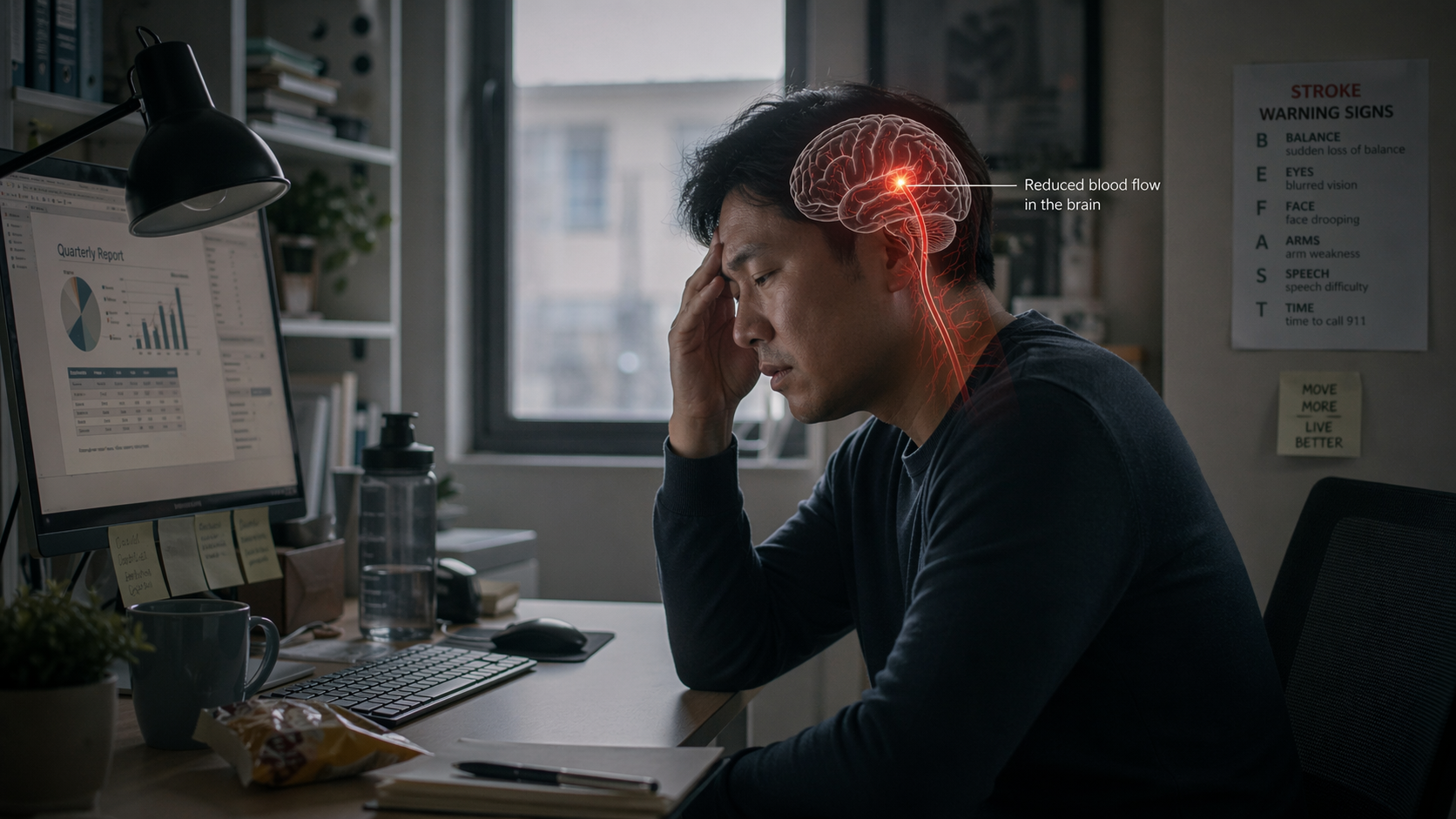
If you spend most of your day indoors sitting, working, studying, or relaxing, your routine may quietly raise stroke risk over time. Here is a practical, everyday guide to protecting brain blood vessel health without turning your life upside down.
You wake up indoors, work indoors, eat indoors, drive or ride somewhere, then come back home and unwind indoors again. Even people who do not think of themselves as sedentary can end up spending most of the day sitting still under lights, in front of screens, with very little natural movement built in.
That matters more than it seems.
Stroke prevention is not only about dramatic medical events or family history. Everyday things like blood pressure, physical inactivity, long sitting time, smoking, diabetes, cholesterol, diet, alcohol use, and weight all play into stroke risk. High blood pressure in particular is a leading cause of stroke, and recent American Heart Association guidance specifically calls out prolonged sedentary behavior as a stroke risk that deserves attention.
So when people ask how to protect “brain blood vessels” in real life, especially if they spend a lot of time indoors, the answer is usually not one miracle food or one heroic workout. It is a cluster of boring, useful habits that lower strain on the blood vessels that supply the brain.
Boring is underrated, honestly.
The First Thing to Understand: Sitting All Day Is Not Neutral
A lot of indoor routines create a strange illusion. Because you are not doing anything obviously risky, it can feel like nothing much is happening. You are just working, watching, reading, answering emails, studying, gaming, or folding yourself into a chair for the ninth hour in a row.
But prolonged inactivity has consequences.
The WHO says higher amounts of sedentary behavior are associated with worse health outcomes, including cardiovascular disease, and U.S. stroke-prevention guidance now recommends screening for sedentary behavior because it is associated with increased stroke risk. Physical activity, on the other hand, helps lower blood pressure, improve cholesterol, support weight control, and reduce cardiovascular risk.
That does not mean every desk job is a disaster. It means indoor people need to be more intentional because natural movement is no longer built into the day.
If your routine is mostly chair, couch, car, bed, repeat, prevention has to be added on purpose.
Start With the Biggest Lever: Blood Pressure
When people think about stroke prevention, they often jump straight to “eat healthy” or “walk more,” which are both useful. But blood pressure deserves special attention because it is such a major driver of stroke risk.
The CDC says high blood pressure is a leading cause of stroke, and the American Heart Association notes that high blood pressure damages arteries and makes it easier for vessels in the brain to become blocked or burst. High blood pressure often has no symptoms, which is part of what makes it tricky.
If you rarely have your blood pressure checked, that is a good place to start. Some people assume they would “feel it” if something were off. Often, they would not.
A home blood pressure monitor can be useful if you already have elevated readings or want to keep an eye on trends. If that feels like too much, even regular checks at a clinic or pharmacy are better than floating through adulthood on vibes.
Build habits that support lower blood pressure
The CDC recommends physical activity, a healthy diet, limiting sodium and alcohol, not smoking, keeping a healthy weight, and managing stress as part of blood pressure prevention.
That sounds broad, so it helps to make it specific:
move most days of the week
avoid turning every meal into a high-salt convenience meal
do not let stress automatically become late-night snacking, drinking, or smoking
sleep enough to function like a person, not a haunted device
None of that is flashy. It is still the foundation.
Break Up Sitting Before It Turns Into a Full-Day Pattern
Indoor people often make one mistake: they assume an evening walk cancels out an entire day of stillness.
It helps, but it is not the whole story.
Current stroke-prevention guidance highlights prolonged sedentary behavior during waking hours, not just lack of exercise in the abstract. In other words, the long stretches matter too.
So the goal is not only “exercise later.” It is also “sit less all day.”
Easy ways to interrupt sitting indoors
You do not need a perfect standing desk life. You need interruptions that are realistic enough to repeat.
Try things like:
standing up during calls
walking while waiting for coffee or food
doing one short lap around the house every hour
stretching after each bathroom break
putting the printer, charger, or water bottle slightly out of reach on purpose
taking five minutes of movement between work blocks
This kind of movement feels almost too small to count, but that is part of why it works. Tiny actions are easier to keep.
Do not wait until evening for all your movement
If your only activity happens at 8 p.m. after a fully indoor, fully seated day, that is still better than nothing. But many people feel better and function better when some movement happens earlier too.
Even a brisk 10-minute walk after lunch or a few short indoor movement breaks can shift the day in a healthier direction. The CDC recommends at least 150 minutes a week of moderate-intensity activity for adults, and WHO guidance says adults should aim for 150 to 300 minutes of moderate aerobic activity per week.
That sounds like a lot until you divide it up.
If You Live Indoors, Walking Is Probably Your Best Friend
There are fancier options. There are trendier options. Walking still does a lot of heavy lifting.
For people with indoor-heavy lives, walking has several advantages:
it is accessible
it lowers the barrier to starting
it supports blood pressure and cardiovascular health
it breaks up sitting time
it can happen outside, which often improves mood and routine consistency too
You do not have to become “a walking person” in a lifestyle-content way. You just need a repeatable version that fits your life.
Practical walking options for indoor people
The after-meal walk
Ten minutes after lunch or dinner is not dramatic, but it is surprisingly effective because it is easy to anchor to something you already do.
The errand walk
Park farther away. Walk to pick up coffee. Deliver something in person instead of sending another message.
The reset walk
When your brain gets foggy after too much screen time, step outside for 10 to 15 minutes. This is good for more than productivity. It reduces uninterrupted sitting and pulls your day out of that sealed-indoor feeling.
Food Matters, but It Does Not Need to Become a Purity Contest
A lot of articles make preventive eating sound so strict that normal people check out halfway through.
For brain and stroke prevention, the overall pattern matters more than performing dietary perfection for three days and then giving up.
The American Stroke Association recommends heart-healthy eating patterns such as the Mediterranean-style or DASH-style approach. These emphasize things like vegetables, fruits, beans, whole grains, and healthier fats, while reducing excess sodium and overly processed foods.
If your life is very indoor and very busy, the risk is not always junk food in the obvious sense. Sometimes it is more subtle:
constantly eating at your desk
relying on takeout that is extra salty
grazing on packaged snacks because you never built a real lunch
drinking too much alcohol at home because “I’m just unwinding”
Better indoor-life food habits
Make one meal a little more structured
Not perfect. Just more real.
A bowl with protein, vegetables, and a grain is already doing more for you than random snacks and a giant sugary coffee.
Watch the salt creep
Packaged soups, instant noodles, deli foods, frozen meals, chips, and restaurant food can push sodium higher than people realize. Since high blood pressure is such a major stroke risk factor, this is worth paying attention to.
Keep alcohol from becoming an “every indoor evening” reflex
The American Heart Association lists drinking more alcohol than usual among modifiable factors that can worsen blood pressure risk.
A drink now and then is one thing. Quietly normalizing “a few most nights” is another.
Smoking and Vaping Are Not Side Notes
This part is not exciting, but it is important.
The American Stroke Association lists smoking among controllable stroke risk factors, and the CDC includes tobacco use among behaviors that raise blood pressure risk.
Indoor life sometimes hides this because habits become private and routine-based. A smoke break on the balcony, vaping while working, nicotine during stress, nicotine during gaming, nicotine after meals. It starts to feel woven into the day.
From a prevention standpoint, it is not minor.
If stroke prevention is the goal, reducing or quitting nicotine exposure belongs on the list with movement and blood pressure, not somewhere off to the side.
Sleep, Stress, and Routine Drift Matter More Indoors
When people spend a lot of time indoors, routines can get oddly blurry. Meals slide later. Bedtimes drift. Stress builds in a quiet, constant way. Screen time stretches further into the night. Days start to feel similar, and health habits loosen without much drama.
That matters because stress can feed into higher blood pressure and related behaviors, while better sleep and steadier daily structure make healthy choices easier to repeat. The AHA notes that too much stress may contribute to increased blood pressure directly and also through behaviors like poor diet, inactivity, tobacco use, and heavier alcohol use.
This is why prevention sometimes looks less like medicine and more like basic adult maintenance:
keep a sleep window that is at least somewhat regular
do not stack work, TV, and scrolling into one endless seated evening
build one real stopping point into the day
get daylight when you can
use stress relief that is not automatically food, alcohol, or nicotine
Not because you need a flawless routine. Just because drift has a way of turning into risk.
A Simple Prevention Routine for Indoor People
If you want this to feel usable, not theoretical, keep it simple.
A Daily Brain-Blood-Vessel Checklist
Move in small pieces during the day
Stand up, walk, stretch, or climb stairs for a few minutes at a time so sitting does not swallow the whole day. Prolonged sedentary behavior is now directly addressed in stroke-prevention guidance.
Aim for your weekly activity target
Work toward at least 150 minutes of moderate activity per week, even if you build it through short walks and practical movement.
Know your blood pressure
Check it periodically, especially if you have family history, weight changes, high stress, poor sleep, diabetes, or a very sedentary routine. High blood pressure often has no symptoms.
Eat in a way that helps, not hurts
Less sodium-heavy convenience food, more meals with actual structure. Think steady, not extreme.
Keep smoking and excess alcohol in the prevention conversation
These are not separate from stroke risk. They are part of it.
Get out of the house on purpose
Even one outdoor walk a day can support movement, routine, and mental reset. This is partly about exercise and partly about escaping the all-day indoor loop.
Know the Emergency Signs Too
Prevention matters, but so does recognizing when something may already be wrong.
The CDC urges people to act FAST for stroke warning signs: Face drooping, Arm weakness, Speech difficulty, Time to call emergency services. Stroke is time-sensitive, and fast treatment matters.
That is not meant to be scary. It is just something adults should know, the same way we know what a smoke alarm is for.
The Goal Is Not to Live Perfectly. It Is to Stop Drifting
For people who spend most of life indoors, stroke prevention is often less about doing one heroic thing and more about refusing to drift into the default pattern of modern life.
Too much sitting. Too little walking. Blood pressure unchecked. Salty convenience food. Stress handled with screens, alcohol, or nicotine. Days passing indoors without much interruption.
That pattern is common, but it is not harmless. And the fix does not have to be extreme.
Walk more. Sit less. Check your blood pressure. Eat a little better than convenience alone would suggest. Watch the smoking and drinking habits that become invisible because they happen at home. Keep your routine from sliding into a fully chair-based life. Those are ordinary habits, but they line up closely with what official stroke-prevention guidance keeps emphasizing.
That is good news, really.
Because ordinary habits are the ones most people actually have a chance of keeping.
Hi, I’m the creator and editor behind ZestyHabit. I research everyday safety, first aid, and practical wellness topics using official guidance and reliable public sources, then turn that information into clear, realistic steps for daily life.
My goal is to help readers make safer, better-informed choices at home and beyond.
[…] in trash bags can range from small cuts to deep puncture wounds involving tendons, nerves, or blood vessels. Used medical sharps may also expose household members, cleaners, and waste workers to bloodborne […]
Loading…
Discover more from
Subscribe now to keep reading and get access to the full archive.



[…] in trash bags can range from small cuts to deep puncture wounds involving tendons, nerves, or blood vessels. Used medical sharps may also expose household members, cleaners, and waste workers to bloodborne […]