
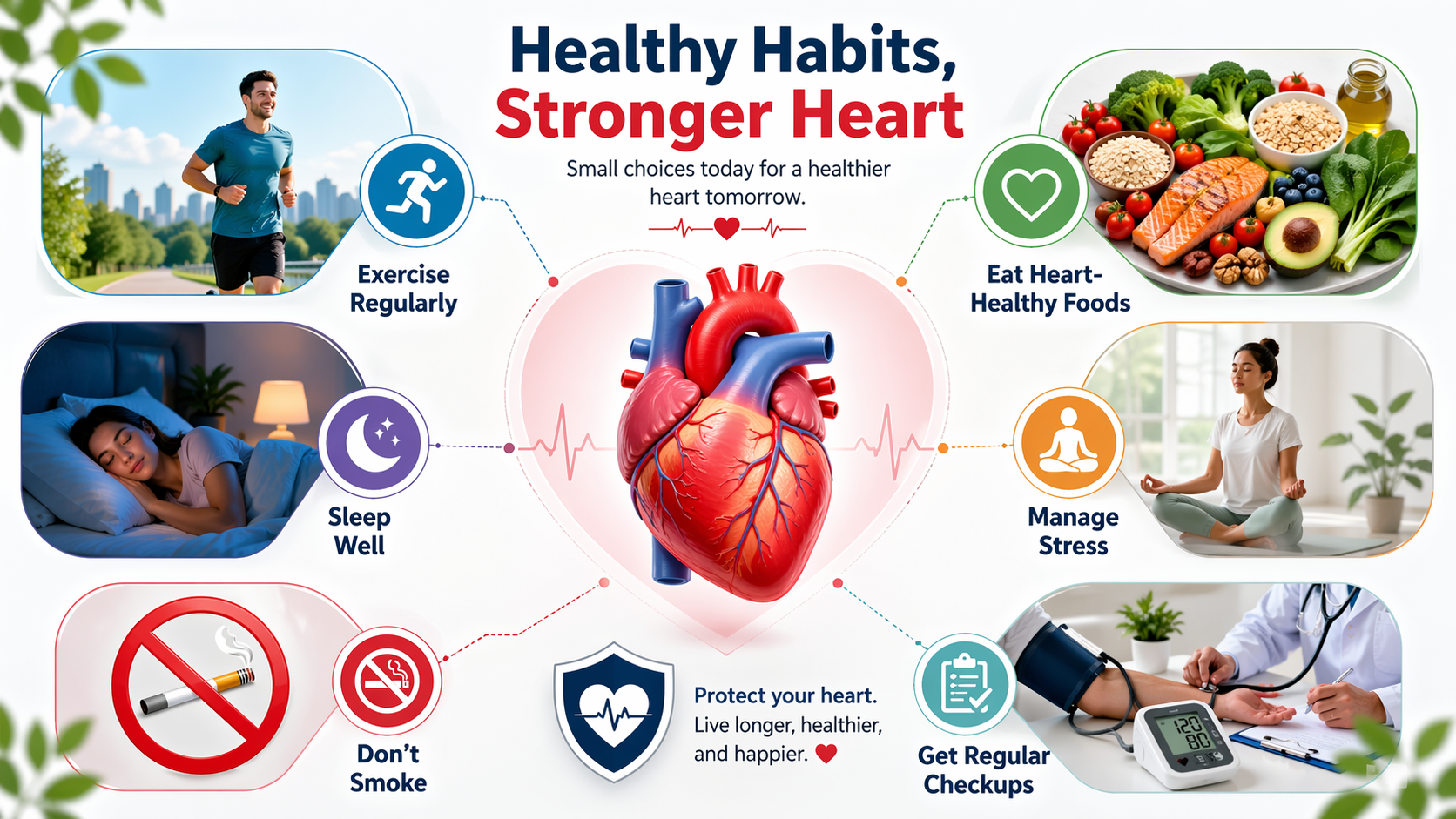

If you want to lower your risk of heart disease, the best first change is not a perfect diet or an extreme workout plan. It is building a daily routine that helps you move more, sit less, and stay consistent.
A lot of people ask heart-health questions as if there is one magic switch.
Should you stop eating fried food first? Start walking? Sleep more? Cut sugar? Lose weight? Stop drinking? Get serious about stress?
The annoying answer is that heart disease risk is shaped by several habits, not just one. The useful answer is a little more specific: if you want one place to begin, the most practical first habit to change is usually physical inactivity.
Not because exercise fixes everything overnight. Not because everyone needs to become a gym person. Mostly because being inactive quietly affects a lot of the other things that matter for heart health too, including blood pressure, blood sugar, sleep quality, weight, stress, and energy for daily life. The CDC lists high blood pressure, high cholesterol, and smoking as key heart disease risk factors, and it also notes that physical inactivity, unhealthy diet, diabetes, overweight or obesity, and excessive alcohol use can raise risk. The American Heart Association includes physical activity as one of its “Life’s Essential 8” measures for cardiovascular health.
That does not mean food is unimportant. Or sleep. Or smoking. If you smoke, that may be the most urgent thing to address. If your blood pressure is very high, that deserves immediate attention. But for the average person asking, “What should I change first in real life?” movement is often the best entry point because it is concrete, flexible, and easier to build on than a full lifestyle overhaul. The NHLBI also frames heart-healthy living as a mix of healthy choices that lower the chance of heart disease and heart attack.
Why inactivity is such a big deal
Most people do not think of inactivity as a habit. They think of it as something that just happens around work.
You drive to work. Sit at a desk. Sit during lunch. Sit in traffic again. Get home. Sit on the couch. Maybe you are exhausted, maybe your knees hurt, maybe the day simply got away from you.
That pattern can become normal so fast that it stops feeling like a choice.
The problem is that a body that barely moves tends to drift in the wrong direction in slow, unexciting ways. Blood pressure can creep up. Fitness drops. Weight often climbs without much warning. Sleep gets lighter or more irregular. Stress feels stickier. Everyday tasks start taking more out of you than they used to.
That is part of why physical activity shows up again and again in major heart-health guidance. The American Heart Association lists healthy diet, physical activity, nicotine exposure, sleep, body weight, blood lipids, blood glucose, and blood pressure as the core measures of cardiovascular health.
In other words, movement is not a side quest. It sits near the center of the whole picture.
The “first change” should be the one you can actually keep
This is where a lot of well-meant advice falls apart.
People hear “prevent heart disease” and immediately picture a dramatic reset: 5 a.m. workouts, grilled salmon every night, no dessert, no sodium, no fun, no skipping, no excuses. That kind of plan works for a small number of people for a short number of days.
Then life barges in.
A sick kid. Overtime. Rain. Low energy. Bad sleep. A stressful week. Suddenly the perfect plan collapses, and people take that as proof they are bad at healthy habits. Usually it just means the plan was too fragile.
A better first step is smaller and more honest.
Instead of asking, “What is the ideal lifestyle for heart disease prevention?” ask, “What is the first habit that makes the rest of my choices easier?”
For many people, it is this: walk every day, even if it is not long.
That one shift can be boring in the best possible way. It does not require special equipment. It does not ask you to become athletic. It works in sneakers, work clothes, or a coat over pajamas if that is where you are in life.
Why walking is such a strong starting point
Walking has a funny reputation. People know it is healthy, but they often treat it like it is too mild to count.
It counts.
A regular walking habit can help people become less sedentary, build consistency, and create a daily rhythm that supports better overall cardiovascular health. Adults are generally advised by the American Heart Association to aim for about 150 minutes of moderate-intensity physical activity per week, or 75 minutes of vigorous activity.
That number can sound big when you are starting from almost zero. Broken down, though, it is about 30 minutes on five days a week. And even before you fully reach that target, doing more than you are doing now still moves you in a better direction.
Walking also tends to spill into other good decisions without forcing them.
When people start walking regularly, they often notice they want less heavy food at lunch because it makes the walk feel sluggish. They sleep a little better. They feel less trapped in their own head. Some start checking blood pressure because they are more tuned in to health in general. A small habit begins to organize the day.
That matters more than people think.
But what if food seems more important?
Food matters a lot. No question.
An eating pattern heavy in highly processed foods, excess sodium, sugary drinks, and frequent takeout can push heart risk higher over time, especially when it contributes to high blood pressure, higher cholesterol, weight gain, or diabetes risk. The CDC and NHLBI both include diet among the lifestyle factors that influence heart disease risk.
Still, trying to “fix your diet” in one sweep can get abstract fast.
People tell themselves they will eat clean, then end up confused by conflicting rules and give up by Thursday. Walking, by contrast, is simple enough to begin before you feel fully organized. That is why it often works as the first domino.
Then, once the routine feels steadier, you can make food changes that are more specific and realistic.
A smarter food follow-up
After your daily movement habit starts settling in, the next food habit to change is usually not “never eat anything fun again.”
It is more like this:
- cook at home one more time than usual each week
- stop treating sugary drinks like water
- add one heart-friendly meal you can repeat without thinking
- reduce the super-salty convenience foods you eat most often
- make breakfast or lunch a little less chaotic
That kind of adjustment is easier to live with.
What about smoking, alcohol, sleep, and stress?
They matter. A lot.
Smoking is one of the clearest heart disease risk factors, and quitting has obvious benefits. Excessive alcohol use can also raise heart-related risk. Poor sleep and chronic stress are not just “wellness” issues either. NHLBI notes that poor-quality or insufficient sleep is linked with higher risk for high blood pressure, heart disease, and other medical problems, and most adults need about 7 to 9 hours of sleep a night.
So why not say sleep is the first thing to fix?
For some people, it should be. Especially if they are sleeping five hours a night, working under constant strain, or using nicotine and alcohol in ways that are clearly affecting health.
But sleep and stress can be harder to change directly. You cannot always force yourself into great sleep by deciding harder. You often need better routines, less stimulation at night, steadier wake times, less late caffeine, and sometimes medical evaluation.
Movement helps here too. Not as a cure-all, but as support. People who move more during the day often find it easier to wind down at night and less likely to feel mentally jammed by the evening.
The habit that usually needs to go first: all-day sitting
Sometimes the first change is not “exercise” in the formal sense.
Sometimes it is simply breaking up long stretches of sitting.
This matters especially for people who believe they are doing fine because they go to the gym twice a week, yet spend the rest of their time almost entirely seated. A few workouts are helpful, but they do not erase a whole day of stillness.
You do not need to turn your workday into a fitness program. Just interrupt the pattern.
Stand during phone calls. Walk for 10 minutes after lunch. Take the farther parking spot. Do a lap around the building before getting back in the car. Walk while waiting for your coffee instead of scrolling. None of this is glamorous. That is partly why it works.
What this looks like in normal life
Let’s say someone works a desk job, orders takeout three nights a week, sleeps around six hours, and keeps meaning to “get healthy” but never really starts.
A realistic first month might look like this:
Week 1: Stop aiming for a whole transformation
Walk 10 minutes a day after one meal. That is it.
Not 10,000 steps. Not a new identity. Just 10 minutes.
Week 2: Make sitting less continuous
Add one short walking break during the workday. Even five minutes helps break the all-day chair pattern.
Week 3: Extend one or two walks
Bring two of those daily walks up to 20 or 25 minutes.
Week 4: Let the habit touch food naturally
Once you are moving regularly, make one meal change that actually fits your life. Maybe that means a less salty lunch, fewer drive-through breakfasts, or swapping soda for water most days.
This is slower than a dramatic reset, but slower is often how real habits stick.
Signs you picked the right first habit
You know a first habit is working when it does not just exist on paper.
Here is what that usually looks like:
You can do it on a bad day
A good starting habit survives low motivation. A walk can shrink to 8 minutes and still count.
It lowers friction instead of adding chaos
You do not need a complicated app, a full meal-prep Sunday, or a perfect mood.
It nudges other choices without lecturing you
You start wanting a little more sleep. A little less takeout. A little more water. That is a good sign.
It feels repeatable, not impressive
Heart disease prevention is less about grand gestures and more about what your weeks look like over time.
A few practical places to begin this week
If you want this to feel real by tomorrow, not just inspiring for fifteen minutes tonight, start here:
Pick a default walk time
After breakfast, after lunch, after dinner, before your shower, before your evening show. Attach it to something that already happens.
Make the bar almost too low
Tell yourself 10 minutes counts because it does. You can always do more when the day allows.
Keep shoes visible
This sounds silly until it works. Hidden shoes lead to forgotten plans.
Use a simple rule for workdays
For example: stand up once every hour and take a short lap every afternoon.
Track effort, not perfection
A checkmark on a calendar works fine. So does a note on your phone. You are looking for continuity, not a gold star.
When the first habit should be something else
There are cases where movement is not the first priority.
If you smoke, quitting or reducing nicotine exposure may need to move to the front. If you have been told you have high blood pressure, high cholesterol, or diabetes, getting those addressed is a big deal. If you have chest pain, unusual shortness of breath, fainting, or symptoms that worry you, that is not a lifestyle-habit problem to casually self-manage; that needs medical attention. The CDC and AHA both emphasize that blood pressure, cholesterol, blood glucose, and nicotine exposure are central parts of heart health.
That said, even in those situations, daily movement often remains part of the long-term foundation unless a clinician tells you otherwise.
The quiet truth about heart-healthy living
People often wait for the perfect plan because it feels safer than starting small.
But heart disease prevention usually does not begin with a dramatic declaration. It begins with a repeated decision that is plain enough to survive ordinary life.
A short walk after dinner. Fewer hours glued to a chair. A body that gets used a little more often. That is not flashy advice. It is the kind that tends to outlast motivation.
So if you are wondering what to change first, start there.
Not because walking is the only thing that matters. Not because diet, sleep, smoking, stress, and medical checkups can be ignored. They cannot.
Start there because movement is one of the simplest ways to interrupt a pattern that quietly pushes heart health in the wrong direction. And once that pattern changes, other changes often feel less like punishment and more like momentum.
That is usually how real prevention begins. Quietly. Repeatedly. A little more movement than yesterday, and enough consistency to let the habit become part of your actual life.

Hi, I’m the creator and editor behind ZestyHabit. I research everyday safety, first aid, and practical wellness topics using official guidance and reliable public sources, then turn that information into clear, realistic steps for daily life.
My goal is to help readers make safer, better-informed choices at home and beyond.


