
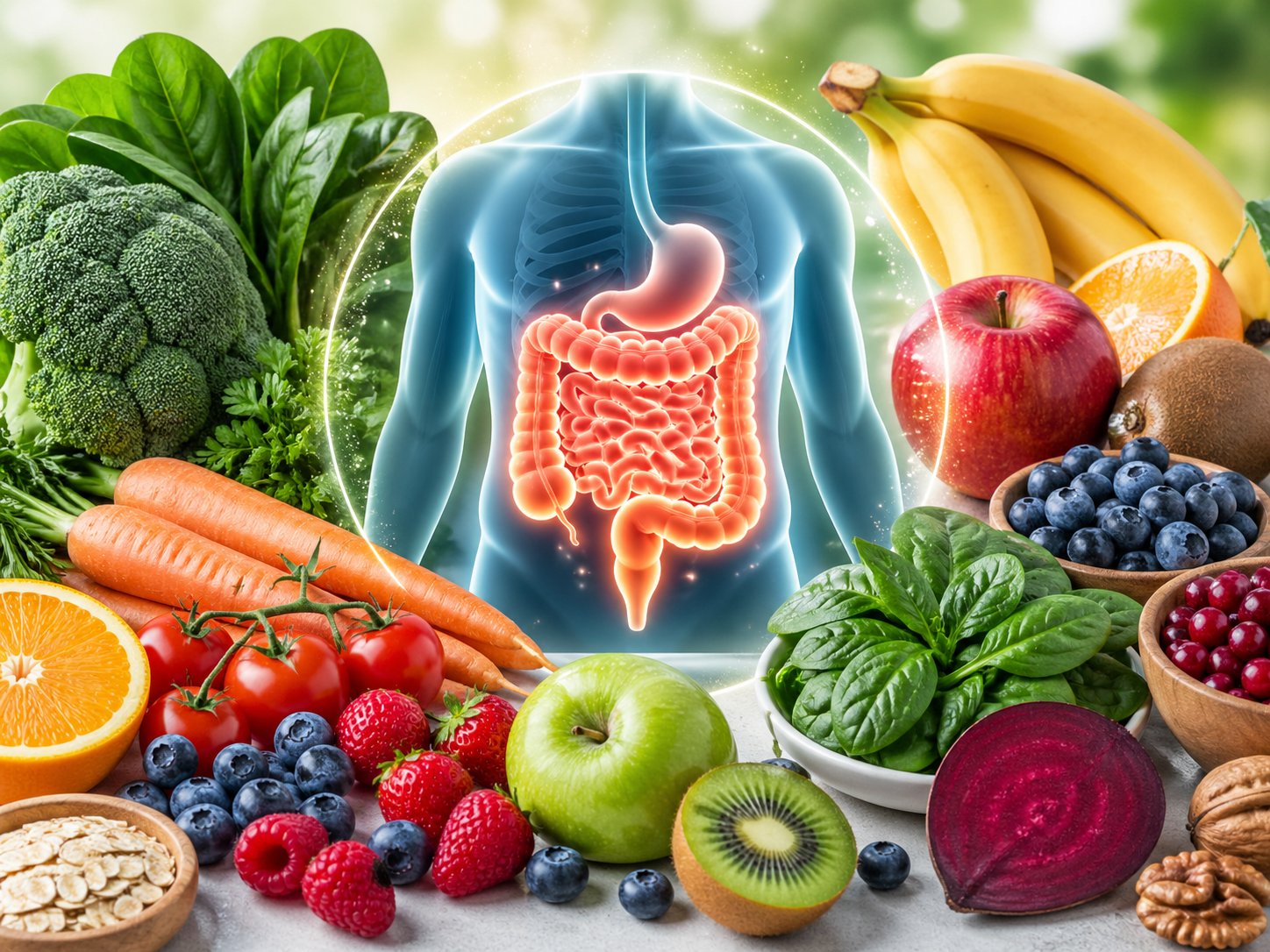

Eating more vegetables and fruit can support colon health, digestion, and regularity. Here are realistic ways to add more fiber-rich foods to your day without turning every meal into a project.
Most people know they “should” eat more vegetables and fruit.
It is one of those health tips that floats around everywhere, right next to “drink more water” and “get enough sleep.” True, yes. Helpful, also yes. But sometimes it is said so often that it becomes background noise.
Then real life shows up.
The fridge has one sad cucumber in the drawer. The bananas went from green to spotted overnight. Dinner is pasta again because everyone is hungry and nobody wants to chop anything. Lunch is whatever can be eaten in seven minutes between tasks.
So when someone says, “Just eat more vegetables and fruit,” it can sound simple in a way that is almost irritating.
But for colon health, this habit really does matter.
Vegetables and fruit bring fiber, water, vitamins, minerals, antioxidants, and plant compounds that support digestion and overall health. Fiber especially plays a big role in keeping stool softer and easier to pass, supporting regular bowel movements, and feeding beneficial gut bacteria.
That does not mean you need to become the person who casually snacks on raw kale. Some people do, and I wish them peace. For the rest of us, the goal is much more practical: make vegetables and fruit easier to eat, easier to remember, and easier to enjoy.
Why Vegetables and Fruit Matter for Colon Health
The colon, or large intestine, has a pretty unglamorous job. It absorbs water, forms stool, and works with gut bacteria to process what is left after digestion.
Fiber helps this system run more smoothly.
There are two broad types of fiber: soluble and insoluble. Soluble fiber absorbs water and can form a gel-like texture. It is found in foods like apples, oats, beans, lentils, citrus fruits, and some vegetables. Insoluble fiber adds bulk and helps move stool through the digestive tract. You get it from foods like whole grains, vegetables, nuts, seeds, and fruit skins.
Most plant foods contain a mix of both.
This is why a bowl of berries, a bean soup, roasted vegetables, or an apple with the skin can do more than simply “count as healthy.” These foods give the colon material to work with.
A low-fiber pattern, on the other hand, often shows up as sluggish digestion. Not always, but often. If meals are mostly refined carbs, cheese, meat, sweets, and very little produce, the digestive system may not have enough bulk or moisture to keep things moving comfortably.
And yes, some people can eat a vegetable-free diet and still have regular bowel movements. Bodies are annoyingly individual. But for many people, increasing fiber-rich produce makes a noticeable difference.
Start With Addition, Not Restriction
When people try to eat healthier, they often start by making a long list of things they should stop eating.
No chips. No white bread. No dessert. No takeout. No fun, apparently.
That approach can work for about three days, usually while the fridge is freshly stocked and motivation is high. Then life gets busy, and the whole plan collapses.
A better starting point is addition.
Add a fruit to breakfast.
Add a vegetable to lunch.
Add one side dish to dinner.
Add berries to yogurt.
Add spinach to eggs.
Add a handful of baby carrots next to your sandwich.
This works because it does not require you to redesign your personality. You are not asking yourself to become a totally different eater by Monday morning. You are simply making the plate a little more helpful.
Over time, those additions start to crowd out some of the less helpful foods naturally. Not always. Not perfectly. But enough.
Keep Fruit Where You Can See It

Fruit hidden in the fridge drawer is fruit on a slow journey to becoming compost.
If you want to eat more fruit, make it visible.
Put apples, oranges, bananas, or pears in a bowl on the counter. Keep washed grapes in a clear container at eye level in the fridge. Slice melon when you buy it, not three days later when you are already suspicious of it.
This sounds almost too basic, but convenience changes behavior.
Most of us eat what is easiest. If cookies are visible and fruit is hidden, guess what happens at 10 p.m.? Nobody needs a psychology degree for that one.
Try the “First Snack” Rule
A gentle trick: make fruit your first snack, not your only snack.
If you want chips after that, fine. But have the apple first. Or a handful of berries. Or a clementine.
This removes the feeling of deprivation. You are not saying, “I can never eat the snack I want.” You are saying, “I’ll give my body something useful first.”
Very often, that small pause changes the rest of the snack decision. Sometimes you still eat the chips. Sometimes you eat fewer. Sometimes the fruit was enough.
Either way, you got the fruit in.
Use Frozen Produce Without Shame
Frozen vegetables and fruit are not a backup plan for people who failed at fresh produce. They are a smart kitchen tool.
Frozen berries can go into oatmeal, yogurt, smoothies, or pancakes. Frozen spinach can disappear into soups, pasta sauce, scrambled eggs, and casseroles. Frozen broccoli, peas, carrots, green beans, and stir-fry blends can turn a plain meal into something with actual fiber.
Fresh produce is lovely, but it can be demanding. It has deadlines. It wilts. It judges you from the drawer.
Frozen produce waits patiently.
For colon health, the body does not require your vegetables to be photogenic. It just needs you to eat them.
Build Vegetables Into Meals You Already Like
One of the easiest ways to eat more vegetables is to stop treating them as a separate side dish.
Side dishes require extra thought. Extra pans. Extra timing. Extra cleanup. That is a lot for a weeknight.
Instead, fold vegetables into foods you already make.
Add mushrooms, peppers, onions, or spinach to eggs.
Add zucchini, carrots, or lentils to pasta sauce.
Add chopped vegetables to chili.
Add cabbage or shredded carrots to tacos.
Add spinach or kale to soup.
Add roasted vegetables to grain bowls.
Add cucumbers and tomatoes to sandwiches.
Add peas to rice.
Add a bagged salad next to pizza.
That last one is underrated. A salad next to pizza is still a win. It does not need to be a dramatic transformation where pizza is banned and replaced by steamed broccoli under fluorescent lighting.
Food can be balanced without being joyless.
Make Vegetables Taste Good
This should not be controversial, but somehow it needs to be said: you are allowed to season vegetables.
If your childhood experience of vegetables involved limp boiled carrots or unseasoned broccoli, no wonder you are not excited.
Roast vegetables with olive oil, garlic, pepper, and a little salt. Add lemon juice. Use herbs. Toss cabbage with vinegar and sesame oil. Put salsa on roasted sweet potatoes. Add parmesan to green beans. Dip raw vegetables in hummus, yogurt dip, guacamole, or ranch if that is what gets them eaten.
A vegetable you actually eat is better than a “perfect” vegetable you avoid.
Roasting Changes Everything
Roasting is the friend of reluctant vegetable eaters.
Broccoli gets crispy edges. Carrots become sweet. Brussels sprouts stop tasting like punishment. Cauliflower turns nutty. Sweet potatoes become soft and comforting.
A simple method: cut vegetables into similar-sized pieces, toss with oil and seasoning, spread them out on a sheet pan, and roast until browned and tender.
Make extra if you can. Leftover roasted vegetables can go into wraps, eggs, salads, rice bowls, or pasta.
They are also surprisingly good eaten cold from the fridge while deciding what to make for dinner. Not elegant, but real.
Do Not Increase Fiber Too Fast
Here is the part people often learn the hard way.
If you go from very little fiber to giant salads, lentil bowls, apples, chia seeds, and raw broccoli all in one day, your digestive system may complain.
Loudly.
Gas, bloating, cramps, and bathroom surprises can happen when fiber increases too quickly. That does not mean vegetables and fruit are bad for you. It means your gut needs time to adjust.
Start small.
Add one serving a day for a week. Then add another. Drink enough water, because fiber works better when fluid is part of the picture. If constipation is already a problem, suddenly adding dry fiber without enough liquid may make things more uncomfortable.
People with irritable bowel syndrome, inflammatory bowel disease, bowel narrowing, recent digestive surgery, or other medical conditions may need more personalized guidance. Some high-fiber foods can trigger symptoms for certain people. In that case, a doctor or registered dietitian can help you find a safer approach.
Add Beans and Lentils, Too
The topic is vegetables and fruit, but beans deserve a seat at the table.
Beans, lentils, chickpeas, and peas are fiber-rich, affordable, filling, and useful for colon health. They also contain plant-based protein, which makes meals more satisfying.
If beans make you gassy, start with small portions. Try a few tablespoons in soup or salad instead of a giant bowl of chili. Rinse canned beans well. Lentils may be easier for some people. Give your gut time to adapt.
Easy ideas:
Add black beans to tacos.
Stir chickpeas into salad.
Add lentils to soup.
Mash white beans onto toast with olive oil and lemon.
Mix beans into rice bowls.
Make hummus a regular snack.
This is not fancy eating. It is practical eating.
Pair Produce With Meals You Already Eat
A common mistake is trying to create a totally new eating routine from scratch.
Instead, attach produce to routines already in place.
Coffee in the morning? Add a banana or berries with breakfast.
Lunch sandwich? Add lettuce, tomato, cucumber, or a side of baby carrots.
Afternoon snack? Keep apples or clementines near your desk.
Dinner plate? Add one vegetable, even if it is frozen peas microwaved in a bowl.
Evening sweet craving? Try fruit with yogurt, cinnamon, or a few chocolate chips.
Habits stick better when they have a home. “Eat more vegetables” is vague. “Add vegetables to lunch” is easier. “Eat fruit after dinner” is even easier.
Use the Half-Plate Idea Without Being Rigid
You may have heard the advice to fill half your plate with vegetables and fruit.
It is a helpful visual. It is also not realistic for every meal.
A burrito does not have a “half plate.” Soup does not either. A sandwich lunch may not look like a nutrition diagram. That is okay.
Use the idea loosely.
If your meal is pasta, can you add vegetables to the sauce and eat fruit later?
If your meal is eggs, can you add spinach or tomatoes?
If your meal is takeout, can you add a side salad or fruit at home?
If your meal is soup, can it include beans, carrots, greens, or lentils?
The goal is not plate perfection. The goal is to make plant foods show up more often.
Keep Prep Simple Enough to Repeat
Some people love meal prep. They chop vegetables into neat containers while listening to podcasts, and honestly, good for them.
Other people see meal prep containers and feel tired before they start.
If that is you, lower the bar.
Buy pre-washed greens.
Use baby carrots.
Choose steam-in-bag vegetables.
Buy pre-cut fruit when life is chaotic.
Use canned tomatoes, canned pumpkin, canned beans, and jarred salsa.
Keep apples, oranges, and bananas around because they require no prep.
Buy bagged coleslaw mix and use it in wraps, tacos, stir-fries, or salads.
Convenience produce may cost a little more, but wasted produce costs money too. If pre-cut vegetables are the difference between eating them and throwing away a whole head of cauliflower, the pre-cut option may be worth it.
Make Breakfast Work Harder
Breakfast is often low in produce.
Toast. Cereal. Coffee. Maybe a granola bar eaten while looking for keys.
Adding fruit or vegetables to breakfast can quietly increase your daily fiber without much effort.
Try oatmeal with berries, sliced banana, or chopped apple.
Add spinach, peppers, mushrooms, or tomatoes to eggs.
Blend frozen fruit with yogurt.
Top whole-grain toast with avocado and tomato.
Eat cottage cheese with fruit.
Add pumpkin puree and cinnamon to oatmeal.
Breakfast does not need to be huge. It just needs to stop being completely fiber-free every day.
Make Lunch Less Beige
Lunch can easily become beige: bread, crackers, chips, cheese, chicken, pasta, or leftovers with no color.
A simple rule: add one color.
Green lettuce. Red tomato. Orange carrots. Purple cabbage. Blueberries. Apple slices. Roasted peppers. A cup of vegetable soup.
This is not about making lunch beautiful for the internet. It is about giving your colon something better to work with than refined starch and stress.
If you pack lunch, include fruit automatically. Do not wait to decide in the morning when your brain is still loading. Put apples, oranges, fruit cups packed in juice, or dried fruit in your lunch area ahead of time.
Dinner: The Easiest Place to Add Volume
Dinner is often where vegetables can fit most naturally.
A sheet pan of vegetables can roast while the main dish cooks. A salad can be thrown together quickly. Frozen vegetables can be microwaved in five minutes. Soup can carry a lot of vegetables without feeling like “eating a pile of vegetables.”
Try keeping two emergency vegetable options at home at all times.
For example:
Frozen broccoli and bagged salad.
Baby carrots and canned green beans.
Frozen spinach and cherry tomatoes.
Cabbage and frozen peas.
That way, even when the meal is simple, you have something to add.
Fruit Can Help With Sweet Cravings
Fruit is not the same as candy, obviously. But it can help when you want something sweet after meals.
Berries with yogurt.
Apple slices with peanut butter.
Frozen grapes.
Orange slices.
Banana with cinnamon.
Pears with a little cheese.
Warm berries over oatmeal.
This works especially well when you are not trying to pretend fruit is cake. Fruit is fruit. Let it be fresh, sweet, and easy.
Sometimes you may still want cake. That is fine. But fruit can become a regular sweet finish that also supports digestion.
A Realistic One-Day Example
Here is what increasing vegetables and fruit might look like without turning the day into a wellness performance.
Breakfast: Oatmeal with blueberries and walnuts.
Lunch: Turkey sandwich with lettuce and tomato, plus baby carrots or an apple.
Snack: Greek yogurt with sliced banana.
Dinner: Pasta with tomato sauce, spinach, mushrooms, and a side salad.
Evening: A clementine or a few strawberries if you want something sweet.
That is not extreme. It is not expensive or complicated. It is just more plant food woven into normal meals.
And that is usually what works.
A Gentle Final Thought
Eating more vegetables and fruit for colon health does not require a perfect diet, a dramatic grocery haul, or a fridge that looks like a farmers market display.
It starts with small, repeatable changes.
Put fruit where you can see it. Keep frozen vegetables ready. Add one color to lunch. Roast vegetables so they actually taste good. Increase fiber gradually. Drink water. Let beans, berries, greens, apples, carrots, lentils, and soups become normal parts of the week.
The colon does not need you to be perfect.
It just appreciates consistency, moisture, fiber, and a little less neglect. And honestly, most of us can start there.

Hi, I’m the creator and editor behind ZestyHabit. I research everyday safety, first aid, and practical wellness topics using official guidance and reliable public sources, then turn that information into clear, realistic steps for daily life.
My goal is to help readers make safer, better-informed choices at home and beyond.


[…] Many people say they eat fairly healthy, but the weekly pattern tells the real story. One salad at l… […]