Vibrio Septicemia: The Seafood and Seawater Risk More People Should Know About
Minjin Park
·
Vibrio vulnificus infection is rare, but it can become dangerous very quickly. Learn who is at higher risk, how raw oysters and open wounds are involved, and what everyday steps can lower the chance of serious illness.
Some health risks are loud.
You hear about them all the time. Heart disease. Diabetes. Flu season. Food poisoning after a questionable picnic potato salad.
Then there are risks that stay quiet until a news story appears: someone ate raw oysters and became seriously ill, or a small cut got exposed to warm seawater and turned into a medical emergency.
That is often when people hear the name Vibrio vulnificus.
It sounds obscure, almost like something that only matters to marine biologists or people who spend every weekend on the Gulf Coast. But for certain people, this bacteria can be extremely dangerous. Not “a rough stomach bug for a day” dangerous. More like emergency-room, intensive-care, life-threatening dangerous.
The good news is that everyday prevention is fairly straightforward once you understand the risk. You do not need to be afraid of the ocean. You do not need to swear off seafood forever. But you do need to know when raw shellfish and open wounds deserve more caution than they usually get.
Vibrio vulnificus is a type of bacteria that naturally lives in warm coastal waters, especially saltwater and brackish water. Brackish water is the mix of fresh and salt water often found where rivers meet the sea.
It is part of a larger group of Vibrio bacteria. Some cause milder stomach illness. Vibrio vulnificus is the one that gets attention because it can cause severe wound infections and bloodstream infections.
People usually become infected in two main ways: eating raw or undercooked seafood, especially oysters, or exposing an open wound to coastal water or raw seafood juices. The CDC lists eating raw seafood, particularly oysters, and exposing wounds to coastal waters or raw seafood drippings as common routes of infection.
That last part is easy to miss.
A “wound” does not always mean a dramatic injury. It can be a scrape from a shell, a blister, a fresh tattoo, a recent piercing, a surgical incision, a cut from shaving, or a cracked spot on the skin. If bacteria gets into broken skin, trouble can start quickly.
Why People Call It “Septicemia”
Septicemia means bacteria are in the bloodstream. In everyday language, people often use it to describe a serious blood infection that can lead to sepsis, shock, organ failure, and death.
With Vibrio vulnificus, bloodstream infection is one of the scariest outcomes.
The CDC says many people with Vibrio vulnificus infection can become seriously ill and may need intensive care or limb amputation. About 1 in 5 people with this infection die, sometimes within a day or two of becoming ill.
That number is sobering. It is also why this topic deserves clear, calm information instead of panic or vague warnings.
Most people who eat seafood or swim in the ocean will not get Vibrio vulnificus. But when the infection does happen, especially in someone with certain health conditions, it can move fast.
Raw Oysters Are a Particular Concern
Oysters are filter feeders. They pull water through their bodies, and bacteria in that water can concentrate in the oyster.
This is why raw oysters carry risk even when they look fresh, smell fine, and come from a restaurant that seems clean. You cannot reliably see, smell, or taste Vibrio bacteria.
That part feels unfair, honestly. Most of us are used to judging food by whether it looks suspicious. Slimy chicken? Bad sign. Sour milk? Obvious. But a raw oyster contaminated with Vibrio can look completely normal.
Cooking is what lowers the risk.
The CDC warns that raw oysters can make people very sick, and that some infections from oysters, including those caused by Vibrio vulnificus, can be severe.
This matters most for people at higher risk. For them, raw oysters are not just a “maybe I’ll get a stomachache” food. They can be a serious gamble.
Who Is Most at Risk?
Anyone can get a Vibrio infection, but severe illness is much more likely in people with certain conditions.
People with liver disease are at especially high risk. That includes cirrhosis, hepatitis-related liver damage, alcohol-related liver disease, and other chronic liver problems. Diabetes, weakened immune systems, cancer, kidney disease, iron overload disorders, and certain chronic illnesses can also raise the risk of severe infection. CDC reporting has noted increased risk among people with liver disease, compromised immune systems, chronic renal insufficiency, cancer, diabetes, and iron overload states.
This is where prevention becomes personal.
A healthy young person eating raw oysters is not facing the same risk as someone with cirrhosis or a weakened immune system. The same beach cut is not the same risk for every body.
If you have a condition that affects immunity, liver function, or healing, it is worth being more careful around raw shellfish and coastal water. Not scared. Careful.
There is a big difference.
Symptoms Can Start Quickly
A Vibrio infection can look different depending on how it entered the body.
After eating contaminated seafood, symptoms may include diarrhea, stomach cramps, nausea, vomiting, fever, and chills. Some people have a typical foodborne illness pattern and recover.
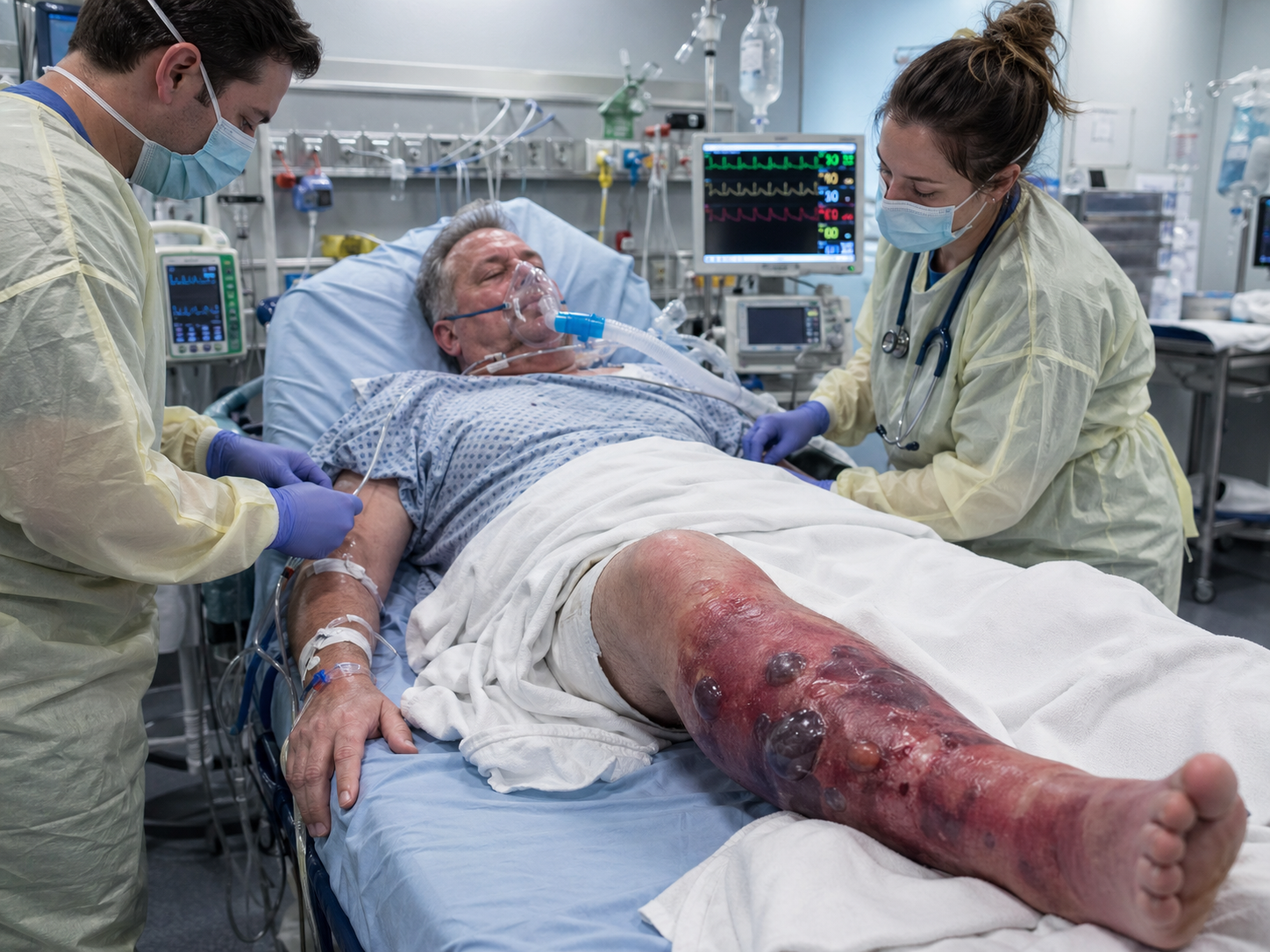
But with Vibrio vulnificus, symptoms can become more severe, especially in high-risk people. A bloodstream infection may cause fever, chills, low blood pressure, and blistering skin lesions.
A wound infection may start with redness, swelling, warmth, pain, or tenderness around the area. It can progress quickly, sometimes with blisters, skin discoloration, severe pain, or spreading redness.
The “quickly” part is important.
This is not something to watch casually for a week while hoping it settles down. If someone develops fever, chills, severe pain, fast-spreading redness, swelling, or blistering after eating raw seafood or exposing a wound to seawater, they should seek medical care right away.
And tell the clinician about the exposure.
That detail matters. Say: “I ate raw oysters yesterday,” or “I had a cut that got exposed to saltwater.” Do not assume they will guess.
The Ocean Is Not the Enemy
It is easy to read about Vibrio and suddenly feel suspicious of every wave.
That is not the point.
Coastal water has always contained bacteria and other microorganisms. The beach can still be good for your mind, your body, and your summer mood. The goal is to match your behavior to your risk.
If you have intact skin and are generally healthy, swimming in coastal water is usually not something to fear. But if you have an open wound, it is smart to avoid saltwater and brackish water when possible. The CDC recommends staying out of saltwater or brackish water if you have an open wound, or covering the wound with a waterproof bandage if contact with coastal water or raw seafood is possible.
This includes everyday activities: fishing, crabbing, walking along the shore, handling raw seafood, cleaning fish, or wading after a storm.
Sometimes the risky moment is not dramatic. It is just someone with a small cut on their foot walking through warm shallow water because “it’s probably fine.”
Usually it is fine. But not always.
Warm Weather Raises the Conversation
Vibrio bacteria are more common in warmer waters, which is why cases often get more attention during warmer months.
For people in coastal areas, especially along warm-water regions, this becomes a seasonal habit issue. Beach trips, oyster bars, fishing weekends, boat days, hurricane flooding, and summer seafood meals all increase the chances of exposure.
Climate and water conditions can affect where and when bacteria are found. But for everyday prevention, the practical advice stays fairly simple: be careful with raw shellfish, protect wounds, and take symptoms seriously after exposure.
You do not have to memorize bacterial growth patterns to make safer choices.
How to Eat Seafood More Safely
The simplest rule for high-risk people is this: avoid raw or undercooked oysters and other raw shellfish.
That may sound disappointing if you love raw oysters. I get it. Food is not just nutrition; it is texture, ritual, place, memory, and sometimes the whole reason people go to a certain restaurant.
But for someone with liver disease or a weakened immune system, cooked seafood is the safer choice.
Cooking oysters and shellfish properly can kill harmful bacteria. The CDC recommends cooking raw oysters and other shellfish before eating, and avoiding cross-contamination between raw seafood and cooked foods.
At home, that means keeping raw seafood juices away from salads, cooked dishes, utensils, cutting boards, and countertops. Wash hands after handling raw seafood. Use separate plates for raw and cooked items. Do not put cooked shrimp back on the same platter that held raw seafood unless it has been washed.
This is basic kitchen safety, but it matters more when the bacteria involved can be severe.
“But the Oysters Are From Clean Water”
This is a common thought.
People assume the risk is only from dirty water, bad restaurants, or visibly spoiled seafood.
Not quite.
Vibrio bacteria naturally live in coastal waters. An oyster can come from a regulated harvest area and still carry some risk when eaten raw. Safety rules and monitoring reduce risk, but they do not make raw shellfish risk-free.
Hot sauce does not kill Vibrio. Lemon juice does not make raw oysters safe. Alcohol with the meal does not disinfect anything inside your stomach. These little myths hang around because they feel comforting, but they are not reliable protection.
If someone is high-risk, the safer move is cooked shellfish.
Not fancy. Just true.
Protect Cuts, Scrapes, and Skin Breaks
The wound side of Vibrio prevention is just as important as the seafood side.
Before going into saltwater or brackish water, check your skin. That sounds overly cautious until you remember how many tiny cuts people ignore.
A scraped ankle from sandals.
A nick from shaving.
A blister from new shoes.
A scratch from a pet.
A cut from fishing gear.
A recent tattoo or piercing.
If there is broken skin, either stay out of the water or cover it completely with a waterproof bandage. If you get cut while in coastal water, leave the water and wash the area well with soap and clean running water. The CDC recommends washing open wounds and cuts thoroughly after contact with saltwater, brackish water, or raw seafood drippings.
If you handle raw shellfish often, wear gloves, especially if you have cuts or a condition that puts you at higher risk.
This is not being dramatic. This is being practical.
After Storms and Flooding, Be Extra Careful
Storm surge and coastal flooding can expose people to brackish or saltwater in places they do not expect it.
After hurricanes, tropical storms, or flooding, people may walk through contaminated water while cleaning up homes or yards. They may have cuts they barely notice. Debris can scratch skin. Shoes get soaked. Gloves tear.
That is a setup for infection.
During cleanup, cover wounds, wear protective footwear and gloves, and wash any cuts that come into contact with floodwater or coastal water. If a wound becomes red, swollen, painful, hot, blistered, or begins spreading, get medical help promptly.
A little caution during cleanup is much easier than trying to manage a severe infection later.
When to Get Medical Help
This is the part to keep clear.
Seek urgent medical care if you have signs of infection after raw seafood exposure or coastal water exposure, especially if you are in a high-risk group.
Do not wait if you notice:
Fever or chills after eating raw or undercooked seafood.
A wound that becomes rapidly red, swollen, or painful.
Blisters around a wound.
Skin that turns dark, purple, or unusually discolored.
Severe pain that seems out of proportion to the injury.
Dizziness, confusion, weakness, or signs of low blood pressure.
Vomiting or diarrhea with worsening illness in someone with liver disease or immune problems.
And again, tell the healthcare provider about oysters, seafood, seawater, brackish water, fishing, or wound exposure. That clue can help them think about Vibrio faster.
Fast treatment matters.
Practical Prevention for Everyday Life
The prevention routine is not complicated, but it does require remembering a few things when life is relaxed and sunny.
If you are at an oyster bar, choose cooked oysters or other fully cooked seafood if you are high-risk.
If you are cooking at home, keep raw seafood juices away from ready-to-eat foods.
If you have a cut, skip saltwater or cover it well.
If you get a scrape at the beach, wash it thoroughly.
If you fish, crab, or handle shellfish, wear gloves when needed.
If you have liver disease, diabetes, kidney disease, cancer, an immune condition, or take immune-suppressing medication, take the warnings seriously.
A lot of prevention looks boring in the moment. Then later, boring looks very wise.
Do Not Let Embarrassment Delay Care
People sometimes delay care because they feel silly.
They think, “It’s just a cut.”
Or, “I don’t want to overreact.”
Or, “I ate oysters, but maybe this fever is unrelated.”
I understand that instinct. Nobody wants to be the person who goes to urgent care and gets told it is nothing.
But Vibrio vulnificus is one of those infections where quick attention can be crucial. It is better to be checked early than to wait until symptoms are obviously serious.
This is especially true for people with liver disease or weakened immunity. If that is you, your threshold for getting care should be lower.
That is not weakness. That is good risk management.
A Calm Final Thought
Vibrio septicemia is rare, but rare does not mean irrelevant. Some risks deserve attention because the outcome can be severe and the prevention steps are simple.
Cook shellfish if you are at higher risk. Be careful with raw oyster juices in the kitchen. Keep open wounds away from warm coastal water when possible. Cover cuts well. Wash wounds after exposure. Get medical help quickly if symptoms show up after seafood or seawater contact.
You can still enjoy the beach. You can still enjoy seafood. You just do it with a little more awareness.
And honestly, that is what practical health advice should do: not make life smaller, but help you move through it with fewer avoidable risks.
Hi, I’m the creator and editor behind ZestyHabit. I research everyday safety, first aid, and practical wellness topics using official guidance and reliable public sources, then turn that information into clear, realistic steps for daily life.
My goal is to help readers make safer, better-informed choices at home and beyond.