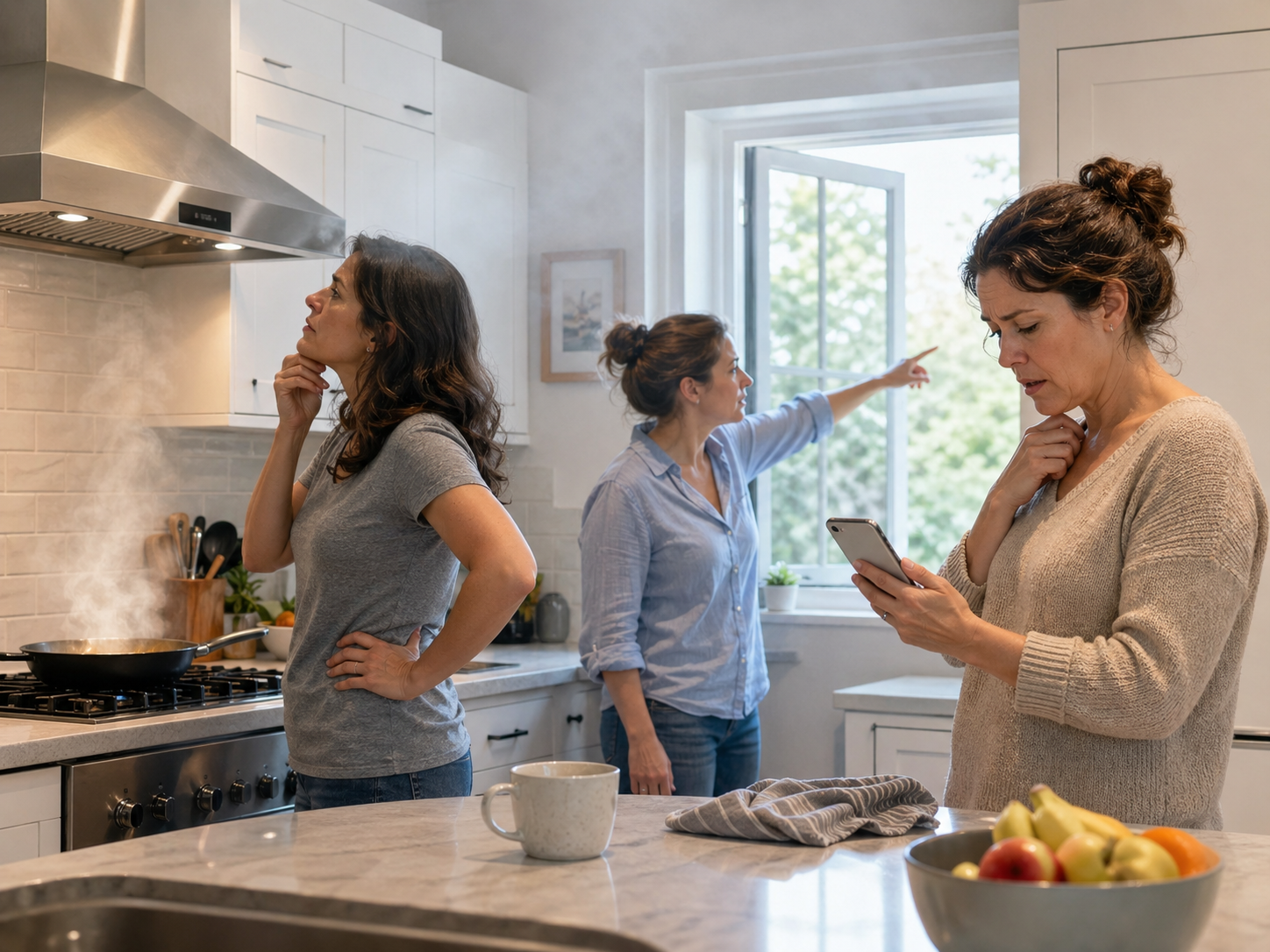

When outdoor fine dust levels are high, it can feel wrong to open a window. But cooking can create indoor pollution too. Here’s how to ventilate wisely after cooking without making indoor air worse.
The Awkward Problem: Bad Air Outside, Cooking Fumes Inside
On days when the air quality is poor, most of us go into “seal the house” mode.
Windows closed. Doors shut quickly. Maybe the air purifier is running. Maybe the weather app has that unpleasant little warning about fine particles. It feels sensible to keep outdoor air outside.
Then dinner happens.
You pan-fry eggs. Sear meat. Toast bread a little too enthusiastically. Stir-fry vegetables. Cook bacon. Roast something in the oven. Maybe there is smoke, maybe just a strong smell. Either way, the kitchen air changes fast.
And because it is a high-pollution day, you think, “I shouldn’t ventilate.”
That thought makes sense. But it can also create a new problem.
Cooking itself can produce indoor air pollutants, especially fine particles and gases. If you do not ventilate after cooking, those particles can linger in your kitchen and spread into the living room, bedroom, and the rest of the home. So on bad outdoor air days, the question is not simply “Should I open the window or not?”
The better question is: How can I clear cooking pollution without bringing in too much outdoor pollution?
It is a little annoying, yes. Indoor air has opinions too.
Cooking Can Make Indoor Air Dirtier Than You Expect
Cooking feels harmless because it is normal. Everyone cooks. The smell of dinner is cozy. A little steam rising from a pan does not look like pollution.
But cooking can release tiny particles, nitrogen dioxide if you use a gas stove, carbon monoxide in some situations, moisture, grease particles, and strong odors. The amount depends on what you cook and how you cook it.
High-heat cooking usually creates more particles. Frying, searing, broiling, grilling indoors, stir-frying, and cooking with oil at high temperatures can all make the air worse quickly. Burnt food is even more obvious. If the smoke alarm has ever judged your dinner, you already know.
Even electric stoves can produce particles from heated oil, food residue, and cooking smoke. Gas stoves add another concern because combustion itself can create gases that are not great to breathe in a closed space.
The tricky part is that indoor cooking pollution is often invisible. The kitchen may smell like food, not “pollution.” You may not cough. You may not notice anything except a slightly heavy feeling in the room.
But if the air feels greasy, smoky, or stale after cooking, your home is telling you something.

Fine Dust Outside Does Not Cancel Out Kitchen Pollution
On days with high PM2.5 or wildfire smoke, it is natural to avoid opening windows. Outdoor fine particles can enter the home and worsen indoor air, especially if you live near traffic or in an area with heavy pollution.
Still, keeping every window closed after cooking can trap cooking particles indoors.
This is the uncomfortable trade-off.
Outdoor air may be bad. Indoor cooking air may also be bad. If you do nothing, the kitchen pollution can stay around longer than you think.
That does not mean you should fling every window open for an hour during a pollution alert. Please do not turn your living room into an outdoor air sampling station.
It means you need a smarter ventilation habit.
Short, targeted ventilation can be more useful than leaving everything sealed while the kitchen fumes drift through the house.
Use the Range Hood Before the Smoke Starts
The range hood is not just for moments when the kitchen already smells like burnt oil.
Turn it on before you start cooking, especially if you are using high heat. This helps create airflow early, before smoke and particles spread. Leave it running during cooking and for a while afterward.
If your range hood vents outdoors, that is usually the most helpful option. It pulls cooking pollutants out of the home instead of just moving them around.
If your hood is a recirculating type, it may pass air through filters and blow it back into the kitchen. That can still help with grease and some odors if the filters are maintained, but it is not the same as exhausting air outside.
Check whether your hood actually vents outdoors
A lot of people do not know which type they have. Totally understandable. Range hoods are not exactly dinner conversation.
You can check by looking for ductwork in a cabinet above the hood, outside wall venting, or the product manual. Some apartment hoods simply recirculate air through a filter. If yours does, you may need to rely more on short window ventilation, a nearby exhaust fan, and an air purifier after cooking.
Also, clean the hood filters. Grease-filled filters do not work well and can smell bad when heated. If the filter looks like it has lived several lives, it is time.
Do Not Wait Until the Whole House Smells Like Dinner
Kitchen smells travel fast. Once cooking fumes spread into soft furniture, curtains, bedrooms, and clothing, they are harder to clear.
Try to contain the problem early.
Close bedroom doors while cooking. Keep the air purifier in or near the kitchen area if the manufacturer allows and the unit is not too close to heat or grease. Turn on the range hood before the pan gets hot. Use lids when possible. Lower the heat a little if the oil starts smoking.
A small adjustment early can prevent a whole-house odor situation later.
There is a big difference between “the kitchen smells like dinner” and “my pillow smells faintly like fried onions.” The second one feels personal.
Short Ventilation Can Be Better Than No Ventilation
On high-pollution days, you may still need a brief window opening after cooking. The key is to keep it short and intentional.
Instead of opening windows for an hour, try a few minutes of cross-ventilation if outdoor air is not dangerously bad. Open a kitchen window and another window or door briefly to create airflow, then close them again. If you have an exhaust fan, use it to push air out.
This can help remove cooking fumes before they spread too far.
Time it when outdoor air is less bad
Air quality can change throughout the day. Sometimes pollution is worse near rush hour or during certain weather conditions. If you use an air quality app, check it before major cooking or ventilation.
If the air outside is very poor, especially during wildfire smoke or severe pollution alerts, keep windows closed as much as possible and rely more on mechanical ventilation that exhausts outdoors, air purifiers, and lower-emission cooking methods.
The point is not to open windows blindly. It is to avoid trapping strong cooking fumes just because the outside air is imperfect.
Air Purifiers Help, But They Do Not Replace Ventilation
An air purifier with a good particle filter can help reduce fine particles from cooking. This is especially useful on days when you cannot open windows much.
But air purifiers have limits.
They do not remove all gases well unless they have enough activated carbon, and even then carbon filters need replacement. They do not remove moisture from cooking. They do not pull greasy air away from the stove the way a proper exhaust hood can.
So think of an air purifier as backup support, not the main kitchen exhaust system.
Place it where air can circulate, not hidden behind a chair. Let it run during and after cooking. Keep filters clean and replace them on schedule. Cooking particles can load filters faster than everyday dust.
If the air purifier starts smelling like last month’s stir-fry when it runs, that is your sign to check the filter and clean the surrounding area.
Cooking Style Matters More on Bad Air Days
When outdoor air is already poor, it helps to choose cooking methods that create less indoor pollution.
That does not mean every meal has to be a cold salad. But maybe high-heat frying is not the best choice on a day when the air quality index looks alarming.
Lower-emission options include:
Simmering soup
Steaming vegetables
Using an electric pressure cooker
Microwaving leftovers
Baking at moderate temperatures
Boiling pasta or grains
Using a slow cooker
Making simple no-cook meals
High-emission options tend to include:
Deep-frying
Pan-frying at high heat
Searing meat
Broiling
Indoor grilling
Cooking with smoking oil
Burning toast, sadly
Of course, real life happens. Sometimes dinner is fried eggs because that is what exists in the fridge. Just use the hood, keep the heat controlled, and ventilate briefly when appropriate.
Oil Smoke Is a Clear Warning
If oil is smoking, the pan is too hot.
That smoke is not just an unpleasant smell. It can add particles and irritating compounds to the air. It can also make food taste burnt, which is rude after all that effort.
Different oils have different smoke points, but the practical habit is simple: do not let oil smoke for long. Turn the heat down. Move the pan off the burner for a moment. Use the right size burner. Avoid leaving an empty oiled pan heating while you chop things and forget time exists.
We have all done the “why is the kitchen smoking?” moment. It is not a crime. Just do not make it a routine.
Gas Stoves Need Extra Attention
Gas stoves can produce pollutants from combustion, even when food is not burning. This does not mean everyone with a gas stove needs to panic. It does mean ventilation matters.
Use the range hood when using gas burners. Try to use the back burners when possible because many hoods capture fumes better from the back. Make sure the flame is blue, not yellow or orange, which can suggest incomplete combustion or burner issues. Keep burners clean.
Never use a gas oven or stove to heat the home. That is dangerous.
If you cook often with gas in a small or poorly ventilated kitchen, it may be worth being more consistent about exhaust, air purifiers, and carbon monoxide detectors.
A carbon monoxide detector is not optional decoration. It is one of those quiet household things you hope never has to be interesting.
Keep Kitchen Doors and Bedroom Doors in Mind
Air moves through the path you give it.
If your kitchen is open to the living room, cooking fumes spread easily. If bedroom doors are open, the smell and particles can travel into sleeping areas. On high-pollution days, when you are trying not to open windows much, controlling airflow inside the home becomes more important.
Close doors to bedrooms before cooking. If you have a small kitchen with a door, close it while using the hood or exhaust fan, as long as it is safe and does not trap you in a smoky room. The goal is to direct polluted kitchen air out, not into the rest of the home.
After cooking, open the kitchen window briefly if conditions allow, run the exhaust, and let the air purifier help with what remains.
It is not a perfect system. It is just better than letting the whole home marinate.
Clean Grease Before It Becomes Airborne Again
Grease buildup on stovetops, backsplashes, filters, and pans can smoke the next time you cook. Old oil residue heats up and adds smell and particles to the air.
This is why wiping the stove is not only about appearance.
After cooking, once surfaces are safe to touch, wipe grease from the stovetop and nearby areas. Wash pans properly. Clean range hood filters regularly. Replace or wash filters according to the manual.
A greasy kitchen creates more odor each time it heats up. It also makes you feel like the room is never fully fresh, even after cleaning.
Not every night needs a deep clean. But a quick wipe helps more than it gets credit for.
Watch for Moisture Too
Cooking adds moisture to the air, especially boiling, steaming, and simmering. Moisture is not the same as particle pollution, but it can still affect indoor air quality.
Too much humidity can make rooms feel stuffy and may encourage mold or mildew if it becomes a pattern. In winter, moisture can collect on windows. In small apartments, cooking steam can linger for hours.
Use lids when boiling. Run the hood or exhaust fan. Wipe condensation if it collects. If your home is often humid, a dehumidifier may help.
A room can be clean and still feel heavy if moisture keeps hanging around.
What About Opening Windows When PM2.5 Is High?
This is the practical dilemma.
If outdoor fine dust is moderately elevated, a short ventilation period after high-smoke cooking may still be useful, especially if the kitchen air is visibly smoky or strongly irritating. If outdoor air is extremely poor, such as during wildfire smoke or a severe pollution event, it may be safer to keep windows closed and focus on the range hood, exhaust fans, air purifiers, and low-smoke cooking.
There is no perfect one-size answer because homes differ.
A small apartment with no outdoor-venting hood is different from a house with a strong exhaust system. A mild pollution day is different from an emergency smoke advisory. A quick bowl of soup is different from pan-frying fish.
Use the situation in front of you.
If your eyes sting and the kitchen is smoky, the indoor air is already a problem. Do something to clear it.
A Better Routine for Cooking on Bad Air Days
Here is a realistic pattern that works better than doing nothing:
Check the outdoor air quality before cooking if it is a known bad-air day.
Choose a lower-smoke cooking method when possible.
Turn on the range hood before heating the pan.
Use lids and moderate heat.
Keep oil from smoking.
Close bedroom doors.
Run an air purifier nearby, away from grease and heat.
After cooking, keep the hood running for a while.
If outdoor air is not severely bad, briefly ventilate the kitchen.
Clean grease and food residue after the area cools.
This does not require a perfect kitchen. It just requires not treating cooking fumes like they disappear on their own.
They do not. They linger, travel, and settle.
When Someone at Home Is More Sensitive
Some households need to be more careful.
Babies, older adults, pregnant people, and people with asthma, COPD, allergies, heart disease, or respiratory infections may be more sensitive to both outdoor pollution and indoor cooking fumes.
If someone at home coughs after cooking, gets headaches, has chest tightness, or feels better when away from the kitchen, take it seriously. Try lower-smoke cooking, stronger exhaust, cleaner filters, and shorter targeted ventilation. If symptoms continue, it may be worth discussing with a healthcare professional.
Food should not make the home feel hard to breathe in.
A Fresh Kitchen Is About Balance
On days with lots of fine dust outside, it is understandable to keep windows closed. But cooking can create its own indoor air problem. Not ventilating at all after cooking may leave fine particles, gases, grease, odors, and moisture trapped inside.
The answer is not reckless window opening. It is balance.
Use the range hood early. Cook with less smoke when you can. Run an air purifier. Keep filters clean. Ventilate briefly and strategically when outdoor air allows. Close off sleeping areas. Clean grease before it becomes tomorrow’s smell.
It is not the most glamorous home habit, but it makes a difference.
A kitchen should smell like dinner for a little while. Not all night. Not in the bedroom. Not in the air you keep breathing while trying to protect yourself from outdoor pollution.
Good indoor air is not about choosing between outside air and kitchen air. It is about managing both with a little more intention.
Leave a Reply