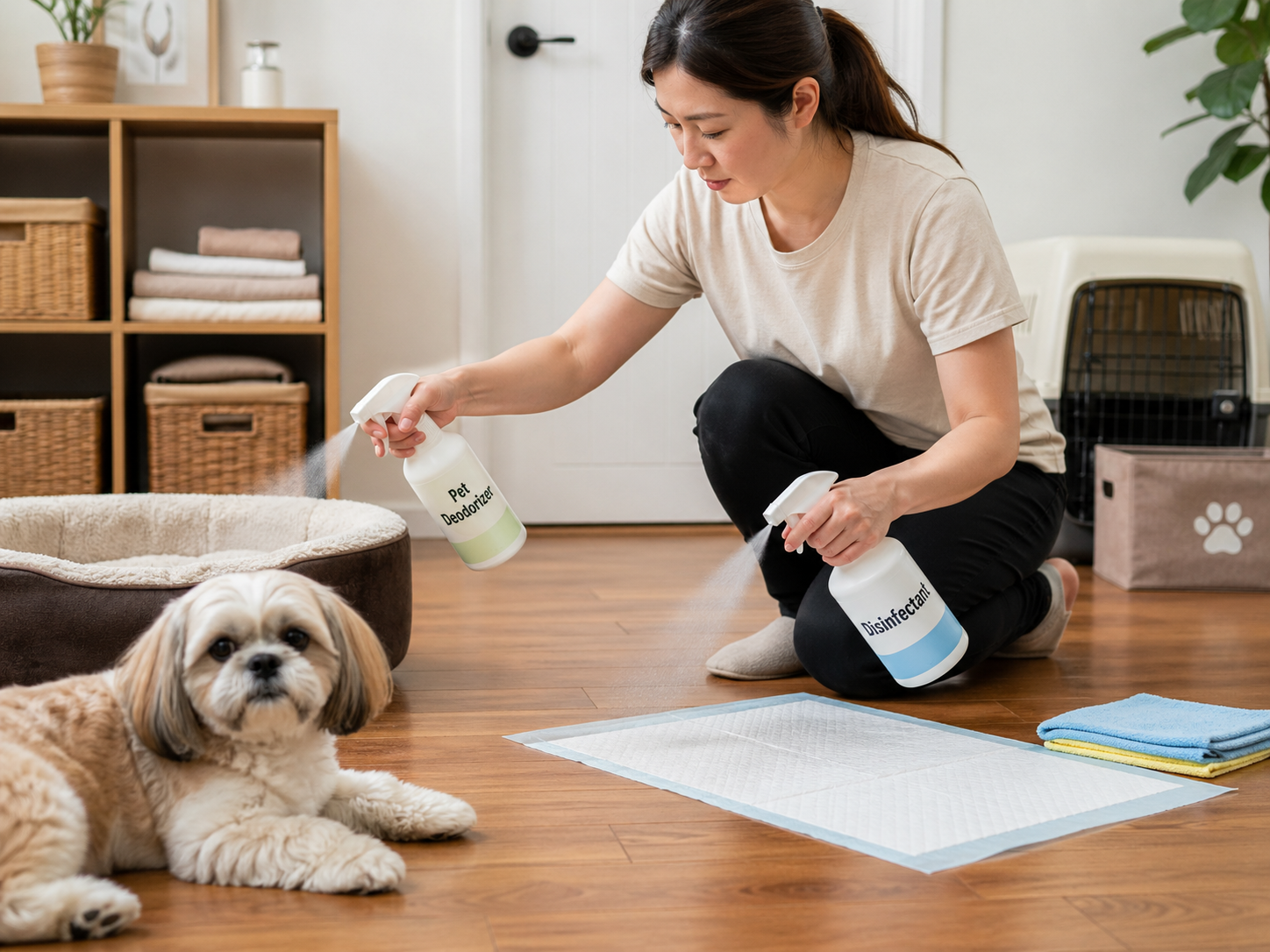
Be Careful When Using Pet Deodorizers and Disinfectants Together
Minjin Park
·
Pet odors can make any home feel less fresh, but layering deodorizers and disinfectants is not always safe. Learn how to clean pet messes without overdoing chemicals, irritating your pet, or mixing products the wrong way.
A Clean Pet Home Should Not Smell Like a Chemical Cloud
Living with pets means accepting a certain amount of chaos.
A dog runs in after rain and suddenly the living room smells like wet socks with legs. A cat decides the litter box area needs to announce itself. A puppy has an accident on the rug five minutes after you thought potty training was going well. Even the cleanest pet homes have moments where you think, “Okay, something needs to be sprayed, wiped, washed, or possibly burned.”
So it is easy to reach for two things at once: a pet deodorizer to handle the smell, and a disinfectant to make the area feel truly clean.
It sounds logical. Smell gone, germs handled, home reset.
But using pet deodorizers and disinfectants together can be trickier than it seems. More product does not always mean more cleanliness. Sometimes it means more residue, stronger fumes, irritated paws, coughing pets, or a chemical mix that should never have happened in the first place.
This is not about being scared of every cleaning product. It is about using them with a little more patience and order.
Because your home can be clean without smelling like a veterinary clinic and a perfume aisle got into an argument.
Deodorizing and Disinfecting Are Not the Same Thing
A pet deodorizer and a disinfectant have different jobs.
A deodorizer is meant to reduce or cover odors. Some use fragrance. Some use odor-neutralizing ingredients. Some enzyme-based products help break down organic messes like urine, vomit, or feces. These can be genuinely helpful when used the right way.
A disinfectant is meant to kill certain germs on surfaces. It usually needs to stay wet on the surface for a specific amount of time, called contact time, before it can do its job properly.
That difference matters.
If you spray a deodorizer over a dirty spot, the smell may improve for a while, but the mess may still be there. If you spray disinfectant over pet urine without cleaning first, you may end up with disinfectant mixed into urine residue and fabric fibers, which is not exactly a fresh start.
And if you layer a deodorizer and disinfectant at the same time because you want the problem gone quickly, the products may interfere with each other or leave behind too much chemical residue.
Cleaning works better in steps.
Boring steps, yes. But useful ones.
The Biggest Mistake: Mixing Products Without Thinking
The most important rule is simple: do not mix cleaning products unless the labels clearly say they can be used together.
That includes spraying one product right after another on the same wet surface. People often imagine “mixing” as pouring two liquids into a bucket like a science experiment. But mixing can also happen on the floor, in a litter box area, on a crate tray, or on a couch cushion.
Some combinations can create irritating or dangerous fumes. Bleach is the classic example. Bleach should not be mixed with ammonia, vinegar, acids, many bathroom cleaners, or unknown products. And pet messes can contain compounds that make bleach a poor first choice for some situations.
Even if a combination does not create a dangerous gas, it can still make the air uncomfortable. Strong fragrance plus disinfectant fumes in a small room can irritate your eyes, throat, nose, or lungs. Your pet is closer to the floor, closer to the sprayed area, and often more likely to sniff it directly.
That is not a fair setup for them.
Pets Experience Cleaning Products Differently Than We Do
Humans usually stand above the cleaned surface. Pets live right on top of it.
A dog lies on the floor. A cat walks across a freshly cleaned surface and later licks its paws. A rabbit or small pet may be close to bedding, cage liners, or floors for most of the day. Birds are especially sensitive to airborne chemicals and fragrances.
That means a product that feels mild to you may be a bigger exposure for them.
Pets may inhale residue, absorb it through paw pads, lick it off fur, or rub their face against treated fabrics. They also cannot tell you, “Hey, this lavender disinfectant situation is making my throat feel weird.”
Instead, you might notice sneezing, coughing, watery eyes, drooling, paw licking, skin redness, vomiting, hiding, restlessness, or avoiding a room.
Sometimes the clue is subtle. A cat stops using a litter box after you clean the area with a strong-smelling product. A dog refuses to lie on a bed after it has been sprayed. That may not be “stubbornness.” It may be scent or residue they dislike.
Fragrance Can Be a Problem, Even When It Smells Nice
Pet deodorizers often rely on scent because scent gives humans instant feedback. If the room smells like fresh linen, citrus, or eucalyptus, we feel like something worked.
But fragrance does not equal clean.
It can cover the odor while the source remains. It can also irritate sensitive pets or people. Strong scents can be overwhelming for animals, especially dogs and cats, whose sense of smell is much stronger than ours.
Essential oils deserve special caution. Some products marketed as natural may contain oils that are not safe for certain pets, especially cats and birds. “Natural” sounds comforting, but natural ingredients can still be biologically active and irritating.
A good pet-safe cleaning routine usually smells mild. Maybe faintly clean. Maybe like nothing at all.
Nothing is underrated.
Enzyme Cleaners Need Time to Work
For urine, feces, vomit, and other organic messes, enzyme cleaners are often more useful than a basic fragrance spray.
They help break down odor-causing compounds instead of simply covering them. But they need time, and they usually work best when used according to the label.
This is where people get impatient.
You spray the enzyme cleaner, wait thirty seconds, decide it is not magical enough, then follow with disinfectant or deodorizer. Now the enzyme cleaner may not get enough time to work, and the other product may interfere.
If you are using an enzyme cleaner, let it do its job. Blot up the mess first. Apply the product as directed. Give it the recommended dwell time. Keep pets away while it is wet. Then let it dry.
It may not give the instant “perfume blast” of a deodorizer, but it often solves the actual odor better.
Disinfectants Need Clean Surfaces
Disinfectants are not meant to replace cleaning.
Most disinfectants work best after visible dirt, urine, feces, or food residue has been removed. If the surface is dirty, the product may not contact the germs properly. Also, organic matter can reduce effectiveness for some disinfectants.
So the order matters:
Remove the mess. Clean the surface. Then disinfect if needed. Let it stay wet for the required time. Rinse if the label says to rinse. Let it dry before pets return.
That sounds like a lot, but it becomes easier once you stop trying to solve smell and germs with one aggressive spray attack.
Not every pet mess needs disinfectant, either. A muddy paw print may need cleaning, not disinfecting. A food spill may need soap and water. A litter box accident may need deeper cleaning. Use the level that matches the situation.
Residue Is a Real Issue
Cleaning products do not disappear just because the surface looks dry.
Some leave residues. On floors, that residue can transfer to paws. On bedding, it can touch skin and fur. On crates or food areas, pets may lick surfaces. On toys, residue can go straight into the mouth.
This is why label directions matter, especially around pets.
Some disinfectants require rinsing after use on surfaces that pets contact. Some products are only safe after fully drying. Some should not be used on food bowls, toys, porous surfaces, or bedding. Some are not meant for use around cats, birds, reptiles, or small mammals.
It is easy to assume that “pet deodorizer” means safe for every pet in every amount. Not necessarily.
Safe use depends on the product, surface, amount, ventilation, drying time, and species.
The Litter Box Area Needs a Lighter Touch
The litter box is one of the most tempting places to overuse deodorizer and disinfectant.
Understandable. Nobody wants a litter box smell drifting through the home like an unwanted announcement.
But cats can be picky about scent. Strong fragrance near the litter box may cause some cats to avoid it. And if a cat avoids the litter box, congratulations, you now have a bigger problem than odor.
A better approach is simple and less dramatic: scoop often, replace litter as needed, wash the box regularly with mild soap, dry it well, and avoid heavily scented sprays right around the box.
If disinfecting is necessary, choose a product appropriate for pet areas, follow the contact time, rinse if directed, and let the box dry completely before refilling.
The goal is clean, not perfumed.
Cats especially seem to prefer “clean enough to use” over “smells like a pine forest exploded.”
Pet Bedding Should Usually Be Washed, Not Sprayed Forever
Pet beds can hold a lot: fur, dander, saliva, outdoor dirt, body oils, and the mysterious dog smell that returns even after a bath.
A deodorizer may help temporarily, but if the bed smells bad again quickly, it probably needs washing. If it cannot be washed, it may eventually need replacing. Harsh truth, but some pet beds become odor museums.
Wash removable covers regularly. Dry them completely. Use a pet-safe detergent or a mild fragrance-free option if your pet has sensitive skin. Avoid heavy fabric sprays on bedding your pet sleeps on for hours.
If you use a deodorizer, spray lightly, let it dry fully, and watch for skin or breathing reactions. Never spray a pet bed while the pet is lying on it. That sounds obvious, but tired people do tired things.
Food and Water Areas Need Extra Caution
Avoid using strong deodorizers or disinfectants near food bowls, water bowls, treat mats, or chew toys unless the product is clearly safe for those surfaces and used as directed.
Pets lick. That is their whole thing.
For bowls, hot water and dish soap are often enough for routine washing. Some bowls can go in the dishwasher. If disinfecting is needed, use a method safe for food-contact surfaces and rinse thoroughly if required.
Do not spray a scented deodorizer around the feeding area to cover food smells. It can settle on bowls, water, mats, and nearby toys.
Also, scented air around food may be confusing or unpleasant for pets. Imagine someone spraying perfume around your dinner plate. Not ideal.
Ventilation Is Not Optional
When using any deodorizer or disinfectant, especially sprays, ventilation helps.
Open a window when possible. Turn on a fan that moves air out of the room. Keep pets away until the area is dry and the smell has faded. This is especially important in small bathrooms, laundry rooms, apartments, and enclosed pet areas.
Do not spray in a closed room and immediately let your pet back in.
A room can smell “fresh” to you and still be too strong for a pet’s nose. Fresh air is often a better deodorizer than more fragrance.
Be Very Careful Around Birds and Small Animals
Birds are extremely sensitive to airborne chemicals. Strong fumes, aerosols, fragrances, and certain cleaning products can be dangerous for them.
Small mammals, reptiles, and other pets may also have specific sensitivities. Their cages, bedding, and enclosures often have limited airflow, and residues can build up quickly.
If you have birds or small pets, be extra conservative. Avoid spraying products near them. Move them to a safe, well-ventilated area before cleaning. Use only products known to be appropriate for their environment. When unsure, ask a veterinarian who understands that species.
A product that is fine around a Labrador may not be fine around a parakeet.
A Better Cleaning Order for Pet Messes
When a pet accident happens, it helps to have a simple order.
First, remove solids or blot liquids. Do not rub urine deeper into carpet. Blot gently with paper towels or washable cloths.
Next, clean the area with a product suited to the mess. For urine, an enzyme cleaner is often a good choice. For muddy paws, mild soap and water may be enough. For vomit, remove the material first, then clean thoroughly.
After cleaning, decide whether disinfection is truly needed. If it is, use one disinfectant product according to the label. Do not layer several products because the room still smells.
Let the surface dry fully before pets return.
If odor remains after cleaning, repeat the enzyme-cleaning step or wash the fabric. Do not just keep adding fragrance. That usually creates a weird mixed smell: part pet odor, part fake flowers, part regret.
When You Actually Need Disinfection
Disinfection is useful in certain situations.
If a pet has a contagious illness, parasites, diarrhea, vomiting, or a wound that leaks onto surfaces, proper disinfection may be important. It can also matter in multi-pet households, shelters, grooming spaces, or areas where young, elderly, or immune-compromised pets spend time.
But for everyday odor control, disinfectant is not always necessary.
Overusing disinfectants can leave residues, irritate airways, and make cleaning feel harsher than it needs to be. It may also give a false sense of cleanliness if the odor source remains.
Routine pet home care often looks more like washing, drying, scooping, vacuuming, laundering, and ventilating. Less glamorous than a strong spray, but more effective over time.
Watch Your Pet After Cleaning
After using a new deodorizer or disinfectant, watch your pet’s behavior.
Do they avoid the area? Do they sneeze or cough? Do they lick their paws more? Do they scratch or develop redness? Do they seem restless or sleepy in an unusual way? Do they drool, vomit, or act disoriented?
If symptoms are serious or sudden, contact a veterinarian or pet poison helpline. Bring the product label if you need help, because ingredients matter.
For mild signs like avoidance or sneezing, stop using the product and air out the area. Wash the surface if needed. Your pet may be telling you the product is too strong.
Store Products Like Your Pet Is Too Curious
Pets are talented at finding things they should not touch.
Keep deodorizers, disinfectants, wipes, concentrates, and sprays in closed cabinets or high shelves. Do not leave buckets, wet wipes, or soaked cloths where pets can lick them. Close caps tightly. Keep trash containing cleaning wipes out of reach.
Some pets chew bottles. Some knock things over. Some cats treat counters as personal territory. Assume curiosity will happen.
Also, never use household disinfectants directly on pets unless the product is specifically made and labeled for use on animals. Cleaning the floor and cleaning the dog are not the same task.
Choose Products More Thoughtfully
When buying products for a pet home, look for clear labels.
Does it say safe for use around pets when used as directed? Does it list surfaces it can be used on? Does it require rinsing? Is it fragrance-free or lightly scented? Is it appropriate for the type of pet you have? Does it say not to use around birds, cats, or certain animals? Does it have clear drying or contact-time instructions?
Avoid products with vague promises and no useful directions. A cleaning product should tell you how to use it safely, not just show a picture of a happy golden retriever.
For stubborn odors, choose the right product for the source. Enzyme cleaner for urine. Mild detergent for washable bedding. Proper disinfectant for illness-related messes. Fresh air for stale rooms. Vacuuming for fur and dander.
There is no single spray that solves pet life. If there were, pet owners would have formed a national holiday around it by now.
A Simple Pet-Safe Freshness Routine
A calmer routine can reduce the need for constant spraying.
Scoop litter boxes daily. Wash pet bedding regularly. Vacuum fur and dander from floors and furniture. Clean accidents quickly with the right product. Ventilate rooms when weather allows. Wash food and water bowls often. Keep pets groomed according to their needs. Use deodorizer lightly and only after cleaning the source. Disinfect only when needed, and follow the label carefully.
This is not about having a perfect home. A pet home will sometimes smell like a pet home. That is not failure. That is living with a warm little creature who sheds, drools, digs, rolls, tracks things inside, and occasionally makes deeply questionable choices.
The goal is not to erase every sign of them. It is to keep the home clean and safe without overloading the air and surfaces with chemicals.
A Cleaner Home Without Overdoing It
Using pet deodorizer and disinfectant together may feel like being extra thorough, but it can create problems if products are layered, mixed, sprayed too often, or used around pets before surfaces dry.
Deodorizers handle smells. Disinfectants handle germs. Cleaning removes the mess. Those are different jobs, and they work best in the right order.
Clean first. Use enzyme products when odor comes from organic messes. Disinfect only when it makes sense. Avoid mixing products. Ventilate. Let surfaces dry. Keep pets away until the area is safe again.
A fresh pet home does not need to smell heavily perfumed. It should feel breathable, comfortable, and clean enough for both humans and animals to relax.
That is the real win: not a home that smells like chemicals, but a home where your pet can flop on the floor, you can sit on the couch, and nobody’s nose has to suffer for it.
Hi, I’m the creator and editor behind ZestyHabit. I research everyday safety, first aid, and practical wellness topics using official guidance and reliable public sources, then turn that information into clear, realistic steps for daily life.
My goal is to help readers make safer, better-informed choices at home and beyond.