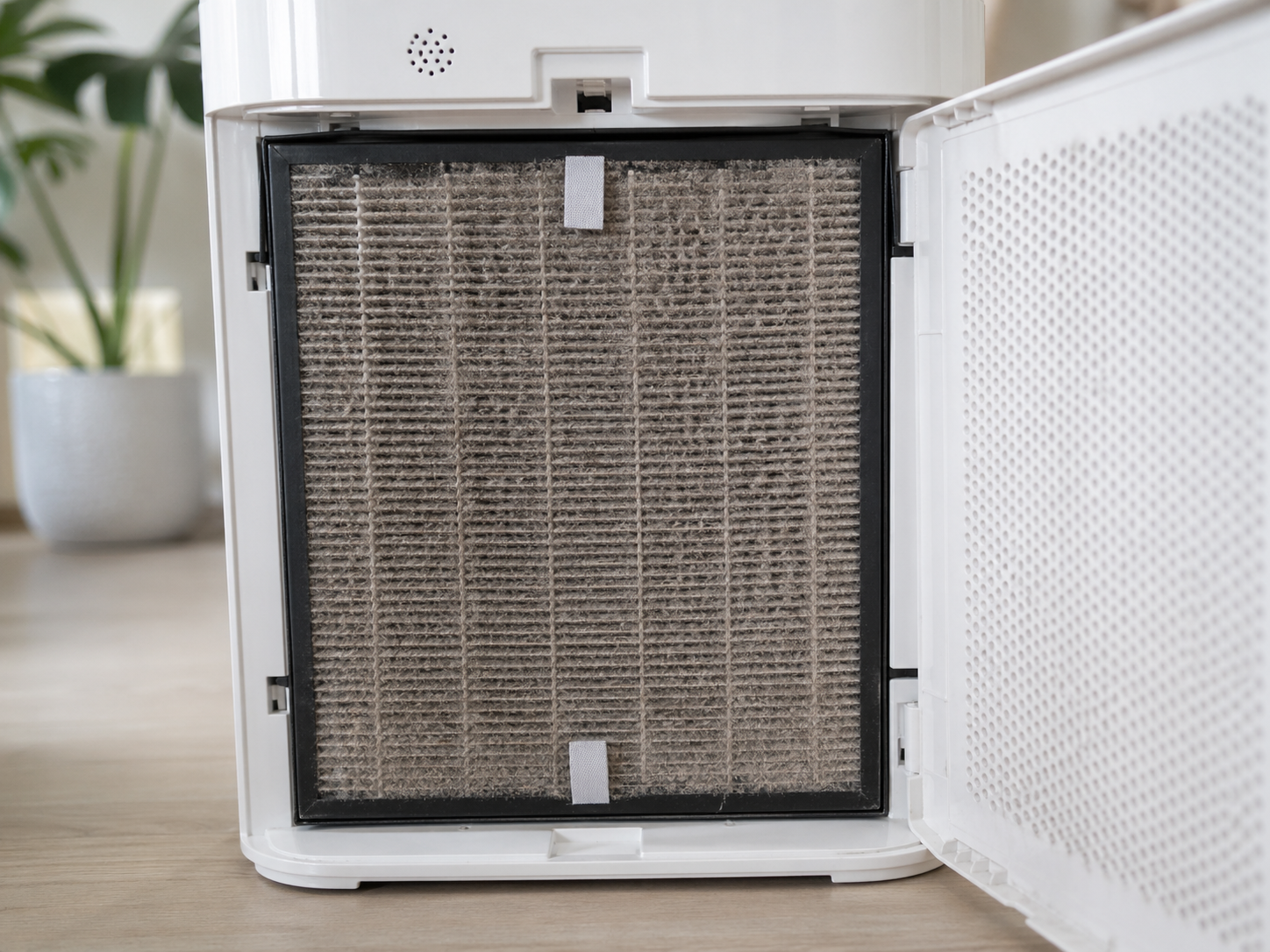

An air purifier can help improve indoor air quality, but only when the filter is maintained. Here’s why delayed filter changes matter and how to build an easier routine.
An Air Purifier Is Not a “Set It and Forget It” Appliance
Air purifiers are easy to trust too much.
You buy one, plug it in, hear that soft fan sound, and suddenly the room feels more responsible. Cleaner. Healthier. Like you have done something good for your lungs and your home.
And maybe you have.
A good air purifier, used correctly, can reduce particles in indoor air. It can help with dust, pollen, pet dander, smoke particles, and other things that float around your home even when everything looks clean. For people with allergies, pets, wildfire smoke exposure, or dusty rooms, it can be genuinely useful.
But there is one very ordinary habit that makes an air purifier far less helpful: not changing or cleaning the filter on time.
It is not dramatic. No sparks. No loud warning. The machine may still turn on and hum away like it is doing its job. That is what makes it easy to ignore.
The filter is where the work happens. If the filter is clogged, overloaded, or overdue for replacement, the purifier becomes more like a tired fan in a plastic box. Still moving air, yes. Cleaning it well? Maybe not.
The Filter Is the Part Doing the Heavy Lifting
An air purifier is not magic. It pulls room air in, passes that air through one or more filters, and pushes cleaner air back out.
Most home air purifiers use a combination of:
A pre-filter for larger dust, hair, and lint
A HEPA or HEPA-type filter for smaller particles
An activated carbon filter for some odors and gases
The exact setup depends on the model. Some filters are washable. Some must be replaced. Some look clean from the outside even when they are loaded inside. Annoying, but true.
The filter traps what you do not want floating around. Dust, pollen, pet dander, fine particles from smoke, fabric fibers, and other tiny bits of indoor life.
So when you delay filter changes, all that trapped material stays there. The purifier keeps trying to pull air through a filter that is already crowded.
Imagine breathing through a mask you have worn during dusty yard work for several months. Technically, air may still pass through. But it is not exactly performing at its best.
A Dirty Filter Can Reduce Airflow
One of the first things that happens with an overdue filter is reduced airflow.
The fan has to pull air through dust and debris packed into the filter. The machine may sound louder, work harder, or circulate less air than before. Some purifiers automatically adjust, while others just quietly become less effective.
This matters because an air purifier can only clean the air that actually moves through it.
If less air passes through the filter, less air gets cleaned. The room may still feel dusty. Allergies may still flare. Odors may linger. You may think, “This purifier does not work,” when the real problem is that the filter is overdue.
The room size problem
A dirty filter becomes even more of an issue if the purifier is already small for the room.
A purifier in a bedroom may do fine when the filter is fresh. But put the same machine in a large living room with pets, carpet, open windows, and a clogged filter? That poor little thing is struggling.
Air purifiers are usually rated for certain room sizes, but those ratings assume the unit is functioning properly. A neglected filter changes the whole situation.
The Filter Can Become a Dust Storage Unit
The purpose of a filter is to collect particles. That part is good.
But when a filter is left too long, it becomes a packed storage area for dust, hair, pollen, pet dander, and whatever else the purifier has been catching. At some point, you are not just running an air purifier. You are keeping a dense block of indoor debris inside the machine.
That does not mean the filter automatically throws everything back into the air. A good filter is designed to hold particles. But an overloaded filter can reduce performance, create odors, and make the unit harder to keep clean.
You may notice a stale smell when the purifier runs. Or a dusty puff when moving it. Or gray buildup around the intake vents. Those are signs the machine needs attention.
And if you have ever opened an overdue filter compartment and felt personally attacked by what you saw, you are not alone. It can be humbling. Indoor air is busier than it looks.
Odors Can Get Worse When Filters Are Old
Some air purifiers include activated carbon filters to help reduce certain odors. These filters do not last forever.
Carbon works by trapping some odor-causing molecules and gases. Once it is saturated, it becomes less useful. The purifier may still blow air, but smells from cooking, pets, smoke, or musty rooms may not improve much.
Sometimes old filters can even carry a stale odor of their own, especially in humid homes or rooms where the purifier has been exposed to cooking fumes, smoke, or pet smells.
This is one reason people sometimes say, “My air purifier smells weird.”
The machine may not be broken. It may just be overdue for a filter change or a proper cleaning around the intake and pre-filter.
Humidity Can Make Neglected Filters Worse
Air purifiers and humidity have a complicated relationship.
A purifier does not remove moisture like a dehumidifier. If your room is humid, damp air can affect dust, odors, and sometimes the condition of filters or the unit itself. A damp, dirty environment is not ideal for anything meant to move air through collected debris.
If a filter smells musty, looks damp, or the room has moisture problems, do not ignore it. Check the purifier, clean washable parts according to the manual, and address the humidity source.
That may mean using a bathroom fan, fixing leaks, improving ventilation, or using a dehumidifier in damp spaces.
An air purifier cannot solve mold or moisture problems by itself. It can help with airborne particles, but it does not replace drying out a room, cleaning surfaces, or fixing water issues.
A Dirty Pre-Filter Makes the Whole Unit Work Harder
Many purifiers have a pre-filter that catches larger particles before they reach the main filter. This is especially important in homes with pets, long hair, carpets, or lots of dust.
The pre-filter may collect a surprising amount of fuzz and hair. If it is washable or vacuumable and you ignore it, the main filter gets loaded faster. The purifier may also lose airflow sooner.
This is the part of maintenance that feels small but helps a lot.
Check the pre-filter regularly. Vacuum it gently if the manual allows. Wash it only if the manufacturer says it is washable, and let it dry completely before putting it back.
Do not guess here. A wet filter placed back into a machine is not the fresh-air victory we are looking for.
Filter Indicator Lights Are Helpful, But Not Perfect
Many modern air purifiers have filter replacement lights. They are convenient, but they are not always a perfect measurement of filter condition.
Some indicators are based on time used. Some are based on fan hours. Some may estimate filter life based on settings. They may not fully account for your actual home conditions.
A filter used in a clean, low-dust bedroom may last longer than one used in a home with pets, candles, cooking smoke, open windows, or wildfire smoke. Two people can own the same purifier and have very different filter needs.
Do a real-life check
Use the indicator light as a reminder, not the only rule.
Look at the filter. Notice airflow. Pay attention to odor. Check dust around the intake. Think about what has been happening in your home.
Did you run the purifier during wildfire smoke?
Do you have a shedding dog?
Have you been burning candles often?
Is the purifier near the kitchen?
Have windows been open during pollen season?
Those situations can shorten filter life.
Wildfire Smoke and Heavy Pollution Use Up Filters Faster
If you live in an area affected by wildfire smoke, heavy traffic pollution, or seasonal air quality problems, your purifier may work much harder during certain periods.
Smoke particles can load filters quickly. The same goes for dust from renovation, construction, sanding, or moving furniture around. If the purifier has been running on high for days during poor outdoor air, the filter may need replacement sooner than the normal schedule.
This is not a failure of the purifier. It is evidence that the filter has been doing its job.
After a smoke event or dusty project, check the filter. Do not assume the usual six-month or twelve-month timeline still applies.
Not All Filters Should Be Washed
This one is important.
Some people try to wash filters to save money, especially when replacement filters are expensive. Understandable. Replacement filters can feel annoyingly pricey for something that looks like folded paper.
But many HEPA filters are not washable. Washing them can damage the fibers, reduce filtration ability, leave moisture trapped inside, or create mold risk if not dried perfectly.
If the manual says replace, replace. If it says washable, follow the instructions carefully.
The same applies to vacuuming. Some filters can be gently vacuumed on the surface. Others should not be handled that way. The manual may feel boring, but it matters here.
A damaged filter may look fine and still perform poorly. That is the frustrating part.
Generic Filters: Useful or Risky?
Replacement filters can be expensive, so generic versions are tempting.
Some off-brand filters work reasonably well. Others may not fit properly, may have less filter material, may reduce airflow, or may not meet the same filtration standard as the original. A tiny gap around the filter can let air bypass the filter, which means the purifier is moving air without cleaning it properly.
If you use a generic filter, check the fit carefully. It should sit snugly with no obvious gaps. Read reviews from people using the exact purifier model. Avoid filters that smell strongly of chemicals out of the package or look poorly made.
A cheaper filter is not a bargain if the purifier stops doing its main job.
Placement Matters Too
Even with a clean filter, placement affects performance.
An air purifier needs space to pull air in and push air out. If it is trapped behind a sofa, squeezed under a table, or placed right against a wall with blocked intake vents, it cannot circulate air well.
Keep it in the room where you spend the most time. Bedrooms are a common choice because you breathe there for hours. Place it with enough clearance around the intake and outlet. Close windows during high outdoor pollution or pollen days if you are trying to clean indoor air.
And do not put it right next to a source of constant mess and expect miracles. For example, placing it beside a litter box may help somewhat with airborne particles and odors, but it does not replace scooping the litter box. Sadly, no machine has yet solved that household reality.
Signs Your Air Purifier Filter Needs Attention
You do not have to wait for a calendar reminder if the purifier is clearly struggling.
Watch for:
Weaker airflow than usual
More dust collecting in the room
A stale or musty smell when the purifier runs
A filter that looks gray, dusty, or clogged
Pet hair or lint covering the pre-filter
More allergy symptoms indoors
The unit running louder than usual
A filter light that has been ignored for weeks
One sign does not always mean the filter is ruined, but it does mean the purifier deserves a check.
A two-minute inspection can prevent months of pretending the machine is helping more than it is.
How Often Should You Change the Filter?
There is no single answer because models vary.
Some filters need replacement every three months. Others last six months, nine months, or a year. Carbon filters may need replacement more often than HEPA filters. Washable pre-filters may need cleaning every few weeks or monthly.
The best answer is the one in your purifier’s manual, adjusted for your real home.
If you have pets, smoke exposure, high dust, allergy season, wildfire smoke, or heavy daily use, assume the filter may need attention sooner. If the purifier runs only occasionally in a clean guest room, it may last longer.
Make it easy to remember
When you install a new filter, write the date on it with a marker if the filter design allows. Or put a reminder in your phone. Tape a small note inside a closet door. Keep one spare filter at home if you rely on the purifier during allergy season or smoke season.
The goal is to remove the tiny barrier of “I’ll order it later.”
Later has a way of becoming six months.
Cleaning the Unit Itself Matters
The filter is the main thing, but the outside of the purifier also needs basic care.
Dust can collect on intake grilles, vents, sensors, and fan areas. Some units have air quality sensors that may become dusty and less accurate if not cleaned according to instructions.
Unplug the purifier before cleaning. Wipe the exterior with a dry or slightly damp cloth if the manual allows. Vacuum dust from intake areas gently. Clean sensors only as directed.
Do not spray cleaning products directly into the purifier. That is not cleaning the air. That is giving the machine a chemical snack it did not ask for.
An Air Purifier Does Not Replace Source Control
This is where expectations matter.
An air purifier can help reduce airborne particles, but it cannot fix every indoor air problem.
It does not replace vacuuming.
It does not replace washing bedding.
It does not remove the source of mold.
It does not make smoking indoors safe.
It does not cancel out heavy fragrance use.
It does not solve poor ventilation all by itself.
If the home has a strong odor, dampness, smoke, dust buildup, or pet mess, deal with the source first. The purifier can support the room after that.
Think of it like a helper, not a housekeeper.
A Simple Filter Routine That Actually Works
The best maintenance routine is the one you will actually do.
Try this:
Check the pre-filter every two to four weeks, especially if you have pets.
Look at the main filter monthly during heavy-use seasons.
Replace filters according to the manual or sooner if they look overloaded.
Write the replacement date down.
Keep air intake and outlet areas clear.
Clean the outside vents when you vacuum the room.
Order the next filter before the current one is completely done.
That last step is weirdly powerful. If the replacement filter is already in the closet, you are much more likely to change it on time.
If you have multiple purifiers, label them by room. Bedroom filter, living room filter, office filter. Otherwise, you may end up playing a very dull guessing game with slightly different rectangles.
A Cleaner-Air Habit, Not a Perfect-Air Promise
Forgetting to change an air purifier filter is common because the machine keeps running. It gives the illusion that everything is fine.
But clean air depends on maintenance.
A clogged filter can reduce airflow, weaken performance, hold stale odors, and make the purifier work harder than it should. In homes with pets, smoke, pollen, dust, or heavy daily use, filters can become overloaded faster than expected.
The good news is that this is fixable. You do not need a complicated system. You just need a small routine.
Check the filter. Clean the pre-filter if your model allows it. Replace parts on schedule. Keep the purifier in a sensible spot. Deal with the sources of dust and odors when you can.
An air purifier can be a useful tool, especially in the room where you sleep or spend long hours. But it needs a clean path to do its job.
Fresh air at home does not come from buying the device once and forgetting it forever. It comes from the quiet little habit of maintaining it — not exciting, maybe, but very much worth doing.
Leave a Reply