Why Using Nail Remover and Gel Products Without Ventilation Is a Bad Habit
Minjin Park
·
Gel nails and nail remover can be part of a normal beauty routine, but using them in a closed room can expose you to strong fumes, irritation, headaches, and avoidable indoor air problems.
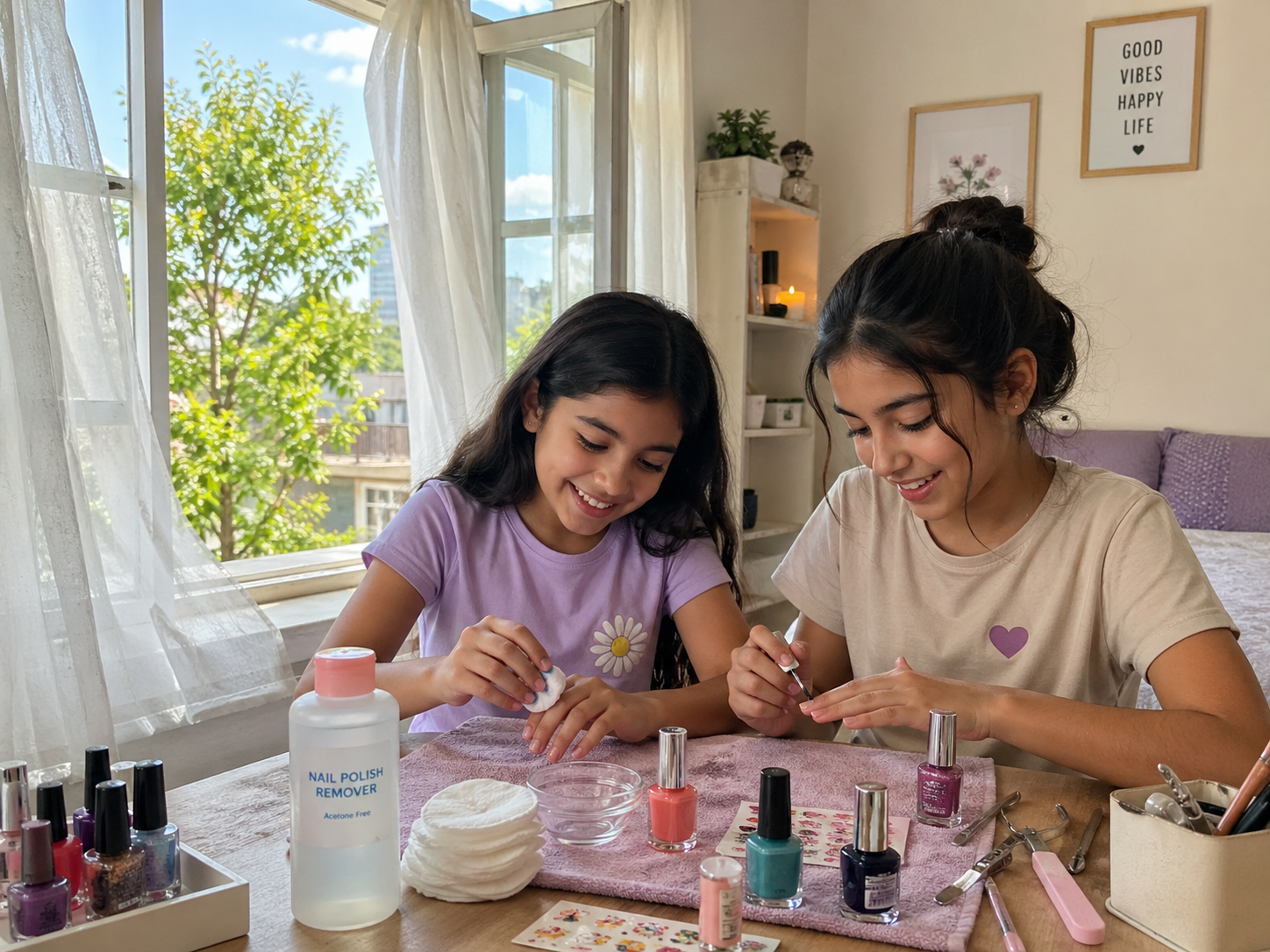
You lay out the colors, file the edges, push back the cuticles, maybe put on a show in the background, and pretend for a little while that your life is organized enough for a glossy top coat.
Then comes the smell.
Nail polish remover. Gel cleanser. Primer. Base coat. Top coat. Sometimes glue. Sometimes acetone wraps if you are removing gel. It all creates that sharp salon-like scent that many people recognize immediately.
Because the smell is familiar, it is easy to treat it as normal.
But familiar does not always mean harmless. Many nail products contain ingredients that evaporate into the air while you use them. In a small closed bedroom or bathroom, those vapors can build up quickly. You may not notice it at first, especially if you are focused on getting the polish near the cuticle without flooding it, which is basically a tiny hand-eye coordination challenge. But after a while, your head may feel heavy, your eyes may sting, or the room may feel strangely chemical.
That is your cue.
Ventilation is not a fancy extra step. It is part of using these products more safely.
Why Closed Rooms Make Nail Fumes Worse
A nail product does not have to be “dangerous” in a dramatic way to be irritating in a poorly ventilated space.
Acetone, alcohols, adhesives, gels, primers, and polish ingredients can release vapors while the product is open, applied, wiped, soaked, or cured. Some smells disappear quickly. Others hang around longer, especially when cotton pads, foil wraps, wipes, and open bottles sit nearby.
In a room with fresh air moving through it, vapors dilute and leave. In a closed room, they stay close to you.
That matters because at-home nail routines can take longer than people expect. A quick removal becomes forty minutes. Gel application becomes an hour. One broken nail becomes full set maintenance. By the end, you have been leaning over small bottles and soaked cotton pads in the same air the whole time.
Bathrooms are especially sneaky. They seem like a good nail station because the counter is easy to wipe, but many bathrooms have poor airflow. If the exhaust fan is weak or not vented well, you may just be sitting in a small box of remover smell.
Lovely for no one.
Headaches, Dizziness, and Eye Irritation Can Happen
One of the most common problems with using nail remover or gel products without ventilation is simple irritation.
Your eyes may water. Your throat may feel dry. Your nose may burn a little. You may get a headache or feel lightheaded. Some people feel mildly nauseated after sitting near strong acetone fumes for too long.
That does not mean you are being dramatic or “too sensitive.” It means your body noticed the air quality changed.
Strong fumes can bother anyone, but some people are more prone to symptoms: people with asthma, migraines, allergies, pregnancy-related sensitivity, respiratory issues, or a history of reacting strongly to fragrances and chemicals.
The annoying part is that nail work requires you to lean close. You are not across the room from the product. Your face is usually right above your hands. If the air is still, you are breathing the strongest concentration.
A fan, an open window, and a better setup can make a noticeable difference.
Acetone Removal Needs Extra Respect
Acetone is effective. That is why people use it.
It breaks down polish and helps remove gel when used correctly. But it also evaporates fast, smells strong, dries out skin, and can irritate the eyes, nose, and throat in a closed space.
Gel removal often involves soaking cotton in acetone, placing it on the nails, wrapping with foil, and waiting. During that waiting time, several little acetone packets are sitting right there on your fingers. If you are in a closed room, the smell can build.
A few practical habits help:
Use only as much remover as you need.
Keep the bottle closed between uses.
Do not leave soaked cotton pads sitting out.
Put used cotton and foil into a small bag or covered trash right away.
Wash your hands after removal.
Moisturize your skin and cuticles afterward.
Work near airflow, not in a sealed room.
It is a small amount of effort, but it changes the experience from “why does my entire room smell like remover?” to “okay, that was manageable.”
Gel Products Can Irritate Skin Too
Ventilation matters, but it is not the only concern with gel nails.
Uncured gel products can irritate the skin and may trigger allergic reactions in some people, especially if they repeatedly touch the cuticles or surrounding skin. This is one reason neat application matters. Gel belongs on the nail plate, not pooled around the skin.
If you often get redness, itching, swelling, peeling, burning, or tiny blisters around the nails after using gel products, stop using the product and consider getting medical advice. Nail allergies can become stubborn once they develop.
Also, cure gel fully according to the product instructions. Using the wrong lamp or under-curing can leave product improperly cured, which may increase the chance of irritation. Mixing random gel brands and lamps can be risky because not all lamps cure all formulas equally well.
I know it is tempting to buy a pretty color and assume any lamp will do. The nail world does not always reward assumptions.
Poor Ventilation Can Make the Whole Room Smell for Hours
Nail fumes do not always disappear the moment you cap the bottle.
Used cotton pads, wipes, paper towels, dust from filing, and open trash can keep the smell hanging around. If you do nails in a bedroom, that smell may linger in bedding, curtains, or clothes. If you do them near a desk, the scent may stick around while you try to work later.
This is especially true with acetone removal.
A room can smell “done” to you because you got used to it, but someone else walking in may immediately notice. That is a good reminder that your nose adapts. It is not a reliable safety meter.
After doing nails, clear the waste quickly. Close bottles tightly. Wipe the surface. Air out the room for a while. If you used acetone wraps, take the trash out sooner rather than letting it sit beside your bed like a tiny chemical bouquet.
Nail Dust Adds Another Layer
Gel removal is not only about liquid products.
Many people file or buff the top layer before soaking. Some use an e-file at home. That creates nail dust, and sometimes gel dust, which can float around and settle on surfaces. Breathing dust is not great, especially if you are doing it often.
If you file gel indoors, use a dust collector if you have one, or at least work in a space that can be cleaned easily. Avoid filing on your bed or couch. Please do not turn your comforter into a nail salon table.
Wear a mask if you are filing a lot, especially with an e-file. Clean the surface afterward with a damp cloth instead of just brushing dust into the air. Wash your hands and forearms if dust settles on your skin.
Ventilation helps with vapors, but dust needs its own cleanup plan.
The Bedroom Is Usually a Poor Nail Station
A bedroom feels convenient. It has good lighting if you have a desk. You can sit comfortably. You can watch something while you work. Everything feels relaxed.
But bedrooms have a problem: they are where you sleep.
If you use remover and gel products in a bedroom without ventilation, the fumes may linger close to pillows, blankets, and clothing. Then later, when you are trying to rest, the room still has that chemical edge.
A better spot is a table near a window, ideally in a room where you can open the window and run a fan. A kitchen table can work if you cover the surface and keep products away from food, dishes, and kids. A bathroom may work only if it has strong exhaust and you do not stay in there breathing fumes for ages.
Wherever you work, think about airflow first.
A pretty nail setup is nice. Breathing easier is nicer.
Children and Pets Should Not Be Nearby
Nail products should not be treated like harmless craft supplies.
Children are curious. Pets are nosy. Both are very skilled at appearing exactly where they should not be.
Keep nail remover, gel polish, primer, glue, and cleanser away from kids and pets while you work. Do not leave open bottles on low tables. Do not let children play with cured gel bottles or sticky brushes. Do not let pets walk across your nail station, even if they are emotionally committed to supervising.
Birds, in particular, can be very sensitive to airborne fumes. Small pets may also be more affected by strong smells and vapors because of their size.
After you finish, store products tightly closed, upright, and out of reach. Used remover pads should go into a closed trash bag or bin. If a child or pet swallows a product, gets it in the eyes, or has symptoms after exposure, contact Poison Control, a veterinarian, or emergency help as appropriate.
This sounds serious because it is. Nail products belong in the “use carefully” category.
Good Ventilation Does Not Have to Be Complicated
You do not need a professional salon ventilation system to improve your at-home routine, though salons need stronger controls because workers are exposed all day.
For home use, start with simple airflow.
Open a window. Place a fan so it moves air away from your face and toward the window. Keep the door open if it helps fresh air move through. Avoid doing nails in a tiny closed bathroom. Take breaks if the smell gets strong.
Do not point a strong fan directly at wet gel or polish if it blows dust onto your nails. That is irritating in a different way. Aim for room airflow, not a windstorm on your manicure.
A small desk fan placed off to the side can help. An air purifier may reduce some particles and odors, depending on the filter, but it should not be your only plan. Fresh air exchange is still important.
A Safer At-Home Gel Nail Setup
A little setup before you start can prevent most of the mess.
Choose a hard, wipeable surface.
Cover it with a disposable towel, silicone mat, or paper layer.
Open a window or turn on ventilation.
Keep all bottles closed unless you are actively using them.
Set up a small trash bag or covered bin for used wipes.
Keep cotton pads, foil, and remover organized.
Have cuticle oil and hand cream ready for afterward.
Keep kids and pets out of the area.
Wash your hands when you are done.
It sounds like a lot written out, but in real life it takes only a few minutes. The main difference is that you are not scrambling with sticky nails while an open bottle sits there evaporating into your room.
Do Not Ignore Skin Contact
Gel application can get messy, especially when you are doing your dominant hand with your non-dominant hand. Truly humbling.
Still, avoid letting gel touch your skin. If it does, clean it off before curing. Do not cure gel that is sitting on your cuticle or sidewall.
Repeated skin contact is a common way people develop irritation or allergy. Once you become allergic to certain nail ingredients, you may react to future products too. That can make gel nails difficult or impossible to wear comfortably.
Use thin coats. Leave a tiny margin near the cuticle. Do not flood the nail. If the brush is overloaded, wipe some product off before applying.
A slightly imperfect gel line is better than a perfect-looking manicure that leaves your skin itchy and angry.
Be Careful With Lamps and Eyes
Gel nail lamps are part of the process, and they need to be used correctly.
Use the lamp recommended for your gel system when possible. Cure for the full time listed by the product. Do not stare directly into the light. Some people prefer fingerless UV-protective gloves or sunscreen on the backs of the hands before curing, though sunscreen should not be on the nail plate where it could interfere with application.
Also, do not use the lamp as a toy or leave it where children can play with it.
The lamp is not the main ventilation issue, but it is part of the overall “use this setup thoughtfully” routine.
When the Smell Means You Should Stop
Sometimes the best safety step is simply stopping.
Pause your nail routine if you feel dizzy, nauseated, short of breath, unusually sleepy, or if your eyes or throat are burning. Move to fresh air. Open windows. Take the trash out. Do not keep going just because one hand is already done.
A mismatched manicure for a day is not the end of the world. Feeling sick in a chemical-smelling room is worse.
If symptoms are strong, persistent, or involve breathing trouble, get medical advice. If there is accidental ingestion or eye exposure, contact Poison Control in the U.S. at 1-800-222-1222 or seek urgent care.
Keep the product bottle with you if you call. The ingredients and brand matter.
Store Products Like They Matter
Nail products should be stored carefully.
Keep them tightly closed, away from heat, direct sunlight, flames, and children. Acetone is flammable, so do not use it near candles, smoking, stovetops, or space heaters. That includes the “just a little candle for vibes” situation. Not worth it.
Store bottles upright in a cool place. Toss products that smell strange, separate weirdly, leak, or have changed texture. Do not transfer remover into random unlabeled bottles.
A pretty nail drawer is fine. A mystery chemical drawer is not.
A Better Nail Routine With Fresh Air Built In
Here is a simple version of a safer routine:
Pick a ventilated spot before opening anything.
Set up near a window or fan.
Keep products closed between steps.
Use small amounts of remover.
Throw away used cotton and wipes promptly.
Avoid skin contact with gel.
Cure gel fully with the right lamp.
Clean dust and residue after filing.
Wash hands and moisturize.
Air out the room after finishing.
That is the whole idea. Not fear. Just better habits.
When Professional Help Is Worth It
At-home gel nails can be convenient, but not everyone’s nails tolerate them well.
If your nails are thinning, painful, lifting, peeling badly, or your skin reacts after gel use, take a break. If removal is difficult, consider going to a professional instead of scraping or filing aggressively. Damaged nails can take months to grow out, which is a very long time to regret one impatient evening.
A professional salon should also have good ventilation, clean tools, and safe product handling. If a salon smells overwhelmingly chemical the second you walk in, that is worth noticing.
Your nails should not cost you headaches, irritated skin, or breathing discomfort.
Fresh Air Makes the Habit Better
Gel nails and remover are not automatically a problem. Plenty of people use them without issue.
The habit that needs changing is using them in a closed room, close to your face, for long stretches, with open bottles and used remover pads sitting around.
Fresh air changes the whole routine. So does closing bottles, taking out waste, keeping products off the skin, and cleaning dust instead of letting it float around.
A manicure can still be relaxing. It can still be cute. It can still be your little hour of doing something for yourself.
Just give the fumes somewhere to go. Your nails may be the focus, but your lungs are in the room too.
Hi, I’m the creator and editor behind ZestyHabit. I research everyday safety, first aid, and practical wellness topics using official guidance and reliable public sources, then turn that information into clear, realistic steps for daily life.
My goal is to help readers make safer, better-informed choices at home and beyond.