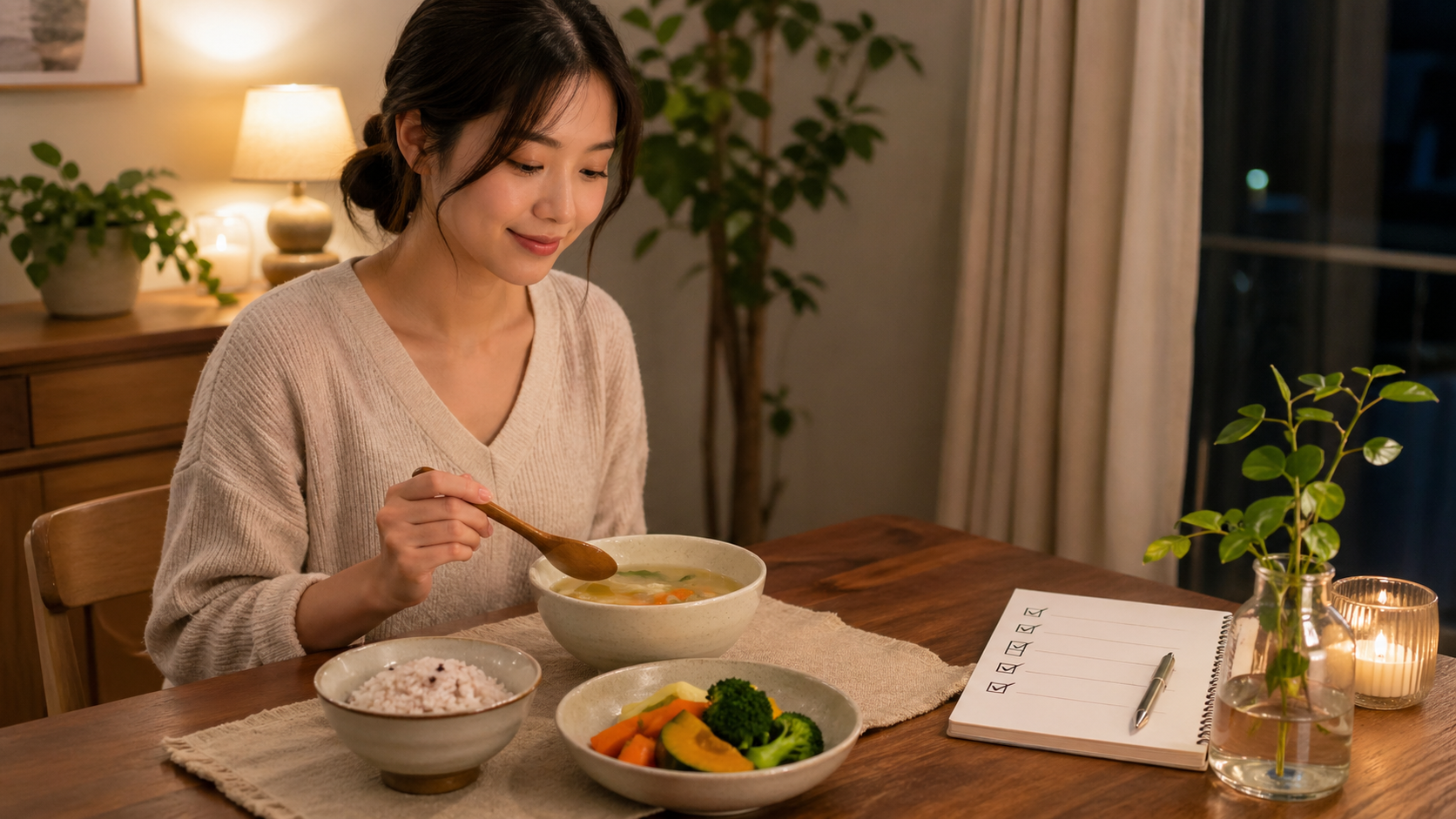
A Gentle Dinner Routine Checklist: How to Eat in a Way That Feels Easier on Your Gut
Minjin Park
·
Dinner has a funny way of turning into the messiest meal of the day.
Breakfast is usually quick. Lunch is often whatever fits into work or errands. But dinner carries a lot. Hunger from the whole day. Mental fatigue. Cravings. Convenience. Sometimes the quiet hope that one satisfying meal will fix everything. So it makes sense that dinner is often when people eat too fast, too much, or too heavily without really planning to.
And then comes the uncomfortable part.
A stomach that feels too full. Bloating that shows up an hour later. That heavy, slightly miserable feeling where you regret the second helping, the late-night snack, or the fact that you ate like someone trying to win a contest. Not every rough evening is caused by dinner, of course. Stress, sleep, digestion, hormones, and general life can all get involved. Still, a lot of people notice that when dinner gets a little simpler and gentler, evenings start feeling better.
This is not about tiny portions or bland food or turning dinner into boiled chicken and sadness. It is more about rhythm. Timing. Portion balance. The kinds of foods that tend to sit better at night. Small habits that lower the odds of ending the day feeling like your stomach is filing a complaint.
If your evenings often end with heaviness, reflux, bloating, or that “why did I eat like that” feeling, a simple dinner routine can help more than people think.
This phrase can sound vague, so it helps to make it more ordinary.
A dinner that feels easier on your gut usually has a few things going for it. It is not too huge. It is not rushed. It is not extremely greasy, spicy, or heavy every single night. And it usually leaves a little breathing room before bed.
That does not mean everyone needs the same meal. Some people handle salads at night just fine. Other people feel bloated halfway through. Some do well with beans and brown rice. Others do not want to negotiate with lentils after 8 p.m. A “light” dinner is not universal.
What tends to matter more is noticing patterns.
Maybe creamy takeout leaves you uncomfortably full. Maybe huge portions of pasta are fine at lunch but rough at night. Maybe raw vegetables sound healthy but do not actually feel great in the evening. That kind of stuff is useful. The goal is not to follow a perfect rulebook. The goal is to build a dinner routine that your body does not dread.
Why dinner is often the meal that goes sideways
There are practical reasons for this.
By dinnertime, most people are tired and less patient. That alone changes how you eat. You are more likely to grab whatever feels rewarding, eat quickly, skip balance, or keep going past fullness because your brain is finally off duty and wants comfort.
A pretty common dinner looks something like this: you get home hungry, snack while cooking, eat a large plate because lunch was weak, maybe go back for more because the food tastes good, then sit down right away and wonder why your stomach feels stretched and weird.
That is not a character flaw. It is just a tired human evening.
Dinner also tends to be later than people realize. A meal at 8:30 or 9:00 can hit differently than the exact same meal at 6:30, especially if you are heading to bed not long after. Add alcohol, dessert, carbonated drinks, or a heavy sauce, and things can get uncomfortable fast.
So when people say their digestion gets worse at night, it is often not just the food itself. It is the timing, pace, size, and context of the meal.
The easiest place to start: make dinner a little smaller, not sadder
A lot of people try to “clean up” dinner by focusing on ingredients first. Sometimes that helps. But often the bigger issue is that dinner is just too much all at once.
The meal does not have to be tiny. It just helps if it feels like dinner, not a weekend buffet.
A useful starting point is to keep the meal satisfying but slightly more moderate than your current default. Enough to feel fed, not flattened.
That might mean:
serving one plate instead of eating from the pan or takeout container
pausing before going back for seconds
building the meal with protein, something cooked and soft, and a carb that feels steady rather than super heavy
not saving all your hunger for the final meal of the day
This is where earlier meals matter more than people think. If lunch was basically coffee and a granola bar, dinner is going to arrive with a lot of emotional intensity. That makes “gentle eating” much harder.
A simple checklist for a lighter-feeling dinner routine
You do not need to follow every point perfectly. Even using half of these consistently can make a difference.
1. Try not to arrive at dinner starving
This is a big one.
When you are overly hungry, it gets hard to eat calmly. You start eating fast before your body has time to catch up. Portions get bigger. Rich food sounds even richer. And the evening can turn into snack-dinner-dessert-snack without much thought.
If this sounds familiar, the fix is not willpower. It is usually something earlier in the day.
A more filling lunch helps. So does a late afternoon snack if dinner tends to be late. That snack does not need to be dramatic. Yogurt, toast with peanut butter, a banana and some nuts, a cheese stick and crackers, leftovers, whatever works. Just enough to take the edge off.
People often assume snacking ruins dinner. In real life, a reasonable snack can be what saves dinner from becoming too heavy.
2. Choose cooked foods more often than raw at night
This will not apply to everyone, but a lot of people notice it.
Raw vegetables can be crisp and refreshing, but they can also feel bulky or hard to digest late in the day. A giant raw salad at lunch may feel fine. The same salad at 8:00 p.m. can sit there like a personal challenge.
Cooked vegetables are often easier in the evening. Roasted zucchini, sautéed spinach, soft carrots, green beans, cooked mushrooms, squash, rice with vegetables, soup. Nothing fancy. Just softer textures and less raw volume.
This does not mean raw foods are bad. It just means dinner may feel better when the meal is warm, cooked, and less aggressive.
3. Keep greasy, creamy, or very spicy meals as occasional choices
Some dinners are worth it. No one needs to pretend otherwise.
There is a time for fried chicken, spicy wings, cheesy pasta, or a heavy burger. But if your stomach is often unhappy at night, those meals probably should not be the default weekday pattern.
Rich foods can feel especially heavy when you are tired and sitting still afterward. The same goes for super spicy meals if you are prone to reflux or stomach irritation.
A calmer dinner does not have to be boring. It can just be less intense.
Think grilled salmon instead of deep-fried fish. Rice bowls instead of loaded fries. Pasta with olive oil and vegetables instead of a dense cream sauce every time. Turkey and rice soup on the kind of night when your stomach already seems a little fragile.
There is room for comfort food. It just helps when comfort food is not the only mode dinner has.
4. Watch the portion of the “heavy” part, not just the total meal
This is one of those little things that helps quietly.
A dinner can look reasonable overall but still feel rough if one part is especially dense. A huge pile of pasta, a lot of fried food, several slices of pizza, a very large dessert, or a heavy takeout dish can push the meal into uncomfortable territory even if the rest is not that much.
You do not need to measure every bite. Just notice the part of the meal most likely to sit heavily, and keep that part more moderate.
For example:
Pasta night
Have pasta, but maybe with a smaller portion plus chicken, shrimp, or cooked vegetables instead of one giant bowl that leaves you immobile.
Takeout night
Plate it, add something lighter on the side, and skip the automatic “finish everything because it is there” approach.
Taco night
A couple tacos with rice and cooked vegetables may feel better than a full snack spread of chips, queso, sour cream, and then tacos on top of that.
This is less about restriction and more about reducing that overly full, stretched feeling later.
5. Slow dinner down just a little
You do not need to eat with monk-like mindfulness. Just slightly slower than your most rushed version.
When people eat too fast, the meal often lands before fullness signals do. Then ten or fifteen minutes later, you suddenly feel like you swallowed a bowling ball.
A few easy ways to slow dinner down without making it weird:
sit down instead of eating while standing at the counter
put the fork down once in a while
drink some water between bites
start with the cooked vegetables or protein instead of inhaling the starch first
avoid scrolling through stressful stuff while eating
This is especially useful if dinner is the first time all day you finally relax. A calmer pace helps your meal feel like an actual meal, not a recovery event.
6. Give yourself some time between dinner and lying down
This matters a lot for people who deal with reflux, heaviness, or that burning feeling that creeps up at bedtime.
If possible, try to leave a little space between dinner and sleep. You do not need to take a long walk around the neighborhood every night like a cheerful wellness commercial. Even staying upright, tidying the kitchen, folding laundry, showering, or just moving around a bit can help.
The roughest pattern is usually a large dinner followed by collapsing onto the couch or bed right away.
Some evenings go that way. Life happens. But as a general rhythm, a little buffer time can make nights much more comfortable.
7. Be careful with the “healthy” dinners that secretly feel hard to digest
This catches people off guard.
A dinner can sound very healthy and still be rough on your stomach. Huge raw salads, lots of cruciferous vegetables, very fibrous grain bowls, extra beans, low-calorie frozen meals that leave you unsatisfied so you keep snacking, protein bars masquerading as dinner. None of those are automatically bad, but they are not automatically gentle either.
Sometimes the dinner that feels best is very plain in the least glamorous way.
Rice, eggs, cooked spinach. Soup and toast. Baked potato with cottage cheese. Chicken and soft vegetables. Oatmeal on a weird night when your stomach feels off. Not Instagram-worthy, maybe, but pretty workable.
Your digestive system does not care whether the meal looks trendy.
8. Notice what drinks are doing
Food gets all the blame, but drinks matter too.
Alcohol at dinner can make some people feel more bloated, reflux-prone, or snacky later. Carbonated drinks can also add to pressure and fullness. Even large amounts of water all at once during or right after a meal can make some people feel overly full, though this varies.
Again, the point is not to ban everything. It is just worth asking whether your evening drink habits are helping or making dinner feel heavier.
For some people, switching from soda to still water with lemon is enough to notice a difference. For others, limiting alcohol on weekdays changes a lot.
Gentle dinner combinations that tend to work well
Not everyone needs meal ideas, but they can help when your brain is tired and all advice starts sounding abstract.
Here are a few dinner combinations that tend to feel lighter while still being real dinners:
Rice bowl with protein and cooked vegetables
Rice, grilled chicken or tofu, sautéed zucchini, carrots, a simple sauce. Warm, easy, and not too complicated.
Soup and toast
Especially good when your stomach feels touchy or your appetite is low. Chicken soup, lentil soup if that works for you, vegetable soup, miso soup with rice on the side.
Baked potato with toppings
A baked potato with cottage cheese, shredded chicken, or plain Greek yogurt plus cooked vegetables can be surprisingly satisfying without feeling too heavy.
Simple pasta with protein
A smaller portion of pasta with olive oil, chicken, white beans if tolerated, spinach, or roasted vegetables often sits better than a huge creamy pasta dinner.
Eggs and rice
A very underrated option for nights when your stomach feels tired. Soft scrambled eggs, rice, maybe cooked spinach or mushrooms. Plain in a good way.
Salmon, sweet potato, and green beans
This is the kind of dinner people roll their eyes at in theory and then end up feeling pretty good after.
What to do if late-night snacking keeps happening
Sometimes dinner itself is fine, and the problem starts afterward.
You eat dinner, then something sweet sounds good. Then something crunchy. Then you are back in the kitchen at 10:15 trying to negotiate with yourself over cereal.
Late-night snacking can happen for all kinds of reasons. Habit, stress, boredom, actual hunger, not enough protein at dinner, not enough food earlier in the day. So the fix depends on the cause.
A few possibilities:
If you are physically hungry later
Dinner may not be balanced enough. Add more protein, enough carbs, or a little more overall food.
If you want something sweet out of habit
Try making dessert more intentional instead of drifting into random grazing. A small bowl of yogurt, fruit with peanut butter, a couple squares of chocolate, a cookie with tea. Something chosen, not a kitchen free-for-all.
If you snack because the day finally got quiet
That is very common. Food becomes a transition. In that case, it can help to build a different evening cue alongside it. Tea, a shower, stretching, a show, reading, whatever actually feels pleasant and realistic.
A realistic dinner checklist you can actually use
You do not need to memorize a whole system. This short version is enough:
Before dinner
Did I wait so long that I am ravenous?
Do I need a small snack before cooking?
During dinner
Is this meal very greasy, very spicy, or extra heavy?
Can I add something cooked and simple?
Am I serving myself enough, but not an accidental feast?
Am I eating fast because I am tired?
After dinner
Can I stay upright for a bit before bed?
Do I actually want more food, or am I just switching into nighttime grazing mode?
That is the kind of checklist that helps because it fits real life.
The goal is not a perfect dinner. It is a more comfortable evening.
A gut-friendly dinner routine is usually built out of pretty ordinary choices. Slightly earlier. Slightly calmer. Slightly less heavy. More cooked food, fewer random extras, a bit more awareness of what actually feels good at night.
That may not sound dramatic, but dramatic is not really the point.
The best dinner routine is the one that lets you end the day feeling normal. Not overly full. Not bloated and annoyed. Not lying in bed mentally replaying your plate.
Hi, I’m the creator and editor behind ZestyHabit. I research everyday safety, first aid, and practical wellness topics using official guidance and reliable public sources, then turn that information into clear, realistic steps for daily life.
My goal is to help readers make safer, better-informed choices at home and beyond.