
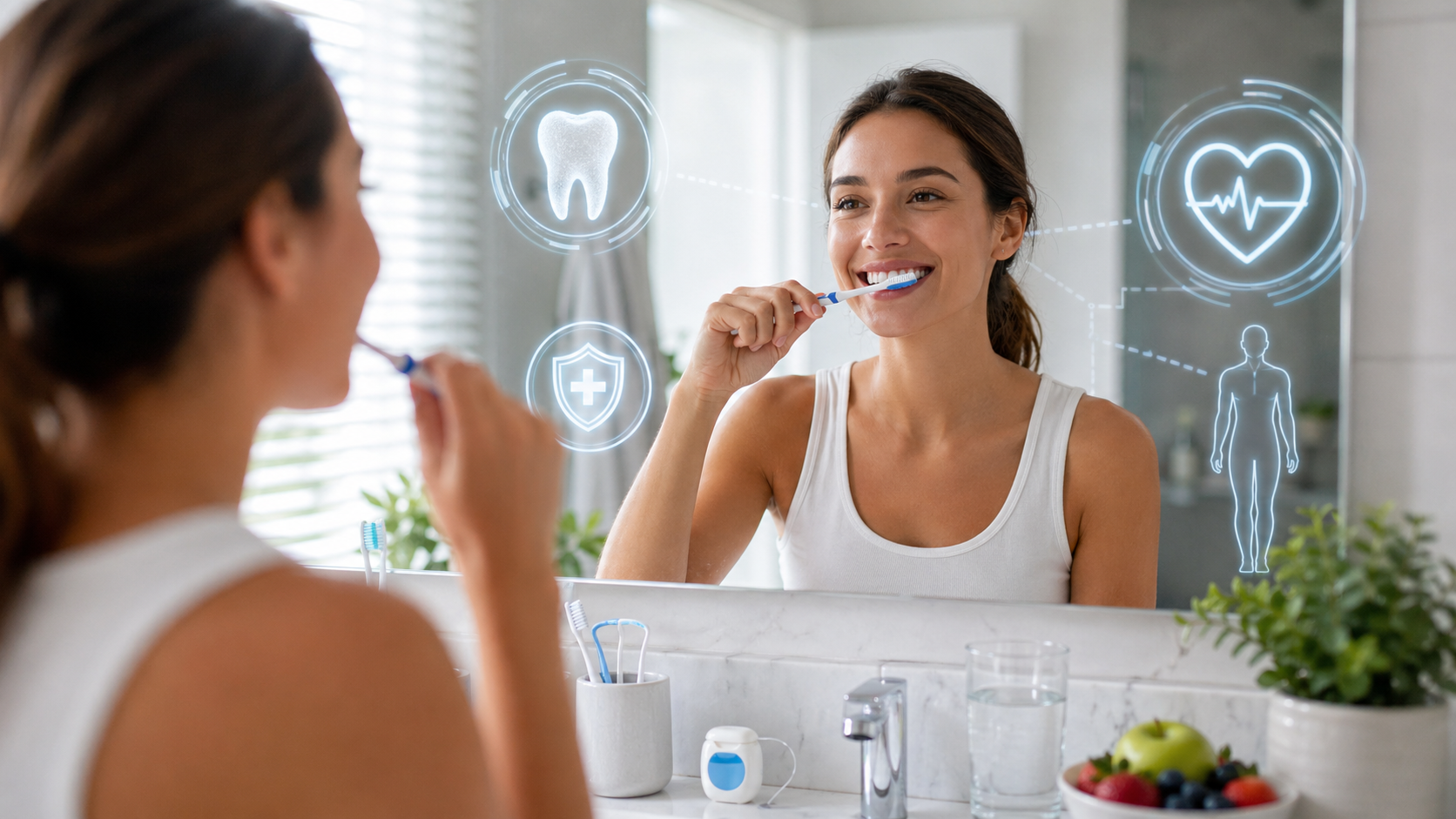

Your mouth is not separate from the rest of your body. Learn how daily oral care may support broader health by reducing inflammation, bacteria buildup, and avoidable stress on your system.
Your Mouth Is Not a Separate Department
It is easy to treat oral health like a cosmetic issue.
White teeth, fresh breath, a nice smile for photos. That is usually what gets the attention. But your mouth is not just a place where teeth happen to live. It is connected to digestion, breathing, blood flow, inflammation, and your immune system in very ordinary, everyday ways.
That does not mean brushing your teeth will magically prevent every health problem. Bodies are more complicated than that, and anyone promising a miracle is probably selling something.
But it does mean your mouth gives you clues. Bleeding gums, constant bad breath, dry mouth, tooth pain, loose teeth, and recurring mouth sores are not just “mouth things” to ignore until your next cleaning. They can affect how you eat, sleep, speak, and feel. They can also make it easier for bacteria and inflammation to hang around longer than they should.
The mouth is a busy place. You eat through it. You breathe through it sometimes. You talk through it. You drink coffee through it, maybe a little too often. It is exposed to sugar, acid, dry air, late-night snacks, stress habits, and all the things we do when life gets messy.
So oral health is not about being perfect. It is about lowering the daily burden on your body in a place that works hard all day.
The Mouth Is Full of Bacteria, and That Is Normal
The word “bacteria” sounds bad, but your mouth is supposed to have bacteria. It has a whole community of microorganisms living there. Some are harmless. Some are helpful. Some become a problem when they build up too much or settle into places they should not.
Plaque is a good example. It is that sticky film that forms on teeth, especially near the gumline. If plaque stays there, it can irritate the gums and harden into tartar, which is harder to remove at home. That is when the gums may start looking swollen, red, or tender.
Why bleeding gums are worth noticing
A lot of people see a little blood when brushing or flossing and think, “Oops, brushed too hard.”
Sometimes that is true. But if your gums bleed often, especially when you floss gently, it can be a sign of gum inflammation.
The tricky part is that early gum problems often do not hurt. You can have irritated gums and still feel completely normal. No dramatic pain. No emergency. Just a little blood in the sink and a vague thought that maybe you should floss more.
That small sign matters because gum inflammation does not stay politely contained forever. Your gums are living tissue. They have blood vessels. They respond to irritation. When they are inflamed for a long time, your body has to keep dealing with that inflammation.
Again, this does not mean a bleeding gum automatically equals a serious disease. But it is not something to shrug off for years.
Inflammation Is One Reason Oral Health Matters
Inflammation is part of the body’s normal defense system. If you get a cut, inflammation helps protect and heal the area. That is useful.
The problem is when inflammation becomes ongoing. Chronic gum irritation can keep your immune system busy in the background. It is a bit like leaving one small alarm buzzing in the house all day. You may learn to tune it out, but it is still there.
Gum disease has been linked with several health conditions, including heart disease and diabetes. The relationship is not always simple cause-and-effect. It is not accurate to say, “If you do not floss, you will get heart disease.” That is too blunt and too scary.
A better way to think about it is this: oral inflammation may be one piece of the larger health picture. If someone already has risk factors such as smoking, high blood sugar, poor sleep, stress, or limited access to dental care, gum disease can add another layer of strain.
The mouth is not isolated from the bloodstream. That is the key idea.
Oral Health and Heart Health: The Practical Connection

Heart health can feel like a big, serious topic. Cholesterol, blood pressure, exercise, genetics — it can all get overwhelming fast.
Oral care seems tiny compared with that. Two minutes with a toothbrush does not feel like a cardiovascular habit.
But gum health and heart health are often discussed together because inflammation and bacteria from the mouth may play a role in broader vascular health. Researchers are still studying the details, but the basic connection makes sense: when the gums are inflamed or infected, the body is not dealing with a sealed-off issue. It is dealing with living tissue connected to circulation.
What this means in daily life
You do not need to panic-brush every time you eat. That can actually irritate your gums if you go too hard.
The more reasonable habit is steady care: brush twice a day with a soft-bristled toothbrush, clean between teeth, and get dental checkups on a schedule that makes sense for your situation.
If you have bleeding gums, loose teeth, gum recession, or persistent bad breath, do not wait until it becomes painful. Dental problems often get more expensive and more stressful when ignored. Annoying truth, but still true.
Diabetes and Gum Health Can Affect Each Other
Blood sugar and gum health have a two-way relationship.
People with diabetes may be more likely to develop gum disease, partly because high blood sugar can affect healing and immune response. At the same time, gum inflammation may make blood sugar harder to manage for some people.
This is one of those connections that feels unfair. As if the body decided to make everything a group project.
For someone managing diabetes or prediabetes, oral health is not just a side task. It can be part of the overall routine, along with food choices, movement, medication if prescribed, sleep, and regular medical care.
Dry mouth can be part of the picture
Dry mouth is common in people with certain medical conditions or medications. It can also happen from dehydration, mouth breathing, smoking, or just sleeping with your mouth open.
Saliva matters more than people realize. It helps wash away food particles, neutralize acids, and protect teeth. When your mouth is dry often, cavities and gum irritation can become more likely.
Simple things may help: drinking water, chewing sugar-free gum if appropriate, limiting frequent sipping of sugary drinks, and asking a dentist or doctor about dry-mouth products if it is persistent.
And yes, coffee counts as a personality trait for some of us, but it is not a replacement for water.
Digestion Starts Before Food Reaches the Stomach
Oral health also affects how comfortably you eat.
If your teeth hurt, your gums are sore, or you have missing teeth, you may avoid certain foods. Crunchy vegetables, nuts, apples, lean meats, or whole grains can become harder to chew. Over time, that can quietly change your diet.
People do not always say, “My oral health changed my nutrition.” They say things like:
“I just eat softer foods now.”
“I avoid chewing on that side.”
“I do not like cold drinks anymore.”
“I stopped eating salads because they are annoying.”
Those little adjustments matter.
Chewing is the first step of digestion. It breaks food down and mixes it with saliva. When chewing becomes uncomfortable, meals can get less balanced without anyone noticing right away.
Taking care of your teeth and gums helps you keep more food options open. That is a very practical kind of prevention.
Bad Breath Is Not Always About Mints
Bad breath can be embarrassing, so people often try to cover it quickly. Gum, mints, mouthwash, another mint, maybe avoiding close conversation. We have all had those moments.
But persistent bad breath is often a clue. It can come from plaque buildup, gum disease, dry mouth, tongue coating, cavities, certain foods, smoking, acid reflux, or sinus issues.
A mint may help for twenty minutes. It does not fix the source.
The tongue gets forgotten
The tongue can hold bacteria and food debris, especially toward the back. Gently brushing the tongue or using a tongue scraper can help some people with breath freshness.
The key word is gently. Your mouth is not a dirty pan that needs scrubbing.
If bad breath does not improve with brushing, flossing, tongue cleaning, hydration, and dental care, it may be worth checking for other causes. Sometimes the mouth is only part of the story.
Oral Health Can Affect Sleep and Daily Comfort
Tooth pain has a special talent for getting worse at night. You are finally lying down, the room is quiet, and suddenly one tooth starts acting like it has an announcement to make.
Oral problems can interfere with sleep through pain, jaw tension, mouth dryness, grinding, or breathing issues. Poor sleep then affects mood, appetite, focus, immune function, and energy. The whole day can feel harder because of something that started in your mouth.
Teeth grinding is worth taking seriously
Many people clench or grind their teeth when stressed, especially during sleep. They may wake up with jaw soreness, headaches, sensitive teeth, or tight facial muscles.
This is not just a dental issue. It can be tied to stress, sleep quality, posture, caffeine timing, and sometimes sleep disorders.
A dentist may recommend a night guard if grinding is damaging the teeth. Stress reduction can help too, though “just relax” is probably the least useful advice ever given to a stressed person. A more realistic approach might be reducing late caffeine, doing a short wind-down routine, stretching the jaw gently, or noticing when you clench during the day.
Sometimes I catch myself clenching while reading emails. Apparently my jaw thinks it has a job in office administration.
Pregnancy Makes Gum Care Especially Important
Hormonal changes during pregnancy can make gums more sensitive and more likely to bleed or swell. Some people develop pregnancy gingivitis, even if their oral care was decent before.
Nausea and vomiting can also expose teeth to stomach acid. Cravings and more frequent snacking may add extra sugar or acid exposure. It is not about blame. Pregnancy is already a full-body event.
Good oral care during pregnancy supports comfort and reduces avoidable dental problems. It is also a good time to ask a dentist or healthcare provider about safe dental care, especially if there is pain, swelling, or bleeding.
Ignoring dental problems because “I will deal with it after the baby comes” is understandable, but not always helpful. After the baby comes, free time does not exactly multiply.
The Daily Habits That Make the Biggest Difference
Oral health advice can get weirdly complicated, but the basics still carry most of the weight.
Brush twice a day. Use fluoride toothpaste. Clean between teeth. Limit frequent sugar exposure. Drink water. Avoid tobacco. See a dentist regularly. Pay attention to changes.
That is the plain version.
Brushing: gentle beats aggressive
Brushing harder does not mean brushing better. Aggressive brushing can irritate gums and wear down enamel over time.
Use a soft-bristled toothbrush and small movements. Spend time near the gumline, but do not attack it. If your toothbrush bristles look smashed after a short time, that may be a sign you are pressing too hard.
Electric toothbrushes can help some people, especially if they tend to rush. But a manual toothbrush can work well too. The best toothbrush is the one you actually use properly.
Flossing does not have to be dramatic
Some people hate flossing with a passion usually reserved for tax forms.
If traditional floss feels awkward, try floss picks, interdental brushes, or a water flosser. The goal is to clean the spaces your toothbrush cannot reach. It does not have to look elegant.
If your gums bleed when you start flossing, do not immediately quit. Gentle, consistent cleaning may improve gum health over time. But if bleeding continues, see a dental professional.
Sugar Frequency Matters More Than People Think
When it comes to teeth, frequency matters.
Sipping sweet coffee all morning can be harder on teeth than drinking it with breakfast and moving on. The same goes for soda, sports drinks, sweet tea, juice, candy, and sticky snacks. Every exposure gives mouth bacteria more fuel to produce acids that can weaken enamel.
This does not mean you can never have dessert. A realistic approach is to reduce constant grazing on sugary or acidic foods and drinks.
Have the sweet thing, enjoy it, rinse with water afterward, and avoid dragging it out for hours. Your teeth do not need a six-hour relationship with caramel iced coffee.
Mouthwash Is Not a Substitute for Cleaning
Mouthwash can be useful, depending on the type. Some help with fluoride protection, dry mouth, or gum health. But mouthwash does not replace brushing and cleaning between teeth.
It is more like a supporting actor. Nice to have in the right role, not the whole movie.
Also, very strong mouthwash that burns is not automatically better. Some people find alcohol-based mouthwash drying or irritating. If your mouth feels worse after using it, ask your dentist about gentler options.
Prevention Is Usually Quieter Than Treatment
Preventive oral care is not exciting. It does not give you a dramatic story. No one says, “Guess what, I prevented a cavity today.” You just go about your life without tooth pain, swelling, emergency appointments, or surprise bills.
That quietness is exactly the benefit.
A small gum problem is easier to manage than advanced gum disease. A tiny cavity is easier than a root canal. A dry-mouth issue is easier to address early than after several teeth become sensitive or decayed.
Prevention is not glamorous, but it is kind.
Kind to your future schedule. Kind to your wallet. Kind to your nervous system if dental visits make you anxious.
When to Get Checked Instead of Waiting
Some mouth symptoms deserve attention sooner rather than later.
Bleeding gums that do not improve, persistent bad breath, tooth sensitivity, mouth sores that do not heal, swelling, pus, loose teeth, jaw pain, or pain when chewing are all worth checking.
If you have a medical condition such as diabetes, heart disease, immune problems, or you are pregnant, it may be even more important to stay on top of dental care.
There is no prize for waiting until pain becomes unbearable. Truly. Dental pain is not a character-building exercise.
A Whole-Body Habit That Starts Small
Oral health connects to whole-body prevention because the mouth is part of the body’s daily workload. It affects inflammation, bacteria balance, eating comfort, sleep, blood sugar management, and sometimes even confidence in social life.
That is a lot for such a small area.
The good news is that oral care does not require a perfect routine. It asks for consistency more than intensity. A soft toothbrush. A couple of minutes. Cleaning between teeth. Water after sweet drinks. A dental appointment before things get dramatic.
Your mouth does not need punishment. It needs regular care.
And when you take care of it, you are not just protecting your smile. You are giving the rest of your body one less problem to manage in the background. That is a quiet kind of prevention, but it counts.

Hi, I’m the creator and editor behind ZestyHabit. I research everyday safety, first aid, and practical wellness topics using official guidance and reliable public sources, then turn that information into clear, realistic steps for daily life.
My goal is to help readers make safer, better-informed choices at home and beyond.


[…] smoking can dramatically improve breath odor, oral health, and overall […]