
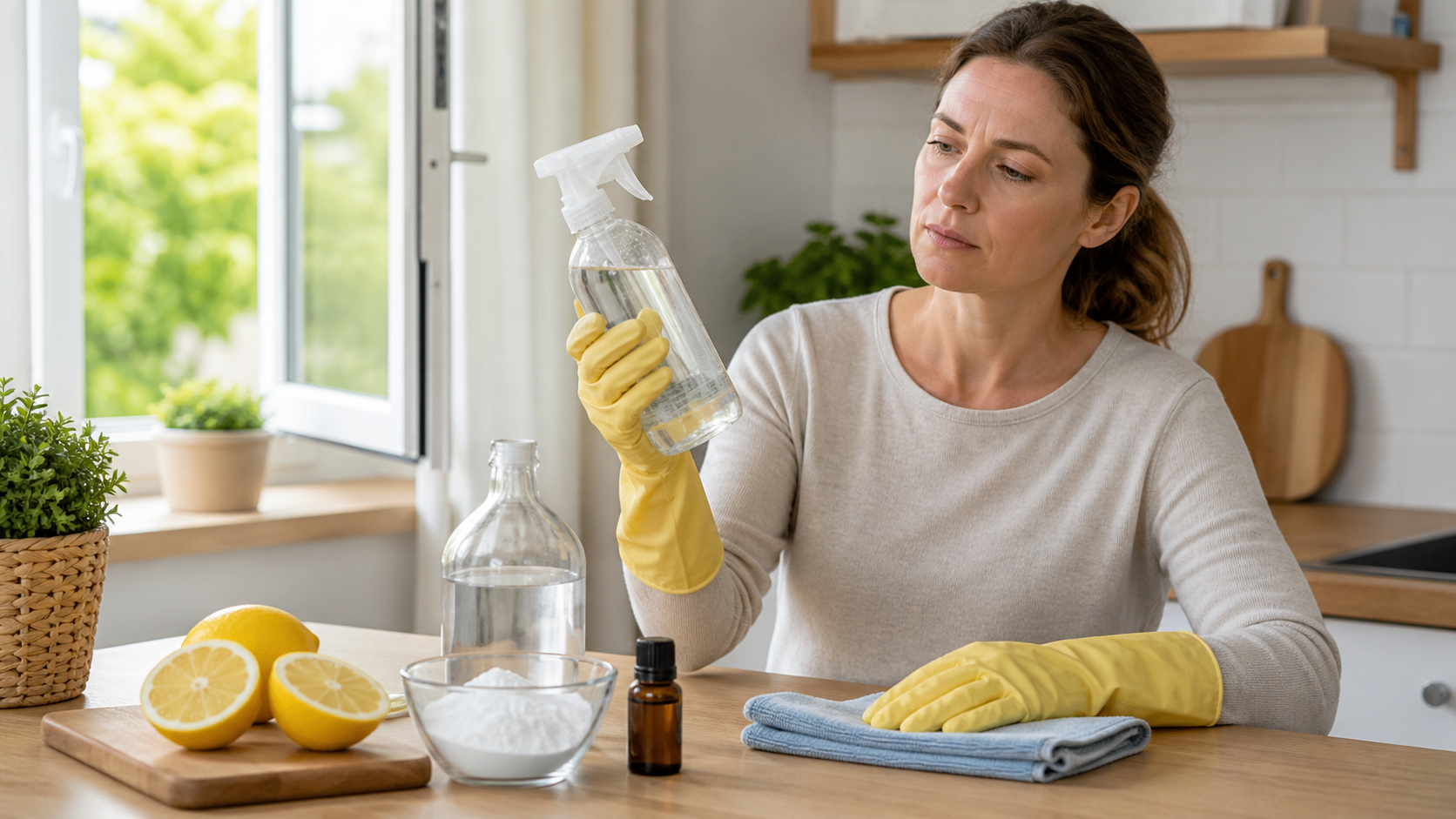

Natural cleaning products can be useful, but the word “natural” does not guarantee safety. Learn how vinegar, baking soda, essential oils, and plant-based cleaners can still irritate skin, lungs, pets, surfaces, or become risky when mixed incorrectly.
“Natural” is one of those words that makes a product feel friendlier before you even open the bottle.
Natural cleaner. Plant-based formula. Non-toxic spray. Gentle ingredients. Fresh botanical scent.
It sounds calm. Almost wholesome. Like something that belongs in a sunny kitchen next to a bowl of lemons and a linen towel.
And to be fair, many people reach for natural cleaners for understandable reasons. They may be trying to reduce harsh smells, avoid certain chemicals, protect kids or pets, or simply use fewer products at home. That instinct is not silly. A lot of conventional cleaners can be irritating, especially in small bathrooms, poorly ventilated apartments, or homes where someone has asthma or sensitive skin.
But here is the part that gets skipped too often: natural does not always mean safe.
Poison ivy is natural. Mold is natural. Arsenic is natural. That does not mean we want any of them on the kitchen counter.
Cleaning products should be judged by what they contain, how they are used, where they are used, and who is exposed to them. The label may give a nice first impression, but the real safety question is much more practical: can this product irritate my skin, lungs, eyes, pets, furniture, or plumbing if I use it the wrong way?
Sometimes the answer is yes.
“Natural” Is Not a Safety Certification
The word “natural” can feel official, but in everyday cleaning product marketing, it often does not tell you much.
A natural cleaner may still contain strong acids, alkaline ingredients, solvents, fragrances, preservatives, or essential oils. Some may be gentle. Some may not. Two products can both call themselves natural and behave very differently on skin, stone, wood, metal, fabric, or lungs.
This is where people get caught.
They assume a plant-based or homemade cleaner can be sprayed freely without gloves, used around pets, mixed with other products, or poured onto any surface. But safety is not based on whether an ingredient originally came from a plant. Safety depends on dose, concentration, exposure, ventilation, and chemical behavior.
That sounds a little chemistry-class-ish, but in real life it means something simple:
A small amount of vinegar in a bowl is not the same as spraying vinegar mist all over a tiny bathroom.
A drop of essential oil in a diffuser is not the same as letting a cat walk across a floor freshly cleaned with essential oil solution.
Baking soda in a paste is not the same as scrubbing it into a delicate surface every week.
The context matters.
Vinegar Is Useful, But It Is Still an Acid
Vinegar is probably the most famous natural cleaning ingredient. It is cheap, easy to find, and surprisingly useful.
It can help with mineral deposits, mild odors, glass, and some kitchen cleaning tasks. A bottle of white vinegar under the sink has saved many people from buying five extra specialty products.
Still, vinegar is acidic.
That means it can damage certain surfaces. Natural stone like marble, limestone, travertine, and some granite sealants can be etched or dulled by acidic cleaners. It can also affect waxed wood, some metal finishes, grout over time, and certain appliance parts if used carelessly.
The problem is not that vinegar is “bad.” The problem is treating it like magic water.
If you use vinegar, check whether the surface can handle acid. Do not assume. A countertop can look sturdy and still react badly. When in doubt, test a small hidden area first or use a cleaner recommended by the surface manufacturer.
And please do not use vinegar on every single thing just because someone online said it cleans everything. The internet has never met your countertop.
Baking Soda Is Gentle—Until It Isn’t
Baking soda has a nice reputation because it is familiar. It sits in the fridge, goes into muffins, and feels harmless.
As a cleaner, it can be helpful for deodorizing, gentle scrubbing, and making pastes for certain messes. It is less harsh than many abrasive powders, which is why people like it.
But baking soda is still mildly abrasive.
That means it can scratch or dull some surfaces, especially if you scrub hard. Glass cooktops, stainless steel finishes, polished stone, nonstick coatings, delicate enamel, and shiny fixtures may not appreciate repeated baking soda scrubbing.
There is also the drain myth.
People love pouring baking soda and vinegar down drains because it fizzes dramatically. It feels productive. Very satisfying, like a tiny science fair volcano in your sink.
But the fizz does not mean your drain is deeply cleaned. Baking soda and vinegar largely react with each other, and the bubbling may not do much for serious buildup. For minor odors, it may be fine. For real clogs, you may need a plunger, drain snake, proper cleaning method, or plumber.
The fizz is fun. It is not a miracle.
Essential Oils Can Irritate People and Pets
Essential oils are where “natural” can get especially misleading.
Lavender, tea tree, eucalyptus, lemon, peppermint, orange, clove, pine—these scents can make a home feel fresh and clean. Some essential oils also have antimicrobial properties in certain conditions.
But concentrated essential oils are potent substances. They can irritate skin, eyes, and airways. Some people get headaches, coughing, rashes, or asthma symptoms from scented products, even natural ones.
Pets are a big concern too. Cats and dogs process certain compounds differently than humans. Cats, in particular, can be sensitive to some essential oils. Birds can also be very vulnerable to airborne irritants.
This does not mean every scented product is dangerous in every home. It means “smells like herbs” is not the same as “safe for everyone.”
If you have pets, babies, asthma, migraines, allergies, or sensitive skin in the house, use scented cleaning products carefully. Avoid heavy spraying. Ventilate. Do not let pets walk on wet floors cleaned with essential oil mixtures. Store oils out of reach. And never assume that because an oil is safe for adults to smell occasionally, it is safe for a pet to inhale or lick from a surface.
The cute “all-natural lavender floor spray” may not be as harmless as it looks.
Homemade Cleaners Can Be Risky When Mixed
One of the biggest cleaning safety mistakes is mixing products.
People do this with natural cleaners and conventional cleaners, usually with good intentions. They want something stronger. They want to disinfect. They want to “boost” the cleaning power.
But mixing can create irritating or dangerous fumes.
A classic example: vinegar and bleach should never be mixed. Vinegar is acidic, and bleach mixed with acids can release chlorine gas. That is not a small problem. That is a “leave the area and get fresh air” problem.
Bleach should also not be mixed with ammonia. Some glass cleaners, toilet cleaners, and other products may contain ingredients that do not belong anywhere near bleach.
Hydrogen peroxide and vinegar should not be mixed together in the same container either. They can form peracetic acid, which can irritate skin, eyes, and lungs.
This is one of those topics where being boring is good.
Use one cleaner at a time.
Rinse if needed.
Do not play kitchen chemist.
If you are using a commercial product, read the label before combining it with anything. The safest “recipe” is usually no recipe at all.
Natural Does Not Always Mean Disinfecting
Cleaning and disinfecting are not the same thing.
Cleaning removes dirt, grease, crumbs, dust, and some germs from a surface. Disinfecting uses a product that kills specific germs under specific conditions, often requiring the surface to stay wet for a set amount of time.
Many natural cleaners are fine for routine cleaning. Wiping counters, removing light messes, freshening sinks, cleaning mirrors, handling everyday grime—great.
But if someone in the house has been sick, if raw chicken juice touched the counter, or if you are cleaning a bathroom after stomach illness, you may need a real disinfectant used according to the label.
This does not mean every surface must be disinfected daily. Most homes do not need to smell like a hospital. But it is important to know when a natural cleaner is only cleaning, not disinfecting.
A homemade vinegar spray may make the kitchen smell fresh. That does not mean it has reliably killed the germs you are worried about.
“Non-Toxic” Still Has Limits
The phrase “non-toxic” can be comforting, but it can also be misunderstood.
It does not mean “safe to drink.” It does not mean “safe to spray in your eyes.” It does not mean “fine for children to handle unsupervised.” It does not mean “won’t irritate anyone.”
A product may be considered lower risk when used as directed, but still cause problems if swallowed, inhaled in large amounts, used on skin, mixed with other products, or sprayed in a poorly ventilated room.
This matters in homes with young children.
A bottle with a green label may look less dangerous than a traditional cleaner, but children do not read marketing language. They see a bottle. Maybe it smells nice. Maybe it has a bright color. Maybe it is stored under the sink where little hands can reach.
Natural cleaners should still be stored like cleaners: closed tightly, labeled clearly, kept away from children and pets, and never transferred into drink bottles.
That last one deserves repeating in plain words: do not put homemade cleaners in old water bottles, juice bottles, or food containers.
It seems convenient until someone takes a sip.
Ventilation Matters, Even With Mild Products
A cleaner does not have to be harsh to bother your lungs.
Sprays create tiny droplets that can be inhaled. Strong scents can linger. Acids and alcohol-based cleaners can irritate airways. Even a mild product can feel intense in a small bathroom with the door closed.
This is especially relevant for people with asthma, chronic cough, allergies, migraines, or chemical sensitivity.
Open a window if you can. Turn on the bathroom fan. Avoid spraying directly into the air. Spray onto a cloth instead of misting a whole area. Use less product. Leave the room for a bit after cleaning if scents bother you.
The goal is not to clean while holding your breath like you are defusing a bomb. The goal is to make the air part of the safety plan.
Some Natural Cleaners Are Hard on Skin
Skin irritation is another overlooked issue.
Lemon juice, vinegar, alcohol, essential oils, and even frequent contact with baking soda can dry or irritate skin. Washing dishes, wiping counters, scrubbing bathrooms, and handling cleaners several times a day can add up.
People with eczema or sensitive skin may notice redness, itching, cracking, or stinging after cleaning. Sometimes they blame the weather or hand soap, but the cleaner is part of the story.
Gloves help. Not glamorous, but helpful.
Use reusable cleaning gloves for bigger jobs. Wash hands afterward. Moisturize after cleaning. Avoid touching your face while using products. If a cleaner causes burning or rash, stop using it and wash the area with water.
Your hands are not cleaning tools. They are skin. They deserve a little respect.
Natural Products Can Still Damage Surfaces
A cleaner can be safe for humans and still wrong for a surface.
Vinegar can etch stone.
Lemon can discolor or damage some materials.
Essential oils can leave residue.
Baking soda can scratch.
Castile soap can leave film on certain surfaces or react with hard water.
Hydrogen peroxide can lighten fabric or discolor some materials.
Even water can damage untreated wood if left sitting long enough.
This is why the “one cleaner for everything” dream rarely works perfectly. Kitchens, bathrooms, floors, glass, stone, wood, stainless steel, and electronics do not all need the same treatment.
For expensive surfaces, read care instructions. For unknown surfaces, test first. For electronics, be extra careful with moisture and sprays.
It is much cheaper to pause for 30 seconds than to permanently dull a countertop.
Green Cleaning Should Still Be Practical Cleaning
There is nothing wrong with wanting a simpler, less harsh cleaning routine. In fact, many homes could probably use fewer products, not more.
A practical low-irritation cleaning routine might look like this:
Use plain soap and water for many everyday messes.
Use a mild dish soap solution for counters when appropriate.
Use vinegar only on surfaces that tolerate acid.
Use baking soda gently and sparingly for scrubbing.
Use fragrance-free products when scents bother people in the home.
Use disinfectants when the situation truly calls for them.
Wear gloves for longer cleaning sessions.
Ventilate.
Store everything safely.
That is not trendy. It is just sensible.
Be Careful With Online Cleaning Hacks
Cleaning hacks are everywhere.
Some are genuinely useful. Others are questionable. A few are flat-out unsafe.
The tricky thing is that a short video can make a method look amazing without showing the long-term damage, fumes, residue, or risk. A toilet bowl might foam beautifully. A pan might shine for the camera. A countertop might look fine today and dull over the next few months.
Before trying a hack, ask three boring questions:
What ingredients are being mixed?
Is it safe for the surface?
Is it safe to breathe or touch?
If the answer is unclear, skip it. Your home does not need to be the test kitchen for a stranger’s viral experiment.
How to Choose Safer Cleaning Products
You do not need to become a chemist. A few habits help.
Read the directions, even for natural products. Especially for natural products, honestly, because people tend to skip them.
Look for warnings about ventilation, skin contact, pets, surfaces, and mixing.
Choose fragrance-free or low-fragrance options if anyone in the home is sensitive.
Avoid products with vague miracle claims.
Keep the original label when possible.
Use the smallest effective amount.
Do not assume more cleaner means more clean.
For disinfectants, pay attention to contact time. If the label says the surface needs to stay wet for several minutes, a quick spray-and-wipe may not do the job.
Annoying? Yes. Useful? Also yes.
A More Balanced Way to Think About “Natural”
The goal is not to reject natural cleaners.
Vinegar can be useful. Baking soda can be useful. Plant-based cleaners can be useful. Fragrance-free mild products can make cleaning more pleasant. Many people feel better using fewer harsh-smelling products at home.
The problem is blind trust.
Natural should not be treated as a free pass. It should be treated as one piece of information.
A better question is not, “Is this natural?”
A better question is, “Is this safe for how I’m using it?”
That question covers much more ground. It includes your lungs, your skin, your pets, your children, your surfaces, and the specific mess you are trying to clean.
A Calm Final Thought
A safer home does not come from believing every green label or avoiding every chemical-sounding word. It comes from using cleaning products with a little more awareness.
Natural cleaners can be part of a healthy routine, but they still deserve respect. Read labels. Avoid risky mixing. Use ventilation. Protect your skin. Be careful around pets and children. Match the product to the surface. Choose real disinfectants when disinfecting actually matters.
Cleaning is supposed to make your home feel better, not quietly create new problems.
So keep the vinegar if you like it. Use the baking soda. Choose the plant-based spray if it works for your family.
Just do not let the word “natural” do all your thinking for you.

Hi, I’m the creator and editor behind ZestyHabit. I research everyday safety, first aid, and practical wellness topics using official guidance and reliable public sources, then turn that information into clear, realistic steps for daily life.
My goal is to help readers make safer, better-informed choices at home and beyond.


