Why Poor Ventilation After Painting Can Be a Bigger Problem Than People Think
Minjin Park
·
Fresh paint can make a room look clean and new, but poor ventilation afterward can leave odors, fumes, headaches, and indoor air issues hanging around longer than expected.
The Paint Job Is Not Really Finished When the Wall Looks Dry
Painting a room feels satisfying in a very specific way.
The old scuffed wall disappears. The color looks fresh. The room suddenly feels cleaner, brighter, maybe even like you have your life together for a moment. You peel off the tape, step back, admire the work, and think, “Done.”
But with painting, “looks dry” and “finished” are not always the same thing.
The part people often rush is ventilation. Once the surface is dry enough not to smudge, it is tempting to close the windows, move the furniture back, sleep in the room, or let kids and pets wander in as usual. After all, the wall is not wet anymore. What else is there to worry about?
Quite a bit, actually.
Fresh paint can continue releasing odors and chemicals into the air after the wall feels dry to the touch. This is especially noticeable in small rooms, bedrooms, bathrooms, closets, basements, or any space without good airflow. Even low-odor paints can leave something behind in the air for a while.
Ventilation is not just about getting rid of the smell faster. It is about helping indoor air recover after you have introduced a chemical product across a large surface area. A painted wall is not a tiny spot. It is the whole room breathing out, slowly.
That sounds dramatic, but anyone who has slept in a freshly painted room too soon knows the feeling: heavy air, a strange smell, maybe a headache by morning. Not exactly the cozy makeover moment you were hoping for.
Paint Odor Is a Warning, Not Just an Annoyance
Paint smell is easy to dismiss because it feels familiar.
A lot of us grew up around it. Someone repainted a bedroom. A school hallway smelled like fresh paint. A rental apartment had that sharp “new coat” smell when you moved in. So it can seem normal, maybe even clean.
But odor is still information.
Paints can release volatile organic compounds, often called VOCs. These are chemicals that evaporate into the air. Different paints have different amounts, and many modern indoor paints are much lower in VOCs than older formulas. Still, “low odor” does not always mean “zero concern,” and “dry to the touch” does not mean “nothing is being released anymore.”
The problem with poor ventilation is that these fumes have nowhere to go. They linger. They concentrate. They settle into the room’s air instead of being diluted and carried outside.
In a large, open space with windows and airflow, the smell may fade quickly. In a tiny bedroom with the door shut and one small window barely cracked, it may hang around much longer.
And if you are working in that room, sleeping there, or letting children spend time there right away, your exposure is higher than it needs to be.
Headaches, Dizziness, and That Heavy-Air Feeling
One of the most common issues after painting without enough ventilation is simply feeling bad.
Not emergency-level bad, necessarily. More like a dull headache, tired eyes, scratchy throat, mild nausea, or an odd dizzy feeling when you spend too long in the room.
It is the kind of thing people may blame on anything else.
Maybe they are tired. Maybe they skipped lunch. Maybe they stared at the wall too long trying to decide if the color is “warm white” or “why does this look gray at night?”
But paint fumes can irritate the eyes, nose, throat, and lungs, especially in a closed room. Some people are more sensitive than others. One person may walk in and say, “Smells like paint, whatever.” Another person may get a headache within ten minutes.
That does not mean one person is being dramatic. Bodies respond differently.
If you notice symptoms after painting, take them seriously. Leave the room, get fresh air, open windows, run fans safely, and avoid spending long periods in that space until the smell has faded.
Poor Ventilation Can Make the Smell Last Longer
Here is the annoying part: if you do not ventilate well, the paint smell may stick around longer.
Paint needs time to dry and cure. Drying is when the surface is no longer wet. Curing is the longer process where the paint fully hardens and stabilizes. During that period, odors can continue to be released.
Good airflow helps carry those odors away. Poor airflow traps them.
This is why a room can still smell freshly painted days later, especially if the doors and windows stayed closed. Fabric can also hold onto odors. Curtains, bedding, rugs, upholstered chairs, and clothes in nearby closets may pick up that paint smell if the room is not aired out well.
So even if you saved time by skipping ventilation, you may pay for it later with a room that smells off for days.
And nobody wants their clean new bedroom to smell like a hardware store.
Sleeping in a Freshly Painted Room Too Soon Can Be Uncomfortable
Bedrooms deserve extra caution.
When you sleep, you spend hours in the same room, breathing the same air. If the paint is still giving off a strong odor and the room is poorly ventilated, you may wake up feeling stuffy, headachy, or generally not great.
This matters even more for children, pregnant people, older adults, people with asthma, and anyone with respiratory sensitivity. Pets can also be more vulnerable than we realize because they are smaller, closer to the floor, and not exactly able to say, “This room smells suspicious.”
A good rule is to avoid sleeping in a freshly painted room until it has been well ventilated and the odor has clearly faded. Follow the paint label’s instructions too. Some products may recommend longer ventilation periods.
If you painted a bedroom and the smell is still strong at bedtime, sleep somewhere else if possible. It may feel inconvenient for one night, but waking up with a paint-fume headache is also inconvenient, just in a more miserable way.
Kids and Pets Make Ventilation More Important
Children are not tiny adults when it comes to indoor air.
They breathe more air relative to their body size, spend time close to floors and walls, and are more likely to touch surfaces. Babies and toddlers also put hands and objects in their mouths because apparently that is part of their job description.
After painting, keep children out of the room until it is dry, aired out, and safe according to the product instructions.
Pets need the same kind of caution. Cats may hide in freshly painted closets. Dogs may nap right next to a wall. Birds are especially sensitive to airborne chemicals and should be kept far away from painting areas and fumes.
It is not enough to say, “They probably will not go in there.” Close the door. Use a gate. Move food bowls, litter boxes, beds, and toys away from the area.
Fresh paint plus curious pets is not a combination that needs testing.
Ventilation Helps the Paint Dry Better, Too
Ventilation is not only about air quality. It can also help the paint job itself.
Paint dries through evaporation and chemical processes, depending on the type of paint. If the room is too humid, closed up, or stagnant, drying may take longer. The surface can stay tacky. Odors may persist. In some cases, poor airflow and excess moisture can affect the finish.
That does not mean you should blast dust across wet paint with a fan pointed directly at the wall. That can create its own problems, like debris sticking to the finish.
Instead, think of airflow through the room.
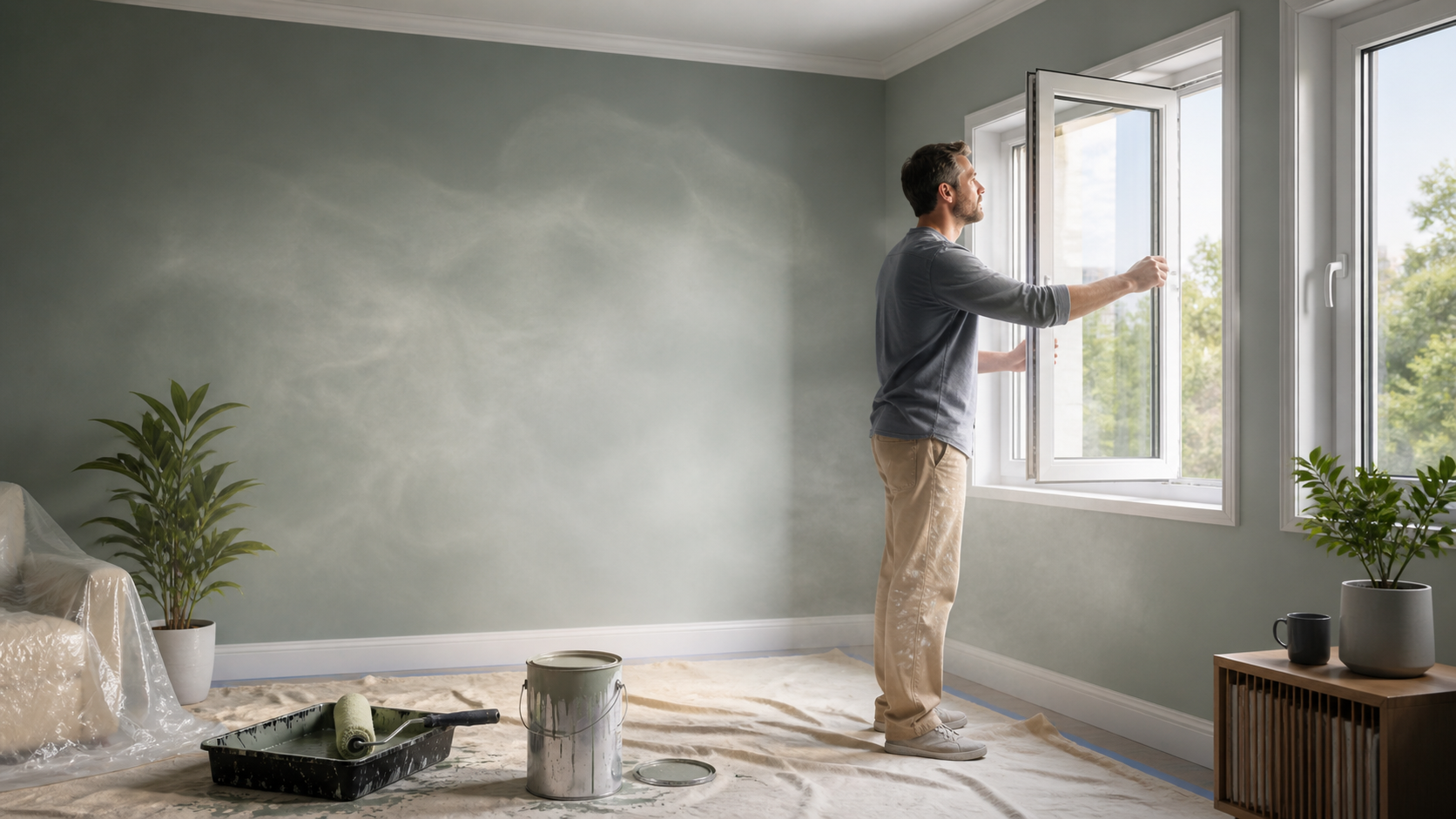
Open windows when outdoor conditions allow. Use fans to move air toward an open window rather than just swirling fumes around the same closed room. Keep interior doors open if it helps air circulate, unless you need to isolate the space from the rest of the home.
The goal is not wind tunnel. It is fresh air exchange.
“Low-VOC” Does Not Mean You Can Ignore Airflow
Low-VOC and zero-VOC paints can be a better choice for many indoor projects, especially in bedrooms and living spaces. They usually smell less intense and may release fewer VOCs than traditional options.
But they still deserve ventilation.
Some low-VOC paints can contain additives, pigments, preservatives, or other ingredients that produce odor. Also, sensitive people may react even to lower levels of fumes. If a paint says low odor, that is nice. It is not permission to paint a nursery, shut the windows, and move the crib back in immediately.
Ventilation remains part of the routine.
If you are choosing paint, read the label before buying. Look for indoor-use paint, low-VOC options when possible, and clear instructions on drying time, cleanup, and ventilation. The less you have to guess later, the better.
Oil-Based Paints and Solvents Need Extra Care
Not all paint products behave the same way.
Water-based latex or acrylic paints are common for indoor walls and usually easier to clean up. Oil-based paints, stains, varnishes, primers, and certain specialty coatings can have stronger odors and may require more serious ventilation.
Solvents can be harsh. They can also be flammable, which adds another safety issue. Rags used with some oil-based products can even pose a fire risk if not handled properly.
This is the point where reading the product label is not optional. The small print may not be thrilling, but it tells you what kind of ventilation, protective equipment, cleanup, and disposal the product requires.
If the product smells very strong, makes your eyes water, or warns about vapors, do not treat it like regular wall paint. Open windows. Use fans appropriately. Take breaks. Keep people and pets away. Consider a respirator if the product calls for it or if ventilation is limited.
No paint project is worth toughing out chemical exposure to prove you are handy.
Small Rooms Are Sneakier Than Big Rooms
Bathrooms, closets, laundry rooms, entryways, and small bedrooms can be tricky after painting.
They have less air volume, fewer windows, and often worse airflow. The same amount of painted surface can affect the air more intensely because there is less fresh air to dilute the fumes.
A closet is a classic example. You paint the inside, close the door so it can dry “without dust,” and then the smell lingers forever. Clothes stored too soon may absorb the odor. The next time you open the closet, it hits you in the face.
Let small spaces breathe longer than you think they need.
Use a fan near the doorway if there is no window. Keep the door open when safe. Avoid putting clothes, bedding, or stored items back until the smell has faded. For bathrooms, keep the exhaust fan running during and after painting if it vents outdoors and is safe to use.
Small rooms do not forgive lazy ventilation.
Weather Can Make Ventilation Easier—or More Annoying
The easiest painting day is mild, dry, and breezy.
If it is freezing outside, opening windows feels painful. If it is hot and humid, the paint may dry slowly. If pollen is awful, you may not want all the windows open. If you live near traffic or wildfire smoke, outdoor air may not be something you want to pull inside.
So ventilation needs a little judgment.
When outdoor air is good, open windows and create cross-ventilation. If only one window opens, place a fan to push air out. If the weather is bad, ventilate in shorter bursts, use exhaust fans that vent outdoors, and avoid painting when you cannot air out the room at all.
This is also why planning matters. Painting at 8 p.m. in a bedroom you need to sleep in that night is usually a bad idea. Painting early in the day gives you more time to air it out before evening.
The Mistake of Closing the Door and Hoping for the Best
People often close a painted room to “contain the smell.”
That can make sense if you are trying to keep fumes away from the rest of the home temporarily, especially if someone sensitive is nearby. But if the room itself has no open window or exhaust route, you have basically made a paint-fume closet.
Containment without ventilation is not a great plan.
A better setup is to isolate the room from the main living area while still giving fumes a path outside. Open a window in the painted room. Use a fan to push air toward that window. Keep the door closed if needed, but make sure the room is not just sealed up.
If you have central heating or air conditioning, check whether running it will spread odors through the home. In some situations, you may want to avoid circulating fumes through the HVAC system while painting and during the strongest odor period.
The main idea is simple: move the fumes outdoors, not just into another room.
Practical Ventilation Steps After Painting
Here is a realistic routine for a typical indoor paint job.
Before You Paint
Choose a paint made for indoor use.
Read the label for ventilation instructions.
Move fabric items out of the room if you can.
Open windows if weather and outdoor air quality allow.
Set up fans so air can move out of the room, not just around it.
Keep kids and pets away from the area.
While You Paint
Take breaks, especially if the smell is strong.
Keep windows or exhaust fans running.
Do not paint in a closed, stuffy room.
Avoid eating in the painting area.
Close paint cans when not in use.
After You Paint
Keep ventilating for at least several hours, and longer if the odor remains.
Do not sleep in the room if it still smells strongly of paint.
Leave doors, drawers, or closet spaces open if they were painted inside.
Wait before moving bedding, clothing, or upholstered items back.
Keep checking the smell the next day, not just the same evening.
Over the Next Few Days
Air out the room when possible.
Use fans safely to improve airflow.
Watch for lingering odors in fabrics or closets.
Avoid heavy use of the room if the smell remains strong.
If symptoms appear, spend less time there and increase ventilation.
This is not complicated. It just requires not rushing the final step.
What If the Paint Smell Will Not Go Away?
A lingering paint smell can happen for several reasons.
The room may not have been ventilated enough. The paint may have been applied too thickly. Humidity may have slowed drying. A closet or corner may still be holding odor. Fabric items may have absorbed the smell. Or the product itself may simply need more time to cure.
Start with air exchange.
Open windows when outdoor air is decent. Use fans to push air out. Keep closet doors and drawers open if they are safe and out of the way. Wash washable fabrics that absorbed odor. Wipe nearby hard surfaces if dust or residue is present.
Avoid covering the smell with air fresheners. That does not remove the source. It just adds more fragrance chemicals to the room, which may make sensitive people feel worse.
If the odor is extremely strong, chemical-like, or causing symptoms even after ventilation, contact the paint manufacturer or a professional. Something may have gone wrong with the product, surface preparation, or application.
When Symptoms Should Not Be Ignored
Mild irritation can happen with paint fumes, but some symptoms need more attention.
Leave the area and get fresh air if you develop dizziness, nausea, chest tightness, wheezing, strong headache, confusion, or shortness of breath. Seek medical help if symptoms are severe, do not improve, or involve a child, pregnant person, older adult, or someone with asthma or heart or lung disease.
If paint or solvent is swallowed, splashed in the eyes, or used in a way that causes serious exposure, contact Poison Control in the U.S. at 1-800-222-1222 or seek emergency care.
It is better to feel a little overly cautious than to sit in a fume-heavy room convincing yourself you are fine.
A Better Habit for Every Paint Project
The habit to build is simple: ventilation is part of painting, not an optional cleanup step.
Buy the paint. Prep the room. Paint the walls. Air it out properly. Wait before using the room heavily.
That last part may feel boring because the visual transformation is already done. But your indoor air still needs time.
Fresh paint can make a home feel renewed, and that is a lovely thing. Just give the room a chance to breathe before you settle back in. Open the windows when you can. Move air outside. Keep children and pets away until the space is ready. Do not sleep in a room that still smells strongly of paint just because the wall looks dry.
A good paint job should leave you enjoying the color, not nursing a headache and wondering why the bedroom smells like a hardware aisle.
Hi, I’m the creator and editor behind ZestyHabit. I research everyday safety, first aid, and practical wellness topics using official guidance and reliable public sources, then turn that information into clear, realistic steps for daily life.
My goal is to help readers make safer, better-informed choices at home and beyond.
[…] first, it is easy to hope it will go away. Many people think, “The car still feels fine, so it is probably nothing.” Sometimes that is true. A loose gas […]



[…] Poor ventilation can allow these allergens to accumulate, triggering persistent nasal symptoms. […]
[…] first, it is easy to hope it will go away. Many people think, “The car still feels fine, so it is probably nothing.” Sometimes that is true. A loose gas […]
[…] people think of blood in urine, they often imagine obvious bright red bleeding. But it does not always look that […]