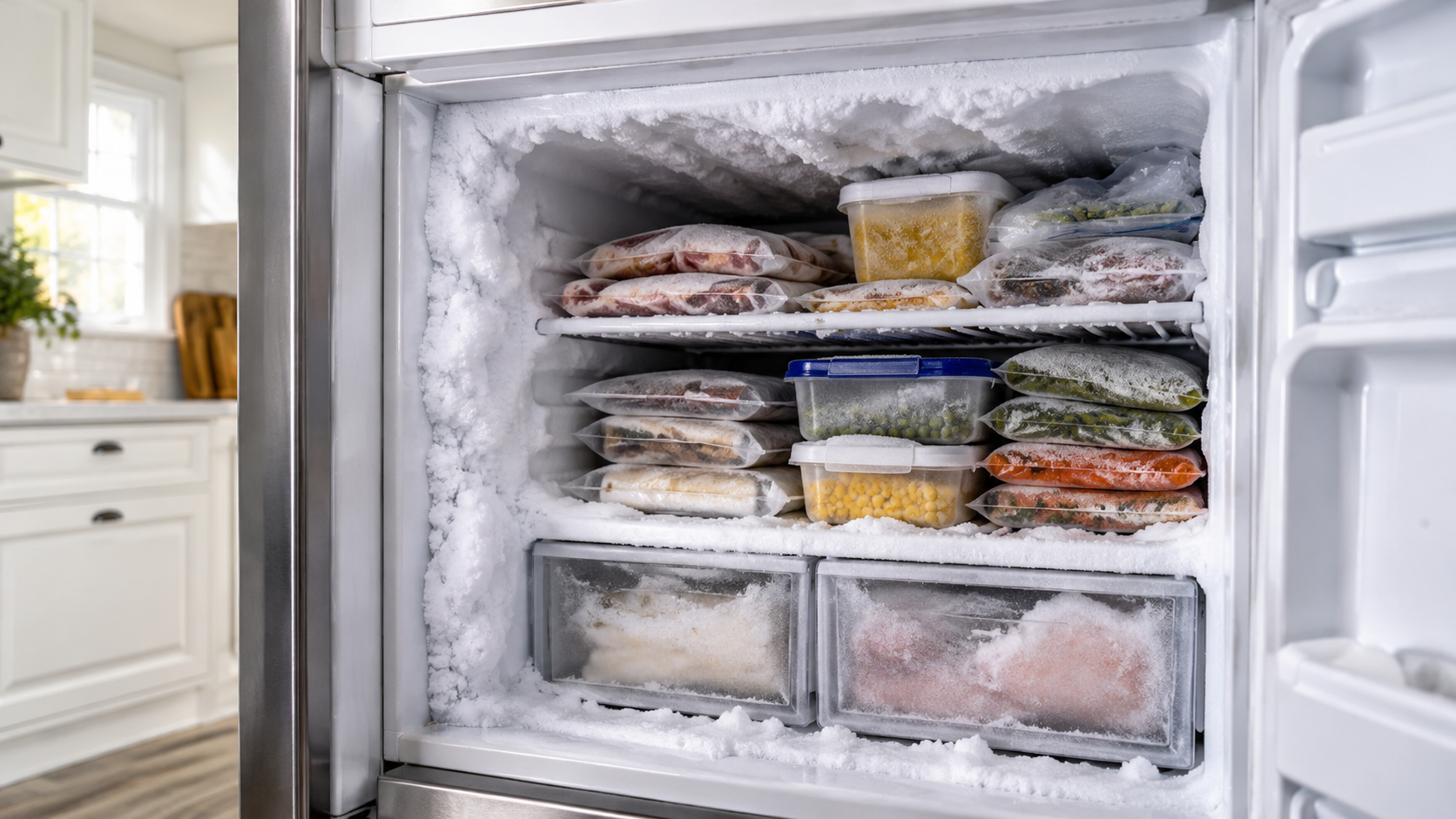
The Freezer Habit That Slowly Steals Space: Ignoring Frost and Ice Buildup
Minjin Park
·
Frost in the freezer may seem like a small annoyance, but ignoring it can affect storage space, food quality, and how well your freezer works. Here’s how to manage freezer ice before it becomes a bigger chore.
At first, it is just a little powdery ice near the back wall. Then a drawer starts scraping when you pull it out. A bag of frozen peas gets stuck to the shelf. The ice cube bin fuses itself to the corner like it has decided to live there permanently.
Most of us ignore it for a while. The freezer still feels cold. The food is still frozen. Nobody wants to spend a Saturday dealing with towels, melting ice, and mysterious old freezer bags.
But frost and ice buildup are not just cosmetic. They can make the freezer harder to use, reduce available space, affect food quality, and sometimes point to a problem with the door seal or how the freezer is being used.
This is one of those household issues that is easier to handle early. A thin layer of frost is annoying. A freezer wall covered in ice is a project.
Why Frost Forms in the Freezer
Frost usually starts with moisture.
Every time warm, humid air enters the freezer, that moisture can freeze onto cold surfaces. Open the door, stand there deciding between frozen dumplings and leftover soup, and the freezer takes in a little warm air. Put in uncovered food, and moisture escapes from that too. Store something that is still warm, and the freezer has to work harder while extra moisture turns into ice.
A small amount of frost can happen even in a well-functioning freezer. The trouble starts when it builds up faster than normal or keeps coming back in the same spots.
Common causes include:
Opening the freezer door often or leaving it open too long
A weak or dirty door gasket
Food packages blocking vents
Warm food placed directly in the freezer
Loose packaging or uncovered containers
A freezer packed so tightly that air cannot move
A manual-defrost freezer that has not been defrosted in a long time
If you have a frost-free freezer, heavy frost is especially worth noticing. Frost-free models are designed to limit ice buildup. They are not magic, but they should not look like a snow cave.
The Problem With “I’ll Deal With It Later”
Frost feels easy to postpone because it does not usually create an emergency. The freezer does not beep. The food does not immediately spoil. The ice simply sits there, quietly making everything more irritating.
The first problem is space. Ice takes up room you paid for. It can make shelves uneven, block drawers, and trap food behind frozen ridges. When the freezer becomes harder to organize, things get buried. Then you buy more food because you cannot see what you already have.
The second problem is airflow. Freezers need cold air to circulate. If vents are blocked by food or ice, some areas may not stay as evenly cold. That can affect how well food freezes and how long it keeps its quality.
The third problem is efficiency. A freezer dealing with thick frost may have to work harder. That does not mean one frosty corner will ruin your electric bill, but heavy buildup is not helping anything.
And then there is the simple daily annoyance. A freezer that scrapes, sticks, and drops ice flakes every time you open it makes cooking feel just a little more chaotic than it needs to.
Frost Can Hurt Food Quality, Too
People often think frozen food lasts forever. Technically, freezing keeps food safe for a long time if it stays properly frozen, but quality can still go downhill.
Frost buildup often goes hand in hand with freezer burn. Freezer burn happens when food loses moisture and is exposed to air. It can make meat look grayish or dry, vegetables icy and limp, and leftovers taste stale.
Freezer-burned food is usually not dangerous if it has stayed frozen, but it may taste disappointing. You know the kind: chicken that cooks up dry no matter what you do, bread that smells like “freezer,” soup with weird ice crystals on top.
A lot of freezer burn comes from poor packaging. Half-open bags, thin store packaging, cracked lids, and containers with too much empty space all invite air exposure.
Frost on the freezer walls and frost inside food packaging are not exactly the same thing, but they often share the same root problem: too much air and moisture moving around.
Check the Door Seal Before Blaming the Freezer
If frost keeps forming near the door or around the front edges, check the gasket. That is the rubber seal around the freezer door.
A gasket does a simple job: it keeps cold air in and warm air out. When it gets dirty, loose, cracked, or warped, humid air can sneak in. That moisture freezes, and suddenly you have ice in places that should stay clean.
Run your hand around the door edge and feel for cold air escaping. Look for crumbs, sticky spills, or tiny bits of packaging stuck to the seal. Clean the gasket with warm, soapy water and dry it well.
There is also the dollar bill test. Close the freezer door on a dollar bill, then gently pull. If it slides out with almost no resistance, the seal may be weak in that spot. Try this in several places around the door.
Sometimes the fix is as simple as cleaning the gasket or rearranging food so nothing pushes against the door. Other times, the gasket may need replacing.
Stop Blocking the Vents
Freezer vents are easy to ignore because they are usually tucked along the back or side. But they matter.
Cold air needs a path. If frozen pizza boxes, bags of vegetables, or storage bins are pressed against the vents, air cannot circulate properly. This can create uneven temperatures and more frost in certain areas.
You do not need a perfectly styled freezer. This is not a magazine photo. But try to leave a little breathing room around vents. Avoid packing food so tightly that nothing can move.
A freezer that is full but organized works better than one that is either crammed solid or almost empty. If yours is nearly empty, a few containers of ice or frozen water bottles can help hold temperature more steadily. If it is packed like a suitcase before vacation, take ten minutes to remove old food and make space for airflow.
Warm Food Does Not Belong Straight in the Freezer
Putting hot leftovers directly into the freezer can create extra steam and moisture. That moisture may turn into frost, and the freezer has to work harder to bring the food down to temperature.
This does not mean you should leave cooked food out for hours. Food safety still matters. But it helps to cool leftovers properly before freezing.
Divide large batches into shallow containers so they cool faster. Let them cool a bit on the counter for a short time, then move them to the refrigerator. Once chilled, freeze them. If you are freezing soup or sauce, leave a little headspace for expansion, but not so much empty space that the food is surrounded by air.
For everyday leftovers, I like the “fridge first, freezer later” rhythm. It gives the food time to cool safely and reduces the blast of steam going into the freezer.
Packaging Makes a Bigger Difference Than People Expect
Bad packaging is one of the quiet causes of freezer mess.
Store packaging is often not meant for long freezer storage. Meat wrapped in thin plastic and foam trays can let air in. Open bags of vegetables spill little frozen pieces everywhere. Bread bags twist loosely and let slices dry out.
Better packaging does not have to be fancy.
Use freezer bags, airtight containers, or wrap food tightly before freezing. Press extra air out of bags. Label food with the date so you do not have to play “is this chili from last month or last winter?”
For meat, consider portioning before freezing. Wrap individual pieces or freeze them flat in bags. This reduces thawing time later and keeps packages neater. For soups and sauces, freeze in practical portions instead of one giant block.
The less air trapped with the food, the better the texture tends to stay.
Manual-Defrost Freezers Need Regular Attention
Some freezers are manual-defrost models, especially chest freezers, older units, compact freezers, and certain garage freezers. These do not automatically remove frost the way frost-free models do.
If you have a manual-defrost freezer, frost buildup is expected over time. The key is not letting it get out of hand.
A good rule of thumb is to defrost when frost reaches about a quarter inch thick. You do not need to measure it with a ruler like a scientist. If ice is clearly building up on the walls and stealing space, it is time.
The job is easier when the freezer is not packed full. Before grocery shopping is a good moment. Use up what you can first, move the remaining food to a cooler with ice packs, and give yourself enough time.
How to Defrost Without Making a Huge Mess
Defrosting sounds worse than it is, as long as you prepare.
First, unplug the freezer or turn it off according to the manufacturer’s instructions. Remove the food and place it in coolers. Put towels around the base to catch water. If your freezer has a drain, use it.
Let the ice soften naturally. You can place bowls of hot water inside to speed things up, then close the door for a few minutes. Replace the water as it cools.
Do not attack the ice with a knife, screwdriver, or metal tool. I know it is tempting. There is something weirdly satisfying about trying to chip away at freezer ice. But one slip can puncture a wall, damage the cooling system, or create an expensive repair.
Use a plastic scraper if needed, and be patient.
Once the ice is gone, wipe the inside with warm, soapy water. Dry everything thoroughly before turning the freezer back on. Moisture left behind can freeze again quickly.
Frost-Free Freezers Still Need Cleaning
A frost-free freezer does some of the work for you, but it does not remove the need for basic maintenance.
Food crumbs, torn bags, old spills, and loose ice can still collect. The door gasket still needs cleaning. Vents can still get blocked. The freezer can still smell stale if old food sits too long.
A quick monthly check helps. You do not need to empty everything. Just look for damaged packaging, wipe small spills, toss food that is clearly past its useful life, and make sure the door closes fully.
If a frost-free freezer has heavy ice buildup, something may be wrong. Check the gasket, vents, and temperature setting first. If those look fine and the frost keeps coming back, the defrost system may need service.
The Temperature Setting Matters
A freezer should be cold enough to keep food solid and safe. In the U.S., 0°F is the standard freezer temperature. A small appliance thermometer can tell you whether your freezer is actually staying there.
Sometimes the dial inside a freezer is vague. It may say “cold” and “coldest” instead of showing temperatures. That is not very helpful when you are trying to troubleshoot frost or soft ice cream.
If your ice cream is always too soft, the freezer may be too warm. If you are getting excessive frost and the unit runs constantly, there may be an airflow, seal, or mechanical issue. Temperature is a clue, not the whole story.
Avoid changing the setting dramatically and repeatedly. Make small adjustments and give the freezer time to stabilize.
Garage and Basement Freezers Have Their Own Issues
Extra freezers in garages, basements, and laundry rooms are convenient, especially for bulk shopping. They also live in tougher conditions.
Garages can get hot in summer and cold in winter. Basements can be damp. Laundry rooms may have humidity from dryers and washers. All of that affects how hard the freezer works and how much moisture it deals with.
Make sure the freezer is rated for the location where you use it. Some models are not designed for extreme garage temperatures. Leave space around the unit for ventilation. Keep it away from direct sun, heaters, and damp corners if possible.
If the area is humid, frost may build faster when the door is opened. In that case, good door habits and a clean gasket matter even more.
Door Habits Are Small but Powerful
Every freezer has a little patience limit. Open the door too often or stand there too long, and warm air gets in.
This is where organization helps. If you know where things are, you do not have to dig through frozen bags while the door hangs open.
Try grouping similar foods together: meats in one bin, vegetables in another, leftovers in a labeled section, breakfast items in one area. Clear bins can help, but you do not need to buy a whole organizing system. Even reusing sturdy containers can make a difference.
Labeling matters more than people think. A mystery container takes longer to identify, and that means the door stays open longer. Write “chili, March” or “chicken thighs, 2 pieces” and spare yourself the frozen guessing game.
When Ice Buildup Signals a Bigger Problem
Not all freezer ice is caused by habits. Sometimes it points to a repair issue.
A frost-free freezer develops thick ice on the back panel
These signs may mean a bad gasket, blocked drain, faulty thermostat, defrost system problem, or airflow issue. Some fixes are simple. Others need a technician.
It is worth checking the user manual before calling for service. Many manuals have troubleshooting sections that are surprisingly useful, even if they are not thrilling bedtime reading.
A Simple Freezer Reset Routine
If your freezer has gotten out of control, start with a reset.
Choose a day when you have a little time and not too many groceries inside. Remove everything. Toss food that is badly freezer-burned, unlabeled, or clearly forgotten beyond reason. Group what you are keeping.
Defrost if needed. Wipe the interior. Clean the gasket. Dry everything well. Put food back in zones, leaving vents clear.
Then make one small habit stick: label new items before freezing. That alone prevents so much freezer chaos.
Another helpful habit is a quick “freezer glance” before grocery shopping. Check what meat, vegetables, and leftovers you already have. This reduces overbuying, keeps food rotating, and prevents old bags from disappearing under new ones.
The Freezer Should Help You, Not Annoy You
Ignoring freezer frost is understandable. It feels like a small problem until the drawer jams, the food gets icy, or the freezer becomes a place where leftovers go to vanish.
But a little maintenance makes the freezer easier to use. Keep moisture out when you can. Package food tightly. Cool leftovers before freezing. Leave room for airflow. Clean the door seal. Defrost manual models before the ice turns into a wall.
None of this needs to be perfect. A freezer is a working part of the kitchen, not a showroom. It just needs enough attention to stay cold, clean, and usable.
The next time you see frost starting to gather, treat it as a quiet reminder. Not a disaster. Just a small household nudge saying, “Handle this while it is still easy.”
Hi, I’m the creator and editor behind ZestyHabit. I research everyday safety, first aid, and practical wellness topics using official guidance and reliable public sources, then turn that information into clear, realistic steps for daily life.
My goal is to help readers make safer, better-informed choices at home and beyond.