The Small Kitchen Habit That Makes Plastic Containers Work Harder Than They Should
Minjin Park
·
Putting hot food straight into plastic containers can affect taste, container wear, and possibly chemical exposure. Here’s a realistic, low-stress way to handle leftovers more safely.
There is a very normal moment after cooking when you just want the kitchen to be done.
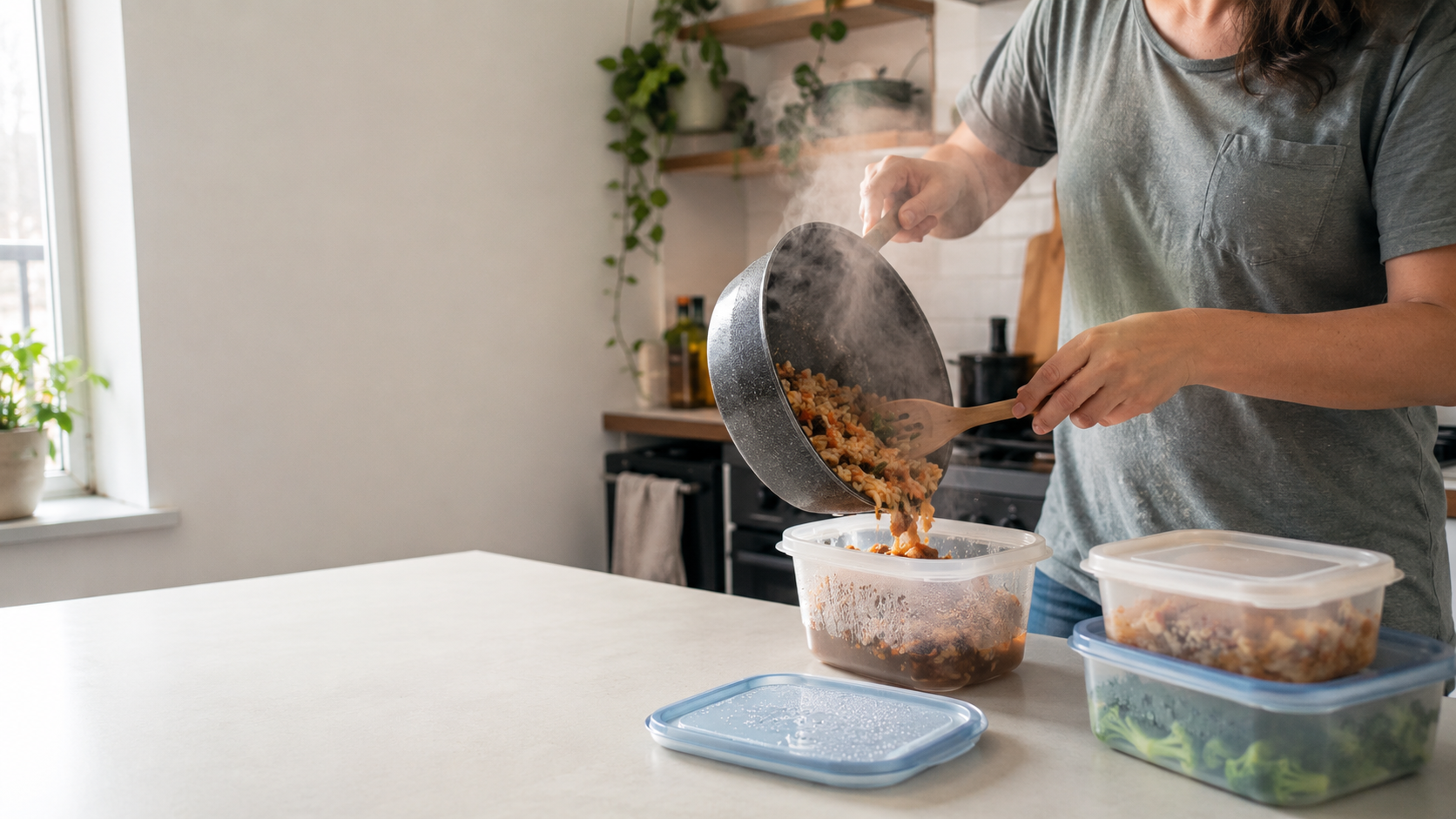
The pan is still warm. The rice cooker is open. Soup is cooling on the stove. Maybe you made pasta, curry, chili, roasted vegetables, or a big batch of meal-prep chicken. You grab a plastic container, scoop everything in, snap the lid on, and feel a tiny bit proud because at least tomorrow’s lunch is handled.
Honestly, that habit makes sense. Plastic containers are light, cheap, stackable, and forgiving. They do not shatter if you knock one off the counter. They fit in lunch bags. They are everywhere.
The problem is not that plastic containers are evil or that every leftovers routine needs to become some complicated wellness ritual. The real issue is simpler: plastic and heat are not always a great match.
When very hot food goes directly into plastic, the container is exposed to more stress than it was probably meant to handle. Over time, that can mean warping, staining, lingering smells, surface damage, and in some cases, increased transfer of chemicals from the plastic into the food.
That does not mean you need to throw away every container in your kitchen tonight. It does mean this small habit is worth changing.
Why Hot Food and Plastic Can Be a Bad Pair
Plastic is not one single material. There are many types, and they behave differently depending on temperature, age, thickness, and how they are used.
Some plastics are designed to tolerate higher temperatures. Others are better suited for cool or room-temperature foods. Even containers labeled “microwave-safe” or “food-safe” have limits. Those labels usually mean the container meets certain use standards, not that it is indestructible or ideal for every hot, oily, acidic food you can put in it.
Heat softens plastic. Not always dramatically, but enough to matter. If you have ever seen a lid bend after being placed near a hot pan, or a takeout container sag after holding steaming food, you have seen this in action.
Hot food also creates steam. Steam builds pressure inside a closed container, especially if you seal it too soon. That can make lids bulge, trap moisture, and create a weird little greenhouse for your leftovers. Not exactly appetizing.
Then there is the food itself. Hot soup is one thing. Hot oily curry, tomato sauce, chili, or greasy stir-fry is another. Fat and acidity can be tougher on plastic surfaces than plain rice or steamed vegetables. That is why some containers turn orange after one round of spaghetti sauce and never quite recover, no matter how much soap you use.
The Chemical Concern, Without the Panic
People often hear about plastic and immediately think of BPA. That is one piece of the conversation, but not the whole thing.
Some plastics may contain compounds such as BPA, phthalates, or other additives used to make the material flexible, durable, clear, or heat-resistant. Food contact regulations exist, and many containers are made to be used safely under specific conditions. Still, heat can increase the chance that small amounts of certain substances migrate from plastic into food.
This is why the habit matters most when several factors pile up:
the food is very hot
the food is oily or acidic
the container is old, scratched, cloudy, or warped
the container is not clearly meant for hot food
the food sits in the container for a long time
the container is repeatedly microwaved, washed, and reused
One hot meal in a plastic container is not a disaster. Daily repetition is where the concern becomes more practical.
Think of it less like “I poisoned my lunch” and more like “I am making this container do a job it is not great at.”
That framing is calmer and more useful.
The First Sign: Your Container Starts Looking Tired
A plastic container often tells you when it has had enough.
It may start to feel rough inside. The lid may not close as neatly as it used to. The container may hold onto smells even after washing. Tomato-based foods may leave permanent stains. Clear plastic may become cloudy. The bottom may develop tiny scratches from forks, dishwashers, or scrubbing pads.
Those scratches matter because they create more surface area and tiny places for food residue to cling. They also make the container harder to clean properly.
If you open your cabinet and see a plastic box that looks like it survived three generations of lasagna, maybe let it retire. It has served.
What About “Microwave-Safe” Plastic?
This label causes a lot of confusion.
“Microwave-safe” usually means the container should not melt, crack, or release unsafe levels of substances under specified testing conditions. It does not necessarily mean it is the best choice for heating greasy stew until it bubbles like lava.
Also, microwaves heat unevenly. One part of the food may be warm while another part gets extremely hot. Sauces with oil can create especially hot spots. That means a container can be exposed to higher temperatures in certain areas than you might expect.
If you use plastic in the microwave, it is better to do it gently: short heating intervals, lid loosened or vented, and no boiling-hot oily foods. But if you have glass or ceramic available, those are usually better for reheating.
The easiest rule: store in plastic if needed, reheat in glass or ceramic when possible.
The Lid Problem Nobody Talks About
Even people who avoid microwaving plastic sometimes forget about lids.
A common routine goes like this: food goes into a bowl, plastic lid goes on top, then the whole thing goes into the microwave. The lid may not touch the food, but it still catches steam and heat. Over time, lids can warp, loosen, or absorb smells.
If the lid has a vent, use it properly. If it does not, leave the lid slightly open or cover the food with a microwave-safe plate or splatter cover instead.
And do not seal steaming hot food right away. That trapped heat and moisture can make the food soggy, stress the container, and create condensation that drips back into the meal.
Nobody wants yesterday’s crispy roasted vegetables turning into sad fridge fog.
The Better Habit: Let Food Cool First
The simplest fix is not fancy.
Let hot food cool down a little before putting it into plastic.
You do not need to leave dinner sitting out for hours. Food safety still matters. Perishable foods should not hang around at room temperature too long. The goal is just to bring the food down from “steaming hot” to “warm enough that it is not punishing the container.”
You finish cooking. You turn off the heat. You eat. Before cleaning up, you spread leftovers into a shallow dish or leave the pot uncovered for a short while. Once the food is no longer aggressively steaming, you transfer it.
For big batches, shallow containers cool faster than deep ones. A huge pot of hot soup can stay hot in the center for a surprisingly long time. Dividing it into smaller portions helps it cool more evenly and get into the fridge sooner.
This is not about perfection. It is about not pouring bubbling sauce into plastic five seconds after turning off the stove.
Use Glass for the Hottest Foods
If you regularly store hot leftovers, glass containers are worth having.
They are heavier, yes. They can break, yes. They also handle heat better, resist stains, and do not hold onto smells the way plastic does. Tomato sauce, curry, garlic-heavy soup, kimchi fried rice, chili — these are all foods that tend to behave better in glass.
Glass is especially useful for meal prep because you can often store, reheat, and eat from the same container. Fewer dishes. Less fuss. That matters.
You do not need a full Pinterest-perfect set. Even two or three glass containers can make a difference. Use them for the foods that are hottest, oiliest, most acidic, or most likely to stain.
Plastic can still handle things like washed fruit, chopped vegetables, crackers, sandwiches, cooled rice, or dry snacks. It does not have to disappear from your kitchen.
Be Careful With Takeout Containers
Takeout containers are tempting to reuse because they feel free.
Some are sturdy. Some are not. The trouble is that many are designed for short-term transport, not repeated storage, reheating, freezing, dishwashing, and scraping.
If a takeout container gets soft, warped, cracked, or cloudy, do not keep using it for hot food. If it feels thin and flimsy, treat it as temporary packaging, not a long-term kitchen tool.
This is especially true for black plastic trays, foam containers, and thin clear containers with snap lids. They may be fine for carrying food home, but they are not always a good choice for reheating or storing hot leftovers.
I know it feels wasteful to toss them. Reusing things is usually a good instinct. But there is a point where “reuse” becomes “why am I trusting this tired little box with my soup?”
Watch Out for Oily and Acidic Foods
Heat is not the only factor. The type of food matters too.
Oily foods can interact with plastic differently than watery foods. Acidic foods, such as tomato sauce, vinegar-based dishes, citrusy marinades, and spicy stews, can also be harder on containers.
That is why a plastic container might be totally fine after holding plain noodles but turn permanently red-orange after one encounter with hot pasta sauce. It is also why kimchi, curry, chili oil, and tomato soup tend to leave their mark.
For those foods, glass or ceramic is a better default. If you only have plastic, let the food cool first and avoid reheating it in the same container.
Do Not Scrub Plastic Like a Baking Pan
Once plastic stains, many people attack it with rough scrubbers. I get the urge. That orange film feels personal.
But harsh scrubbing can scratch the surface, and scratched plastic is harder to clean later. It can also age faster.
A gentler method works better: wash with warm soapy water, let it soak if needed, and use a soft sponge. For smells, baking soda paste can help. For oily residue, dish soap and warm water usually do the heavy lifting.
If the smell will not leave, especially after storing garlic, fish, curry, or fermented foods, it may be time to downgrade that container to non-food use or recycle it if your local system accepts that type of plastic.
Not every container deserves a rescue mission.
The Freezer Is Different, But Still Has Rules
Plastic containers can be useful for freezing food, especially once the food has cooled.
The main thing is to avoid putting very hot food directly into the freezer in plastic. That can raise the temperature around nearby frozen foods and create condensation. It can also stress the container.
Cool the food first, portion it, leave a little space for expansion, then freeze.
Soups, stews, and sauces expand as they freeze. If you fill a container to the absolute top, the lid may pop or the container may crack. Leave some room. Future you will appreciate it.
A Realistic Leftovers Routine
Here is a simple routine that works in normal kitchens, not imaginary kitchens where everyone has endless counter space and matching storage jars.
After cooking, let the food stop steaming heavily. If it is a big batch, move it into a shallow dish or divide it into smaller portions. Use glass for hot, oily, acidic, or strongly flavored foods. Use plastic for foods that have cooled or are less aggressive on the container.
When reheating, move food to a ceramic or glass bowl when you can. If using plastic, make sure it is meant for microwave use, vent the lid, and avoid overheating.
Replace containers when they are scratched, warped, sticky, cloudy, cracked, or permanently smelly.
That is basically it. No dramatic kitchen overhaul required.
What If You Already Do This Every Day?
Do not spiral. Most people have put hot food into plastic at some point. Many of us grew up watching leftovers go straight from the pan into whatever container was clean.
The point is not to feel guilty about every packed lunch you have ever eaten. The point is to make the habit a little better from here.
Start with the easiest swap. Maybe hot soup goes into a glass jar or glass container. Maybe tomato sauce gets cooled before storage. Maybe you stop microwaving plastic lids. Maybe you finally throw away the warped container that only closes if you press it like a suitcase before vacation.
Small changes count here because this is a repeated habit. A tiny improvement that happens five times a week is not tiny anymore.
The Containers Worth Keeping
A good plastic container should still look and feel stable. The lid should fit well. The surface should be smooth. It should not smell like old garlic after washing. It should not be cracked or bent.
Check the bottom for labels or symbols. Some containers are marked for microwave, dishwasher, or freezer use. Those markings are helpful, though they still do not mean the container should be abused with boiling hot food every day.
If you are buying new containers, consider mixing materials instead of buying only plastic. A few glass containers, a few sturdy plastic ones, and maybe some silicone bags or stainless steel containers can cover most needs.
Stainless steel is great for cold lunches and dry snacks, though it cannot go in the microwave. Glass is best for reheating. Plastic is convenient for lightweight storage. Each one has its place.
The Bottom Line in Everyday Terms
Putting hot food straight into plastic is easy, but it is not always the smartest default.
The heat can wear down the container faster. Oily and acidic foods can stain and cling. Steam can warp lids. Older or damaged plastic may be more likely to transfer unwanted substances into food, especially under heat.
The better habit is simple: cool food a little first, use glass or ceramic for the hottest meals, avoid microwaving plastic when you have another option, and replace containers that look worn out.
You do not need to become the kind of person who decants every leftover into a perfect row of glass jars. Unless that brings you joy, in which case, honestly, enjoy your beautiful fridge.
For the rest of us, a more realistic goal is enough: let the food cool, choose the right container for the job, and stop asking one old plastic box to handle boiling curry, freezer storage, microwave reheating, and dishwasher abuse forever.
Hi, I’m the creator and editor behind ZestyHabit. I research everyday safety, first aid, and practical wellness topics using official guidance and reliable public sources, then turn that information into clear, realistic steps for daily life.
My goal is to help readers make safer, better-informed choices at home and beyond.