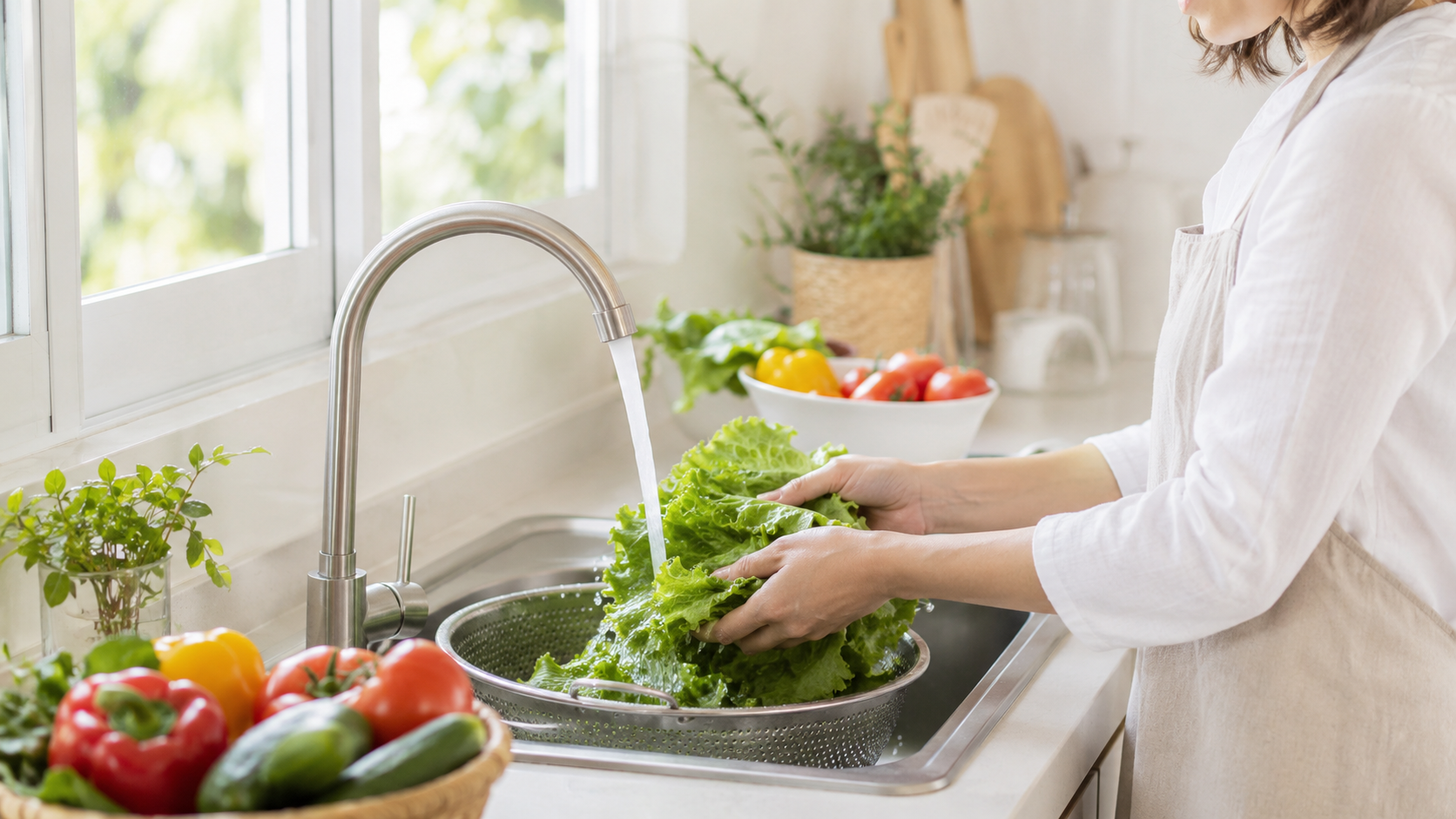
The Small Kitchen Habit That Matters More Than It Seems: Washing Raw Vegetables Well
Minjin Park
·
Eating raw vegetables is a healthy habit, but skipping a proper rinse can bring dirt, bacteria, and pesticide residue to your plate. Here’s how to wash produce in a realistic, everyday way.
A bag of lettuce can look perfectly fresh. A cucumber can be shiny and firm. Cherry tomatoes can sit in the container looking like little red jewels, ready to be tossed into a salad without much thought.
And honestly, that is exactly how many of us treat raw vegetables. We are hungry, the food looks clean, and washing feels like one more tiny step in a day already packed with tiny steps.
Maybe you rinse a tomato for two seconds under the tap. Maybe you give lettuce a quick splash and call it done. Maybe you skip washing altogether when the label says “pre-washed,” or when the vegetable came from a “clean-looking” grocery store.
The tricky thing is that raw vegetables do not always show what they are carrying. Dirt is easy to see. Fine grit, bacteria, tiny insects, handling residue, and pesticide traces are not.
That does not mean you need to become nervous every time you eat a salad. Raw vegetables are still a wonderful part of everyday eating. But the habit of eating them without washing them properly is worth paying attention to, mostly because it is so easy to fix.
Raw Vegetables Pass Through More Hands Than We Imagine
When we buy produce, we usually see the final version: neatly stacked cucumbers, bright peppers, spinach in plastic clamshells, carrots lined up in a chilled section.
Before that, though, vegetables have had a long trip.
They grew in soil or close to it. They were exposed to water, dust, insects, animals, farm tools, harvesting equipment, crates, trucks, warehouse surfaces, grocery displays, and shoppers’ hands. Someone may have picked up the same head of lettuce before you, decided it was not crisp enough, and put it back.
Not a pleasant thought, I know. But it is a normal part of how produce moves through the world.
This is why “fresh” and “clean” are not the same thing. A vegetable can be fresh, nutritious, and still need a proper wash before it goes into your mouth.
Why Raw Produce Needs Extra Attention
Cooking gives us a safety buffer. Heat can reduce many germs that might be on the surface of food. But when we eat vegetables raw, that buffer is gone.
That is the point of a salad, of course. Crisp lettuce. Snappy cucumbers. Fresh herbs. Crunchy carrots. Nobody wants a cooked Caesar salad.
But because raw vegetables go straight from cutting board to plate, the washing step becomes more important. It is the main chance you have to remove what may be sitting on the surface.
The Common Things That Can Stay on Unwashed Vegetables
Unwashed raw vegetables may carry:
Soil or grit
Bacteria from soil, water, animals, or handling
Tiny insects or insect fragments
Pesticide residue
Wax or surface coatings on some produce
Dust and residue from transport or storage
Most of the time, eating a barely rinsed cucumber will not lead to disaster. But food safety is not about the one time everything goes fine. It is about lowering the odds of an unpleasant surprise, especially when the fix is simple.
The Salad Bowl Is Where Small Mistakes Add Up
A single unwashed vegetable may not seem like a big deal. But think about a typical salad.
You might have romaine, spinach, tomatoes, cucumber, carrots, bell pepper, onion, avocado, herbs, and maybe a handful of sprouts. That is a lot of surfaces. A lot of cutting. A lot of chances for whatever is on the outside to move around.
One dirty lettuce leaf can share grit with the whole bowl. One unwashed cucumber can transfer residue to your knife, cutting board, and the other ingredients. If you slice through an unwashed melon or avocado, the knife can drag surface contamination into the flesh.
This is one reason washing should happen before cutting, not after. Once the knife goes through the vegetable, anything on the outside has a chance to spread.
“But It’s Organic” Does Not Mean “No Need to Wash”
Organic vegetables still grow in soil. They are still handled, packed, transported, displayed, and touched.
Organic farming may use different pest-control methods, but organic produce is not sterile produce. It can still have dirt, bacteria, insects, and natural residues. Sometimes organic greens even come with more visible soil because they are less aggressively processed.
That is not a bad thing. Soil is part of growing food. But soil belongs in the garden, not in your teeth during lunch.
So yes, wash organic vegetables too. Not because they are unsafe by nature, but because they are real food from a real environment.
Pre-Washed Greens: Helpful, Not Magical
Pre-washed lettuce and salad mixes are convenient. I use them too. There is something beautiful about being able to open a box of baby spinach and make lunch in three minutes.
If a package says “triple washed” or “ready to eat,” it has usually gone through a commercial washing process. Many people eat those greens straight from the container, and that is how they are intended to be used.
Still, pre-washed does not mean risk-free. Bagged greens have been linked to foodborne illness outbreaks before, partly because leaves have lots of surface area and are often eaten raw.
So what should you do?
For most healthy adults, using ready-to-eat greens as labeled is common and reasonable. But if the greens look slimy, smell sour, are past their date, or have excess moisture pooling in the package, toss them. No dressing can rescue suspicious spinach. I say this as someone who has tried to talk herself into “just picking out the bad pieces.” Don’t.
For people who are pregnant, elderly, immunocompromised, or preparing food for someone more vulnerable, it may be worth being more cautious with raw packaged greens.
Washing Is Not Complicated, But It Should Be Intentional
You do not need special sprays. You do not need vinegar baths for everything. You do not need to treat a tomato like it is being prepared for surgery.
For most vegetables, cool running water and a little friction are enough.
The key is not just “water touched it.” The key is letting water run over the surface while you gently rub, separate, scrub, or swish depending on the vegetable.
A Better Way to Wash Firm Vegetables
Firm vegetables include cucumbers, carrots, zucchini, bell peppers, radishes, and tomatoes.
Rinse them under cool running water. Use your hands to rub the surface while turning them. For vegetables with thicker skin, like cucumbers or carrots, a clean produce brush can help remove stubborn dirt.
Do this before peeling too. That may sound unnecessary, but if the outside is dirty, your peeler or knife can carry that residue onto the part you plan to eat.
Carrots are a perfect example. They may look clean in the bag, but a quick scrub usually tells the truth. The water runs a little cloudy, and suddenly you are glad you did not skip it.
Leafy Greens Need More Than a Quick Splash
Lettuce, kale, cilantro, parsley, spinach, and other leafy greens are a bit more annoying. There is no polite way around it.
Leaves have folds, veins, stems, and hidden pockets where dirt can sit. A quick pass under water often misses the inner parts.
For heads of lettuce or bunches of greens, separate the leaves first. Place them in a large bowl of cool water, swish them around gently, then lift the leaves out instead of pouring the water over them. The dirt tends to sink to the bottom, so dumping everything into a colander can pour the grit right back over the greens.
Repeat if the water looks sandy.
Then dry the leaves well. A salad spinner is genuinely useful here. If you do not have one, lay the leaves on a clean towel and pat them dry. Wet greens make dressing watery, and nobody enjoys a puddle salad.
Herbs Deserve a Real Rinse Too
Fresh herbs are easy to overlook because they are used in small amounts. A little cilantro on tacos, a few basil leaves on pasta, parsley sprinkled over eggs.
But herbs can carry plenty of dirt, especially around the stems.
The easiest method is to hold the bunch by the stems and swish the leafy part in a bowl of cool water. Change the water if needed. Then gently dry them with a towel or spinner.
This takes less than a minute, but it makes a difference. Gritty parsley can ruin a meal faster than you would expect.
What About Vinegar, Baking Soda, or Produce Wash?
This is where kitchen advice can get strangely intense. Some people swear by vinegar. Some use baking soda. Some buy commercial produce washes. Some say plain water is enough.
For everyday use, plain running water is usually the most practical and recommended approach. The physical action of rinsing and rubbing does much of the work.
Vinegar can help reduce some surface microbes, but it can also affect taste and texture, especially with delicate greens or berries. Baking soda solutions may help with some pesticide residues on certain produce, but it requires soaking and thorough rinsing. Commercial washes are not necessary for most home kitchens.
If you like using a baking soda soak for apples or firm produce once in a while, fine. Just rinse very well afterward. But do not let special methods become a reason to avoid washing altogether because it feels like too much work.
A simple rinse done consistently is better than a perfect routine you only do twice a month.
The Cutting Board Problem Nobody Notices
Washing vegetables is only part of the story. The surface you put them on matters too.
If you rinse lettuce and then drop it onto a cutting board that was just used for raw chicken, the lettuce is no longer your main problem. Cross-contamination can undo good washing habits in seconds.
Keep raw meat, poultry, seafood, and their juices away from fresh vegetables. Use separate cutting boards if you can. If not, wash the board, knife, and counter thoroughly before switching foods.
This matters especially when making meals that involve both cooked and raw ingredients. Think tacos with raw lettuce, grilled chicken salad, burgers with tomato and onion, or rice bowls topped with fresh cucumber.
The raw vegetables often go on at the end, after everything else has been handled. That is exactly when a messy kitchen can cause trouble.
When “Just a Little Dirt” Is Not Cute
There is a certain rustic charm to garden vegetables. A tomato still warm from the sun. Lettuce from a farmers market. Radishes with the greens attached. It feels wholesome.
And it is. But wholesome does not mean you should eat the dirt.
Homegrown and farmers market vegetables often need a more careful wash than supermarket produce because they may come with more soil still attached. That is not a flaw. It is just part of getting food closer to the source.
Root vegetables, leafy greens, and anything with lots of folds or stems deserve extra attention. If you have ever washed leeks, you know they can hide an entire sandbox inside their layers.
People Who Should Be More Careful
Most healthy adults can handle small everyday exposures without much issue. But some people are more vulnerable to foodborne illness and may need to be stricter with raw produce.
That includes:
Pregnant people
Young children
Older adults
People with weakened immune systems
People undergoing certain medical treatments
Anyone with a serious chronic illness affecting immunity
For these groups, it may be safer to avoid higher-risk raw items like sprouts and to be extra careful with leafy greens, cut fruit, and pre-prepared salads.
This is not about fear. It is about knowing when the margin for error is smaller.
One helpful habit is to wash and dry certain vegetables soon after bringing them home. Not everything stores well after washing, but many sturdy items do fine if dried properly.
For example, you can wash cucumbers, bell peppers, radishes, and carrots, dry them well, and store them in the fridge. Lettuce can be washed, spun dry, and stored with a paper towel in a container. Herbs can be washed and dried, then wrapped loosely in a towel.
The key word is dry. Excess moisture makes produce spoil faster. If you wash ahead, take the drying step seriously.
This little bit of prep turns future-you into a calmer person. Future-you can open the fridge and build a snack plate without negotiating with a muddy bunch of cilantro.
A Realistic Produce Washing Routine
Here is a routine that works in an ordinary kitchen:
Wash your hands first. It sounds basic, but it matters.
Rinse produce under cool running water before cutting, peeling, or eating. Rub firm vegetables with your hands. Use a clean brush for rough or thick skins.
For leafy greens, separate the leaves and swish them in a bowl of water. Lift them out, check the bottom of the bowl, and repeat if needed.
Store washed produce properly, especially if you washed it ahead of time.
That is it. No drama. No fancy setup.
What You Do Not Need to Worry About Too Much
You do not need to panic over every unwashed blueberry you ate in childhood. You do not need to throw away all your vegetables because you have been rinsing them quickly. You do not need to turn lunch into a food safety inspection.
A better approach is simply to tighten the habit.
Wash before cutting. Give leafy greens enough time. Scrub the dirty-looking stuff. Keep raw meat away from salad ingredients. Throw out produce that smells off, feels slimy, or looks spoiled.
These are ordinary kitchen habits, not extreme ones.
The Bottom Line on Raw Vegetables
Raw vegetables are worth keeping in your meals. They add crunch, freshness, color, and a kind of everyday brightness that cooked food does not always have. A sandwich with crisp lettuce is better. Tacos need that fresh bite. A bowl of noodles with cucumber and herbs feels completely different from one without them.
But raw vegetables come from the real world, not a sterile package. A good wash is the small step that helps them belong safely on your plate.
It does not have to be perfect. It just has to be more than a two-second splash while you are already reaching for the knife. Take the extra minute, rinse with intention, dry what needs drying, and then enjoy the salad, the snack plate, the tomato sandwich, or whatever fresh thing you were about to make. Small kitchen habits count, especially the ones we repeat without thinking.
Hi, I’m the creator and editor behind ZestyHabit. I research everyday safety, first aid, and practical wellness topics using official guidance and reliable public sources, then turn that information into clear, realistic steps for daily life.
My goal is to help readers make safer, better-informed choices at home and beyond.