
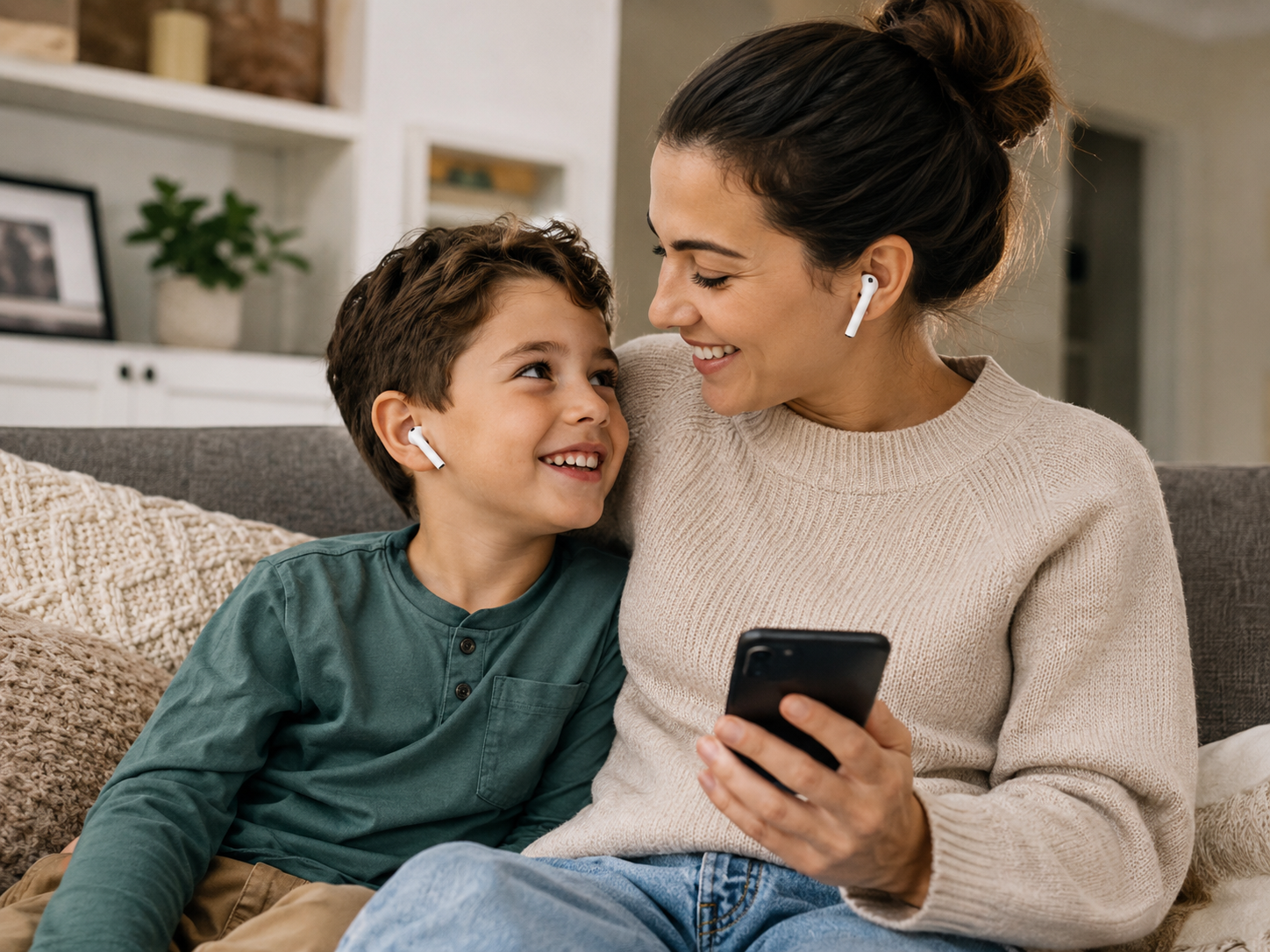
Sharing earbuds with someone else can spread earwax, bacteria, and fungi, and may irritate your ears over time. Here’s what to know before you casually borrow a pair.

The Tiny Favor We Barely Think About
It usually happens in a very normal moment.
A friend says, “Listen to this.”
Someone hands you one earbud during a walk.
Your partner’s earbuds are closer than yours, so you borrow them for a quick call.
A kid in the back seat wants to share a video, and suddenly one tiny speaker is passed from ear to ear like it’s nothing.
And honestly, most of the time, it feels like nothing.
Earbuds are small. They do not look “dirty” in the way a used tissue or a sweaty towel looks dirty. They sit in a little case. They are sleek and expensive-looking. Some even have that smooth white plastic that tricks the brain into thinking, “Clean enough.”
But earbuds go inside the ear canal, or at least right at the entrance of it. That makes sharing them a bit different from sharing a phone charger.
Your ear is not gross. Earwax is not gross either. It has a job. It helps protect the ear canal by trapping dirt and slowing bacterial growth, according to Mayo Clinic.
Still, your earwax, skin oils, sweat, and microbes are personal. They are not really meant to be passed around on a tiny rubber tip.
Earbuds Pick Up More Than Sound
Earbuds spend a lot of time in places that are not exactly sterile.
They sit in ears. Then pockets. Then bags. Then gym lockers. Then car cup holders. Maybe the bathroom counter, if we are being honest. Then they go back into ears.
Even if you are a clean person, earbuds collect things: earwax, dead skin cells, dust, lint, sweat, and whatever they touched between uses. In-ear earbuds also block part of the ear canal, which can trap moisture and create a warmer, more humid little environment while you wear them.
That does not mean every earbud is dangerous. It just means earbuds are more intimate than they look.
ENT Health, from the American Academy of Otolaryngology–Head and Neck Surgery Foundation, advises not sharing earbuds because doing so can increase exposure to new bacteria or fungi. It also notes that earbuds stored in bags or pockets can pick up germs that may be carried into the ear canal.
That is probably the clearest way to think about it: sharing earbuds is not automatically a disaster, but it does add unnecessary exposure.
“But I Only Shared One Earbud”

The single-earbud share feels more innocent.
You are not wearing both. It is only for one song. You wipe it on your shirt first, which feels like a cleaning ritual even though your shirt has also been living a full day.
The problem is that one earbud is still going into someone’s ear and then possibly yours. Or the other way around.
If one person has irritated skin in the ear canal, a small scratch, excess moisture, or the beginning of an infection, sharing can be a convenient little delivery system. The ear canal is sensitive skin, not a hard plastic tunnel. It can get irritated by friction, moisture, and germs.
A quick share is probably lower risk than passing earbuds around all day. But if the habit is regular — with siblings, partners, classmates, coworkers, gym friends — the risk is not just theoretical anymore. It becomes part of your routine.
And routines are where small hygiene habits matter.
Earwax Is Normal, but It’s Still Personal
Earwax gets a bad reputation because we usually notice it only when it looks unpleasant.
But earwax is part of the body’s defense system. It helps clean and protect the ear canal. The ears are also self-cleaning for most people, and Mayo Clinic Health System says you generally do not need extra steps beyond washing your hair and gently drying the ear canal opening with a towel.
That is the healthy way to look at earwax: useful, natural, and still not something you want on shared earbuds.
When earbuds are shared, wax from one person can get onto the silicone tip, mesh, or outer surface. If that earbud goes into another person’s ear, the wax and whatever is mixed with it can transfer.
It is not about being disgusted by another person. It is about respecting that the ear canal has its own little ecosystem. Your ears are used to your own normal microbes and oils. Someone else’s are extra visitors.
Sometimes guests are fine. Sometimes they cause trouble.
The Infection Question
People often ask the blunt version: “Can sharing earbuds give me an ear infection?”
It can increase the chance, especially if the earbuds are dirty, used during workouts, shared often, or used when someone already has ear discomfort or drainage.
Ear infections can have many causes, and not every irritated ear after earbud use is an infection. Sometimes it is dryness. Sometimes wax buildup. Sometimes the ear canal skin is just annoyed from pressure or friction.
But germs can travel on shared earbuds. A 2025 Scientific Reports study on earphone habits noted that sharing earphones was the only factor in that study that significantly led to symptoms, and it also referenced prior research linking shared earphones with positive bacterial isolates from the external ear canal.
That does not mean you need to panic after borrowing earbuds once. It does mean “I share earbuds all the time and never clean them” is not a great long-term plan.
Signs Your Ear Is Not Happy
Pay attention if you notice:
- itching inside the ear
- pain or tenderness
- unusual fullness or pressure
- drainage
- muffled hearing
- a bad smell from the ear or earbud
- swelling around the ear canal
Those symptoms do not automatically mean something serious, but they are a sign to stop using in-ear earbuds for a bit and avoid sharing them. If symptoms continue, get worse, or include drainage or significant pain, it is worth checking with a healthcare professional.
Ears are small, but when they hurt, they become your entire personality for the day. Better not to push it.
Sharing With Family Still Counts
This is where people get casual.
A partner’s earbuds feel less “foreign.” A sibling’s earbuds seem fine. Parents and kids pass things back and forth all the time. If you live in the same house, it is easy to think shared germs are already everywhere anyway.
But ears are still personal.
Sharing a couch is not the same as sharing something that goes into the ear canal. You may live together, but you probably still do not share toothbrushes. Earbuds are not quite toothbrushes, but they are closer to that category than most people want to admit.
This matters especially with kids. Children may be less careful about where earbuds go. They drop them, pocket them, chew on the case, use them after sports, and share them without thinking. Teens may pass them around at school or on buses.
A simple household rule can help: everyone has their own earbuds or headphones. If sharing has to happen, clean the tips first.
No lecture needed. Just a normal boundary, like not sharing lip balm when someone has a cold sore.
Workouts Make Earbuds Even More Personal
Gym earbuds deserve their own small warning.
Sweat changes the situation. Moisture can collect on the tips and around the ear canal. Earbuds may also be handled after touching weights, mats, locker doors, or your phone screen. Then they go back into the ear.
If you borrow someone’s earbuds after they worked out in them, you are not just borrowing sound. You are borrowing a warm little mix of sweat, skin oil, and whatever the earbuds picked up along the way.
Lovely image, I know. Sorry.
This is also why your own earbuds should be cleaned more often if you wear them while exercising. A pair used only at a desk is not living the same life as a pair used during sweaty treadmill sessions.
Earbuds Can Also Push Wax Around
Sharing is one issue. Earbud use itself can also affect wax.
In-ear earbuds may push wax deeper or make wax feel more packed, especially if you wear them for long stretches. Mayo Clinic explains that earwax blockage happens when wax builds up or becomes too hard to wash away naturally, and earwax normally helps protect the ear canal.
Trying to “fix” that by digging with cotton swabs is not a great move. Mayo Clinic Press warns that using cotton swabs, fingernails, or other objects can push wax farther in and may damage the ear.
So the answer is not to share earbuds and then aggressively clean your ears afterward. That can make things worse.
A better approach is boring but safer: keep earbuds clean, give your ears breaks, avoid sharing, and see a clinician if wax buildup becomes a repeated problem.
How to Say No Without Making It Weird
Sometimes the awkward part is not the hygiene. It is the social moment.
Someone offers you an earbud, and refusing can feel dramatic. Like you are accusing them of being dirty. You are not. You just do not want to put someone else’s in-ear device into your ear.
A few easy lines:
“Thanks, I’m weird about sharing earbuds.”
“I’ll listen on speaker for a second.”
“Can you send it to me?”
“I’m trying not to share in-ear stuff.”
“My ears get irritated easily, so I’ll pass.”
Most people will not care. And if they do, that is a lot of emotional weight to put on one earbud.
For families or partners, it can be even simpler: “Let’s just keep separate pairs.” No big speech required.
If You Have to Share, Clean First
Life is not always perfect. Maybe someone needs to take a call. Maybe a kid forgot headphones for a long ride. Maybe you are traveling and only one pair works.
If sharing is unavoidable, clean the earbuds first.
Remove silicone tips if possible. Wipe the outside gently. Use an appropriate disinfecting wipe or a small amount of isopropyl alcohol on a cloth, depending on the manufacturer’s instructions. Avoid soaking earbuds or getting liquid into speaker openings. Let them dry before putting them in the ear.
Many consumer cleaning guides recommend regular wipe-downs and more thorough cleaning for earbuds used daily, especially if they are used during workouts, but the key point is to avoid excess liquid and protect the electronics. Real Simple’s earbud cleaning guide, for example, advises against running earbuds under water or submerging them.
Also clean the case. People forget the case, but dirty earbuds go right back into it. It is like washing a spoon and putting it into a dusty drawer.
Not the end of the world, just not very helpful.
Over-Ear Headphones Are a Little Different
Over-ear headphones do not go into the ear canal, so sharing them is usually less intimate than sharing in-ear earbuds. Still, they touch skin, hair, sweat, and sometimes makeup or sunscreen.
If you share over-ear headphones, wiping the ear pads is a good idea, especially at gyms, studios, classrooms, or offices.
For shared household use, over-ear headphones may be a better option than in-ear earbuds. They are easier to wipe, less likely to transfer wax, and less invasive.
For kids, this can be especially practical. A shared pair of over-ear headphones for a tablet is easier to manage than everyone passing around tiny earbuds.
Volume Is a Separate Problem
While we are talking about earbuds, it is worth mentioning volume.
Sharing earbuds often happens when someone wants to show you a song or video quickly. The volume may already be set for their hearing, their device, or a noisy room. You put the earbud in, and suddenly your ear gets blasted.
Not ideal.
Loud sound through earbuds can contribute to hearing damage over time. That is a separate issue from sharing germs, but the habits often overlap: long use, close contact, high volume, no breaks.
Before putting any borrowed earbud in your ear, lower the volume first. Better yet, do not put it in your ear at all. Ask the person to play it out loud for a moment or send you the link.
Your future ears will not write you a thank-you note, but they should.
A Better Everyday Earbud Habit
The easiest habit is owning your own pair and keeping them reasonably clean.
Not spotless. Not treated like medical equipment. Just not visibly waxy, sticky, or living loose at the bottom of a backpack with crumbs and coins.
A practical routine:
Keep earbuds in their case when not using them.
Wipe the tips regularly, especially after workouts.
Do not share in-ear earbuds casually.
Replace silicone tips if they get worn out or hard to clean.
Let earbuds dry before closing them in the case if they are sweaty.
Avoid wearing earbuds when your ears are painful, itchy, or draining.
Clean the case now and then.
That is enough for most people. Ear hygiene does not need to become a hobby.
The Habit Is Small, but the Boundary Makes Sense
Sharing earbuds feels friendly. It can even feel sweet in the moment — one person handing another a song, a podcast clip, a funny video, a tiny piece of their world.
But the object itself is not just a speaker. It is something that sits in the ear, collects wax and skin oils, picks up bacteria and fungi from daily life, and then gets pressed into someone else’s ear canal.
That is a lot for a casual favor.
You do not have to be anxious about it. Just be a little more selective. Use your own earbuds. Clean them regularly. Share the link instead of the earbud. Put audio on speaker when it makes sense.
It is a small boundary, and honestly, a pretty reasonable one. Your ears do a lot for you every day. They deserve not to be part of a group project.

Hi, I’m the creator and editor behind ZestyHabit. I research everyday safety, first aid, and practical wellness topics using official guidance and reliable public sources, then turn that information into clear, realistic steps for daily life.
My goal is to help readers make safer, better-informed choices at home and beyond.


[…] seems harmless. After all, the heater is already warm. The clothes need warmth. Why not use the heat you already […]
[…] but it deserves the same care as any other pesticide. A quick spray on the driveway or lawn may seem harmless, yet accidental splashes, drifting mist, spills, and improper storage can expose people, pets, […]
[…] in a little extra laundry detergent may seem harmless. After all, more soap should mean cleaner clothes, […]