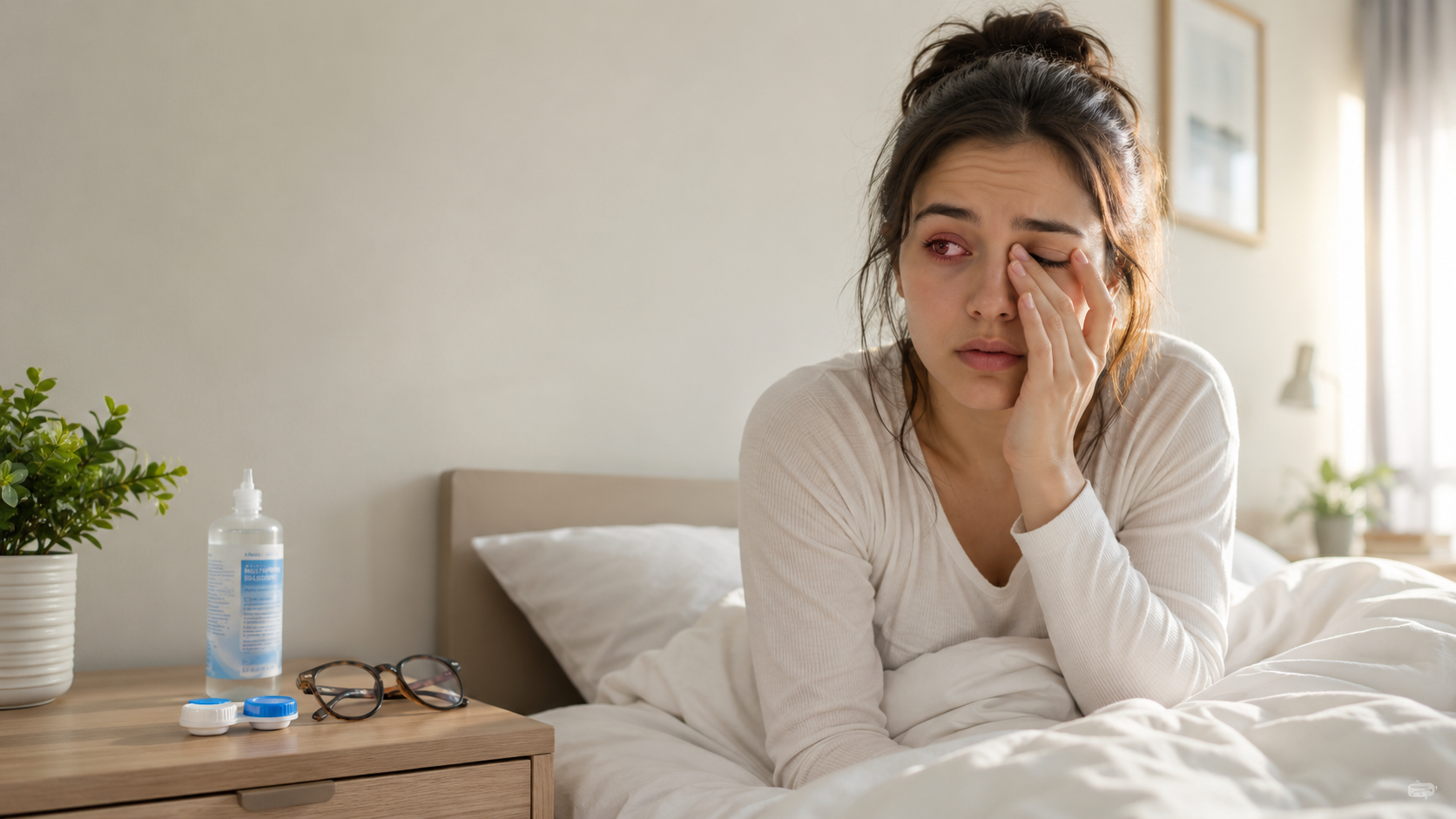
Sleeping in Contact Lenses: The Small Habit That Can Put Your Eyes at Risk
Minjin Park
·
Falling asleep in contact lenses may seem harmless after a long day, but it can raise the risk of eye irritation, infection, and even serious corneal damage. Here’s why the habit matters and what to do instead.
Most people who wear contact lenses know they are supposed to take them out before bed.
Knowing and doing, unfortunately, are not the same thing.
Maybe you lie down for “just ten minutes” after work and wake up at 2 a.m. with dry, sticky eyes. Maybe you fall asleep watching a show. Maybe you come home late, brush your teeth half-asleep, and decide your lenses can wait until morning.
It feels like a tiny shortcut.
The problem is that sleeping in contact lenses is not just a comfort issue. It changes the environment on the surface of your eye in a way that can make irritation and infection more likely. And because eyes are sensitive, problems can move from “annoying” to “I need a doctor today” faster than people expect.
That does not mean one accidental nap guarantees disaster. Plenty of contact lens wearers have done it once and been fine. But as a habit, it is risky enough that it deserves more attention than it usually gets.
Why Your Eyes Need a Break From Lenses
Your cornea, the clear front surface of your eye, needs oxygen. Unlike many parts of the body, it does not get oxygen through blood vessels in the same way. It gets much of it from the air.
A contact lens sits directly on the eye. Even modern soft lenses are designed to let oxygen pass through, but they still create a barrier. During the day, blinking helps move tears under the lens and keeps the surface somewhat refreshed.
When you sleep, your eyes are closed for hours. Less oxygen reaches the cornea. Tear movement slows down. The lens stays pressed against the eye in a warm, moist, low-oxygen environment.
That is not exactly the cozy rest your eyes were hoping for.
This matters because a stressed cornea is more vulnerable. Tiny surface changes can make it easier for bacteria or other microbes to attach, multiply, and cause infection.
“But My Lenses Are Comfortable” Does Not Mean They Are Safe Overnight
This is where contact lenses can be a little deceptive.
A lens can feel fine while still causing stress to your eye. Soft lenses especially may feel comfortable enough that you forget you are wearing them. That comfort can make overnight wear seem harmless.
But comfort is not a reliable safety signal.
Your eye may not complain immediately. The damage may not feel dramatic at first. Sometimes the first sign is dryness or redness. Other times it is a scratchy feeling, light sensitivity, or pain when you wake up.
And occasionally, it starts with the kind of symptom people try to ignore for a day because they are busy.
Please do not ignore eye pain.
The Main Risk: Eye Infections
The biggest concern with sleeping in contact lenses is infection, especially an infection of the cornea called microbial keratitis.
That sounds technical, but the basic idea is simple: germs get into the cornea and cause inflammation and damage.
This can happen with bacteria, fungi, or tiny organisms found in water and the environment. Contact lenses can give those organisms a better chance to stay close to the eye, especially when lenses are worn too long, handled with unwashed hands, stored poorly, or exposed to water.
A mild irritation may improve after removing the lenses. A true infection is different. It can worsen quickly and may need prescription eye drops or urgent care from an eye doctor.
Signs that deserve attention include:
eye pain
redness that does not settle
blurry vision
unusual discharge
strong light sensitivity
the feeling that something is stuck in your eye
swelling
worsening discomfort after removing the lens
If your eye hurts, your vision changes, or light suddenly feels unbearable, it is not a “wait and see for three days” situation. That is a good time to contact an eye care professional promptly.
Dryness Is More Than Just Annoying
A lot of people wake up after sleeping in contacts and say, “My eyes just feel dry.”
That may sound minor, but dryness can make the lens stick more tightly to the eye. Removing it too quickly can irritate the surface. You might feel like the lens is glued on, which is honestly one of the least pleasant ways to start a morning.
If this happens, do not pinch and yank.
Use lubricating eye drops made for contact lens wearers, blink gently, and give the lens time to move again. Once it loosens, remove it carefully. If it will not come out, or if you feel pain, get help instead of digging at your eye.
The cornea is not a kitchen sticker. It does not respond well to aggressive scraping.
Red Eyes After Sleeping in Contacts
Redness after sleeping in lenses can come from dryness, lack of oxygen, irritation, or early infection. Sometimes the eye looks better after a few hours without lenses. Sometimes it does not.
A simple rule helps here: if your eyes are red after sleeping in contacts, take a lens break.
Wear glasses for the day. Use preservative-free lubricating drops if your eyes feel dry. Do not put the lenses back in just because you have errands to run or your glasses feel less flattering.
I know that sounds obvious, but real life is full of “I’ll just wear them for a few hours.” That is exactly how a small irritation can become worse.
If redness is paired with pain, blurry vision, discharge, or light sensitivity, skip the guessing game and call an eye doctor.
The Difference Between Daily Lenses and Extended-Wear Lenses
Some contact lenses are approved for overnight or extended wear. That does not mean sleeping in any lenses is safe.
Daily disposable lenses are meant to be worn once and thrown away. They are not designed for sleeping. They are not meant to be cleaned and reused. They should not spend the night on your eyes because you forgot your case.
Reusable lenses have their own rules, usually involving cleaning solution, storage, and replacement schedules. Some extended-wear lenses allow overnight use under an eye doctor’s guidance, but even then, the risk of infection is generally higher than with removing lenses before sleep.
The key phrase is “under guidance.”
If your eye doctor has not specifically told you that your lenses are safe for overnight wear, assume they are not.
Naps Count Too
A full night of sleep is not the only issue. Naps can also cause problems, especially if they turn into longer sleep than planned.
A 15-minute nap may not carry the same risk as sleeping seven hours, but the habit is slippery. Most people do not nap with a timer, perfect posture, and full control over their future selves. They lie down for a moment and wake up confused, with a blanket crease on their cheek and contacts that feel like tiny pieces of plastic regret.
If you are tired enough to nap, take your lenses out first when you can. It takes less than a minute, and your eyes will usually feel much better afterward.
Water, Showers, and Sleeping: A Bad Combination
Sleeping in lenses is risky on its own. Wearing lenses around water adds another layer.
Contacts should not be exposed to tap water, shower water, pools, hot tubs, lakes, or oceans. Water can carry microorganisms that do not belong on your lenses or your eyes. Once those organisms get trapped under a lens, the risk becomes more serious.
This matters because habits often overlap.
Someone comes home late, showers with lenses still in, lies down “for a second,” and wakes up the next morning with irritated eyes. None of those choices may seem dramatic alone, but together they make the eye’s environment much less safe.
Before showering or sleeping, remove your contacts. It is boring advice, but boring advice is often what saves you from very exciting medical bills.
What to Do If You Accidentally Sleep in Contacts
First, do not panic.
A single mistake does not automatically mean something terrible has happened. But handle your eyes gently for the next day or two.
When you wake up, wash your hands before touching your eyes. If the lenses feel dry or stuck, use contact-safe lubricating drops and wait until they move more freely. Remove them carefully.
Then give your eyes a break. Wear glasses for the day if possible.
Do not reuse daily disposable lenses. Throw them away. If you wore reusable lenses overnight by accident, clean and store them properly, but consider wearing glasses for a while before putting any lenses back in.
Watch how your eyes feel. Mild dryness that improves is one thing. Pain, worsening redness, cloudy vision, discharge, or sensitivity to light is another. Those symptoms deserve professional attention.
Why This Habit Is So Easy to Repeat
People rarely sleep in contacts because they do not care about their eyes.
They do it because they are exhausted.
The risky moment is not usually bedtime at 10 p.m. with soft lighting and plenty of self-discipline. It is midnight after a long shift. It is after traveling. It is after crying. It is after studying, scrolling, working, or falling asleep on the couch while still wearing jeans.
So the solution should not rely only on willpower.
Make it easier to do the right thing when your brain is basically offline.
Keep your contact lens case and solution somewhere visible. Put a spare case in your bag. Keep glasses near your bed, not hidden in a drawer. If you wear daily lenses, place the trash can close enough that throwing them away does not feel like a task.
A tiny setup change can stop the “I’ll deal with it later” loop.
A Practical Night Routine for Contact Lens Wearers
You do not need an elaborate routine. You just need one that happens before you get too tired.
Try taking your lenses out earlier in the evening, not right before sleep. For example, remove them when you get home, before skincare, before dinner, or before you start watching anything in bed.
That one shift helps a lot.
The problem with “I’ll take them out right before I sleep” is that sleep does not always announce itself politely. It just arrives. Suddenly your phone is on your chest, the lamp is still on, and your lenses have been promoted to overnight residents.
If you take them out earlier, the risk disappears before the tired version of you can make questionable decisions.
Keep a Backup Pair of Glasses You Actually Use
Some people avoid removing contacts because their glasses are uncomfortable, outdated, or buried somewhere.
That is a fixable problem.
Your backup glasses do not have to be fancy. They just need to be wearable enough that you are willing to use them at night, during illness, after swimming, or when your eyes feel irritated.
If your glasses prescription is old, or the frames give you a headache, you are more likely to over-wear your lenses. Then the lenses become your only practical option, which is exactly when bad habits start building.
A comfortable pair of glasses is not just a backup. It is part of safe contact lens use.
Be Careful When You Are Sick or Allergic
When you have a cold, allergies, or irritated eyes, contact lenses may feel worse than usual. You may rub your eyes more. Your tear film may be less stable. Your eyes may already be red or watery.
That is not the best time to push lens wear.
If your eyes are irritated, give them a break. Wear glasses. Use eye drops recommended by your eye doctor if needed. Avoid trying to “power through” with contacts just because you have plans.
Eyes are not great at pretending everything is fine. When they complain, it is usually worth listening.
When to Call an Eye Doctor
Some symptoms should not be brushed off, especially after sleeping in contact lenses.
Call an eye care professional quickly if you notice eye pain, vision changes, strong redness, discharge, severe light sensitivity, or a white/gray spot on the cornea. Also get help if it feels like something is stuck in your eye and the feeling does not improve after removing the lens.
Do not put the contact lens back in to “test it.” Do not try random leftover eye drops from a previous problem. Do not cover it with makeup and hope nobody notices.
Your eyes are small, but they are not low-stakes.
The Habit Worth Building
The safest everyday rule is simple: contacts out before sleep.
Not because you are fragile. Not because every accident becomes an emergency. But because the risk is real, and the prevention is usually easy.
Put your lens case where you can see it. Keep glasses nearby. Take lenses out before you get sleepy, not after. Treat naps like sleep. Give your eyes a break when they feel dry or red.
Most contact lens problems do not start with one dramatic mistake. They start with a tiny habit that feels harmless because nothing bad happened last time.
Your eyes do a lot for you all day. Let them breathe at night.
Hi, I’m the creator and editor behind ZestyHabit. I research everyday safety, first aid, and practical wellness topics using official guidance and reliable public sources, then turn that information into clear, realistic steps for daily life.
My goal is to help readers make safer, better-informed choices at home and beyond.