
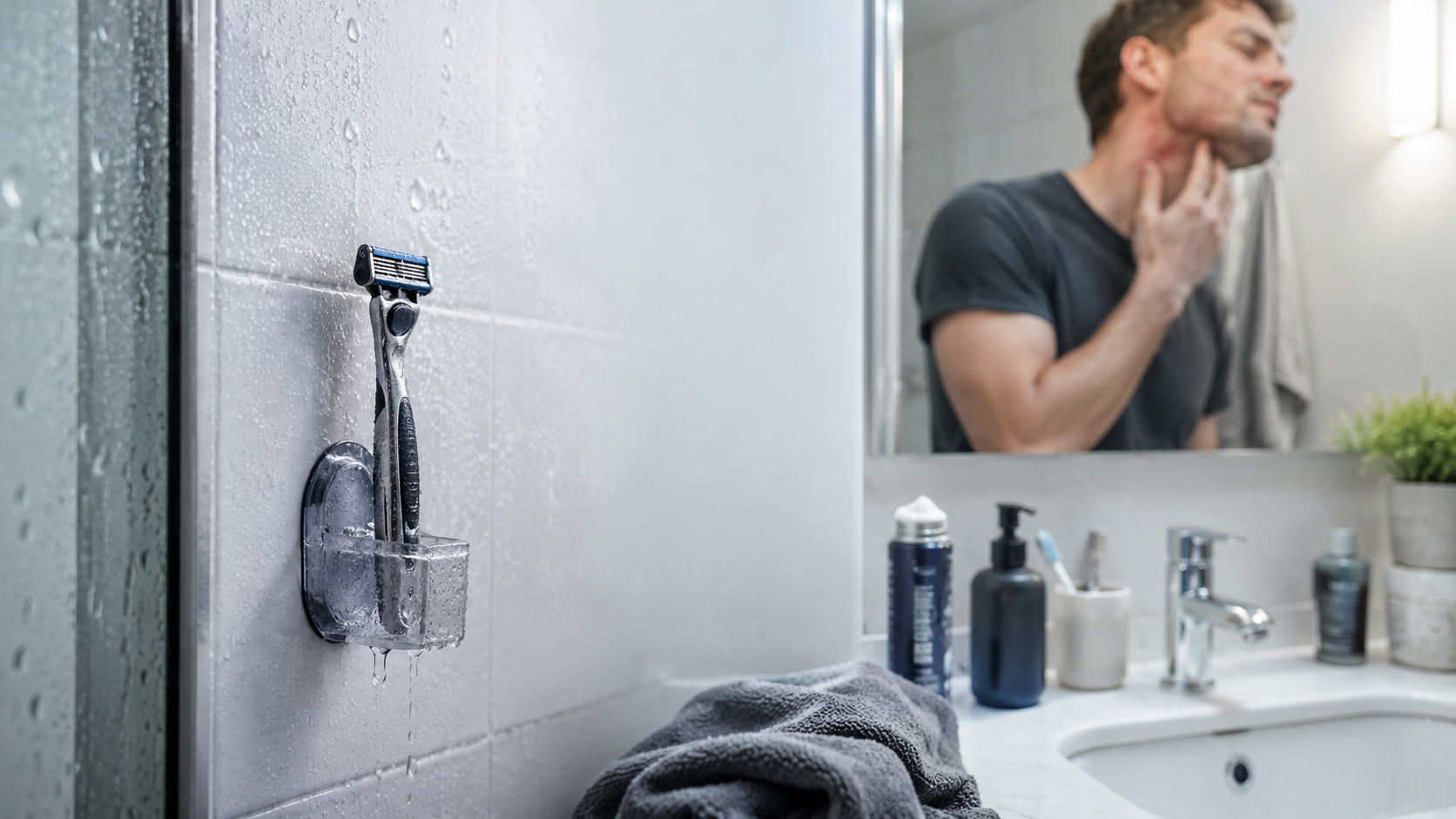

Keeping the same razor for too long can lead to tugging, irritation, bumps, and less comfortable shaves. Here’s how to know when it is time to replace it and how to make blades last longer.
The Razor You Keep “Just One More Week”
Most people have a quiet little bargain with their razor.
It starts out sharp, clean, and easy to use. Then, after a while, it gets a little less smooth. You notice it pulling at the hair instead of gliding. Maybe your skin feels a bit more irritated afterward. Maybe you have to go over the same spot twice.
And still, the razor stays.
It sits in the shower corner or beside the sink, looking perfectly usable. Not broken. Not rusty, at least not obviously. So you think, It can probably handle one more shave.
That “one more shave” can turn into two weeks. Sometimes a month. Sometimes much longer than anyone wants to admit.
Not replacing a razor often enough is one of those everyday habits that feels harmless because the consequences are usually small at first. A little redness. A tiny nick. A shave that takes longer than it should. But over time, using a worn-out razor can make shaving more uncomfortable, less effective, and harder on your skin.
This is not about being fancy or wasteful. Nobody needs to toss a blade after every use unless that is what works for their skin and budget. But there is a difference between getting reasonable use out of a razor and forcing a dull blade to do a job it is no longer good at.
Why Old Razors Become a Problem
A razor blade does not need to look terrible to be past its best.
The edge of the blade wears down gradually. Each time it moves across hair and skin, the sharp edge becomes a little less clean. You may not see the change with your eyes, but your skin often notices before you do.
A fresh blade cuts hair more cleanly. A dull blade tends to drag, scrape, or tug. That is why shaving with an old razor can feel rough even if you are using the same shaving cream, the same water temperature, and the same routine.
The annoying part is that dullness sneaks up on you. You adjust without realizing it. You press a little harder. You shave the same patch again. You stretch the skin more tightly. You blame your skin for being sensitive that day.
Sometimes the problem is not your skin. Sometimes it is just the blade.
The Signs Your Razor Is Past Its Prime
You do not need a strict calendar to know when a razor should be replaced. Your shave usually gives you clues.
It Starts Pulling Instead of Cutting
This is one of the biggest signs.
If the razor catches on hair or feels like it is tugging, the blade is probably dull. A good shave should not feel like a tiny wrestling match. It should move fairly smoothly, especially after warm water and shaving cream or gel.
For people who shave coarse hair, this can happen faster. Facial hair, underarm hair, and thicker leg hair can wear blades down quickly, especially if you shave often.
You Need More Passes Than Usual
If you used to get a clean shave in one or two passes and now need three or four, the blade is struggling.
More passes mean more friction. More friction means a higher chance of redness, dryness, bumps, and that hot, irritated feeling afterward.
This is where people accidentally create a cycle. The razor is dull, so they press harder and shave more. Then their skin gets irritated, so the next shave feels worse. Then they press even harder. The razor wins. The skin loses.
You Notice More Nicks
A dull razor may sound safer than a sharp one, but that is not always how it works.
When a blade is dull, people tend to apply more pressure. That pressure can make slips and cuts more likely. The blade may also move unevenly instead of gliding cleanly.
Tiny cuts around the ankles, knees, jawline, or bikini area are often a sign that the blade is no longer moving smoothly.
Your Skin Feels Itchy or Bumpy Afterward
Post-shave irritation can come from many things: shaving too quickly, dry shaving, shaving against the grain, using a harsh product, or shaving skin that is already irritated.
But an old razor can definitely make it worse.
If you notice more razor bumps, redness, stinging, or itchiness than usual, it is worth asking when you last changed the blade. If your answer is “I have no idea,” there is your first clue.
The Blade Looks Dirty, Rusty, or Gunky
This one is obvious, but it needs to be said.
If there is rust, buildup, hair trapped between blades, or a slimy-looking strip that has seen better days, retire the razor. No dramatic farewell needed. Just throw it away or change the cartridge.
A razor lives in a damp environment, which is not exactly a luxury spa for metal and plastic. If it sits wet in the shower day after day, it can collect residue from soap, skin cells, shaving cream, and water minerals.
Not cute. Not ideal for your skin either.
Why We Keep Razors Too Long
Most bad bathroom habits are not about laziness. They are usually about convenience.
Razors are easy to forget. They are not like milk in the fridge with a date stamped on the carton. They do not beep when they are dull. They simply become less pleasant to use until one day you wonder why shaving feels awful.
There is also the cost factor. Razor cartridges can be expensive, especially the multi-blade ones locked behind plastic cases at the store like they are tiny electronics. It makes sense that people try to stretch them.
Then there is the “it still works” mindset. Technically, yes, an old razor may still remove hair. But there is a difference between removing hair and doing it comfortably.
A fork can technically brush your hair. That does not mean it should.
How Often Should You Replace a Razor?
There is no perfect number because shaving habits vary so much.
Someone who shaves every day will wear out a blade faster than someone who shaves once a week. Someone shaving coarse facial hair may need to replace blades more often than someone touching up fine hair on the legs. The size of the area matters too.
A reasonable general rule: if you use a disposable razor or cartridge razor several times a week, think in terms of around five to ten shaves per blade. Some people can stretch it a little longer. Others need to replace sooner.
Instead of obsessing over the number, pay attention to performance.
Replace it when:
- it tugs
- it feels rough
- you need extra pressure
- you get more irritation than usual
- the blade looks dirty or rusty
- you cannot remember when you last changed it
That last one is surprisingly useful. If you truly have no memory of replacing it, the razor has probably earned retirement.
The Shower Storage Problem
A lot of razors live permanently in the shower. It makes sense. That is where many people shave. But the shower is also wet, humid, and full of soap residue.
Leaving a razor in a puddle or on a damp ledge can make it wear out faster. The blades may dull sooner, and buildup can collect around them.
You do not need a complicated storage system. Just try not to leave the razor sitting blade-down in water.
After shaving, rinse it well under running water. Tap it gently to remove trapped hair. Then store it somewhere it can dry. A small razor holder, a dry shelf, or even a spot outside the shower can help.
It sounds like a tiny thing, and it is. But tiny things are usually what bathroom routines are made of.
A Better Way to Make Razors Last
Replacing razors regularly does not mean being careless with them. You can get better use from each blade by treating it well.
Rinse While You Shave
Hair and shaving cream can clog the blades. When that happens, the razor has a harder time cutting cleanly.
Rinse after every few strokes. Not once at the end. During the shave.
This keeps the blade moving better and helps reduce the temptation to scrape over the same area again and again.
Do Not Press Too Hard
A sharp razor should not need much pressure.
If you feel like you have to push hard, either the blade is dull or your shaving prep is not helping enough. Pressing harder usually does not give a better shave. It just makes the skin angrier.
Use light pressure and let the blade do its job. If it will not do its job, that is useful information. Change it.
Soften the Hair First
Shaving dry or barely damp skin is asking a lot from the razor.
Warm water softens hair and makes shaving easier. Even a few minutes in the shower can help. For face shaving, a warm rinse or damp towel can make a noticeable difference.
Then use something that gives slip: shaving cream, gel, or a gentle cleanser that does not disappear immediately. The goal is to reduce friction, not just create foam for decoration.
Shave in a Sensible Direction
Shaving against the grain can give a closer shave, but it can also increase irritation for some people.
If you are prone to bumps or redness, try shaving with the grain first. You can do a second light pass across the grain if needed. Going straight against the grain with a dull blade is where things often get ugly.
This matters especially on the neck, bikini line, and anywhere hair grows in different directions.
What About Electric Razors?
Electric razors are not exempt from replacement habits. They just have different parts to maintain.
Foils and blades can wear down. Hair can build up. The device may start pulling instead of cutting. If your electric razor suddenly feels uncomfortable or takes much longer to work, it may need cleaning or a replacement head.
Check the manual if you still have it. If not, look up the model. Most brands give a general replacement schedule for heads or foils.
And yes, cleaning matters. An electric razor full of old hair is not going to perform beautifully. That is not a moral failure. It is just physics with stubble.
The Skin Side of the Habit
Using an old razor is not only about the blade. It affects how you treat your skin afterward.
When shaving becomes rough, your skin barrier can feel more irritated. You might notice dryness, a burning feeling, or small bumps that take longer to calm down.
A simple after-shave routine helps. Rinse with cool or lukewarm water. Pat dry instead of rubbing. Apply a gentle moisturizer. If you shaved your face, use something that does not sting like regret. If you shaved your legs or underarms, a basic fragrance-free lotion can be enough.
Avoid putting strong acids, heavy fragrance, or harsh exfoliants on freshly shaved skin if you already feel irritated. That “fresh and tingly” feeling is not always a good sign. Sometimes it is your skin asking why you did that.
A Simple Replacement System That Actually Works
The easiest system is the one you do not have to think about much.
You can keep extra cartridges or disposables where you shave. Not in a random drawer across the house. Right there, within reach. The easier it is to replace the razor, the less likely you are to keep using a bad one out of convenience.
Some people like changing the blade on a certain day, like every other Sunday. Others prefer tracking by number of shaves. If you are not a tracking person, do not force yourself into a spreadsheet for razors. That is how systems die.
Try this instead: when the razor starts to tug, replace it immediately after the shave. Not before the next shave, because future-you may be busy, tired, or late. Replace it while the irritation is still fresh in your memory.
You can also use a tiny visual cue. Keep a small pack of replacements visible. When the current blade starts feeling rough, seeing the fresh ones nearby makes the decision easier.
Disposable Razors, Cartridges, and Safety Razors
Different razors have different replacement rhythms.
Disposable razors are convenient but often do not last as long. Once they feel dull, the whole razor goes.
Cartridge razors let you replace the head while keeping the handle. They can be comfortable, but the cartridges may be pricey, which is exactly why people stretch them too long.
Safety razors use single double-edge blades. The learning curve is a little higher, but replacement blades are usually cheaper. Many people like them because they make it less painful, financially speaking, to change blades often. They are not for everyone, especially if you are always rushing, but they are worth considering if cartridge prices make you hesitate.
The best razor is not the fanciest one. It is the one you will use properly and replace when needed.
When a “Bad Shave” Is Really a Dull Razor
It is easy to blame yourself for shaving problems.
Maybe your technique is wrong. Maybe your skin is too sensitive. Maybe you need a new product. Maybe you should exfoliate more, moisturize more, shave slower, shave faster, change everything.
Sometimes those things matter. But sometimes the simplest answer is sitting right there: the blade is old.
Before buying three new products, change the razor. See what happens. A fresh blade can make a surprisingly big difference.
Not glamorous. Very practical.
A Few Habits That Help Right Away
If shaving has been feeling rough lately, try this small reset:
Use a fresh blade. Shave after warm water has softened the hair. Use enough shaving cream or gel to give the razor slip. Rinse the blade often. Use light pressure. Moisturize afterward. Store the razor somewhere it can dry.
That is it.
No dramatic bathroom transformation required.
You may still have days when shaving is annoying. Everyone does. Knees remain awkward. Ankles remain risky. Neck hair sometimes grows like it is trying to create a map. But a clean, sharp razor removes at least one unnecessary problem from the routine.
The Quiet Benefit of Replacing It Sooner
A fresh razor does not make shaving exciting. It just makes it less irritating, which is honestly enough.
It saves a little time because you are not scraping the same patch repeatedly. It helps your skin feel calmer afterward. It lowers the chance of those small cuts that somehow sting all day. It also makes the whole routine feel less like a chore you are losing.
Keeping an old razor too long is understandable. Most of us do it at some point. But once you notice the signs, it is worth changing the habit.
The next time your razor pulls, scratches, or makes you work too hard, do not negotiate with it. Replace the blade, rinse the new one well, and let your skin have the easier version of the routine.

Hi, I’m the creator and editor behind ZestyHabit. I research everyday safety, first aid, and practical wellness topics using official guidance and reliable public sources, then turn that information into clear, realistic steps for daily life.
My goal is to help readers make safer, better-informed choices at home and beyond.


