How to Use the Bathroom When the Water Is Shut Off
Minjin Park
·
A practical, calm guide to handling toilet use during a water outage, including how to flush with stored water, manage waste safely, reduce odor, and prepare before the next shutoff.
There are few household problems that make people rethink modern life faster than a water outage.
You turn the faucet handle. Nothing. Maybe a small cough from the pipe. Maybe a sad trickle. Then your brain does a quick inventory.
Can I wash my hands? Can I cook? Can I shower? Can I flush the toilet?
That last one gets serious very quickly.
A water shutoff can happen because of plumbing repairs, frozen pipes, a storm, a broken water main, apartment maintenance, or a larger emergency. Sometimes you get advance notice. Sometimes you find out halfway through brushing your teeth, which feels personally rude.
The good news is that bathroom survival during a water outage is mostly about planning, not panic. You need water for flushing, a way to keep hands clean, a backup plan if flushing is not possible, and a little odor control. Nothing glamorous. But very useful.
This is the kind of household knowledge you hope you never need, then feel deeply grateful for when you do.
First, Figure Out What Kind of Water Outage You’re Dealing With
Not all water shutoffs are the same.
If the water is off for a short planned repair, you may only need a few gallons of stored water and some patience. If the outage is connected to flooding, sewage problems, a boil water notice, frozen pipes, or a disaster, you need to be more careful.
Ask yourself:
Is the toilet drain still working? Is the sewer or septic system affected? Is this just a water supply issue? Did officials give any instructions? Is there flooding nearby? Is there a boil water advisory? How long might this last?
This matters because flushing a toilet uses water to move waste through the plumbing. If the drain system is fine, you may be able to flush manually by pouring water into the toilet. If the sewer system is backed up or officials warn people not to flush, that is different. In that case, forcing more water down the toilet can make things worse.
So before you start pouring buckets into anything, make sure the issue is only the incoming water supply.
If you live in an apartment building, check building notices or ask management. Sometimes water is shut off for maintenance, but toilets may still flush once or twice because of water already stored in the tank. Sometimes the building may ask residents to avoid using drains during certain repairs.
Annoying, yes. But better than creating a downstairs-neighbor situation.
Use the Water Already in the Toilet Tank Carefully
Most standard toilets have water stored in the tank behind the bowl. When the water supply is off, the toilet may still flush once using that tank water.
That first flush is precious.
Do not waste it on a tissue or a “just checking” flush. If the water is off, treat every flush like it costs emotional currency.
If you know the shutoff is coming, flush before it starts, then let the tank refill while water is still available. After that, avoid flushing until you actually need to.
If the water is already off and the tank is full, you probably have one normal flush available. Once that tank empties, it will not refill until water service returns.
This is also where the old phrase “if it’s yellow, let it mellow” shows up. Not everyone loves it, and that is understandable. But during a short water outage, saving flushes for solid waste can stretch your stored water much further.
Close the lid between uses to reduce odor. Keep the bathroom ventilated if possible. This is not a fancy spa strategy. It is just survival housekeeping.
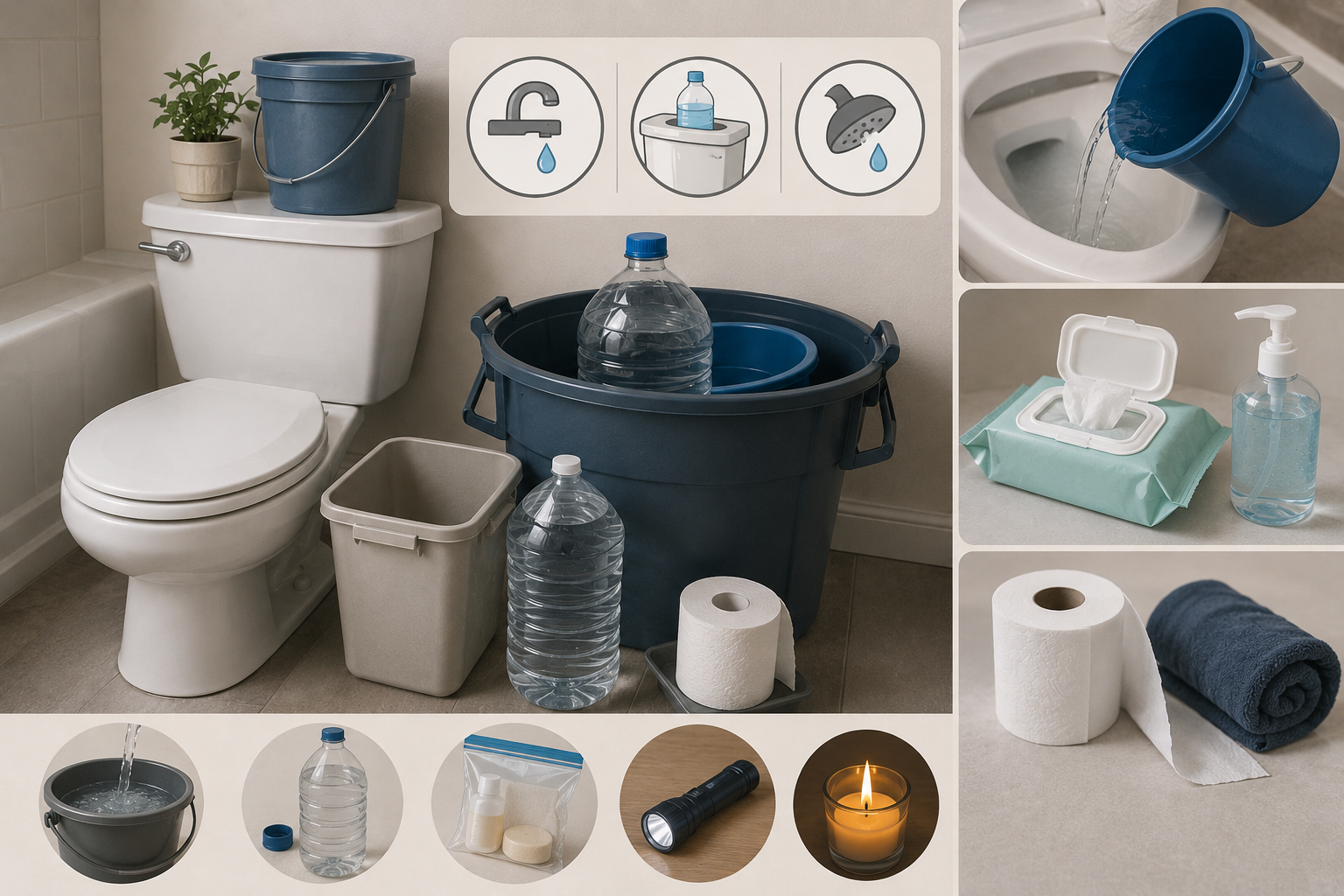
How to Flush a Toilet With a Bucket
If the toilet drain system is working, you can usually flush manually with water.
There are two common ways.
Pour water into the toilet tank
Remove the tank lid and pour water into the tank up to the usual fill line. Then flush with the handle like normal.
This method feels less dramatic and can be easier for people who do not want to splash water into the bowl. It uses about the same amount of water as a normal flush, depending on your toilet.
Pour water directly into the bowl
You can also pour water quickly into the toilet bowl. The force of the water can trigger the flushing action.
This usually takes about one to two gallons, sometimes more depending on the toilet. Pour slowly at first to avoid splashing, then more firmly once you know how the bowl responds. Aim into the bowl, not onto the bathroom floor, which sounds obvious until someone tries this half-asleep with a heavy bucket.
A bucket with a handle helps. So does not filling it so full that you can barely lift it.
If you are using stored water for flushing, it does not need to be drinking-quality water. You can use rainwater, melted snow, bathwater, water from a dehumidifier, or water saved from rinsing dishes, as long as it is not contaminated with anything dangerous. Do not use water with harsh chemicals or anything that could damage plumbing.
Store Flushing Water Before a Planned Shutoff
When you know water will be off, the bathtub is your friend.
Before the shutoff, fill the bathtub with water for flushing. You can also fill large buckets, trash cans lined with clean bags, storage bins, or pitchers. Label what is drinking water and what is flushing water if there is any chance of confusion.
This is especially helpful in apartments or homes with several people. A few small water bottles will not get you through many toilet flushes. Toilets use more water than people realize.
Keep a smaller bucket or pitcher near the bathroom so you are not carrying a giant container every time. Nobody needs a full-body workout just to flush.
If you have young kids, pets, or anyone with balance issues at home, be careful with open containers of water. A filled bathtub or bucket can be a safety risk. Keep doors closed, use lids when possible, and do not leave small children unattended near stored water.
Preparedness is good. Creating a new hazard is not.
Separate Drinking Water From Bathroom Water
During a water outage, it is easy for water containers to multiply around the house.
Some are for drinking. Some are for handwashing. Some are for flushing. Some are mysterious because nobody labeled them.
Do future-you a favor and separate them clearly.
Use clean, food-safe containers for drinking water. Keep them covered. Store them away from the bathroom if possible. Do not dip unwashed hands or random cups into drinking water.
For flushing water, use buckets or larger containers and mark them if needed. “Toilet water” is not the prettiest label, but it gets the point across.
If there is a boil water notice, follow local instructions for drinking, brushing teeth, cooking, washing dishes, and making baby formula. Boiling rules are about water safety, not just taste.
Toilet flushing water is a different category, but hygiene around it still matters. Keep containers stable. Avoid spills. Wash hands after handling bathroom buckets.
Hand Hygiene Becomes the Real Challenge
The toilet gets all the attention, but handwashing may be the bigger issue.
If the faucet does not work, you need a backup way to clean your hands after using the bathroom. This is where people often realize they prepared ten gallons of flushing water and zero handwashing plan.
Keep these nearby:
Hand sanitizer Disposable wipes Paper towels A small bottle of clean water Liquid soap Trash bags A small basin or bowl
Hand sanitizer is useful when hands are not visibly dirty. If hands are dirty, use soap and a small amount of clean water when possible. A squeeze bottle can help you use less water than pouring from a big jug.
A simple setup works well: one person pours a little clean water over the hands while the other washes with soap over a basin, then rinses. If you are alone, use a bottle with a sports cap or pump if you have one.
And yes, this is the moment when you may become weirdly grateful for that half-used bottle of sanitizer in a drawer.
What If You Can’t Flush at All?
If the water outage is long, or if officials say not to use the plumbing, you may need a temporary toilet plan.
The simplest emergency toilet is a sturdy bucket lined with a heavy-duty trash bag. A five-gallon bucket is common because it is stable and easy to find. A snap-on toilet seat made for buckets is much more comfortable, but in a pinch, people improvise.
Line the bucket with two trash bags if you can. Add absorbent material after each use to reduce odor and moisture.
Useful absorbent materials include:
Cat litter Sawdust Wood shavings Shredded paper Baking soda Commercial toilet gel or emergency toilet bags Absorbent pads
Keep liquid and solid waste separate if possible, because it reduces odor and makes the bucket easier to manage. That may sound awkward, and it is, but emergency bathroom plans are not known for elegance.
After use, cover waste with absorbent material, close the lid, and keep the bucket in a ventilated but private area. Do not place it near food preparation areas. Keep it away from children and pets.
Dispose of waste according to local emergency guidance. Do not dump bagged waste into storm drains, yards, streams, or random outdoor areas. That creates sanitation problems for everyone.
Odor Control Without Making Things Worse
Bathroom odor during a water outage is not just embarrassing. It can make the whole home feel stressful.
Start with the basics:
Close the toilet lid. Save flushes for solid waste when possible. Ventilate the bathroom. Use absorbent material in emergency bags. Tie waste bags securely. Keep trash away from living spaces. Use baking soda or cat litter if needed.
Avoid pouring harsh chemicals into the toilet unless you know what you are doing and the plumbing system is functioning. Mixing cleaners is dangerous, especially bleach with ammonia-containing products. Emergency sanitation is not the time to create fumes.
If you use wipes, do not flush them unless the package specifically says they are flushable—and honestly, even then, many plumbers would rather you did not. During a water outage, put wipes in a lined trash can. Plumbing is already having a bad day. Do not give it more problems.
A small lidded trash can with a liner can make a big difference. Add baking soda at the bottom if odor is an issue.
Managing Periods During a Water Outage
Periods are already inconvenient. A water outage adds another layer of irritation.
Keep menstrual products in your emergency supplies: pads, tampons, liners, menstrual cup supplies if you use one, disposable bags, wipes, and extra underwear if possible.
If you use a menstrual cup or reusable pads, think through how you would clean them safely without running water. You may need extra clean water, soap, a dedicated container, or disposable backup products for emergencies.
Do not flush pads, tampons, wipes, or liners. Wrap them and place them in a lined trash can.
A small “bathroom outage pouch” can be helpful: menstrual supplies, wipes, sanitizer, disposal bags, and a clean pair of underwear. Not glamorous. Extremely practical.
Babies, Kids, and Potty Training Chaos
If you have a baby or toddler, bathroom planning needs extra attention.
Keep extra diapers, wipes, diaper cream, trash bags, and hand sanitizer. If your child is potty training, a water outage may not be the week to enforce perfection. Portable potty liners can help. So can a calm attitude and a backup plan.
Kids may also flush out of habit. If water is limited, explain the rule in simple terms: “We are saving flushes until we really need them.”
You can place a sticky note on the toilet handle if needed. Adults may need the reminder too, honestly.
For older kids, show them where hand sanitizer and wipes are, but supervise water buckets and emergency toilet setups. Children are curious. Buckets are not toys.
Apartment Living During a Water Shutoff
Apartment water outages can feel extra frustrating because you may not control the timeline.
Keep an eye on building notices. Ask whether toilets can be flushed, whether drains are affected, and when water is expected to return. If the outage is planned, fill containers before the shutoff.
Be considerate with shared plumbing. If management says not to use toilets or drains during a repair, take it seriously. One person ignoring instructions can cause problems for multiple units.
If you live on a higher floor, carrying water can be exhausting. Store some water ahead of time if you know repairs are scheduled. Even a few gallons can make a big difference.
Also, keep a small emergency bathroom kit in your apartment. You do not need much space: sanitizer, wipes, trash bags, toilet paper, menstrual products if needed, a flashlight, and a few bottles of water.
Tiny apartments still deserve functioning emergency plans.
Rural Homes, Wells, and Septic Systems
If you are on a well, a power outage may also mean no water because the pump cannot run. In that case, bathroom planning overlaps with power outage planning.
If you have a septic system, be careful with water use if the system is already stressed by flooding or heavy rain. Do not overload drains unnecessarily. If you suspect septic backup, avoid flushing and call a professional or follow local emergency guidance.
Well users may want to store more water than city water users, especially in storm seasons. A generator may keep the pump running if properly installed and used safely, but that is a larger household planning issue.
The bathroom part is simple: know whether your toilet can flush without incoming water, know where your stored water is, and know when not to push the system.
What to Keep in a Bathroom Water-Outage Kit
A small kit makes the whole situation less chaotic.
Consider keeping:
Toilet paper Hand sanitizer Disposable gloves Wet wipes Paper towels Trash bags Heavy-duty contractor bags A small bottle of liquid soap Baking soda Cat litter or absorbent material Flashlight or battery light Menstrual products Diapers, if needed A small bucket or pitcher A five-gallon bucket with lid for longer emergencies Disinfecting wipes for surfaces
You do not need to buy everything at once. Start with sanitizer, trash bags, wipes, and a bucket. Those four items already solve a lot of problems.
Store the kit somewhere obvious. Emergency supplies hidden behind holiday decorations are only useful to archaeologists.
After the Water Comes Back
When water returns, do not immediately assume everything is normal.
Run faucets for a bit if local guidance recommends it, especially after repairs. Check for discoloration, unusual smell, or sputtering. Follow any boil water notices. If the toilet tank refills, flush and watch that everything drains normally.
Clean and disinfect bathroom surfaces that may have been touched during the outage, especially if you used buckets, emergency bags, or stored water. Wash towels used for cleanup. Take out trash promptly.
If you stored water in the bathtub for flushing, drain and clean the tub afterward. It may not look dirty, but standing water and bathroom use are not exactly a fresh combination.
This is the easiest time to prepare for next time, because the memory is still fresh and mildly annoying.
A Simple Plan for Next Time
The next time you hear about a planned shutoff, do three things.
Fill the bathtub or large containers for flushing. Set aside clean drinking and handwashing water. Put a bathroom kit where everyone can find it.
That is enough to get through most short outages.
For longer emergencies, add the bucket toilet plan, absorbent material, extra trash bags, and clear disposal rules.
It may feel odd to prepare for toilet use, because people do not usually talk about it casually. But that is exactly why it helps. When the water stops, everyone in the house suddenly cares very much about the bathroom plan.
Keep It Practical, Not Perfect
A water outage is inconvenient, sometimes stressful, and occasionally very gross. There is no need to pretend otherwise.
But it becomes much easier when you know what to do.
Save the tank flush. Use stored water wisely. Keep hands clean. Do not flush things that should not be flushed. Have a backup toilet plan if plumbing cannot be used. Keep odor under control. Follow local guidance if the outage is connected to a larger emergency.
Most of the supplies are ordinary: buckets, bags, wipes, sanitizer, soap, water, and a little common sense.
Not glamorous. Not complicated.
Just the kind of preparation that makes a bad day less chaotic—and keeps the bathroom from becoming the main character of the disaster.
Hi, I’m the creator and editor behind ZestyHabit. I research everyday safety, first aid, and practical wellness topics using official guidance and reliable public sources, then turn that information into clear, realistic steps for daily life.
My goal is to help readers make safer, better-informed choices at home and beyond.