
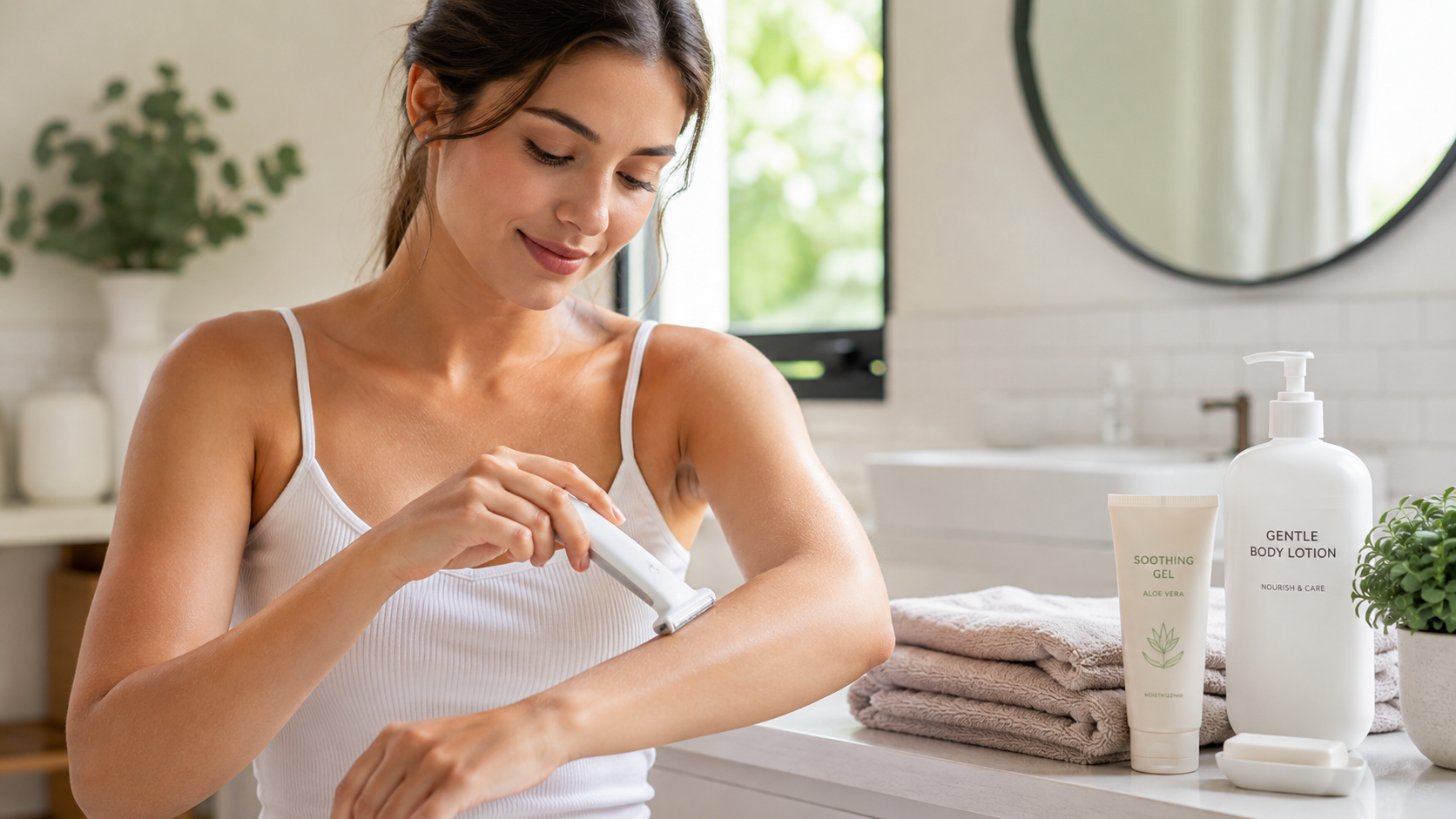

Arm hair care may seem simple, but shaving, waxing, trimming, or ignoring aftercare can affect how smooth and clean your skin looks. Here’s how to manage arm hair gently and avoid irritation.
Arm hair is one of those grooming topics people do not talk about much until they suddenly notice it.
Maybe it shows more in bright sunlight. Maybe it stands out when you wear short sleeves. Maybe you are getting ready for an event, taking photos, wearing a watch or bracelet, or just wanting your arms to look a little cleaner and more polished.
And then comes the question: should I shave it, wax it, trim it, bleach it, or just leave it alone?
The honest answer is that arm hair is completely normal. Everyone has it. Some people have very fine, barely visible hair. Some have darker, thicker hair. Some care about it. Some do not. There is no rule that says clean-looking arms must be hair-free.
But if you do want to manage arm hair for a neater impression, it is worth doing it carefully. The skin on your arms can get irritated, bumpy, itchy, or dry if you rush the process or skip aftercare.
Grooming should make you feel more comfortable, not leave you with red dots and regret.
First, decide how much grooming you actually want

Before removing arm hair, ask yourself what result you want.
Do you want completely smooth arms? Do you just want the hair to look less noticeable? Do you want a tidy look without changing the natural appearance too much?
That matters because full removal is not the only option.
Some people prefer trimming because it reduces bulk without creating the sharp regrowth feeling that shaving can sometimes leave. Others like waxing because the result lasts longer. Some use hair removal cream. Some bleach the hair so it blends more with the skin. Some simply moisturize and leave the hair as it is.
There is no “correct” choice. The best method is the one that fits your skin, hair type, pain tolerance, time, and maintenance level.
The mistake is copying someone else’s routine without thinking about your own skin.
Shaving arm hair: easy, but easy to irritate
Shaving is probably the simplest option. It is quick, affordable, and can be done at home.
But shaving your arms like you are rushing through a chore can cause irritation. Dry shaving, using an old razor, pressing too hard, or going over the same area again and again can lead to redness, tiny cuts, razor bumps, and that uncomfortable itchy feeling during regrowth.
If you shave your arms, do it gently.
Use warm water first to soften the hair. Apply shaving gel, cream, or at least a gentle body wash with enough slip. Use a clean, sharp razor. Shave lightly in the direction that feels least irritating for your skin. Do not press hard. The razor should glide, not scrape.
After shaving, rinse well and apply moisturizer. Your skin just went through friction, so give it some support.
And please do not shave over irritated skin, sunburn, fresh scratches, or active bumps. That is just asking for your skin to complain louder.
Does shaving make arm hair grow back thicker?
This is one of the most common worries.
Shaving does not actually change the thickness, color, or growth rate of your hair. Hair grows from the follicle under the skin, and shaving cuts the hair at the surface.
However, shaved hair can feel stubbier when it grows back because the tip has been cut blunt. Natural hair has a softer tapered end, while shaved hair grows back with a flat edge at first. That can make it feel thicker even though the hair itself has not changed.
So if you hate the feeling of stubble, shaving may not be your favorite method.
Trimming or waxing may feel better, depending on your preference.
Waxing gives longer results, but aftercare matters
Waxing removes hair from the root, so the smoothness usually lasts longer than shaving. The regrowth may also feel softer because the hair grows back naturally rather than with a blunt cut edge.
But waxing is more intense on the skin.
It pulls hair out from the follicle and removes some surface skin cells at the same time. That can leave your arms temporarily red, sensitive, or bumpy. Some people also get ingrown hairs or follicle irritation after waxing.
If you wax your arms, avoid doing it right before an important event. Give your skin a day or two to calm down, especially if you are new to waxing.
After waxing, skip hot showers, saunas, heavy sweating, strong fragrance, exfoliating acids, retinoids, and tight sleeves for a short while. Keep the skin clean and moisturized. If the skin feels warm or irritated, a cool compress can help.
Freshly waxed skin needs calm, not a full perfume-and-scrub routine.
Hair removal creams can be convenient, but patch testing is important
Depilatory creams dissolve hair at the surface using chemical ingredients.
They can be useful if you want a smooth result without shaving or waxing. But they can also irritate the skin, especially if left on too long or used on sensitive areas.
Always do a patch test first. I know patch testing feels annoying and slow. But chemical burns or angry red arms are much more annoying.
Follow the time instructions exactly. Do not think, “I’ll leave it on a little longer so it works better.” That is how people end up with irritation.
After rinsing the cream off, moisturize gently. Avoid using strong exfoliants or fragrance right away.
Also, do not use hair removal cream on broken, scratched, sunburned, or irritated skin.
Trimming is underrated
If you want a cleaner look but do not want smooth bare arms, trimming may be the easiest option.
Trimming shortens the hair without cutting it right down to the skin. That means less risk of razor burn, less chance of tiny cuts, and usually less itchy regrowth.
It can look natural and neat, especially if your arm hair is long but you do not want it completely removed.
Use a clean body groomer or trimmer with a guard. Start with a longer guard first. You can always go shorter, but you cannot un-trim hair once it is gone. Move slowly and check both arms in natural lighting if possible.
The goal is not perfection. It is evenness.
Uneven trimming can look more noticeable than the hair itself.
Bleaching arm hair: less visible, but not for everyone
Some people prefer bleaching arm hair instead of removing it. This can make dark hair look lighter and less noticeable, especially on lighter skin tones.
But bleaching products can irritate skin. They may sting, cause redness, or trigger sensitivity if your skin does not tolerate them well.
Again, patch test first. Use products made for body hair, follow the instructions, and do not apply bleach to irritated, freshly shaved, or sunburned skin.
Bleaching also does not remove texture. The hair is still there, just lighter. If your concern is the feel of the hair rather than its color, bleaching may not solve that.
It can be a nice option for some people, but it is not automatically gentler than shaving.
Exfoliation helps, but timing matters
Exfoliation can help prevent rough texture and ingrown hairs, especially if you shave or wax.
But timing matters.
Do not scrub your arms immediately after hair removal. The skin is already sensitive. Scrubbing right away can make redness and irritation worse.
Instead, exfoliate gently a day or two before shaving or waxing. This helps remove dead skin cells and can make hair removal smoother. After hair removal, wait until the skin calms down before exfoliating again.
Use a gentle body scrub, exfoliating glove, or mild chemical exfoliant if your skin tolerates it. You do not need to sand your arms like furniture.
If your skin gets red, stingy, or dry after exfoliating, you are doing too much.
Moisturizer makes arms look cleaner than people realize
This is the boring step that makes a surprisingly big difference.
Dry arms can look dull, rough, and uneven. Hair also tends to look more noticeable when the skin underneath is dry or flaky. Moisturized skin reflects light better, feels smoother, and gives the whole arm a cleaner appearance.
After showering, apply body lotion while your skin is slightly damp. If your arms are very dry, use a richer cream. If you hate sticky body lotion, choose a lightweight gel-lotion or fast-absorbing formula.
Consistency matters more than fancy ingredients.
You can remove hair perfectly, but if the skin is dry and irritated afterward, the result will not look polished.
Clean grooming is not just hair removal. It is skin care too.
Watch out for tiny bumps after hair removal
Small bumps after shaving or waxing are common.
They may come from irritation, clogged follicles, ingrown hairs, friction, or bacteria entering freshly disturbed follicles. The bumps can look like red dots, whiteheads, or rough patches.
To reduce the chance of bumps, keep your tools clean, avoid removing hair on dirty skin, moisturize afterward, and wear loose clothing for a while if the skin is sensitive.
If you wax or shave and then immediately wear tight sleeves, sweat heavily, or apply fragranced lotion, the skin may react.
If bumps are painful, spreading, filled with pus, or not improving, it may be folliculitis or another skin issue. In that case, it is better to get proper advice instead of repeatedly shaving over it.
Sun protection matters after hair removal
Freshly shaved, waxed, or chemically treated skin may be more sensitive to sunlight.
If your arms will be exposed, use sunscreen. This is especially important after waxing or using depilatory creams, because the skin can be more vulnerable to irritation and uneven pigmentation.
Sun exposure can make red marks or irritation look darker and last longer. So if you are grooming your arms for a clean look, sunscreen helps protect the result.
Also, do not wax or use strong hair removal methods on sunburned skin. Let it heal first.
Your skin does not need multiple problems at once.
Do not remove arm hair right before a big event
This is a simple rule that saves so much stress.
If you are shaving, waxing, bleaching, or using hair removal cream before a wedding, photoshoot, trip, date, interview, or important event, do it ahead of time.
Not too far ahead that hair regrows, but not the morning of if you are trying a method for the first time.
Skin can react unpredictably. Redness, bumps, itching, or irritation may show up even if the method seemed fine at first. Give yourself a buffer.
For shaving, the day before often works for many people. For waxing or bleaching, two or three days before may be safer if your skin tends to react.
Never test a brand-new hair removal cream an hour before leaving the house. That is skincare gambling.
Keep your tools clean
Razors, trimmers, and grooming tools touch your skin directly. They should be clean.
A dull razor can drag and irritate the skin. A dirty razor can increase the chance of bumps or infection. A trimmer with old hair and skin debris stuck in it is not exactly giving “clean impression.”
Rinse razors well after use and let them dry. Replace blades regularly. Clean trimmer heads according to the instructions. Do not share razors.
This is not being dramatic. It is basic hygiene.
If your goal is a neat, polished look, dirty tools are working against you.
Avoid picking at ingrown hairs
Ingrown hairs can happen when hair grows back into the skin instead of out of it.
They may look like small bumps, sometimes with a visible hair trapped underneath. The temptation to dig it out is very real. But picking with nails or tweezers can damage the skin, cause scabs, and leave dark marks.
If you get ingrown hairs often, gentle exfoliation between hair removal sessions may help. Moisturizing also keeps the skin softer, which can make it easier for hairs to grow out normally.
If an ingrown hair becomes painful, swollen, or infected-looking, stop picking and get it checked.
A tiny bump is not worth creating a scar.
Matching arm care with the rest of your grooming
Clean-looking arms are not only about hair.
Nails, hands, elbows, skin texture, and dryness all affect the overall impression. You can have perfectly smooth arms, but if your elbows are dry and ashy or your hands are cracked, the look may still feel unfinished.
Body grooming works best when it feels balanced.
Moisturize your arms and elbows. Keep nails clean. Use sunscreen when arms are exposed. Avoid overdoing fragrance-heavy lotions if your skin gets irritated. If you wear bracelets or watches, clean the area underneath them too, especially in hot weather.
Small things add up.
A polished look is usually not one dramatic step. It is a few simple habits done consistently.
What if you do not want to remove arm hair?
Then do not.
Seriously.
Arm hair is normal. You are not required to remove it to look clean, attractive, professional, feminine, masculine, or put-together. Cleanliness and hairlessness are not the same thing.
If you prefer to keep your arm hair natural, basic care still matters. Wash regularly, moisturize the skin, exfoliate gently if you get rough texture, and use sunscreen when arms are exposed.
Well-cared-for skin looks good with or without hair.
The goal is not to meet some imaginary grooming standard. The goal is to feel comfortable in your own skin and make choices that suit you.
A simple arm grooming routine
If you want a clean, neat look without overcomplicating it, try this kind of routine:
A day before hair removal, gently exfoliate if your skin tolerates it.
On hair removal day, use clean tools and avoid rushing.
Shave with cream, wax carefully, trim evenly, or use cream only after patch testing.
Rinse well and moisturize afterward.
Avoid fragrance, hot water, heavy sweating, or tight sleeves right after waxing or chemical removal.
Use sunscreen if your arms will be exposed.
Moisturize regularly between grooming sessions.
That is enough for most people.
You do not need to treat arm hair like a crisis. Just manage it calmly.
When to stop and let your skin recover
If your arms become red, itchy, bumpy, burning, or very dry after grooming, pause hair removal for a while.
Do not keep shaving over irritated skin. Do not wax skin that is already inflamed. Do not apply bleach or depilatory cream to areas that sting.
Switch to gentle body wash, moisturizer, and sunscreen until the skin calms down. If needed, wear looser sleeves and avoid strong fragrance.
If irritation keeps happening every time, your current method may not be right for you. Try trimming instead of shaving. Try shaving instead of waxing. Try a gentler product. Or simply remove hair less often.
Your skin’s reaction is useful information.
So, what are the key precautions for arm hair care?
Arm hair grooming can help create a cleaner, more polished impression, but only when the skin is treated gently.
Shaving is quick but can cause stubble and irritation if done roughly. Waxing lasts longer but needs careful aftercare. Hair removal creams are convenient but require patch testing. Trimming is a low-irritation option that many people overlook. Bleaching can make hair less visible, but it can also irritate sensitive skin.
Whatever method you choose, remember the basics: clean tools, gentle technique, moisturizer, sun protection, and no aggressive picking or scrubbing.
The best grooming routine is not the harshest one.
It is the one that leaves your arms looking neat and your skin feeling calm. Because a clean impression comes from healthy-looking skin, not irritated skin that has been forced into smoothness.

Hi, I’m the creator and editor behind ZestyHabit. I research everyday safety, first aid, and practical wellness topics using official guidance and reliable public sources, then turn that information into clear, realistic steps for daily life.
My goal is to help readers make safer, better-informed choices at home and beyond.


