Eye Cream: What It Actually Does and How to Use It Properly
Minjin Park
·
Eye cream can help with dryness, fine lines, and tired-looking under-eyes, but it is not magic. Here’s how to choose and use eye cream the right way.
Eye cream is one of those skincare products people either swear by or completely ignore.
Some people treat it like a tiny miracle jar. They dab it on every night and feel like their whole face looks more awake by morning. Other people roll their eyes and say, “Isn’t it just expensive moisturizer in a smaller container?”
Honestly, both sides have a point.
Eye cream is not magic. It will not erase deep wrinkles overnight, remove genetic dark circles, or make you look like you slept nine hours when you actually watched videos until 2 a.m. I wish. We all wish.
But eye cream can be useful, especially if your under-eye area is dry, easily irritated, crepey, or sensitive to regular face products. The key is understanding what eye cream can realistically do, what it cannot do, and how to use it without overdoing it.
Because the skin around the eyes is delicate, and more product is not always better.
The skin around your eyes is thinner and more delicate than many other areas of the face. It also moves a lot. We blink, squint, smile, cry, rub, apply makeup, remove makeup, and sometimes aggressively drag concealer around like we are editing a document.
That area goes through a lot.
Because the skin is thinner, dryness and texture can show more easily. Fine lines may look more noticeable when the skin is dehydrated. Makeup can settle into small lines. Concealer may look patchy or cakey. The under-eye area can also react more strongly to harsh skincare products.
This is why some people can use a strong retinol or exfoliating serum on their cheeks but cannot bring it anywhere near their eyes without burning, watering, or peeling.
Eye cream exists partly because the eye area often needs a gentler, more targeted product.
Is eye cream really necessary?
Not always.
If your regular moisturizer works well around your eyes and does not sting, migrate into your eyes, or cause bumps, you may not need a separate eye cream. A gentle moisturizer can be enough for many people.
But eye cream can be helpful if:
Your under-eyes feel dry or tight Your concealer looks cakey because the area is dehydrated Regular moisturizer irritates your eyes You want a lighter texture near the eyes You want specific ingredients for puffiness, fine lines, or dullness Your eye area is sensitive to facial actives
So, eye cream is not required for everyone. It is more of a “useful if needed” product.
That might sound boring, but it is the truth. Skincare does not have to be a shopping list. It should solve an actual problem.
What eye cream can realistically help with
Eye cream is best at helping with dryness and dehydration.
This is where it can make a noticeable difference. When the under-eye area is dry, fine lines look sharper, makeup sits badly, and the skin can look tired even when you are not actually exhausted. A good eye cream can soften that look by adding hydration and helping the skin stay comfortable.
Eye cream may also help with the appearance of fine lines, especially the tiny dehydration lines that come and go depending on how dry your skin is. It will not erase expression lines completely, but hydrated skin usually looks smoother.
Some formulas can help brighten a dull-looking under-eye area. Ingredients like niacinamide, caffeine, peptides, or gentle vitamin C derivatives may improve the look of tired skin over time.
Eye cream can also help reduce the appearance of puffiness, especially if the puffiness is mild and temporary. Caffeine-based eye creams can be nice in the morning because caffeine may help the area look a little less swollen.
But again, realistic expectations matter.
If your dark circles are caused by genetics, deep tear troughs, visible blood vessels, natural shadowing, or bone structure, an eye cream can only do so much. It may improve hydration and brightness, but it cannot change facial anatomy.
What eye cream cannot do
Eye cream cannot replace sleep, water, sunscreen, or a balanced routine.
It also cannot permanently remove deep wrinkles, severe under-eye bags, or hollow tear troughs. Those concerns may need professional treatments if someone wants a bigger change.
This is where marketing gets a little sneaky. A product may show dramatic “before and after” images, but under-eye concerns are complicated. Dark circles alone can come from pigmentation, thin skin, shadows, allergies, lack of sleep, dehydration, or genetics.
One cream cannot fix every version of that.
Eye cream also cannot undo constant irritation. If you rub your eyes every day, remove makeup harshly, skip sunscreen, and sleep in mascara, even the nicest eye cream is fighting uphill.
Sometimes the best eye care is not the product. It is the habits around the product.
How to choose an eye cream
The right eye cream depends on what you are trying to improve.
For dryness, look for ingredients like glycerin, hyaluronic acid, ceramides, squalane, panthenol, or shea butter. These help hydrate, soften, and support the skin barrier.
For puffiness, caffeine can be helpful, especially in morning eye creams. A cooling metal applicator can also feel nice, though the cooling effect is usually temporary.
For fine lines, peptides, retinol, retinal, or bakuchiol may be useful. But retinoid eye creams should be used carefully because the eye area can get irritated fast.
For dark circles, it depends on the cause. Niacinamide, vitamin C, licorice root, or gentle brightening ingredients may help pigmentation over time. But if the darkness is mostly shadow from hollowness, a cream will have limited effect.
For sensitive skin, go simple. Fragrance-free, gentle, barrier-supporting formulas are usually better than highly perfumed, glittery, “instant miracle” creams.
The eye area does not need drama.
How much eye cream should you use?
Less than you think.
A tiny amount is enough for both eyes. Usually, a rice-grain-sized amount per eye is plenty. Some people use a pea-sized amount for both eyes, but even that can be too much depending on the formula.
Using too much eye cream can make the area greasy, cause makeup to slide, or lead to milia-like bumps in some people. It can also migrate into the eyes and cause watering or irritation.
This is one product where more does not mean better.
You are not frosting a cupcake. You are lightly moisturizing thin skin.
Where exactly should you apply eye cream?
Apply eye cream around the orbital bone, not directly into your lash line.
Avoid placing eye cream too close to the actual eye. Products can move as your skin warms up, especially at night. If you apply cream right under the lower lashes, it may creep into your eyes and make them sting or water.
For the upper eyelid, be careful. Some eye creams are safe for the lid, but not all. If the product label does not say it can be used on eyelids, keep it to the orbital area.
The skin will still benefit without you putting product dangerously close to the eyeball.
The best way to apply eye cream
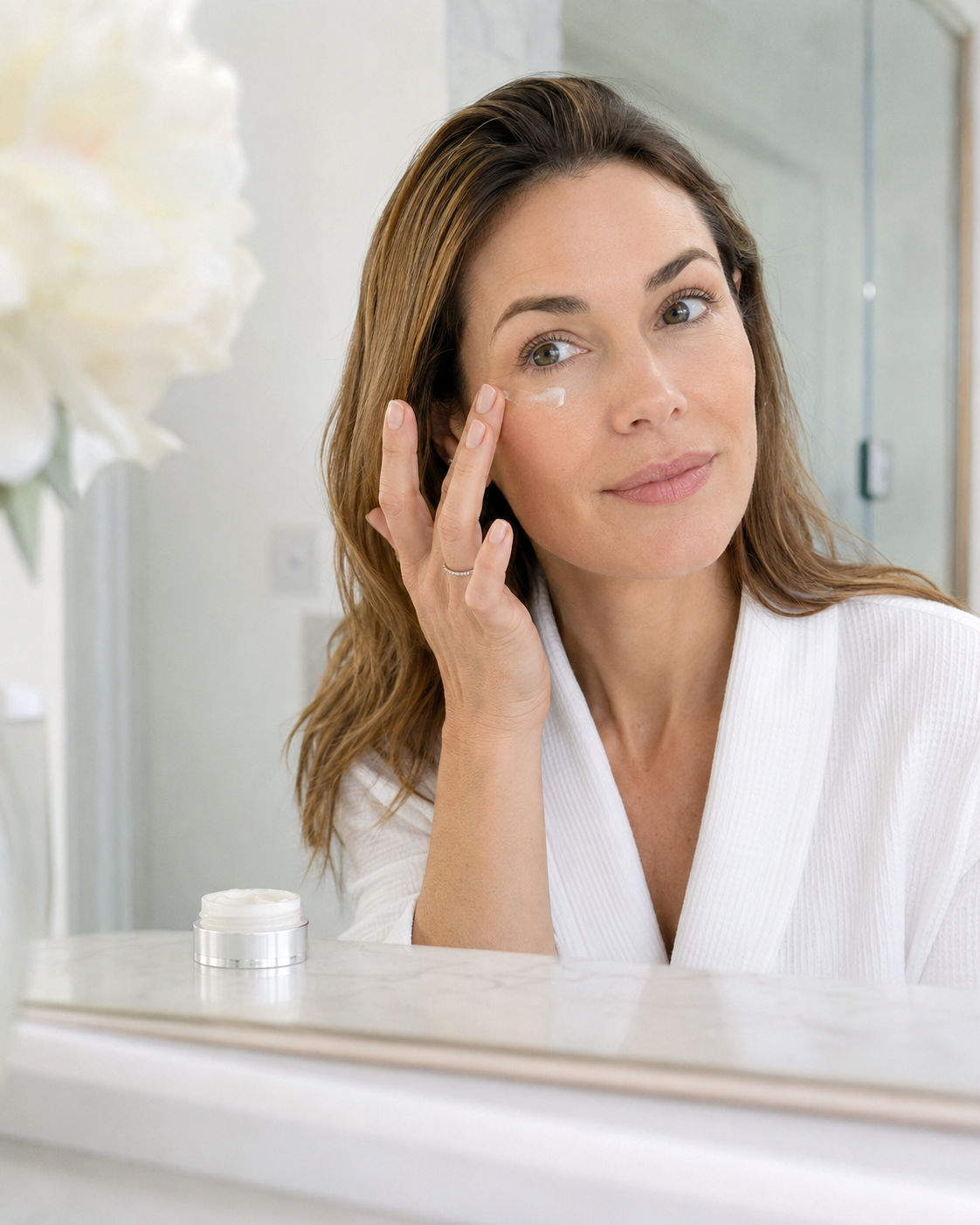
Use your ring finger if you want the classic gentle method. It naturally applies less pressure than your index finger.
Tap the product lightly around the eye area. Do not drag, pull, or rub. You can press gently, but there is no need to massage aggressively unless the product is specifically designed for that.
A simple method:
Take a tiny amount. Dot it under the eye and near the outer corner. Tap gently along the orbital bone. Let it absorb before applying sunscreen or makeup.
That is it.
Eye cream application should feel almost boring. If you are tugging the skin around, you are doing too much.
Morning vs. night: when should you use eye cream?
You can use eye cream in the morning, at night, or both.
Morning eye cream is helpful if your under-eyes look dry, puffy, or creased under makeup. Lightweight hydrating formulas work well during the day. Caffeine eye creams are also popular in the morning because they can help the area look more awake.
Night eye cream can be richer and more nourishing. This is also when people often use retinol or peptide eye creams, because they are more treatment-focused.
If you use a retinol eye cream, nighttime is usually best. Start slowly, maybe two or three nights a week, and watch how your skin responds.
If your eye area becomes red, flaky, itchy, or stingy, pause. The eye area is not a place to “push through” irritation.
Should eye cream go before or after moisturizer?
Usually, eye cream goes after lightweight serums and before heavier moisturizer or facial oils.
A simple routine could look like this:
Cleanser Toner or essence, if you use one Serum Eye cream Moisturizer Sunscreen in the morning
But do not stress too much about the exact order if your routine is simple. The main idea is to apply thinner products before thicker ones.
If your eye cream is very rich, you can apply it after moisturizer. If it is a lightweight gel, apply it before moisturizer.
Texture matters.
Can you use regular moisturizer as eye cream?
Yes, sometimes.
If your moisturizer is gentle, fragrance-free, and does not contain strong actives, it may work perfectly fine around your eyes. Many people do not need a separate product.
But be careful with moisturizers that contain exfoliating acids, strong retinoids, high levels of vitamin C, fragrance, essential oils, or acne-fighting ingredients. These may be fine for your cheeks but too irritating near the eyes.
Also, some face creams are too heavy and can cause puffiness or bumps around the eye area.
So the answer is not “never use face cream near your eyes.” It is more like: use a gentle moisturizer if your eye area tolerates it.
Your skin will tell you.
Eye cream and sunscreen
If you care about fine lines, pigmentation, and long-term skin aging, sunscreen around the eye area matters.
A lot of people apply sunscreen to the face but skip the under-eyes because they are afraid of stinging. Understandable. Sunscreen in the eyes is one of life’s tiny betrayals.
But the eye area still gets sun exposure. Over time, UV damage can contribute to fine lines, dark spots, and texture changes.
If regular sunscreen stings near your eyes, try a mineral sunscreen, a fragrance-free formula, or a sunscreen stick designed for sensitive areas. Sunglasses and hats also help a lot.
Eye cream can moisturize, but sunscreen protects.
Those are not the same job.
Eye cream and makeup
Eye cream can make concealer look better, but only if you use the right amount.
Too little hydration and concealer may cling to dry patches. Too much eye cream and concealer may slide around, crease, or separate.
The trick is to apply a small amount, let it absorb for a few minutes, then apply makeup. If the area still feels greasy, you used too much or the formula is too rich for daytime.
For makeup users, a lightweight hydrating eye cream is usually easier than a thick balm in the morning.
At night, you can use the cozy rich stuff.
What about eye creams with retinol?
Retinol eye creams can be helpful for fine lines and texture, but they need respect.
The eye area is more sensitive, so starting slowly is important. Use a tiny amount, avoid the lash line, and do not combine it with other irritating products in the same area.
Do not use retinol eye cream every night right away. Try a couple of nights a week first. If your skin handles it well, you can gradually increase.
Also, sunscreen is non-negotiable when using retinoids. Retinol can make skin more sensitive, and the whole point is to support smoother-looking skin, not create irritation and sun sensitivity.
If you are pregnant, breastfeeding, or trying to become pregnant, ask a healthcare professional before using retinoids.
What about eye creams for dark circles?
Dark circles are complicated, which is why eye creams for dark circles can be disappointing.
There are different types of dark circles:
Brownish discoloration from pigmentation Bluish or purple tones from visible blood vessels Shadows from hollowness or tear troughs Temporary darkness from lack of sleep or dehydration Darkness related to allergies or rubbing
Brightening eye creams may help pigmentation a bit over time. Hydrating eye creams can make the area look plumper and less shadowy. Caffeine can help temporary puffiness. But if your dark circles come from bone structure or genetics, eye cream will not fully remove them.
This does not mean eye cream is useless. It just means it may improve the overall look without completely solving the issue.
Sometimes “better” is realistic. “Gone” is not.
What about eye bags and puffiness?
Eye bags can come from fluid retention, lack of sleep, salty food, allergies, aging, genetics, or fat pads under the eyes.
If puffiness is temporary, morning habits can help. A caffeine eye cream, cool compress, gentle tapping, good sleep, and reducing irritation may make the area look less swollen.
If under-eye bags are structural or long-term, eye cream will have limited results. It may improve skin texture or hydration, but it will not remove fat pads.
Also, heavy eye creams can make puffiness worse for some people, especially if applied too close to the eyes at night. If you wake up puffy after using a rich eye cream, try using less, applying it farther from the lash line, or switching to a lighter formula.
Can eye cream cause milia?
It can contribute to small bumps around the eyes in some people, especially if the formula is very thick or occlusive.
Milia are tiny white bumps that form when keratin gets trapped under the skin. They are common around the eyes. Heavy creams do not cause all milia, but they can make the area more prone to congestion for certain people.
If you notice small bumps after starting a rich eye cream, stop using it for a while and see if things improve. A lighter gel or lotion texture may be better.
Do not try to squeeze milia at home. The eye area is delicate, and picking can cause irritation or scarring.
Common eye cream mistakes
The biggest mistake is using too much.
The second biggest mistake is applying it too close to the eye.
Another mistake is expecting an eye cream to fix lifestyle-related tiredness. If you sleep poorly, rub your eyes, drink very little water, and stare at screens all day without breaks, eye cream can only do so much.
People also tend to switch products too quickly. Eye creams, especially those for fine lines or pigmentation, need time. Hydration can improve quickly, but deeper changes take weeks or months.
And then there is the habit of using strong facial actives right up to the eye area. Please be careful with that. Your under-eyes do not need the same intensity as your forehead.
A simple eye care routine that actually makes sense
You do not need a separate product for every concern.
A practical routine could look like this:
In the morning, apply a lightweight hydrating eye cream if your under-eyes feel dry. Follow with sunscreen, and use sunglasses when you are outside.
At night, remove makeup gently. No scrubbing. Apply a small amount of eye cream around the orbital bone. If you use a retinol eye cream, start slowly and keep the rest of your routine gentle.
That is enough.
The boring habits matter: sleep, gentle makeup removal, sunscreen, not rubbing your eyes, and using the right amount of product.
Eye cream is only one piece of the puzzle.
So, is eye cream worth it?
Eye cream can be worth it if it addresses a real concern you have.
If your under-eyes are dry, sensitive, crepey, or easily irritated by regular face products, a good eye cream can make the area feel much more comfortable. It can help makeup sit better, soften the look of dehydration lines, and support the delicate skin around the eyes.
But it is not magic. It will not erase every wrinkle, remove genetic dark circles, or lift under-eye bags overnight.
The best eye cream is not necessarily the most expensive one. It is the one that suits your skin, feels comfortable, does not irritate your eyes, and fits into a routine you can actually keep.
Use a tiny amount. Apply it gently. Keep it away from the lash line. Wear sunscreen. Stop rubbing your eyes like you are trying to erase a mistake.
That is the real secret.
Eye cream can help, but gentle habits around the eye area often help just as much.
Hi, I’m the creator and editor behind ZestyHabit. I research everyday safety, first aid, and practical wellness topics using official guidance and reliable public sources, then turn that information into clear, realistic steps for daily life.
My goal is to help readers make safer, better-informed choices at home and beyond.