
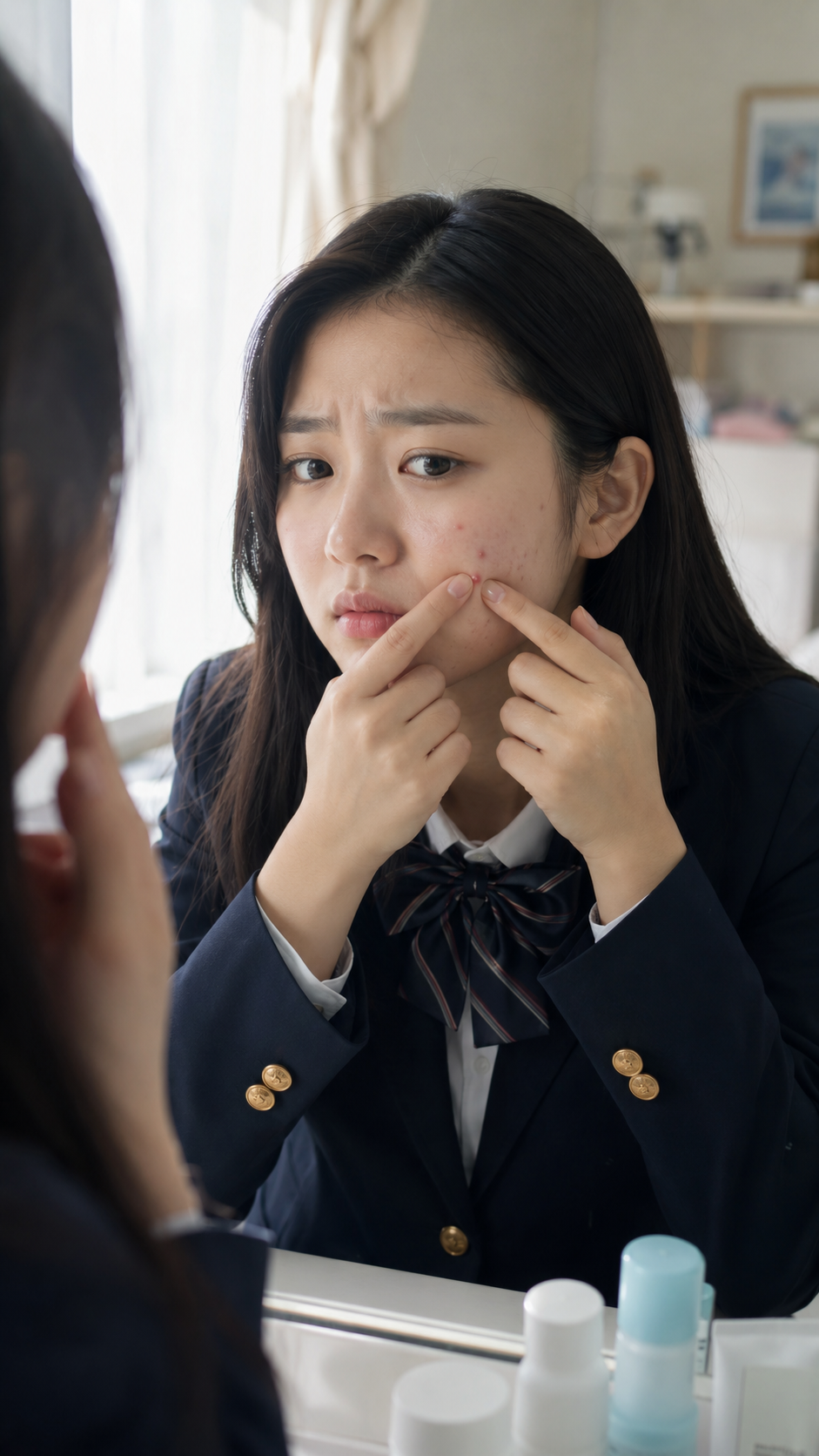

There are few skincare temptations stronger than a pimple that looks “ready.”
You know the one. It appears right in the middle of your face, usually before a meeting, date, photo, family gathering, or any other moment where your skin apparently chooses violence. You wash your face, you look in the mirror, and there it is.
A tiny bump.
A whitehead.
A red swollen spot.
And suddenly your brain becomes a dermatologist, surgeon, and crisis manager all at once.
“Just a little squeeze,” you tell yourself. “It’ll look flatter after.”
Sometimes it does look flatter for about five minutes. Then it becomes redder, angrier, more swollen, and somehow more noticeable than before. By the next morning, what started as one small pimple has turned into a scab, a dark mark, or a painful lump that now has emotional history.
So, is popping pimples really bad for your skin?
Honestly, most of the time, yes. Not because your skin is fragile beyond repair, and not because touching one pimple will destroy your face forever. But squeezing, picking, and forcing pimples open can irritate the skin, spread inflammation, increase the chance of infection, and leave behind marks that last much longer than the original breakout.
The annoying truth is that pimples usually heal better when we stop trying to “help” them so aggressively.
Why Popping Pimples Feels So Satisfying
Before we shame the habit, let’s admit something: popping a pimple can feel weirdly satisfying.
There is the visual relief. The sense that you “got something out.” The hope that now the pimple will finally go away. It feels like taking action instead of just staring helplessly at your face.
That is part of why it becomes a habit. Skin problems make us feel out of control, and popping feels like control.
But skin does not always respond kindly to being forced.
A pimple is not just a little dot of stuff sitting politely under the surface. It is inflammation inside the skin. There may be trapped oil, dead skin cells, bacteria, swelling, and pressure. When you squeeze it, you are not simply emptying a tiny pocket. You are pushing on inflamed tissue.
Sometimes the contents come out. Sometimes they go deeper. Sometimes both happen.
And that is where the trouble starts.
What Actually Happens When You Squeeze a Pimple
When you press around a pimple, you create pressure under the skin. If the pore opening is clear and the pimple is very superficial, some material may come out easily. That is usually the “best case” version.
But if the pimple is deep, red, painful, or not ready, squeezing can push the blockage and inflammation deeper into the skin. Instead of helping it heal, you can make the surrounding area more swollen and irritated.
You can also break the skin surface. Once the skin is open, it becomes more vulnerable. Your fingers and nails may introduce bacteria, especially if you did not wash your hands first. Even clean hands can still be too rough if you are digging, scratching, or using your nails.
This is how one pimple can turn into a bigger problem.
The skin around it becomes red. The spot starts throbbing. A scab forms. Then you pick the scab because now that bothers you too. Suddenly this tiny breakout has become a week-long skincare drama.
It is a very common cycle.
Not a proud one, but common.
The Risk of Dark Marks and Scarring
For many people, the worst part is not even the pimple itself. It is what comes after.
Popping pimples can increase the chance of post-inflammatory marks. These can look like red, purple, brown, or dark spots depending on your skin tone and how your skin reacts after inflammation.
Some marks fade in a few weeks. Others take months.
This is especially frustrating because the original pimple might have gone away in three or four days if left alone. But after squeezing it, you may be dealing with the aftermath for much longer.
Scarring is another concern. Not every popped pimple causes a scar, of course. But aggressive picking, repeated squeezing, deep inflamed acne, and breaking the skin can increase the risk. Atrophic scars, the indented kind, are much harder to treat than a regular blemish.
That is the part I wish someone had explained more clearly when I was younger.
A pimple feels urgent because it is visible right now. But a scar or dark mark can stay long after the urgency is gone.
Some Pimples Should Never Be Popped
Not all pimples are the same.
A small whitehead sitting right at the surface is very different from a deep, painful cyst under the skin. The deeper and more inflamed the spot is, the worse idea squeezing becomes.
Deep cystic pimples usually do not have a clear opening. They may feel like hard, sore lumps under the skin. Trying to pop them often causes more swelling without actually releasing anything. You just end up hurting yourself and making the spot angrier.
Red bumps without a white center are also not good candidates. If there is nothing visible to release, squeezing usually just creates trauma.
Those tiny closed comedones, the little under-the-skin bumps, can also be risky to attack. People often squeeze them repeatedly because they do not come out easily. That repeated pressure can irritate the area and turn a non-inflamed bump into an inflamed pimple.
Basically, if you have to fight it, leave it alone.
Your skin should not require a battle plan.
Why Nails Make Everything Worse
If there is one thing that makes pimple popping more damaging, it is using your nails.
Nails can scratch and tear the skin. They can create tiny cuts even if you do not notice them right away. They also tend to carry bacteria and debris underneath, unless you are extremely careful about cleaning them.
Using nails also makes it easier to apply uneven, sharp pressure. That is why popped pimples often end up with little crescent-shaped marks or broken skin around them.
If you ever see two little nail marks around a pimple, that is your skin quietly saying, “Please stop.”
The problem is that once the skin is broken, healing becomes more complicated. Your body now has to repair both the original inflammation and the damage caused by picking.
That is a lot of work for one tiny spot.
What About “Proper” Extraction?
You may be wondering: if popping is so bad, why do facialists and dermatologists do extractions?
Good question.
Professional extraction is different because it is usually done with clean tools, better lighting, proper technique, and knowledge of what should and should not be extracted. A trained professional is less likely to attack a deep cyst or squeeze until the skin tears.
Even then, extraction can still cause irritation if done too aggressively. That is why good professionals are selective. They do not try to empty every pore on your face like they are clearing a battlefield.
At-home popping is often less controlled. We do it impulsively, in bad lighting, with unwashed hands, while leaning two inches from the mirror and emotionally negotiating with a whitehead.
Not exactly a sterile environment.
The “Triangle of Danger” Thing
You may have heard people warn about popping pimples in the area from the bridge of the nose to the corners of the mouth. Sometimes this gets called the “danger triangle” of the face.
The reason people talk about this area is because infections in that region, though rare, can potentially become more serious due to certain blood vessel connections. Now, this does not mean every squeezed pimple near your nose is a medical emergency. Most are not.
But it is a good reminder that breaking skin on your face is not completely risk-free.
If a pimple becomes extremely painful, very swollen, hot, rapidly spreading, filled with lots of pus, or you develop fever or feel unwell, that is not a normal breakout situation. It is worth getting medical help.
For everyday acne, though, the more realistic issue is irritation, marks, and scarring.
Still unpleasant enough.
What to Do Instead of Popping
The best alternative depends on the type of pimple.
For a small whitehead, a hydrocolloid pimple patch can be surprisingly helpful. It protects the spot, absorbs fluid, and, maybe most importantly, stops your fingers from messing with it. Sometimes the patch is less about magic and more about damage control.
For red, inflamed pimples, a spot treatment with benzoyl peroxide or salicylic acid may help. Use a small amount. More product does not mean faster healing. It often just means dry, flaky skin around the pimple, which then makes it look even more obvious.
For a sore, swollen bump, a cold compress can help reduce discomfort and puffiness. Not glamorous, but useful.
For deep cystic acne, it is better not to squeeze. If you get these often, a dermatologist can offer treatments that work better than attacking them in the mirror.
And for all types of breakouts, keep the routine gentle. Cleanse, moisturize, protect with sunscreen during the day, and avoid turning your entire face into a science experiment because of one pimple.
One pimple does not need six new products.
If You Already Popped It
Okay. Let’s be realistic.
Maybe you already popped it.
No judgment. We have all made skincare decisions under poor emotional management.
The first thing to do is stop. Do not keep squeezing to “finish the job.” That is usually how the damage gets worse.
Wash your hands. Cleanse the area gently. Do not scrub. Do not apply five harsh actives on the open skin. Treat it like a tiny wound, because that is basically what it is now.
A plain hydrocolloid patch can help protect it while it heals. If the skin is raw or broken, avoid strong exfoliating acids or retinoids directly on that spot until it closes. Keep it moisturized and protected from the sun, because UV exposure can make post-acne marks look darker and last longer.
The main goal after popping is simple: let the skin repair.
Not punish it. Not dry it into submission. Just let it heal.
Why “Drying It Out” Can Backfire
A lot of people try to fix pimples by drying them out as much as possible.
Toothpaste, alcohol, harsh spot treatments, too much benzoyl peroxide, repeated cleansing, clay masks every day — the whole emergency kit.
But overly drying the skin can damage the barrier. When the skin barrier is irritated, your face may become red, flaky, tight, or more sensitive. Sometimes it even produces more oil in response, which is deeply unfair but very skin-like.
A pimple is already inflamed. Adding irritation around it does not always help.
The goal is not to turn your skin into a desert. The goal is to reduce inflammation and support healing.
That sounds less dramatic, but it works better.
The Mirror Problem
A lot of pimple popping happens because of mirrors.
Not normal mirrors from a reasonable distance. I mean the intense inspection mirror situation. Bright light. Leaning close. Searching every pore like you are investigating a crime scene.
This is where tiny texture starts looking huge. A pore becomes a problem. A small bump becomes an emergency. Suddenly you are squeezing something no one else would have noticed.
One of the best things you can do for your skin is step back.
Literally.
Look at your face from a normal conversational distance. That is how most people see you. Not magnified, not under bathroom lighting, not from two centimeters away.
Your skin has texture. Everyone’s skin has texture. The mirror just likes to exaggerate things.
When Popping Becomes a Habit
Occasionally popping a pimple is one thing. Feeling unable to stop picking your skin is another.
If you often pick until your skin bleeds, scabs, or scars, or if you spend a lot of time scanning your skin for things to squeeze, it may be more than a simple skincare habit. Stress, anxiety, boredom, and perfectionism can all feed the cycle.
In that case, the answer is not “just stop.” If it were that easy, you would have stopped already.
Physical barriers can help. Pimple patches, short nails, keeping hands busy, covering magnifying mirrors, dimming harsh bathroom lights, or setting a time limit for skincare can all reduce the opportunity.
But if skin picking feels compulsive or emotionally distressing, talking to a professional can help. That could be a dermatologist, therapist, or both. Skin and stress are often more connected than people admit.
So, Should You Ever Pop a Pimple?
Ideally, no.
Realistically, people do.
If you absolutely cannot resist, at least do not touch deep, painful, red, or cystic pimples. Do not use nails. Do not squeeze until the skin breaks. Do not keep going when nothing comes out. And do not attack the same spot repeatedly.
But the better answer is to make popping less tempting in the first place.
Use a pimple patch early. Treat breakouts gently. Keep your hands away. Do not inspect your face too closely. Build a routine that prevents clogged pores over time instead of fighting each pimple like it personally offended you.
Because yes, I know. Sometimes it does feel personal.
The Bottom Line
Popping pimples can be bad for your skin because it increases irritation, inflammation, infection risk, dark marks, and scarring. It can turn a small temporary breakout into a longer healing process.
The pimple itself is usually not the biggest problem.
The damage we do to it is.
So the next time you see a spot and feel that familiar urge, pause for a second. Put on a pimple patch. Step away from the mirror. Let the skincare do its job. Let your skin heal without being squeezed, scratched, or negotiated with.
Your future face will be grateful.
Maybe not loudly. Skin is not very polite.
But it will show you.

Hi, I’m the creator and editor behind ZestyHabit. I research everyday safety, first aid, and practical wellness topics using official guidance and reliable public sources, then turn that information into clear, realistic steps for daily life.
My goal is to help readers make safer, better-informed choices at home and beyond.


