LED Masks: What to Watch Out for When Using Them at Home
Minjin Park
·
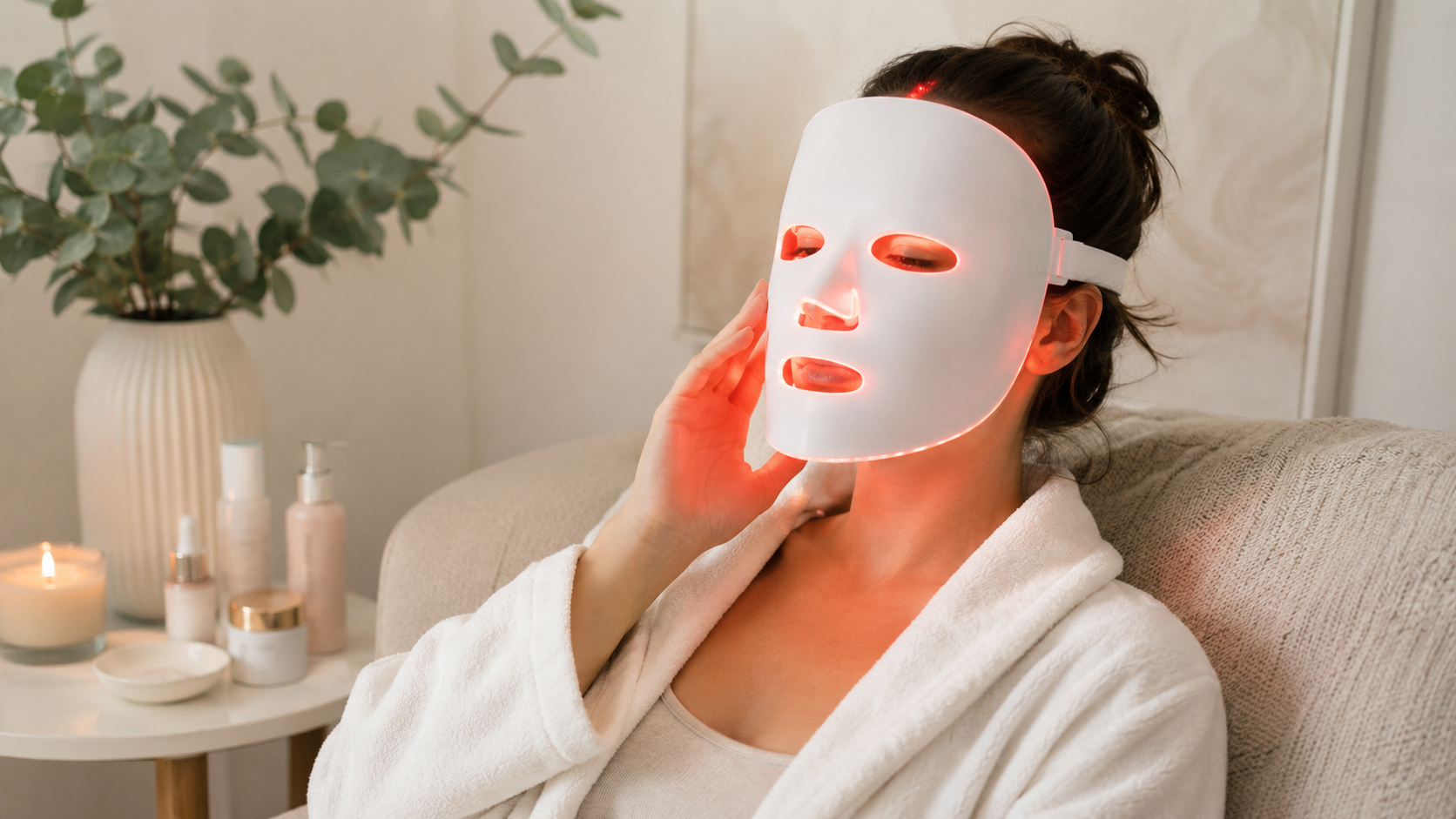
LED masks look very futuristic.
You put one on, your face glows red or blue, and suddenly your bathroom feels like a tiny science lab. Or a spaceship. Or a skincare ad where everyone has perfect skin and no one is ever late for work.
They are also everywhere now. Red light masks, blue light masks, near-infrared devices, flexible silicone masks, hard-shell masks, handheld wands, panels, eye shields, “pro-level” home devices. The whole category has become surprisingly normal.
And honestly, LED masks can be useful. They are not just a random beauty gimmick. Light therapy has been used in dermatology settings for certain skin concerns, and at-home LED devices can support skin routines when used consistently and safely.
But this is the part people sometimes skip: LED masks are still devices. They are not the same as applying a moisturizer. They involve light exposure near your eyes, repeated use, and sometimes strong marketing claims. So it makes sense to be a little careful.
An LED mask uses specific wavelengths of light on the skin. Different colors are usually marketed for different concerns.
Red light is commonly used for skin rejuvenation support. It is often associated with fine lines, firmness, dullness, and overall skin recovery.
Near-infrared light is usually deeper-penetrating than visible red light and is often paired with red light in anti-aging devices.
Blue light is commonly marketed for acne-prone skin because it can target certain acne-related bacteria on the surface of the skin.
Some masks also include green, yellow, purple, or other colors, though not every color has the same level of evidence behind it. This is where marketing can get very sparkly very fast.
The main thing to understand is that LED masks do not peel, burn, or physically remove skin like some treatments. They are generally meant to be non-invasive and gradual.
That word matters: gradual.
If you expect one session to erase wrinkles, clear acne, shrink pores, and make you look like you slept nine hours, you may be disappointed. LED masks are more of a consistency tool than a dramatic overnight fix.
Home LED Masks Are Not the Same as Clinic Treatments
At-home LED masks are usually weaker than professional in-office devices. That is part of what makes them safer for regular home use, but it also means the results may be subtle.
A clinic treatment may use stronger equipment, controlled settings, and professional supervision. A home mask is designed for convenience and repeated use.
This does not mean home masks are useless. It means you need realistic expectations.
A home LED mask may help your skin look calmer, smoother, or more even over time. It may support acne management for some people. It may help with general skin maintenance.
But it is not a replacement for dermatology care if you have severe acne, persistent redness, melasma, eczema, rosacea, infection, suspicious spots, or sudden skin changes.
A mask can support a routine. It cannot diagnose your skin.
Eye Safety Comes First
This is probably the most important caution.
LED masks sit very close to your eyes. Some come with built-in eye protection. Some require separate goggles. Some claim they are safe to use with eyes closed. But you should still take eye safety seriously.
Do not stare directly into the lights. Do not use the mask with your eyes open unless the device specifically allows it and provides proper protection. If your mask comes with eye shields or goggles, use them.
People who have eye conditions, recent eye surgery, light sensitivity, migraines triggered by light, or retinal concerns should be especially cautious and ask a healthcare professional before using LED devices near the face.
Also, if the mask feels painfully bright, causes eye discomfort, headache, afterimages, dizziness, or visual changes, stop using it.
Skincare is not worth risking your eyes. Your eyes are not replaceable. A glow is.
Follow the Time Limit
More is not better with LED masks.
This is one of the most common mistakes. Someone buys a mask, gets excited, and thinks, “If ten minutes is good, thirty minutes must be amazing.”
No. Please do not do that.
LED devices are designed with specific treatment times for a reason. Overusing them can increase the chance of irritation, dryness, headaches, eye strain, or sensitivity. It may not give better results, and it may make your skin less happy.
Use the device exactly as the manufacturer recommends. If it says 10 minutes, use it for 10 minutes. If it says three to five times a week, do not turn it into a twice-daily personality trait.
Consistency beats intensity.
Your skin does not need to be blasted into improvement.
Start Slowly, Especially If Your Skin Is Sensitive
Even though LED therapy is generally considered gentle, your skin may still react.
If you have sensitive skin, rosacea-prone skin, eczema-prone skin, or a damaged skin barrier, start slowly. Use the mask for less time or less often at first if the instructions allow. Pay attention to how your skin feels afterward.
Some people feel totally fine. Others may notice warmth, dryness, redness, tightness, or mild irritation.
If your skin is already angry, peeling, sunburned, freshly exfoliated, or recovering from a strong treatment, it may not be the best day to use an LED mask.
There is no skincare award for using every device on schedule even when your face is clearly asking for peace.
Use It on Clean, Dry Skin
Most LED masks are meant to be used on clean, dry skin.
That means cleanse first, gently pat your face dry, and then use the mask before applying heavy skincare products.
Why? Thick creams, oils, sunscreen, and makeup can interfere with light reaching the skin. They can also create extra warmth or irritation under the mask. Some ingredients may not behave well when combined with light exposure, depending on the formula.
A simple routine looks like this:
Cleanse. Dry your face. Use the LED mask. Then apply your usual skincare afterward.
You do not need to apply a serum before the mask unless the device instructions specifically say so. A lot of people layer products underneath because it feels more “treatment-like,” but it is not always necessary.
Sometimes clean skin is enough.
Be Careful with Active Ingredients
LED masks are often gentle, but your skincare routine around them matters.
If you use strong retinoids, exfoliating acids, benzoyl peroxide, strong vitamin C, peeling products, or acne treatments, your skin may already be more sensitive. Adding an LED mask on top of that routine may be fine for some people, but too much at once can cause irritation.
This is especially true if your skin barrier is already compromised.
You do not necessarily have to stop all active ingredients to use LED. But avoid stacking too many irritating steps in the same night.
For example, if you used a strong exfoliating toner and your skin feels tingly, maybe skip the LED mask that evening. If you are adjusting to retinal or tretinoin and your skin is flaky, keep the routine simple.
Skincare should not feel like a competition between devices and acids.
Do Not Use It Over Makeup or Sunscreen
This sounds obvious, but it happens.
Do not use an LED mask over makeup, sunscreen, heavy moisturizer, or facial oil unless the device instructions specifically say it is okay. Makeup and sunscreen can block or scatter light. Oils and thick creams can make the experience feel warmer or messier.
Also, using a mask over makeup is not exactly hygienic. Foundation, oil, sweat, and bacteria can transfer onto the device, then sit there until the next use.
If you want the mask to work properly, give it a clean surface.
Your skin and your device both deserve better than yesterday’s foundation.
The mask touches your face. Your face has oil, sweat, skincare residue, bacteria, and maybe a little lint from your towel because life is imperfect.
If you do not clean the mask regularly, buildup can collect on the surface. Then the next time you use it, you are pressing that residue back onto your skin.
Check the manufacturer’s cleaning instructions. Usually, you can wipe the mask with a soft cloth and an approved disinfecting method. Do not soak it in water unless the device says it is waterproof. Do not spray random cleaner into electrical parts. Do not treat it like a dinner plate.
Clean it gently and let it dry fully before storing.
A dirty skincare device is not skincare. It is just a fancy bacteria accessory.
Check Whether the Device Is Legitimate
Not all LED masks are created equal.
Some brands provide clear information about wavelength, irradiance, safety testing, eye protection, usage instructions, and regulatory compliance. Others just say “red light for youthful glow” and hope you do not ask questions.
Be cautious with very cheap devices that make huge promises. Also be cautious with masks that do not clearly explain how to use them safely.
A good product should tell you:
What wavelengths it uses.
How long to use it.
How often to use it.
Whether eye protection is required.
Who should avoid using it.
How to clean it.
What warnings apply.
If the instructions are vague, poorly translated, or full of miracle claims, that is not reassuring.
Skincare devices should come with boring safety information. Boring is good here.
Know When Not to Use an LED Mask
There are times when you should pause or avoid LED mask use.
Do not use it on sunburned skin, open wounds, active skin infections, fresh burns, or areas with unexplained irritation.
Be cautious after professional treatments like lasers, chemical peels, microneedling, waxing, or strong facials. Ask your provider when it is safe to restart.
If you take medications that increase light sensitivity, you should check with a doctor or pharmacist before using LED devices. Some medications and conditions can make skin or eyes more reactive to light.
If you are pregnant, have a medical condition, have a history of skin cancer, or are under dermatology care, it is worth asking a professional before starting.
That may sound overly cautious, but devices are not one-size-fits-all.
Do Not Expect It to Replace Sunscreen
This needs to be said because anti-aging marketing can get wild.
An LED mask is not a replacement for sunscreen.
If your goal is smoother, firmer, more even-looking skin, daily sun protection matters far more than any at-home device. UV exposure is one of the biggest contributors to wrinkles, dark spots, collagen breakdown, and uneven tone.
Using a red light mask at night while skipping sunscreen during the day is like carefully watering a plant and then leaving it in a fire.
Maybe dramatic, but you get the point.
LED can be an extra step. Sunscreen is the foundation.
Blue Light Masks Need Extra Thought
Blue light is often used for acne-prone skin. It can be helpful for some people, but it is not for everyone.
Blue light may be more likely to cause visible light concerns in some skin tones, especially when it comes to pigmentation issues. If you are prone to dark spots, melasma, or post-inflammatory hyperpigmentation, be cautious and consider talking to a dermatologist before relying on blue light.
Also, acne is complicated. Blue light may help with certain acne-related bacteria, but it will not solve hormonal acne, clogged pores, oil imbalance, irritation, or inflammation on its own.
If your acne is painful, cystic, widespread, or leaving scars, do not wait around hoping a mask fixes everything. Get proper treatment.
An LED mask can support acne care. It should not be your only plan if your acne needs medical help.
Red Light Is Gentle, But Still Not Magic
Red light is probably the most popular option for general skin wellness and aging concerns.
It is often marketed for collagen support, fine lines, firmness, and radiance. Many people like it because it feels gentle and does not require downtime.
But red light results are usually subtle and gradual.
You may notice your skin looks calmer or a little more even with regular use. Fine lines may soften over time for some people. Skin may look healthier overall.
But it will not lift sagging skin dramatically, erase deep wrinkles, or replace professional treatments.
I think of red light as a supportive habit, not a miracle machine. More like taking walks for your skin. Helpful, steady, not instantly life-changing.
Heat and Comfort Matter
LED masks should not feel painfully hot.
Some warmth can be normal depending on the device, but burning, stinging, overheating, or discomfort is not something to ignore.
If your face feels too warm, stop. If your skin stays red or irritated after use, reduce frequency or discontinue. If the device smells odd, flickers, shocks, overheats, or malfunctions, do not keep using it because “maybe it’s fine.”
It is an electronic device on your face. Be picky.
Also, make sure the mask fits comfortably. If it presses too hard on your nose, cheeks, or eye area, it may leave marks or irritation. Adjustable straps help, but do not tighten them aggressively.
Your mask should sit on your face. It should not clamp onto you like it has personal issues.
Consistency Is More Important Than Intensity
LED masks usually need consistent use to show results.
Many people give up after one or two weeks because they do not see a dramatic change. But LED is not an instant facial filter. It works gradually, if it works for your skin at all.
Take photos in the same lighting every few weeks if you want to track changes. Otherwise, it can be hard to notice subtle improvements.
But do not use the mask more often than recommended just because you want faster results. That is how routines become irritating.
Use it as directed for a couple of months before deciding whether it is worth keeping in your routine.
Slow results are still results. They are just less fun for impatient people, which unfortunately includes many of us.
Do Not Use Multiple Devices at Once
It can be tempting to create a full at-home spa night with every device you own.
LED mask. Microcurrent. Radiofrequency. Facial steamer. Exfoliating tool. Ice roller. Strong serum. Maybe a peel because apparently your bathroom is now a clinic.
Please be careful.
Using multiple devices and strong products in one routine can overwhelm the skin. Even if each thing is fine on its own, the combination may cause irritation.
If you use other devices, separate them by days or follow professional guidance. Introduce one device at a time so you know how your skin responds.
Your skin does not need a technology festival every night.
Can You Use LED Masks Every Day?
Some devices are designed for daily use. Others are not.
Follow the specific instructions for your device. Do not assume all masks are the same.
If your device allows daily use and your skin tolerates it well, it may be fine. But if your skin feels dry, tight, red, or sensitive, reduce the frequency.
More frequent use is not automatically better. The best schedule is the one your skin can handle comfortably and consistently.
If you are new to LED, starting three times a week is often more reasonable than jumping into daily use right away.
Your face does not need to be placed on a strict boot camp plan.
What to Apply After an LED Mask
After using an LED mask, keep skincare simple.
A hydrating serum, gentle moisturizer, and barrier-supporting products are usually good options. Ingredients like glycerin, hyaluronic acid, panthenol, ceramides, niacinamide, and centella can pair nicely for many skin types.
If your skin is sensitive, avoid applying strong exfoliating acids or retinoids immediately afterward until you know how your skin tolerates the device.
In the morning, sunscreen is essential.
At night, a calming moisturizer can be enough.
The LED mask is already the treatment step. You do not need to turn the rest of the routine into a chemical obstacle course.
Signs You Should Stop Using It
Stop using your LED mask if you experience eye pain, vision changes, severe headache, dizziness, burning, persistent redness, swelling, rash, worsening pigmentation, increased irritation, or acne that clearly gets worse after starting the device.
Also stop if the device itself seems damaged or overheats.
Mild temporary warmth or slight redness may happen for some people, but anything uncomfortable or persistent should be taken seriously.
When in doubt, pause. Your skin will not fall apart because you skipped a device.
A Simple Safe LED Mask Routine
Here is a realistic routine:
Use the mask on clean, dry skin.
Wear eye protection if recommended.
Use it for the exact time listed in the instructions.
Start a few times a week.
Do not use it over makeup, sunscreen, or heavy products.
Keep your routine gentle around LED sessions.
Clean the mask after each use.
Use sunscreen daily.
Track results over several weeks, not several hours.
That is enough. No need to make it complicated.
Final Thoughts
LED masks can be a helpful addition to a skincare routine, especially if you enjoy consistent, low-effort treatments at home. Red light may support smoother, healthier-looking skin over time. Blue light may help some acne-prone skin types. Near-infrared may add another layer of support in certain devices.
But LED masks are not magic, and they are not risk-free toys.
Eye protection matters. Time limits matter. Device quality matters. Cleanliness matters. Your skin condition matters. And realistic expectations really matter.
Use the mask as directed. Start slowly. Keep your skin clean. Do not stack it with too many strong products. Stop if something feels wrong. And please, do not skip sunscreen just because you bought a fancy glowing face robot.
At-home skincare devices can be fun and useful, but the best results usually come from boring consistency, not overdoing it.
Your skin does not need a sci-fi routine every night.
Hi, I’m the creator and editor behind ZestyHabit. I research everyday safety, first aid, and practical wellness topics using official guidance and reliable public sources, then turn that information into clear, realistic steps for daily life.
My goal is to help readers make safer, better-informed choices at home and beyond.