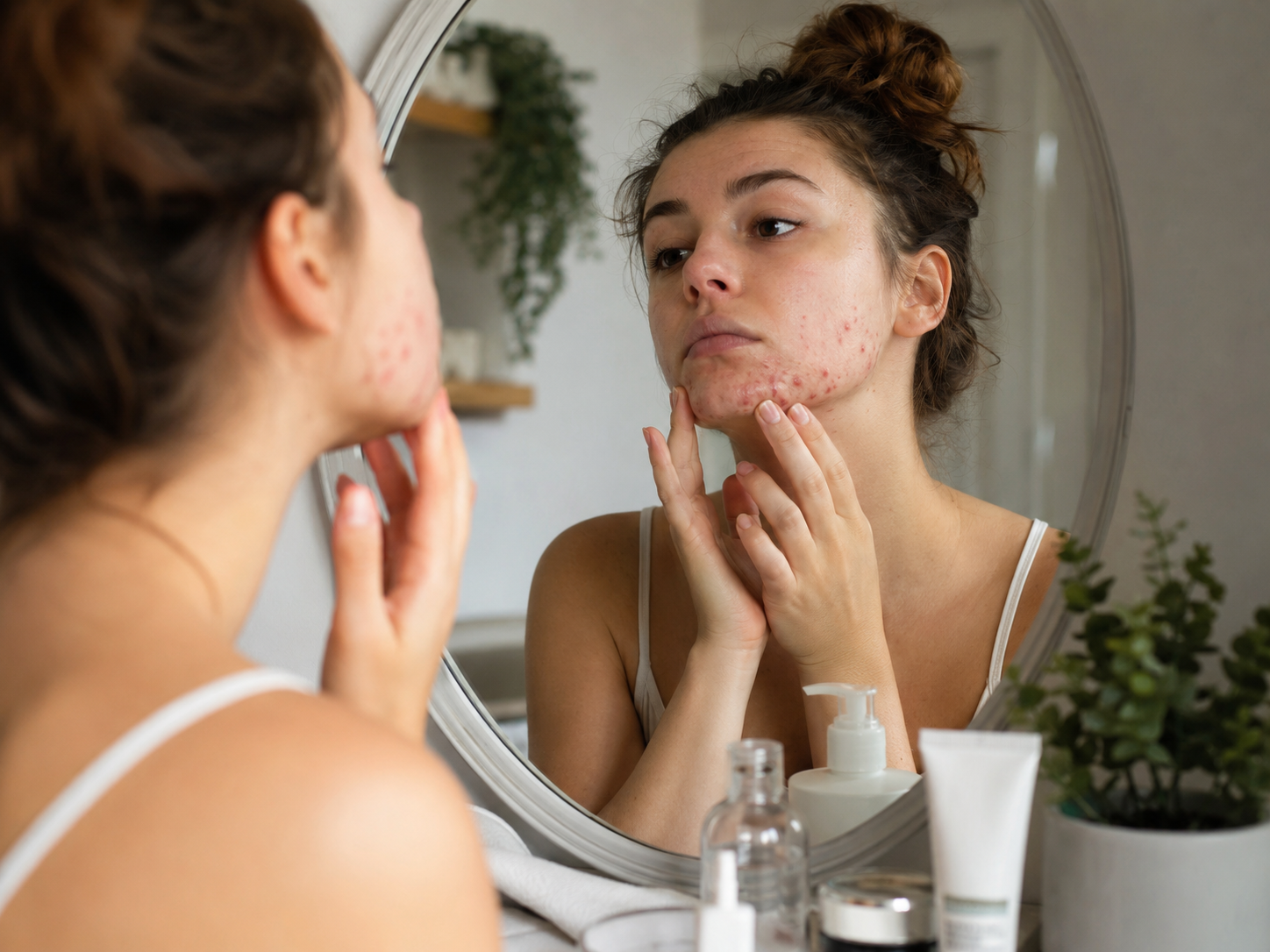
Why Inflammatory Acne Keeps Coming Back — and How to Manage It Without Losing Your Mind
There is something especially frustrating about inflammatory acne.
A tiny clogged pore is annoying, sure. A little texture on the forehead can be irritating. But an angry red pimple? A swollen bump that hurts when you wash your face? A deep spot on your chin that seems to have its own heartbeat?
That feels personal.
And when it keeps coming back in the same areas, it gets even more exhausting. You treat one breakout, wait for it to calm down, finally think your skin is improving, and then another red bump appears almost exactly where the last one lived.
At some point, it stops feeling like a random pimple and starts feeling like a pattern.
Inflammatory acne can repeat for many reasons: excess oil, clogged pores, bacteria, hormones, stress, damaged skin barrier, friction, wrong products, or simply a routine that is too harsh or too inconsistent. Usually, it is not just one thing. It is several small triggers stacking up until your skin decides it has had enough.
The good news is that recurring inflammatory acne can often be managed.
The annoying news is that it usually requires patience, not panic.
Inflammatory acne is the red, swollen, tender kind of acne.
It can show up as red bumps, pus-filled pimples, painful nodules, or deeper cyst-like spots under the skin. Unlike blackheads or closed comedones, inflammatory acne is not just about a pore being clogged. It also involves irritation and inflammation inside the skin.
That is why it can hurt.
That is why it gets red.
That is why it can leave marks behind even after the bump itself disappears.
When a pore becomes clogged with oil and dead skin cells, bacteria can multiply inside it. Your immune system reacts, and inflammation follows. The area becomes swollen, sore, and visible. It is your skin trying to deal with a problem, but unfortunately, the process is not exactly cute.
Inflammatory acne is also more likely to leave post-acne marks or scars, especially if you squeeze it, pick it, or keep irritating it.
Which brings us to the first big reason it keeps coming back.
Reason 1: The Pore Was Never Fully Calmed Down
Sometimes a pimple looks like it is gone, but the area underneath is still inflamed.
The redness fades a little. The bump flattens. You think, “Great, done.” Then a few days later, the same area feels tender again.
This can happen when the pore is still clogged or the inflammation has not fully settled. It can also happen if you keep touching, picking, or applying harsh products to the area.
Inflammatory acne needs time to heal. Not just time to look smaller, but time for the surrounding skin to recover.
This is why aggressive spot-treating can backfire. When you apply strong products over and over, hoping to dry the pimple out faster, you may irritate the skin around it. The original pimple might shrink, but now the skin barrier is irritated, which makes the area more reactive.
The goal is not to attack the spot until it gives up.
The goal is to reduce inflammation and prevent the next clog from forming.
Less dramatic, but much more effective.
Reason 2: Hormones Are Involved
If your inflammatory acne keeps returning around the chin, jawline, lower cheeks, or neck, hormones may be part of the picture.
Hormonal acne often shows up as deeper, tender bumps. It may flare before your period, during stressful times, after sleep disruption, or during certain life stages. It can feel like the pimples are coming from somewhere deep under the skin, because often they are.
This type of acne is not always caused by poor skincare. You can cleanse properly, moisturize, eat normally, change your pillowcase, drink water, and still get hormonal breakouts.
That is not your fault.
Hormones can increase oil production and make pores more likely to clog. When that happens repeatedly in the same area, inflammatory acne can become a cycle.
For mild cases, a steady routine with acne-fighting ingredients may help. But if the breakouts are deep, painful, or frequent, it may be worth seeing a dermatologist. Some acne needs prescription treatment, especially when hormones are a major driver.
Skincare can support your skin.
It cannot always negotiate with your endocrine system.
Reason 3: Your Skin Barrier Is Damaged
This one is sneaky.
A lot of people with recurring acne assume their skin needs stronger products. Stronger cleanser. Stronger exfoliant. Stronger spot treatment. More acids. More scrubbing. More “oil control.”
But inflammatory acne often gets worse when the skin barrier is irritated.
Your skin barrier is like the protective wall of your skin. When it is healthy, it helps keep moisture in and irritants out. When it is damaged, your skin may become more sensitive, red, dry, oily, itchy, tight, or breakout-prone.
Yes, oily and dehydrated can happen at the same time. Skin loves contradictions.
If your face stings when you apply moisturizer, feels tight after cleansing, flakes around pimples, or looks red even when you are not breaking out, your barrier may be struggling.
In that state, acne treatments can become harder to tolerate. Even helpful ingredients may feel irritating. The skin gets inflamed more easily, and recurring breakouts can become harder to calm.
Sometimes the best acne move is not adding another active.
Sometimes it is stepping back and repairing the barrier.
Salicylic acid cleanser in the morning. Benzoyl peroxide spot treatment. Retinol at night. Exfoliating toner. Clay mask. Scrub. Tea tree oil. Maybe toothpaste, because someone somewhere once said it worked.
This is how a skincare routine becomes a battlefield.
The problem is that too many active ingredients can irritate the skin, especially when used all at once. Irritated skin is more inflamed. More inflammation can make acne look worse and heal slower.
A good acne routine does not have to be harsh. It has to be consistent and tolerable.
That word matters: tolerable.
The best treatment is not the strongest one you can barely survive. It is the one your skin can use regularly without falling apart.
For many people, that means choosing one or two proven acne ingredients and giving them time to work instead of constantly switching products.
Boring? Yes.
Effective? Often, yes.
Reason 5: Friction Keeps Triggering the Same Areas
Recurring acne is sometimes caused by repeated friction or pressure.
Think about where your acne appears.
Chin? Maybe you rest your face in your hand.
Cheeks? Phone, pillowcase, mask, helmet, makeup brushes, or hair products.
This does not mean you need to sanitize your entire life. But small changes can help.
Clean your phone screen. Change pillowcases regularly. Avoid resting your chin in your hand for long periods. Rinse after sweating. Keep hair products away from acne-prone areas. Wash makeup brushes. Use breathable fabrics when possible.
It is not glamorous skincare.
It is practical skincare.
And practical skincare is underrated.
Reason 6: Popping Makes the Cycle Worse
I know. We all know.
A red, swollen pimple is hard to ignore. A whitehead looks like it is asking for intervention. A deep bump feels like it should be “released,” even though nothing good usually happens when you start squeezing a deep bump.
Popping inflammatory acne can push irritation deeper into the skin. It can break the skin surface, introduce bacteria, increase swelling, and raise the chance of dark marks or scarring.
Even worse, it can make the same spot feel inflamed for longer.
Sometimes what looks like “the pimple came back” is actually the same irritated area never being allowed to heal properly.
If you tend to pick, pimple patches can help. Not because they are magical, but because they create a barrier between your fingers and your bad decisions.
And honestly, sometimes that is exactly what we need.
Reason 7: Your Products May Be Too Heavy or Too Harsh
Recurring inflammatory acne can also come from products that do not suit your skin.
A moisturizer that is too heavy may clog some people’s pores. A sunscreen that does not agree with your skin may create bumps. A cleansing balm that leaves residue may cause congestion. A harsh cleanser may strip the skin and worsen irritation.
The difficult part is that a product can be good and still not be good for you.
This is why changing your entire routine at once can become confusing. If you start five new products and break out, which one caused it? Nobody knows. Not even your bathroom shelf.
Try introducing new products one at a time. Give your skin a chance to respond. If you are acne-prone, look for lightweight, non-comedogenic formulas, but also pay attention to how your skin actually behaves.
Labels help.
Your skin’s reaction helps more.
Reason 8: Stress and Sleep Are Quiet Triggers
Stress does not cause every breakout, but it can absolutely make acne worse for some people.
When you are stressed, your body goes through hormonal and inflammatory changes. You may sleep less, touch your face more, crave different foods, skip your routine, or pick at your skin without realizing it. All of that can feed the acne cycle.
Sleep matters too. Poor sleep can affect inflammation, skin repair, and stress levels. You do not need perfect sleep to have good skin, but if your acne flares every time your life becomes chaotic, stress and sleep may be part of the pattern.
This is not a “just relax and your acne will disappear” lecture.
That kind of advice is annoying.
It is more like: your skin is connected to the rest of your body, so when everything else is under pressure, your skin may show it.
Reason 9: Treatment Is Stopped Too Soon
Acne treatment takes time.
This is probably the least satisfying sentence in skincare, but it is true.
Many acne ingredients need several weeks to show clear improvement. Some may even cause temporary dryness, purging, or adjustment periods depending on the ingredient. If you stop after a few days because you do not see perfect skin, you may never get the full benefit.
At the same time, if a product is burning, swelling, or severely irritating your skin, that is different. That is not “just wait it out.” That is your skin asking for mercy.
The trick is knowing the difference between normal adjustment and real irritation.
Mild dryness? Maybe manageable.
Pain, intense burning, rash, or worsening inflammation? Stop and reassess.
Consistency matters, but so does common sense.
How to Build a Routine for Recurring Inflammatory Acne
The best routine is simple enough that you can actually follow it.
Start with a gentle cleanser. Not one that makes your face squeaky. Not one that leaves your cheeks tight. Just a cleanser that removes oil, sunscreen, and sweat without making your skin angry.
Then use a lightweight moisturizer. Even acne-prone skin needs moisture. Especially acne-prone skin using active treatments.
In the morning, use sunscreen. This matters because inflammatory acne can leave marks, and sun exposure can make those marks linger longer.
For treatment, choose carefully. Benzoyl peroxide can help with inflamed pimples. Salicylic acid can help with clogged pores. Retinoids can help prevent future clogs and improve acne over time. But you do not need to use everything at once.
Pick one main treatment. Use it consistently. Start slowly. Watch your skin.
A routine that your skin tolerates is better than an intense routine you abandon in a week.
Benzoyl Peroxide: Helpful for Inflamed Pimples
Benzoyl peroxide is one of the classic ingredients for inflammatory acne.
It helps reduce acne-causing bacteria and can be useful for red, angry pimples. It comes in cleansers, gels, creams, and spot treatments.
But it can be drying and irritating, especially at higher strengths. More is not always better. A lower percentage used consistently may work well with less irritation.
Also, benzoyl peroxide can bleach fabric. Towels, pillowcases, shirts, eyebrows if you are truly unlucky. Be careful.
A benzoyl peroxide wash can be a good option for body acne, like chest or back breakouts, because it rinses off and may be less irritating than a leave-on product. For the face, some people tolerate leave-on formulas well, while others need to use them sparingly.
Your skin will tell you.
Sometimes loudly.
Salicylic Acid: Better for Clogged Pores
Salicylic acid is often helpful when inflammatory acne starts from clogged pores, blackheads, or bumpy texture.
It can get into oilier areas and help exfoliate inside the pore. That makes it useful for preventing some breakouts before they become inflamed.
But again, do not overdo it. Using salicylic acid cleanser, toner, serum, and mask all at once is not a personality trait your skin will appreciate.
Start with one product. Use it a few times a week if your skin is sensitive. Increase slowly only if your skin stays calm.
The goal is clearer pores, not a red, peeling face.
Retinoids: Long-Term Prevention
Retinoids are often used for acne because they help prevent pores from clogging in the first place. They can be very useful for recurring acne, especially when breakouts keep forming in the same areas.
But retinoids require patience.
They can cause dryness or irritation at first, especially if you apply too much or use them too often. A pea-sized amount for the whole face is usually enough. Not a pea-sized amount for each cheek. I know the tube looks small, but please do not fight the instructions.
Use moisturizer. Start slowly. Avoid combining retinoids with too many other strong actives at the same time.
Retinoids are a marathon ingredient, not a panic button.
Don’t Forget Sunscreen
Sunscreen may not sound like an acne treatment, but it matters.
Inflammatory acne often leaves marks behind. These marks can look red, brown, purple, or dark depending on your skin tone. Sun exposure can make discoloration more stubborn.
If you are using acne treatments like retinoids, benzoyl peroxide, or exfoliating acids, your skin may also be more sensitive.
The challenge is finding a sunscreen that does not feel greasy or clog your pores. This may take some trial and error. Lightweight gel, fluid, or non-comedogenic sunscreens are often better for acne-prone skin.
The best sunscreen is the one you will actually wear.
A perfect sunscreen sitting unused in a drawer is not doing skincare. It is just collecting dust with ambition.
When Diet Might Matter
Diet and acne can be complicated.
For some people, certain foods seem to trigger breakouts. For others, food makes little noticeable difference. Common suspects include high-glycemic foods and dairy for some acne-prone individuals, but the connection is not the same for everyone.
This does not mean you need to fear food or cut out entire food groups because someone online blamed your skin on breakfast.
A better approach is to observe patterns. If you notice your inflammatory acne consistently flares after certain foods, track it calmly. Look for repeated patterns, not one random breakout after one random snack.
Skin is influenced by many things, so food should not become the automatic villain.
Also, please eat enough. Under-eating and stressing over every bite is not a skincare routine.
When to See a Dermatologist
If your inflammatory acne is painful, deep, recurring, leaving scars, or not improving after a consistent routine, see a dermatologist if you can.
This is especially important for cystic acne or acne that leaves dents or dark marks.
Over-the-counter products can help mild to moderate acne, but deeper inflammatory acne often needs prescription support. That might include topical medications, oral medications, hormonal treatments, or other options depending on your situation.
Seeing a dermatologist does not mean your acne is “bad enough to be embarrassing.”
It means you are tired of guessing.
And honestly, fair.
What to Do During a Flare-Up
When inflammatory acne flares, it is tempting to panic-change everything.
New cleanser. New serum. New mask. New spot treatment. New life.
Try not to.
During a flare, keep the basics steady. Cleanse gently. Moisturize. Use sunscreen. Apply your acne treatment as directed. Use pimple patches if they help prevent picking. Avoid scrubs, harsh masks, and random emergency remedies.
A cold compress can help calm swelling for painful bumps. A spot treatment may help, but do not layer multiple harsh products on one pimple.
Also, change your pillowcase, clean your phone, and keep your hands off your face as much as possible. Not because these things cure acne, but because they reduce extra irritation.
The fewer side quests your skin has to deal with, the better.
Be Careful With “Natural” Remedies
When acne keeps returning, people will suggest everything.
Lemon juice. Toothpaste. Baking soda. Essential oils. Garlic. Ice cubes. Strange masks made from pantry items. The internet can be a very confident place.
Some natural remedies can irritate or burn the skin, especially inflamed skin. Lemon juice and baking soda, for example, can disrupt the skin barrier. Essential oils can trigger irritation or allergic reactions. Toothpaste was made for teeth, not your chin.
I know home remedies feel appealing because they are simple and cheap.
But inflamed acne is already irritated. It does not need a kitchen experiment.
The Emotional Side of Recurring Acne
Recurring acne is not just a skin issue. It can affect how you feel about yourself.
You may cancel plans. Avoid photos. Spend too long in front of the mirror. Feel like everyone is looking at your breakout even when they probably are not. Wake up and check your face before you check your messages.
It can be tiring.
And it is okay to admit that.
At the same time, your skin does not make you dirty, lazy, unattractive, or undisciplined. Acne is common. Inflammatory acne is common. Recurring acne is common. People with beautiful routines and clean pillowcases still get acne.
So take care of your skin, yes.
But try not to turn your face into a daily self-worth report card.
You are allowed to want clearer skin without hating the skin you have today.
The Bottom Line
Inflammatory acne keeps coming back because acne is usually not caused by one simple thing. Clogged pores, excess oil, bacteria, hormones, stress, friction, damaged skin barrier, product irritation, and picking can all play a role.
Managing it means reducing inflammation, preventing new clogs, protecting the skin barrier, and staying consistent long enough for treatments to work.
Use a gentle cleanser. Moisturize even if you are oily. Wear sunscreen. Choose one or two acne treatments instead of attacking your face with everything at once. Avoid popping. Watch for friction triggers. And if the acne is deep, painful, scarring, or persistent, get professional help.
Recurring inflammatory acne can feel stubborn.
But stubborn skin does not need harsher punishment.
It needs a smarter routine, fewer irritants, and enough time to calm down.