
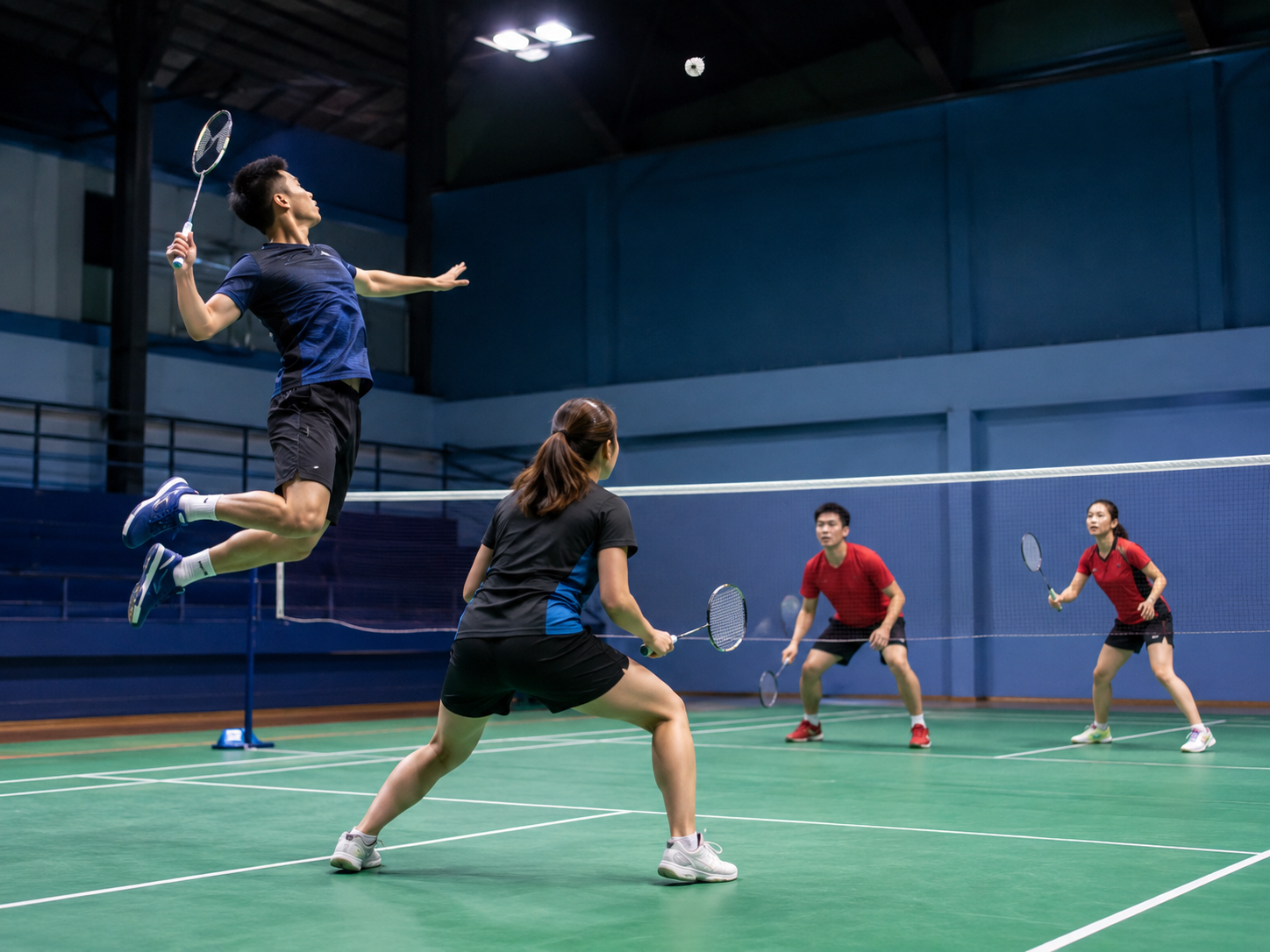

Badminton looks light and playful at first. The shuttlecock is small, the racket is light, and many people first experience the sport in a backyard, gym class, or casual weekend game. But once you start playing seriously, badminton becomes much more demanding than it looks.
There are sudden lunges, quick stops, sharp direction changes, jumps, backward steps, side shuffles, and fast reactions. One second you are standing near the middle of the court, and the next you are reaching low for a drop shot or pushing backward for a clear.
That quickness is what makes badminton fun. It is also what can make it hard on the knees and ankles.
Badminton is not dangerous when played with good movement and reasonable intensity. But beginners often get knee discomfort because they rush into the shuttle, lunge too deeply, land awkwardly, twist while the foot is planted, or keep playing after fatigue changes their form.
If you want to enjoy badminton without leaving the court with sore knees, tight calves, or aching ankles, it helps to understand what movements need extra care.
Why Badminton Can Strain the Knees
Badminton involves repeated acceleration and deceleration. You do not just run forward in a straight line. You start, stop, turn, reach, push off, and recover again and again.
That means your knees have to handle force from many angles. They bend during lunges, stabilize during side steps, absorb impact after jumps, and help control sudden changes of direction.
The knee is not the only joint involved. Your hips, ankles, feet, and core all help control movement. But when those areas are weak, stiff, tired, or poorly coordinated, the knees may take more stress than they should.
Common knee strain in badminton usually comes from a few habits: lunging with poor alignment, twisting the knee instead of pivoting the foot, landing with stiff legs, moving too fast without control, or wearing shoes that do not grip properly.
The goal is not to move slowly forever. The goal is to move quickly with control.
Warm Up Before Fast Court Movement
Badminton requires quick reactions, so your body needs to be ready before you start chasing the shuttle.
A casual arm swing or a few easy hits may not be enough. Your knees, ankles, hips, calves, and shoulders all need a gradual warm-up.
Start with light movement such as brisk walking, gentle jogging, or easy side steps. Then add dynamic movements like ankle circles, leg swings, hip circles, bodyweight squats, lunges, shoulder rolls, and gentle racket swings.
After that, warm up with controlled court movement. Practice small shuffles, short forward steps, backward steps, and easy lunges before playing at full speed.
Do not go from sitting all day to sudden competitive rallies. That is when the first awkward lunge or sharp stop can feel rough on your knees.
A good warm-up should make you feel more alert, warmer, and smoother—not exhausted.
Pay Attention to Your Lunges
Lunges are everywhere in badminton. You lunge forward for drop shots, reach diagonally for net shots, and step wide for defense.
A good lunge can help you reach the shuttle safely. A poor lunge can put a lot of pressure on the knee.
When you lunge, try to land with your foot pointing in the direction you are moving. Your knee should generally track over your toes instead of collapsing inward. Avoid letting the knee cave toward the center of your body.
Your front foot should land with enough control that you can push back to the center of the court. If you land too far, too low, or too suddenly, you may get stuck in the position and strain the knee when trying to recover.
Beginners often overreach because they are desperate to save the shuttle. But a slightly missed shot is better than a painful, uncontrolled lunge.
Focus on stepping smoothly, keeping the knee aligned, and recovering with control.
Avoid Twisting on a Planted Foot
One of the riskiest habits in badminton is turning the body while the foot stays stuck to the floor.
This can happen when you change direction quickly, reach for a shot, or try to rotate for an overhead stroke. If your foot grips the court but your body twists, the knee may absorb that rotation.
Your knees are better at bending and straightening than twisting. Your hips and feet should help with rotation.
When turning, let your feet pivot. Practice small adjustment steps instead of forcing your body to twist from a fixed position. If you need to change direction, push off cleanly and reposition your feet.
This is especially important when moving backward or diagonally. Many knee strains happen not during a dramatic jump, but during a small, awkward turn.
Good footwork protects your knees because it puts your body in a position where joints can move naturally.
Use Smaller Steps to Adjust Position
Badminton rewards quick feet, not just big steps.
Beginners often take one large step toward the shuttle and then reach awkwardly. This can overload the knee because the body is stretched out and unstable.
Instead, use smaller adjustment steps. A split step, shuffle, or quick recovery step can help you arrive in a better position before lunging.
The split step is especially useful. It is a small bounce or ready movement just before your opponent hits the shuttle. It prepares your body to move in any direction.
You do not need to make it dramatic. Think of it as staying light and ready. If your feet are flat and heavy, every movement becomes slower and more stressful.
Better footwork means fewer desperate lunges.
Keep Your Knees Soft When Landing
Badminton can involve jumping, especially for smashes, clears, and quick overhead shots. Even small hops can add up over a long game.
When you land, avoid stiff, straight legs. Your knees, hips, and ankles should bend slightly to absorb force.
A stiff landing sends more impact through the joints. A soft landing spreads the force through the muscles.
Try to land quietly. This simple cue helps many people naturally bend the knees and control the impact.
Also pay attention to where your knees go when landing. They should not collapse inward. Your feet should land securely, and your body should feel balanced enough to move again.
If you cannot land with control because you are tired, reduce jumping and focus on footwork.
Choose the Right Shoes
Badminton shoes matter more than many beginners think.
Running shoes are designed mostly for forward movement. Badminton requires side-to-side movement, sudden stops, lunges, and quick direction changes. Shoes that are too soft, too high, or not supportive enough can make your ankles wobble and your knees work harder.
Good badminton shoes should provide grip, lateral support, and stability. They should allow quick movement without sliding too much or sticking so hard that your foot cannot pivot.
Avoid playing in worn-out shoes with smooth soles. Also avoid shoes that feel loose around the heel or unstable during side steps.
If you play indoors, use court shoes that match the surface. If you play casually outdoors, make sure the shoes still give enough traction and support.
Your shoes are part of your knee protection. If your feet are unstable, your knees often pay the price.
Be Careful With Slippery or Sticky Courts
The court surface can change how your knees and ankles feel.
A slippery floor can make you slide unexpectedly. A sticky floor can stop your foot suddenly while your body keeps moving. Both situations can increase strain.
Before playing, test the surface lightly. Do a few easy side steps and gentle stops. If the floor feels dusty or slick, be cautious. If it feels overly sticky, avoid aggressive twisting and sudden direction changes.
Keep the court clear of shuttlecocks, bags, water bottles, towels, and loose items. A small object on the court can become a trip hazard during a fast rally.
If you sweat heavily, wipe the floor when needed. Slipping during a lunge can strain the knee, ankle, or groin very quickly.
Do Not Chase Every Shot at Any Cost
Badminton can bring out your competitive side. You may want to save every shuttle, even when it is clearly too far away.
But chasing every shot with poor form is one of the easiest ways to hurt yourself.
If you are off balance, late, or already moving in the wrong direction, it may be safer to let the point go. This is especially true during casual play, when the goal is exercise and enjoyment, not sacrificing your body for one rally.
A controlled miss is better than a wild save that twists your knee.
As you improve, better footwork will help you reach more shots safely. Until then, do not confuse reckless movement with effort.
Strengthen Your Hips and Glutes
Knee safety is not only about the knee itself. The hips and glutes play a major role in controlling leg alignment.
If your hips are weak or tired, your knees may cave inward during lunges, landings, and side steps. This can increase stress during repeated badminton movements.
Exercises like glute bridges, side-lying leg raises, clamshells, squats, step-ups, and lateral band walks can help build better control.
You do not need a complicated gym routine. Even a few simple strengthening exercises two or three times a week can support your movement on court.
Strong hips help your knees stay aligned when the game gets fast.
Build Ankle Stability
Your ankles work constantly in badminton. They help you push off, stop, pivot, balance, and recover.
If your ankles are unstable, your knees may compensate. You may also be more likely to roll an ankle during a quick side step or awkward landing.
Simple balance exercises can help. Try standing on one leg for 20 to 30 seconds. Once that feels easy, practice small knee bends, gentle reaches, or balance work on a slightly unstable surface.
Calf raises can also help strengthen the ankles and lower legs. Start with slow, controlled reps rather than bouncing quickly.
Ankle stability is especially important if you have had previous ankle sprains. If your ankle often feels weak or unreliable, consider getting guidance from a trainer or physical therapist.
Control Your Pace as a Beginner
Badminton can feel fun right away, which makes it easy to overdo it.
Beginners may play too many games, too many days in a row, or too intensely before their joints and muscles are prepared. The knees may not hurt during the first session, but soreness or discomfort can appear later.
Start with shorter sessions and build gradually. Take breaks between games. Avoid playing hard for hours if your body is not used to quick court movement.
This is especially important if you are returning to exercise after a break or if you usually do straight-line workouts like walking, running, or cycling. Badminton adds lateral movement and sudden stops that your body may not be conditioned for.
Enjoy the game, but give your knees time to adapt.
Watch for Fatigue
Fatigue changes movement. Your steps get heavier, your lunges get sloppier, your reactions slow down, and your knees may stop tracking well.
The more tired you get, the more likely you are to land stiffly, twist awkwardly, or overreach.
Pay attention to warning signs. If you are stumbling, arriving late to every shot, breathing too hard to recover, or feeling your knees wobble, take a break.
Hydrate, walk around, and let your legs reset. If your form does not improve after resting, stop for the day.
A good session should challenge you, not push you into careless movement.
Improve Direction Changes Gradually
Direction changes are one of the biggest knee challenges in badminton.
Moving forward, backward, sideways, and diagonally requires coordination. You need to push off one leg, control your body weight, place your foot well, and recover quickly.
Practice direction changes slowly before trying them at game speed. Work on side shuffles, forward-backward movement, diagonal steps, and recovery to the center.
Focus on control first. Keep your knees soft, feet active, and posture balanced. Once the movement feels clean, you can increase speed.
Many knee problems happen when players try to move faster than their footwork can support.
Fast feet should be trained, not forced.
Take Care of the Lower Back Too
Although the topic is knee strain, the lower back also matters in badminton.
If your hips are tight or your core is not engaged, you may bend from the back when reaching for low shots. This can make lunges feel less stable and may indirectly affect knee position.
When reaching forward, try to bend through the hips and knees rather than rounding your back dramatically. Keep your torso controlled and avoid twisting suddenly from the lower back.
Core strength can help you stay balanced during quick movement. Planks, dead bugs, bird dogs, and side planks can all support better court control.
A stable torso helps your legs move more safely underneath you.
Stretch After Playing
After badminton, your calves, quads, hamstrings, hips, and glutes may feel tight. A short cooldown can help your body transition out of high-intensity movement.
Walk slowly for a few minutes. Then stretch gently. Focus on the calves, front thighs, back thighs, hip flexors, and glutes.
Do not force deep stretches when your muscles are tired. Keep the stretch mild and steady.
If one knee feels irritated after playing, do not try to stretch the knee itself aggressively. Instead, rest, check for swelling or sharp pain, and pay attention to how it feels later.
Stretching is useful, but it should feel calming, not painful.
Know When to Stop
Some discomfort is normal during exercise. Your legs may burn, your breathing may get heavy, and your feet may feel tired.
But sharp knee pain, sudden ankle pain, swelling, instability, or a popping sensation should not be ignored.
Stop playing if you feel pain that changes how you move. Continuing to play while limping or protecting one side can create more problems.
If pain does not improve with rest or keeps returning during badminton, speak with a qualified healthcare professional. It is better to address a small issue early than to train around it until it becomes serious.
Practical Badminton Knee-Safety Checklist
Before and during play, check these points:
Warm up before fast rallies.
Use badminton or court shoes with good support.
Keep your knees aligned during lunges.
Avoid twisting on a planted foot.
Use small adjustment steps instead of desperate reaching.
Land softly with bent knees.
Take breaks when fatigue affects your form.
Keep the court clear and dry.
Build hip, glute, and ankle strength.
Stop if you feel sharp pain or instability.
These small habits can make badminton safer and more enjoyable.
Final Thoughts
Badminton is fast, fun, and more physically demanding than it may look. The quick lunges, direction changes, stops, and landings can challenge your knees and ankles, especially if you are new to the sport or playing after a long break.
The key is not to avoid movement. It is to move better.
Warm up properly, wear supportive court shoes, practice footwork, keep your knees aligned, avoid twisting on planted feet, and respect fatigue. Do not chase every shuttle with reckless form. Let your skill and conditioning build gradually.
A good badminton session should leave you feeling energized, not worried about your knees. With the right precautions, you can enjoy the speed and excitement of the game while keeping your joints protected for the next match.

Hi, I’m the creator and editor behind ZestyHabit. I research everyday safety, first aid, and practical wellness topics using official guidance and reliable public sources, then turn that information into clear, realistic steps for daily life.
My goal is to help readers make safer, better-informed choices at home and beyond.


