Is It Dangerous to Store Things on Top of the Microwave?
Minjin Park
·
Storing items on top of your microwave may seem harmless, but it can block vents, trap heat, and create safety issues. Here’s what to know.
In a small kitchen, every flat surface starts to look like storage space.
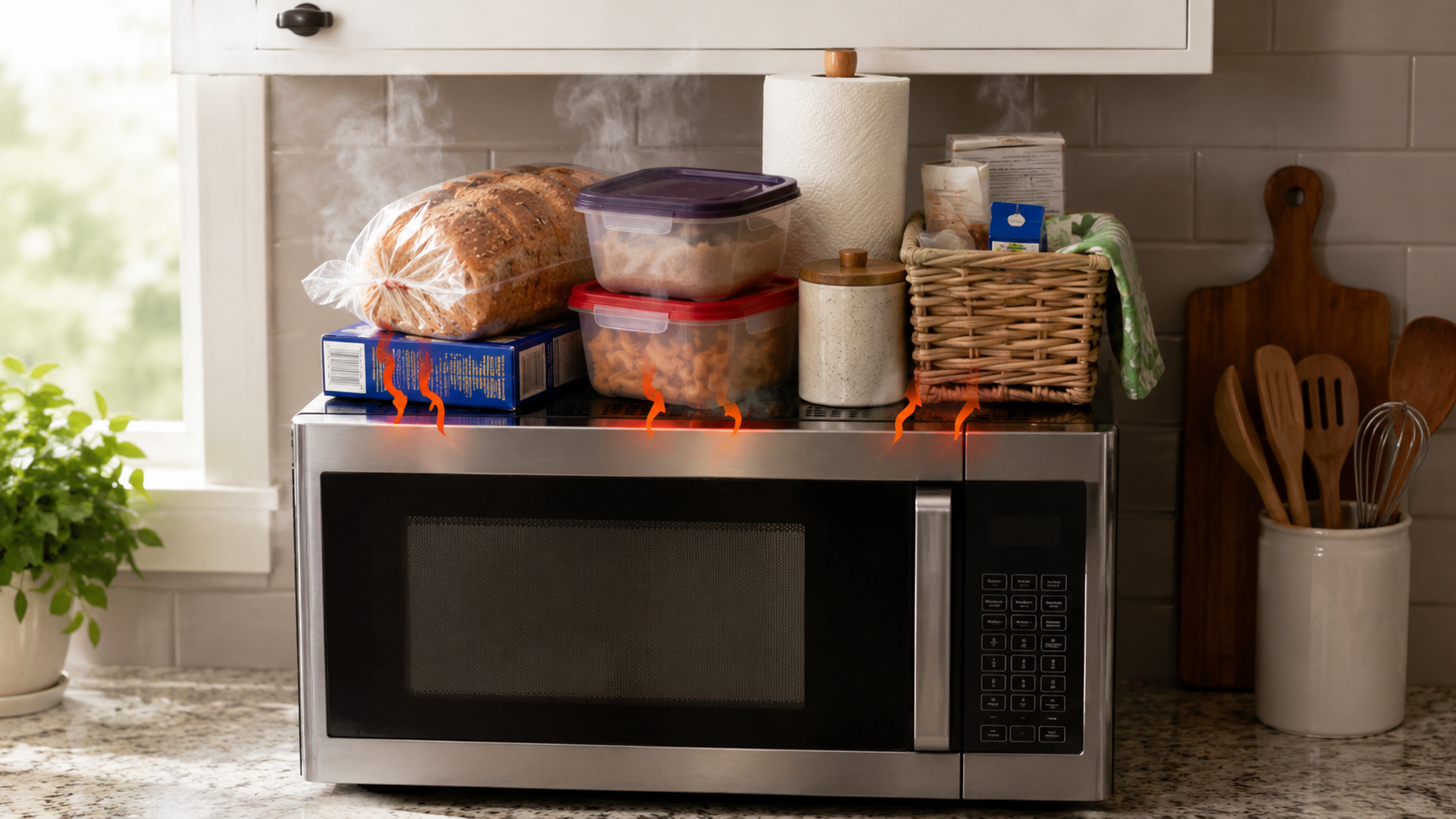
The top of the microwave is especially tempting. It is right there, it is flat, and it often sits at a convenient height. Before long, it becomes a landing spot for bread, paper towels, cookbooks, plastic containers, spice jars, mail, snacks, or whatever else does not have a proper home.
Most of the time, nothing obvious happens. The microwave still heats leftovers. The items on top stay put. Life goes on.
So it is fair to ask: is putting things on top of a microwave actually dangerous, or is it one of those household rules people repeat without much thought?
The honest answer is: it depends on what you place there, how your microwave is designed, how much space it needs for ventilation, and whether the items could block heat, shift, melt, spill, or fall. A single lightweight item placed briefly on top may not cause a problem. But using the microwave top as permanent storage is usually not a great habit.
Microwaves need airflow. They can get warm during use. Their vents should not be blocked. And the kitchen is already a place where heat, steam, cords, liquids, and clutter can create small risks when we are not paying attention.
This does not mean you need to panic or clear your kitchen like a showroom. It just means the top of the microwave deserves a little more thought than we often give it.
Most people do not store things on top of the microwave because they are careless. They do it because kitchens get crowded.
A microwave often sits on a counter, shelf, cart, or dorm-room table. In apartments, shared kitchens, RVs, offices, and older homes with limited cabinet space, the top of the microwave can feel like the only available spot.
You might put a loaf of bread there because it is convenient. You might keep a basket of snacks there because kids can reach it. You might stack paper plates or napkins there because they are used near the microwave anyway.
The problem is that convenience can quietly turn into clutter.
One item becomes three. A paper towel roll gets added. Then a cookbook. Then a plastic food container. Eventually, the microwave is doing its job while surrounded by things that were never meant to sit on or near a heat-producing appliance.
Microwaves Need Ventilation
The main reason you should be careful about storing things on top of a microwave is ventilation.
Microwaves have vents that help release heat and allow air to move around internal components. Depending on the model, vents may be located on the sides, back, top, bottom, or a combination of those areas.
If items block those vents, heat can build up.
Heat Has to Go Somewhere
Even though a microwave heats food quickly, the appliance itself still produces heat. Some heat comes from the cooking process. Some comes from internal electrical components. Steam from food can also contribute to warmth and moisture around the unit.
When airflow is blocked, the microwave may have to work in a warmer environment than it was designed for. Over time, that can put extra strain on the appliance.
You may not notice the problem immediately. The microwave may still work. The buttons may still light up. Your soup may still get hot.
But blocked ventilation can shorten the life of the appliance and may increase the chance of overheating.
Top Vents Are Easy to Miss
Not every microwave has obvious top vents, but many countertop models do need clearance above them.
Some people assume that if the top looks smooth, it must be fine to use as a shelf. That is not always true. The appliance may still need space around it for heat to escape properly.
This is why the user manual matters. It usually explains how much space should be left around the microwave. If you do not have the paper manual, you can often find it online by searching the brand and model number.
A good general habit is to leave the top and sides of the microwave clear unless the manufacturer specifically says it is safe to place items there.
What Could Go Wrong?
Putting something on top of a microwave does not automatically create a disaster. But it can lead to a few practical problems.
Items Can Trap Heat
A thick stack of paper plates, a plastic tray, a basket, or a cloth cover can trap heat around the appliance.
This matters more if you use the microwave often or for longer heating times. For example, reheating a large casserole, cooking frozen meals, or running the microwave several times in a row can make the appliance warmer than a quick 20-second coffee warm-up.
If the top of the microwave feels unusually warm, that is a sign to clear the area and allow better airflow.
Plastic Can Warp or Melt
Plastic containers, snack bags, cutting boards, and lightweight kitchen bins may not handle heat well.
Even if the microwave top does not become extremely hot, repeated warmth can soften, warp, or weaken some plastics over time. Plastic items may also trap heat against the microwave surface.
This is especially true for thin takeout containers, disposable lids, cheap storage bins, or plastic packaging.
If a plastic item has ever looked slightly bent, softened, sticky, or misshapen after sitting on the microwave, it should not be stored there.
Paper Items Can Be a Bad Idea
Paper towels, napkins, mail, paper bags, cardboard food boxes, and cookbooks are common microwave-top clutter.
Paper itself does not burst into flames just because it is on top of a microwave. But paper near heat, steam, vents, or cooking mess is not ideal. It can block airflow, absorb grease, fall behind the appliance, or become part of a general clutter problem.
Paper also makes it harder to notice heat, dust, damage, or warning signs on the appliance.
If you keep paper plates or napkins near the microwave, use a nearby drawer, shelf, or basket instead of placing them directly on top.
Items Can Fall
This is a simple but overlooked risk.
Microwaves vibrate slightly when running. Doors open and close. People bump the counter. Kids reach for snacks. Someone pulls a plate out too quickly.
Anything stored on top can slide, tip, or fall.
A lightweight bag of chips may not matter much. But a glass jar, mug, heavy cookbook, ceramic bowl, knife block, or bottle of oil could break, spill, or injure someone.
Falling items can also damage the microwave door, control panel, counter, or floor.
Liquids Can Spill
Storing liquids on top of a microwave is especially unwise.
This includes water bottles, coffee cups, cooking oil, cleaning sprays, sauces, syrup, or any container that can leak.
If liquid spills down the side, back, or vent area of the microwave, it can create a mess and possibly affect electrical parts. Even if nothing serious happens, it is not worth the risk.
Kitchens already have enough spills. Do not add one directly above an appliance.
Common Items People Put on Microwaves
Some items are riskier than others. Here is a practical look at what people commonly store there.
Bread and Snacks
Bread is probably one of the most common microwave-top items.
It seems harmless, and compared with heavy or liquid items, it is not the worst choice. But it can still block airflow, trap warmth, and encourage the habit of using the microwave as a shelf.
If the microwave top gets warm, bread may also dry out faster.
Snacks in plastic bags or cardboard boxes have similar issues. They are light, but they can clutter the space and cover vents.
Paper Towels and Napkins
Paper towels are convenient near the microwave, but the top of the appliance is not the best place for them.
A paper towel roll can block top vents, fall behind the unit, or collect cooking grease and dust. If you need paper towels nearby, consider a wall-mounted holder, counter stand, or cabinet shelf.
Cookbooks and Mail
Cookbooks may be heavy enough to trap heat and block airflow.
Mail is even worse because it tends to pile up. Envelopes, receipts, flyers, and coupons can quickly turn into messy paper clutter. Paper clutter also makes it easier to ignore the condition of the appliance underneath.
The microwave should not become a mini filing cabinet.
Plastic Containers
Plastic food containers are often stacked on top of the microwave because they are used for leftovers.
The problem is that they can warp, fall, or block vents. Lightweight lids may slide behind the appliance. Stacked containers can also make the microwave area look more cluttered than it really needs to be.
Store containers in a cabinet, drawer, or bin away from heat.
Plants and Decorations
A small plant or decorative item may look cute on top of a microwave, especially in a dorm, office, or apartment kitchen.
But plants involve water. Decorations can fall. Pots can crack. Soil can spill. A plant also makes it more likely that someone will water directly over the microwave.
It is better to place plants and decor somewhere that is not an electrical appliance.
Other Appliances
Putting another appliance on top of the microwave is generally not a good idea.
A toaster, air fryer, coffee maker, electric kettle, rice cooker, or blender may be too heavy, too hot, too unstable, or too likely to spill. Some appliances also need their own ventilation space.
Stacking appliances can create heat and cord-management problems.
If counter space is limited, use a sturdy kitchen cart or appliance shelf designed for that purpose.
Warning Signs the Top of Your Microwave Should Stay Clear
Sometimes the appliance itself gives you hints that storage is a bad idea.
The Top Feels Hot
A little warmth can happen during use, but if the top becomes noticeably hot, do not store anything there.
Clear the area and check whether vents are blocked. If the microwave continues to get unusually hot, review the manual or consider having the appliance checked or replaced.
The Microwave Runs Longer or Smells Odd
If you notice a hot plastic smell, burning smell, or strange electrical odor, stop using the microwave until you understand what is causing it.
Sometimes the smell may come from food splatter inside the microwave. Other times it could be from plastic, dust, blocked vents, or a damaged appliance.
Do not ignore unusual smells just because the microwave still turns on.
Items on Top Are Warping or Getting Warm
If a plastic container, snack bag, or other item feels warm after the microwave runs, that is a sign the space is not suitable for storage.
Repeated heat exposure can damage items and create unnecessary risk.
The Vent Area Is Covered
Look around the sides, back, and top.
If you can see vents covered by paper, plastic, towels, boxes, or other objects, move those items. Vents are there for a reason.
Even partial blockage can affect airflow.
Is It Ever Okay to Put Something on Top Briefly?
There is a difference between briefly setting something down and using the microwave as a storage shelf.
If you place an empty plate on top for a few seconds while cleaning the counter, that is usually different from storing a stack of containers there for months.
The safer approach is to treat the microwave top as a temporary surface only, not a permanent home for household items.
Even then, avoid placing liquids, heavy objects, metal tools, plastic bags, paper clutter, or anything unstable on top.
Built-In and Over-the-Range Microwaves Are Different
Many homes have over-the-range microwaves installed above the stove. These are designed differently from countertop units and often include ventilation features for the cooking area below.
Still, they should not be used as storage surfaces.
Over-the-range microwaves are usually mounted with cabinets above them, so there may not be a flat open top to store things anyway. But people sometimes place items on nearby ledges, vents, or the top edge if there is space.
For built-in microwaves, proper clearance and ventilation are especially important because the appliance is surrounded by cabinetry. Follow the manufacturer’s installation guidelines and avoid stuffing items into gaps around the unit.
Simple Safety Habits for Microwave Storage
You do not need a complicated system. A few small changes can make the microwave area cleaner and safer.
Keep the Top Clear
The simplest rule is best: keep the top of the microwave clear.
This improves airflow, makes cleaning easier, and prevents items from falling or overheating.
If your kitchen is small, this rule may feel annoying at first. But once you stop using the microwave as storage, the area usually feels calmer and easier to manage.
Create a Nearby Microwave Station
If you keep putting things on top because you need them near the microwave, create a better spot.
For example, use a small drawer, basket, shelf, or cabinet area for:
Microwave-safe covers
Paper plates
Napkins
Food storage containers
Oven mitts
Snack bags
The goal is not to remove convenience. It is to move convenience away from the appliance surface.
Check the Manual for Clearance
Look up your microwave model and check the recommended clearance.
Some countertop microwaves need space above, behind, and on the sides. If your microwave is tucked tightly under a cabinet or pushed against a wall, ventilation may already be limited.
Do not make it worse by stacking items on top.
Clean the Vent Areas
Dust, grease, and crumbs can collect around vents.
Wipe the exterior regularly with a slightly damp cloth, then dry it. Avoid spraying cleaner directly into vents or control panels. If there is greasy buildup, clean gently and follow the manual’s instructions.
Keeping vents clean helps air move properly.
Watch the Cord
The microwave cord should not be pinched, crushed, or buried behind clutter.
Avoid placing items on the cord or pushing the microwave so tightly against the wall that the cord bends sharply. A damaged cord is a separate safety concern and should not be ignored.
Do Not Cover the Microwave
Some people use fabric covers over appliances to keep dust away. That may seem tidy, but a microwave should not be covered while plugged in or used.
A cloth cover can block vents, trap heat, collect grease, and create unnecessary risk.
If you use a cover for long-term storage, make sure the microwave is unplugged and not in regular use. For a working kitchen microwave, leave it uncovered.
What to Do If You Have No Counter Space
Small kitchens require creativity. But there are better solutions than stacking items on the microwave.
Use a Microwave Cart
A sturdy microwave cart can provide extra storage without blocking the appliance itself.
Look for one designed to hold the weight of a microwave and leave enough room for airflow. Shelves underneath can hold containers, snacks, or paper goods.
Add a Small Shelf Nearby
A wall shelf, cabinet organizer, or rolling cart can create space for items you normally put on top.
Even a small basket mounted on the side of a cabinet can help keep paper towels, wraps, or snacks off the microwave.
Declutter Around the Appliance
Sometimes the microwave top becomes storage because the surrounding area is already crowded.
Clear out old containers, expired pantry items, duplicate mugs, or appliances you rarely use. You may find enough space nearby once the kitchen is simplified.
Store Less-Used Items Elsewhere
Not everything needs to live beside the microwave.
If you only use certain containers or paper plates occasionally, store them in a pantry, closet, or higher cabinet. Keep only daily-use items within easy reach.
A Realistic Rule for Everyday Homes
The microwave does not need to be treated like a fragile object. It is built for daily use.
But it is still an electrical appliance that produces heat and needs ventilation. Using it as a storage shelf is one of those habits that feels harmless until it causes a problem: blocked vents, melted plastic, falling objects, spills, or unnecessary appliance wear.
A realistic rule is this:
Keep the microwave top clear most of the time. Do not store anything heavy, liquid, plastic, paper, flammable, unstable, or heat-sensitive there. If you briefly set something down, move it before using the microwave.
That rule is simple enough to remember and practical enough for real kitchens.
Conclusion: The Microwave Top Is Not a Shelf
Putting things on top of a microwave may seem like a small habit, but it can create avoidable problems. The biggest concern is blocked ventilation. Microwaves need room to release heat, and items placed on top can trap warmth, cover vents, or make the appliance work harder.
There are also everyday risks: plastic can warp, paper can clutter the area, liquids can spill, and heavy items can fall when the door is opened or the counter is bumped.
You do not need to feel nervous every time something touches the microwave for a moment. The goal is simply to avoid using it as permanent storage.
Clear the top, check the vents, keep liquids and paper away, and create a better nearby spot for the things you use often. It is a small kitchen habit, but it helps keep the appliance cleaner, cooler, and easier to use safely.
Hi, I’m the creator and editor behind ZestyHabit. I research everyday safety, first aid, and practical wellness topics using official guidance and reliable public sources, then turn that information into clear, realistic steps for daily life.
My goal is to help readers make safer, better-informed choices at home and beyond.