Is Picking Dry Skin With Your Fingers Really Bad for Your Skin?
Minjin Park
·
Let’s be honest. Almost everyone has done it.
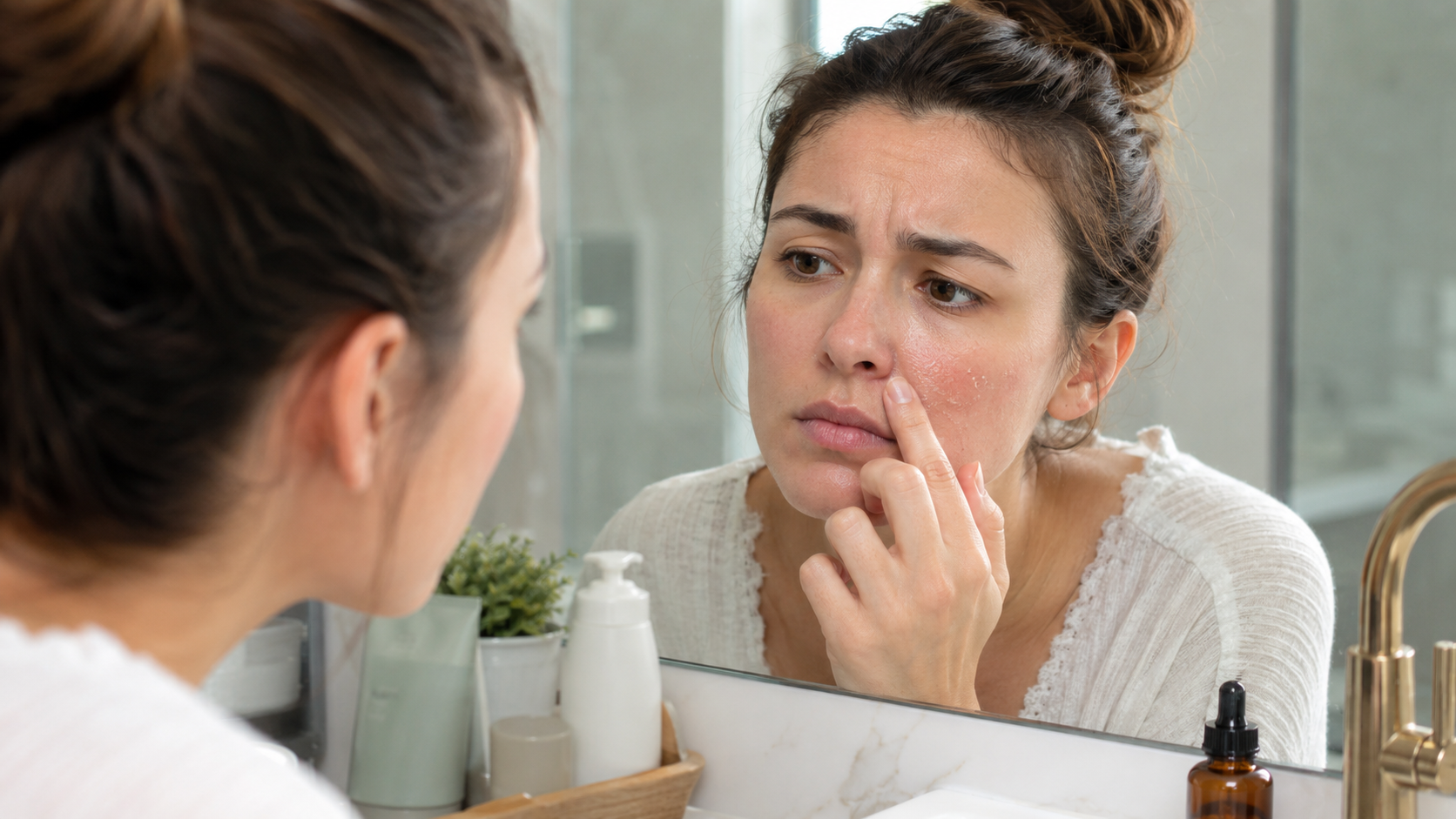
You feel a little rough patch on your face. Maybe around your nose. Maybe on your lips, chin, forehead, or near a healing pimple. Your finger keeps going back to it. You tell yourself you’re just checking it, not picking it.
And then suddenly, a tiny piece of dry skin is gone.
At first, it can feel oddly satisfying. The skin looks smoother for about five seconds. You may even think, “Well, it was already peeling anyway.”
But then the area turns red. Or stings when you apply skincare. Or the next morning, there’s a darker mark, a little scab, or a new irritated bump.
So, is picking dead skin with your fingers really that bad?
Unfortunately, yes. It can be. Not because every tiny flake is dangerous, but because the way we pick at dry skin often damages the healthy skin around it. The problem is not just “removing dead skin.” The problem is pulling, scratching, and tearing skin that is not ready to come off.
It doesn’t always hurt. It doesn’t always look serious. It just feels uneven. Once your fingers notice it, your brain keeps returning to that spot. You might do it while looking in the mirror, watching TV, working at your desk, or lying in bed.
Sometimes it’s not even about appearance. It’s about texture.
That tiny rough edge feels “wrong,” and picking it feels like fixing the problem. But skin is not like peeling a sticker off a bottle. You are dealing with a living barrier. The flaky part may be dead skin, but it is often still attached to skin that is trying to heal underneath.
When you pull it too early, you don’t just remove the flake. You may take part of the protective layer with it.
That is where the trouble starts.
Your Skin Barrier Is Not Just a Beauty Term
People talk about the “skin barrier” so much now that it can start to sound like skincare marketing. But it is a real thing.
Your skin barrier is the outer protective layer that helps keep moisture in and irritants out. When it is healthy, your skin feels more comfortable, calm, and resilient. When it is damaged, everything becomes dramatic.
A cleanser that was fine last month suddenly burns. A moisturizer starts stinging. Your face feels tight after washing. Redness shows up more easily. Makeup sits weirdly. Even water can feel irritating.
Picking at dry skin can weaken that barrier because it creates tiny tears. Some are obvious, like a scratch or scab. Others are small enough that you might not notice them right away.
But your skin notices.
Once the barrier is disrupted, your skin has to spend energy repairing itself. During that time, it may become more sensitive, more inflamed, and more likely to react to products.
So yes, that little flake can become a bigger situation.
Picking Can Make Dryness Worse
This is the annoying part.
You pick dry skin because you want the area to look smoother. But picking often makes the area drier and rougher afterward.
Why? Because when you remove skin before it is ready, you expose newer, more vulnerable skin underneath. That fresh skin may not be prepared to handle air, cleanser, sunscreen, makeup, sweat, or active ingredients.
The result can be a cycle:
You pick a dry patch. It gets red and irritated. It heals with more flaking. You pick again because it feels rough. The roughness comes back worse.
It’s such a small loop, but it can last for weeks if you keep touching the same spot.
This is especially common around the nose, lips, and chin because those areas already deal with more movement, wiping, talking, eating, and facial expressions.
Fingernails Are Not Exactly Gentle Tools
Even clean hands are not sterile. And fingernails are especially tricky.
They can hold bacteria, oil, dust, skincare residue, food particles, or whatever you touched during the day. That doesn’t mean you need to panic every time your hand touches your face. But digging at skin with your nails is different from a light touch.
Fingernails can scrape the surface of the skin and create small openings. Once the skin is open or irritated, bacteria have an easier chance to enter. That can lead to swelling, painful bumps, or infected-looking spots.
This matters even more if you are picking near acne.
A healing pimple may have dry skin around it, but if you pick that area, you can reopen it, push irritation deeper, or spread bacteria around. That is how one small spot can become a bigger, angrier spot.
And no, picking “just the dry part” is not always as precise as we think. Fingers are not surgical instruments. Sadly.
It Can Leave Dark Marks or Red Marks
One of the biggest reasons not to pick dry skin is not just the immediate irritation. It’s what can linger afterward.
After skin gets inflamed or injured, it may leave a mark. For some people, that mark is red or pink. For others, especially deeper skin tones, it may become brown or grayish. This is often called post-inflammatory hyperpigmentation.
The frustrating thing is that the original dry patch might have disappeared in a few days on its own. But the mark from picking can last much longer.
That is the part nobody thinks about in the moment.
Picking feels like a quick fix. But it can turn a temporary flake into a mark you’re trying to fade for weeks or months.
This is also why dermatologists often tell people not to pick acne, scabs, or peeling skin. It’s not just about being neat or disciplined. It’s about preventing unnecessary inflammation.
What About Peeling Skin After Sunburn?
Sunburn peeling is a classic picking trap.
The skin starts lifting. It looks uneven. It feels loose. You may want to peel it off like dried glue.
Don’t.
After a sunburn, your skin is already injured. The peeling is part of the healing process. Pulling off peeling skin can expose tender skin underneath too early and increase irritation.
The safer approach is boring but effective: moisturize, be gentle, and let the skin shed naturally. Avoid harsh scrubs, strong acids, retinoids, and anything that burns. And definitely protect the area from more sun.
Sunburned skin does not need “help” being peeled. It needs time.
I know. Not satisfying. But much better for your face.
When lips are peeling, it feels almost impossible not to bite or pull the skin. But lip skin is delicate, and picking can easily cause cracks, bleeding, and soreness.
The worst part is that once your lips crack, they often peel more. Then you pick more. Then they crack again.
For lips, the best move is usually to soften the dead skin before doing anything else. Apply a thick layer of lip balm or ointment and let it sit. If the flakes loosen naturally, you can gently wipe them away with a damp cloth. Not scrub aggressively. Not pull. Just soften and wipe.
If the skin does not come off easily, it is not ready.
That one rule saves a lot of damage.
Is It Ever Okay to Remove Dead Skin?
Yes, but the keyword is gently.
Your skin naturally sheds dead cells. Sometimes a little help is fine, especially if you have dullness, rough texture, or flaky patches. But there is a huge difference between gentle exfoliation and picking with your nails.
Good exfoliation is controlled. Picking is usually impulsive.
Gentle options may include:
a soft washcloth used lightly
a mild chemical exfoliant used occasionally
a gentle cleanser
moisturizer that softens flakes
a damp cotton pad for loose peeling skin
But if your skin is red, burning, cracked, sunburned, or already irritated, exfoliation may make things worse. In that case, your skin does not need more removal. It needs repair.
Think of it this way: dry skin is not always asking to be exfoliated. Sometimes it is asking to be moisturized.
What to Do Instead of Picking
When you notice a dry patch, the goal is to soften and protect it, not attack it.
Start by washing your face gently. Avoid hot water, because it can make dryness worse. Pat your skin dry instead of rubbing it.
Then apply a moisturizer while your skin is still slightly damp. This helps trap hydration. If the area is very dry or flaky, you can add a thin layer of a thicker balm or ointment on top.
This is especially helpful around the nose, lips, and corners of the mouth.
If you wear makeup, avoid trying to scrub the flakes off right before applying foundation. That usually makes the skin redder and more textured. Moisturize first, wait a little, and then apply makeup gently.
And if you keep touching the area, cover it if possible. A small pimple patch can help protect healing acne from your fingers. For lips, keep balm nearby so your hand reaches for that instead of peeling skin.
It sounds simple, but replacing the habit matters.
The “If It Doesn’t Come Off Easily, Leave It” Rule
This is probably the easiest rule to remember.
If a piece of skin does not come off with a gentle wash or soft wipe, leave it alone.
Do not pull it. Do not scratch at the edge. Do not use tweezers. Do not convince yourself that you can remove it cleanly.
Skin that is ready to shed will usually come off without a fight. Skin that resists is still attached for a reason.
That tiny moment of restraint can prevent redness, stinging, bleeding, and marks.
A little flake is easier to deal with than a wound.
Why Picking Feels So Hard to Stop
It’s worth saying this kindly: picking is not always about vanity.
For some people, it’s a stress habit. For others, it’s a focus habit. Some people pick while thinking, reading, scrolling, or feeling anxious. They barely notice they’re doing it until the skin hurts.
If that sounds familiar, blaming yourself usually does not help.
Instead, make the habit harder to do. Keep your nails short. Put moisturizer or balm on the area so it feels slippery instead of rough. Use a pimple patch or small bandage when appropriate. Keep your hands busy with something else when watching TV or working.
You can also move mirrors away from harsh lighting if you tend to pick while inspecting your skin. Bathroom lighting can turn one tiny flake into a personal emergency. We’ve all been there.
Skin looks different at 11 p.m. under bright lights. Not always in a helpful way.
When Picking Might Be a Bigger Issue
Occasional picking is common. But if you often pick until your skin bleeds, forms scabs, scars, or you feel unable to stop, it may be more than a simple skincare habit.
Some people deal with compulsive skin picking, especially during stress or anxiety. In that case, skincare tips alone may not be enough. A dermatologist or mental health professional can help, depending on what is going on.
There is no shame in that. Skin picking can become a loop that feels very difficult to break, and support can make a real difference.
What If You Already Picked?
First, don’t panic. Also, don’t keep “fixing” it.
Once you’ve picked a dry patch, treat it like irritated skin.
Rinse gently if needed. Avoid exfoliating acids, scrubs, retinoids, benzoyl peroxide, vitamin C, or strong treatments directly on the raw area until it calms down. Apply a simple moisturizer or protective ointment. Keep your hands off it.
If it is an acne spot, a hydrocolloid patch may help protect it from further picking. If the area looks increasingly swollen, painful, warm, or filled with pus, it may need medical attention.
But most minor picked spots just need a boring routine and time.
The boring routine is often the healing routine.
So, Is Picking Dead Skin With Your Fingers Really Bad?
Yes, it can be bad for your skin, especially if you do it often or pull at skin that is not ready to shed.
Picking can damage your skin barrier, worsen dryness, cause redness, create tiny wounds, trigger breakouts, and leave marks that last much longer than the original flake. It may feel like you’re smoothing your skin in the moment, but you’re usually making the healing process messier.
The better approach is simple: soften, moisturize, protect, and wait.
Dead skin that is ready to come off does not need force. And skin that needs force is probably not ready.
So the next time your fingers find that tiny rough patch, try to pause before picking. Put on moisturizer. Use lip balm. Cover the spot if you need to. Walk away from the mirror.
Your skin does not need to be perfectly smooth every second to be healthy.
Sometimes the kindest thing you can do for your skin is leave it alone.
Hi, I’m the creator and editor behind ZestyHabit. I research everyday safety, first aid, and practical wellness topics using official guidance and reliable public sources, then turn that information into clear, realistic steps for daily life.
My goal is to help readers make safer, better-informed choices at home and beyond.



[…] rinsing, pat the skin dry with a clean, soft towel. Do not […]