
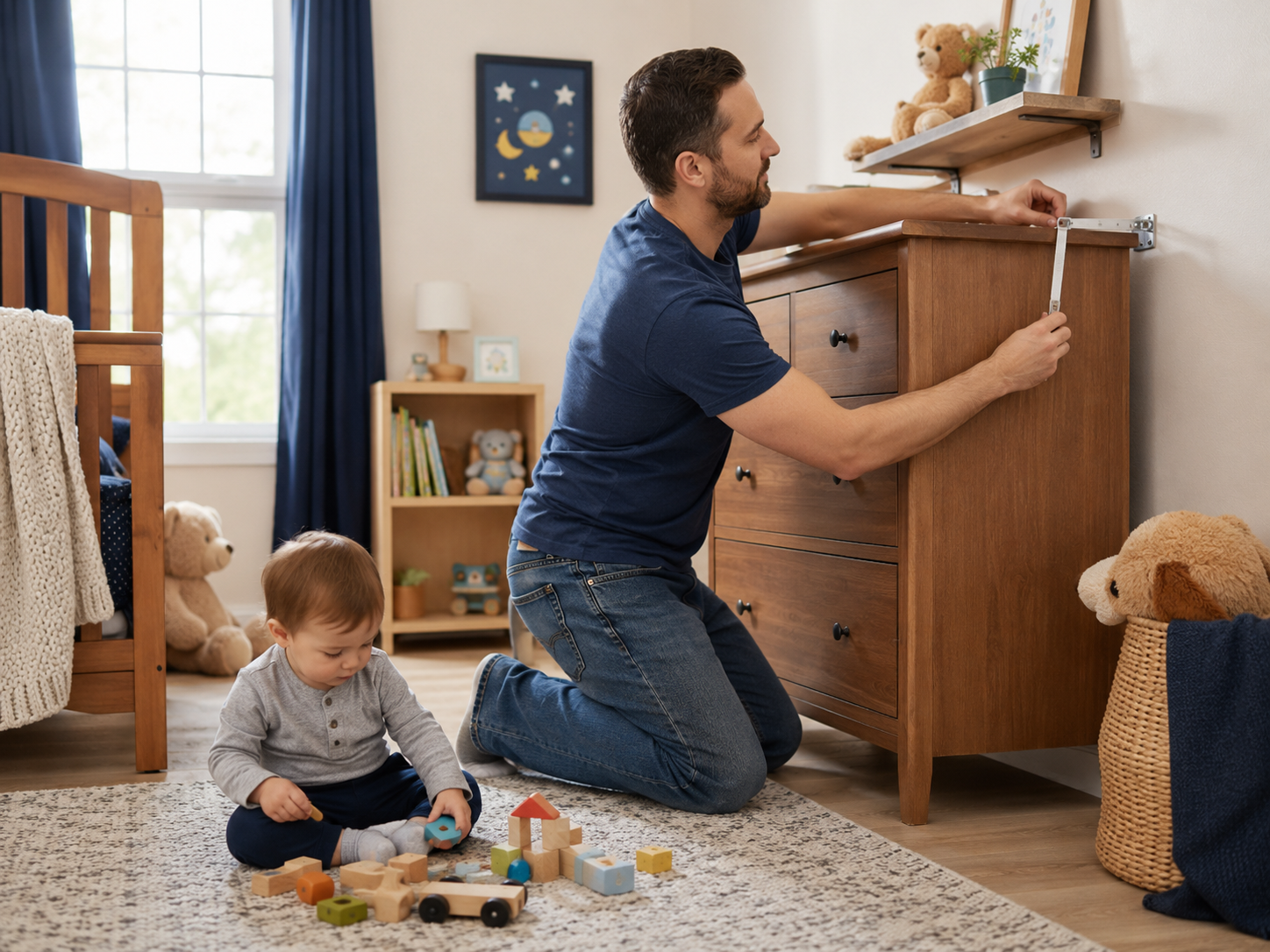

Tall furniture can tip over when climbed, pulled, overloaded, or bumped. Learn why furniture anchors are important, which items need securing, and how simple wall straps can help prevent serious household accidents.
The Hidden Home Hazard Sitting in Plain Sight
Most of us do not look at a dresser, bookshelf, TV stand, or storage cabinet and think, “That could fall.”
Furniture feels solid. It sits quietly against the wall. It holds clothes, books, toys, dishes, or decorations. Once it is assembled and placed in the room, it becomes part of the background.
But some furniture is less stable than it looks.
A dresser can tip forward when multiple drawers are opened. A bookcase can shift if a child climbs it. A TV stand can become unstable if the television is pulled or bumped. A cabinet can lean when heavy items are stored too high. Even furniture that seems sturdy can fall if weight moves forward suddenly.
This is why furniture anchors matter.
A furniture anchor is a simple device that helps secure furniture to the wall. It might be a strap, bracket, cable, or anti-tip kit. It does not make furniture impossible to move, and it does not replace supervision or common sense. But it adds an important layer of protection against tip-over accidents.
In many homes, especially homes with young children, pets, older adults, or tall storage pieces, anchoring furniture is one of the most practical safety steps you can take.
Why Furniture Tip-Overs Happen
Furniture tip-overs usually happen because the center of weight shifts forward.
That may sound technical, but the everyday version is simple: furniture becomes more likely to fall when more weight moves toward the front than the base can support.
This can happen in several common ways.
A child opens dresser drawers and uses them like steps. A toddler pulls on a TV stand while learning to walk. Someone opens two or three loaded drawers at the same time. A pet jumps onto a shelf. A person reaches for something on top and pulls the unit forward. A heavy object is stored near the top of a bookcase. A cabinet sits on thick carpet and leans slightly.
The furniture may not give much warning. It can seem steady right up until it tips.
That is what makes this risk easy to underestimate. The furniture may have been fine for months or years, until one moment changes the balance.
Children See Furniture Differently Than Adults Do
To adults, a dresser is storage.
To a child, it may look like a ladder.
A bookshelf can look like a climbing wall. A TV stand can look like something to hold while standing up. A drawer handle can look like a step. A toy on top of a cabinet can become a reason to climb.
Children are naturally curious. They want to reach things, explore, imitate adults, and test what their bodies can do. They do not fully understand weight, balance, or what can happen if a heavy piece of furniture falls.
This is why telling a child “don’t climb” is not enough on its own.
Rules help, but children forget, act impulsively, or climb when no one is watching. A safer home setup should assume that climbing may happen at some point.
Furniture anchors help make the room more forgiving when curiosity wins.
Furniture Tip-Overs Are Not Only a Child Safety Issue
Children are often the focus of furniture anchoring, and for good reason. But they are not the only people affected.
Older adults may pull on furniture for balance. Someone recovering from an injury may grab a shelf or cabinet while moving through a room. Pets can jump onto furniture or bump lower pieces. Guests may not realize a cabinet is unstable. A person cleaning, moving, or rearranging furniture may pull something forward unexpectedly.
Earthquakes, heavy doors, uneven floors, thick carpet, and overloaded shelves can also increase the chance of furniture shifting.
Anchoring is especially useful in homes where furniture is tall, narrow, heavily loaded, placed on carpet, or located in a child’s room, playroom, living room, or hallway.
What Kinds of Furniture Should Be Anchored?
Not every piece of furniture needs the same attention, but some items deserve a close look.
Dressers and Chests of Drawers
Dressers are one of the most important items to secure.
Drawers can change the balance of the furniture when opened. If several drawers are open at once, or if a child climbs them like steps, the dresser can tip forward.
Even a low dresser can be dangerous if it is heavy.
Bookcases and Shelving Units
Tall bookcases can become unstable when loaded unevenly. Heavy books on upper shelves, decorative objects, storage bins, and climbing can all create tip-over risk.
Open shelving also gives children tempting handholds and footholds.
TV Stands and Entertainment Centers
Televisions add another layer of risk because they are heavy, fragile, and attractive to children. A child may pull on the TV, climb the stand, or reach for a remote or toy.
Both the TV and the furniture holding it should be secured when appropriate.
Wardrobes and Armoires
Large wardrobes can be heavy and tall. They may also have doors that swing open, drawers inside, or storage placed high up.
Because they often sit in bedrooms, they should be checked carefully.
Cabinets and Storage Units
Freestanding cabinets, pantry units, entryway storage, toy storage, and garage cabinets can tip if overloaded or pulled.
Any tall, narrow cabinet deserves attention.
Changing Tables and Nursery Furniture
Nurseries often contain dressers, changing tables, bookshelves, rocking chairs, and storage bins. As babies grow into toddlers, they begin pulling up, climbing, and exploring.
Furniture that seemed safe for a newborn may need new safety checks as the child becomes mobile.
Warning Signs Your Furniture May Be Unstable
A piece of furniture may need anchoring or rearranging if:
- It wobbles when touched.
- It leans away from the wall.
- It sits on thick carpet and feels uneven.
- Drawers slide open on their own.
- It becomes unstable when a drawer is opened.
- It is tall and narrow.
- Heavy items are stored on top.
- Children can reach the handles or shelves.
- It has a TV on top.
- It was assembled loosely.
- It has already shifted or tipped slightly before.
- You feel nervous when moving around it.
A near miss is a warning. If a dresser once rocked forward when a drawer opened, do not wait for it to happen again.
Why Wall Anchors Make a Difference
A furniture anchor connects the furniture to the wall so it cannot tip forward as easily.
Most anti-tip kits use straps, brackets, or cables. One part attaches to the furniture, and the other attaches to a wall stud or appropriate wall anchor. The goal is to reduce the chance of the furniture falling if weight shifts forward.
Anchors are not meant to hold up furniture like a hanging shelf. The furniture should still stand on its own. The anchor is a backup support against tipping.
Think of it like a seat belt for furniture. You hope it never has to do much, but you are glad it is there if something unexpected happens.
Common Mistakes People Make With Furniture Anchors
Assuming Heavy Furniture Cannot Tip
Heavy furniture may feel safer, but weight alone does not prevent tipping. In fact, heavier furniture can cause more injury if it falls.
A heavy dresser with open drawers can still become unstable.
Only Anchoring Furniture in Kids’ Rooms
Children move through the whole home. Living rooms, dining rooms, guest rooms, hallways, and home offices may contain climbable furniture too.
If a child spends time in the space, check the furniture there.
Using the Wrong Hardware
Not all walls are the same. Drywall, plaster, brick, concrete, and studs require different installation methods.
A screw placed only into drywall may not hold well enough. Whenever possible, secure anchors into wall studs or follow the product’s instructions for your wall type.
Installing the Anchor Too Loosely
A loose strap may not help much. The anchor should be installed firmly according to the instructions, with enough tension to prevent the furniture from tipping forward.
Forgetting to Reinstall After Moving Furniture
Furniture gets moved for cleaning, painting, new flooring, or rearranging a room. After moving it, anchors may be removed and forgotten.
Any time furniture moves, recheck the anchor.
Thinking Anchors Replace Supervision
Anchors are important, but they are only one layer. Children should still be taught not to climb furniture, and tempting items should not be placed on top of tall shelves or dressers.
How to Reduce Furniture Tip-Over Risk
Anchor Tall and Heavy Furniture
Start with the biggest risk items: dressers, bookcases, wardrobes, cabinets, and TV stands.
Use the anti-tip kit that came with the furniture, or choose a quality kit designed for that type of furniture and wall.
Secure TVs
If a television sits on furniture, consider securing both the TV and the stand. Wall-mounting can be a good option when installed correctly.
Do not place old, heavy TVs on furniture not designed to hold them.
Store Heavy Items Low
Weight placement matters.
Put heavy books, appliances, tools, dishes, and bins on lower shelves. Lighter items can go higher. This lowers the center of gravity and makes the furniture more stable.
Avoid Placing Tempting Items on Top
Children may climb to reach toys, candy, tablets, remotes, stuffed animals, decorations, or interesting objects.
Keep tempting items off the tops of dressers, cabinets, and bookshelves.
Keep Drawers Closed
Open drawers increase tip risk and create climbing steps. Close drawers after use. If a dresser has sticky drawers, fix them so they do not stay half-open.
Do Not Overload Furniture
Every shelf and drawer has limits. Overloading upper shelves, placing too much weight on top, or storing heavy items unevenly can make furniture less stable.
Choose Stable Furniture
When buying furniture, look for wide bases, sturdy construction, smooth drawers, and anti-tip hardware. Avoid tall, narrow units that wobble easily unless they can be securely anchored.
Check After Assembly
Flat-pack furniture can be safe when assembled correctly, but loose screws, missing parts, or skipped steps can make it unstable.
After assembly, gently test for wobble and install the anti-tip hardware.
A Room-by-Room Furniture Safety Check
Bedrooms
Check dressers, nightstands, wardrobes, bookshelves, and TVs. Bedrooms are especially important because children may play there unsupervised for short periods or wake up before adults.
Move toys and tempting items away from high surfaces.
Living Rooms
Look at TV stands, media consoles, bookshelves, display cabinets, and sideboards. Secure the TV if needed, and keep remote controls or toys off high furniture.
Nurseries
Anchor dressers, changing tables, and shelving. As babies grow, reassess the room. A safe setup for an infant may not be enough for a climbing toddler.
Playrooms
Any shelf in a playroom can become a climbing structure. Keep toy storage low, stable, and easy to access. Anchor tall shelves and avoid placing favorite toys on top.
Home Offices
Bookcases, filing cabinets, printers, and storage cabinets can be heavy. Filing cabinets are especially risky if several drawers open at once.
Garages
Garage shelves often hold tools, paint, sports gear, and heavy bins. Anchor tall shelving and store heavy items low. Make sure shelves are rated for the weight they carry.
What About Renters?
Renters may worry about putting holes in walls. That is understandable, but safety still matters.
Talk with your landlord or property manager about installing furniture anchors, especially in a child’s room. In many cases, small holes from safety devices are reasonable and can be repaired later.
Freestanding furniture can still tip in rentals, apartments, and temporary housing. If you cannot anchor something right away, reduce risk by moving heavy items low, keeping tempting objects off the top, and placing unstable furniture in areas children cannot access.
But when possible, anchoring is the better solution.
Teaching Children About Furniture Safety
Children should learn simple rules:
- Furniture is not for climbing.
- Drawers are not steps.
- Ask an adult for things up high.
- Keep both feet on the floor.
- Do not pull on TVs or shelves.
Keep the language calm and clear. You do not need to scare them. The goal is to create habits.
Still, remember that teaching is not enough by itself. A toddler may understand “no climbing” and still climb five minutes later. Anchoring and room arrangement are what protect against normal childhood impulses.
When to Replace or Repair Furniture
Sometimes anchoring is not enough.
Consider repairing or replacing furniture if:
- The frame is cracked.
- The legs are loose.
- Drawers do not slide properly.
- The back panel is damaged.
- Screws will not stay tight.
- The unit leans even when empty.
- The shelf is overloaded or sagging.
- The furniture was not designed for its current use.
A wobbly bookcase should not simply be filled and ignored. Fix the underlying stability issue.
A Simple Furniture Anchoring Checklist
Use this checklist around your home:
- Anchor dressers and chests of drawers.
- Anchor tall bookcases and shelves.
- Secure TVs and TV stands.
- Store heavy items on lower shelves.
- Keep tempting objects off high furniture.
- Close drawers after use.
- Avoid opening multiple heavy drawers at once.
- Check furniture on carpet for wobbling.
- Reinstall anchors after moving furniture.
- Inspect anchors during seasonal cleaning.
- Teach children not to climb.
- Use the correct hardware for your wall type.
- Ask for help if installation feels uncertain.
You do not have to fix the whole home in one afternoon. Start with children’s rooms, bedrooms, and the living room. Then move through the rest of the house.
Final Thoughts: Anchoring Furniture Is a Small Step With Big Value
Furniture tip-over accidents can happen in ordinary homes with ordinary furniture. A dresser, bookshelf, TV stand, or cabinet may seem stable until a child climbs it, drawers open, weight shifts, or someone pulls from the wrong angle.
Furniture anchors are simple, affordable, and often included with the furniture itself. They do not make a room look different, but they add an important layer of protection.
The best approach is practical: anchor tall and heavy furniture, store weight low, secure TVs, keep tempting items off high surfaces, and teach children not to climb.
You do not need to make your home feel fearful or restricted. You are simply making the background safer.
A dresser should hold clothes. A bookshelf should hold books. A TV stand should hold the TV. None of them should be able to fall easily during normal family life.
That is why furniture anchors are worth using before you ever need them.

Hi, I’m the creator and editor behind ZestyHabit. I research everyday safety, first aid, and practical wellness topics using official guidance and reliable public sources, then turn that information into clear, realistic steps for daily life.
My goal is to help readers make safer, better-informed choices at home and beyond.


