Why Glass Pot Lids Can Suddenly Shatter: Kitchen Safety Tips Most People Miss
Minjin Park
·
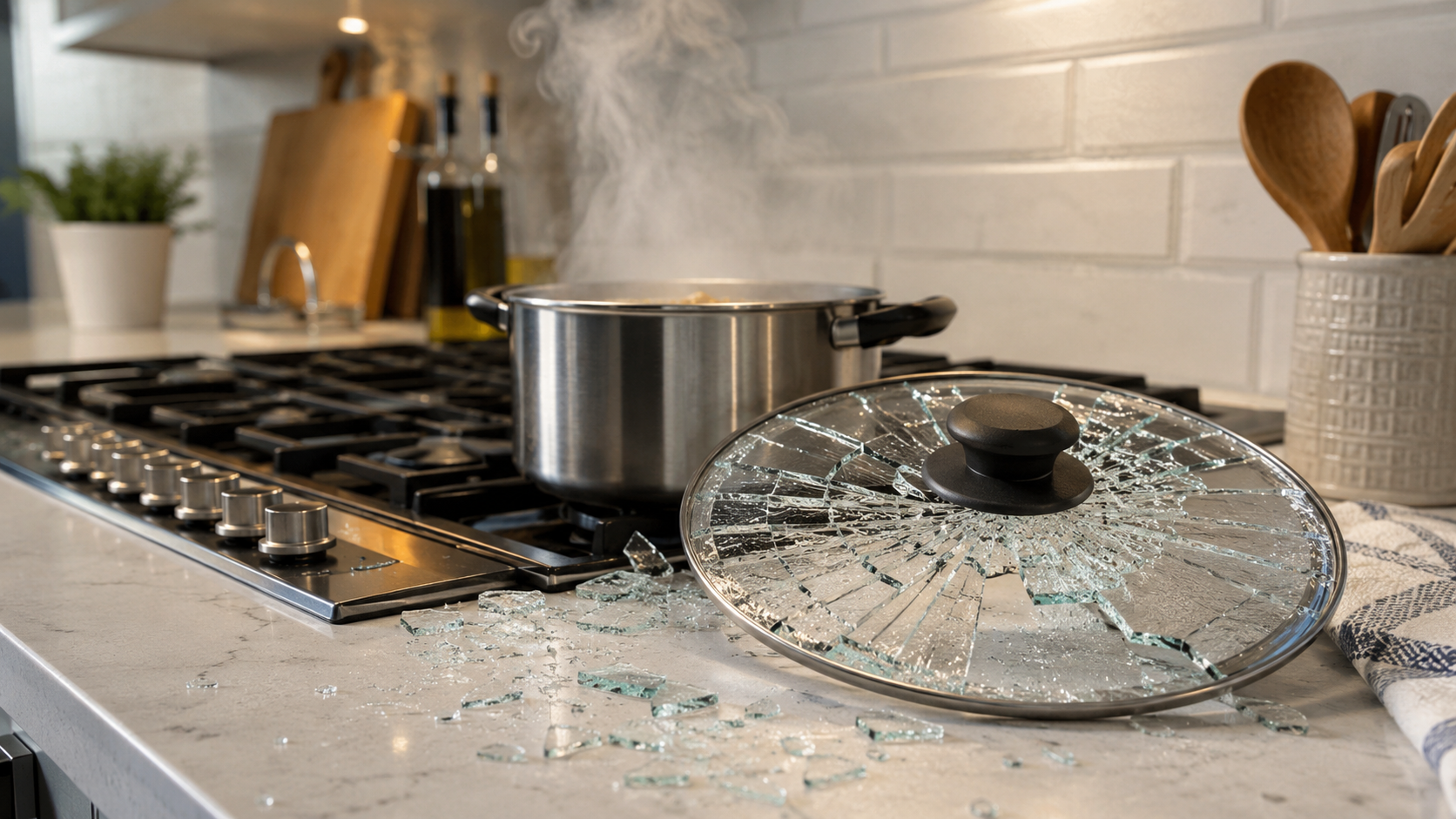
Glass pot lids can break suddenly from heat stress, hidden damage, poor handling, or rapid temperature changes. Learn why it happens, what warning signs to watch for, and simple habits that help prevent messy kitchen accidents.
The Surprise of a Glass Lid Breaking Without Warning
A glass pot lid feels like one of the safest, most ordinary tools in the kitchen.
You use it to simmer soup, cover pasta sauce, steam vegetables, or keep oil splatter under control. It lets you see what is happening in the pot without lifting the lid every few minutes. Most of the time, it does its job quietly and disappears into the background of everyday cooking.
That is why it can be so startling when a glass lid suddenly cracks, pops, or shatters.
One minute it looks perfectly normal. The next, there may be broken glass on the stove, in the sink, across the counter, or even inside the food you were cooking. It can feel like it happened “for no reason,” especially if the lid was not dropped or hit.
But glass usually does have a reason for breaking. The problem is that the reason is not always visible.
A lid may have tiny scratches from years of use. It may have been weakened by sudden temperature changes. The metal rim may be holding stress in one area. The knob may have been tightened too much. Or the lid may have been exposed to heat in a way it was never designed to handle.
The goal here is not to make you afraid of using glass lids. They are useful and common for a reason. But a few simple habits can make them safer, last longer, and reduce the chance of a sudden kitchen mess.
Why Glass Pot Lids Break Differently Than Metal Lids
Metal lids can dent, warp, stain, or get scratched. Glass lids behave differently. They may look fine until the moment they fail.
Many glass pot lids are made from tempered glass. Tempered glass is designed to be stronger than ordinary glass and to break into smaller pieces rather than large sharp shards. That makes it useful for cookware, shower doors, oven doors, tables, and other household items.
But tempered glass is not unbreakable.
It is strong in normal use, but it can be sensitive to edge damage, deep scratches, sudden temperature changes, and pressure points. When it breaks, it may seem dramatic because the whole piece can release its stored tension at once.
This is why a lid might not develop one neat crack like a drinking glass. Instead, it may suddenly break into many small pieces.
That sudden failure is scary, but it is usually connected to stress that built up earlier.
The Main Reason: Thermal Shock
The most common reason glass lids crack or shatter is thermal shock.
Thermal shock happens when different parts of the glass change temperature too quickly. One area expands while another area stays cooler. That uneven expansion creates stress inside the glass.
If the stress becomes stronger than the glass can handle, it breaks.
Hot lid, cold surface
One common example is placing a hot glass lid on a cold or wet countertop.
Imagine taking the lid off a bubbling pot and setting it directly onto a cool stone counter, a stainless-steel sink, or a wet surface. The bottom edge of the glass cools quickly while the rest of the lid remains hot.
That sudden difference can create stress.
Sometimes nothing happens. Sometimes the lid cracks immediately. Other times the damage may be small and invisible at first, then the lid breaks later during another cooking session.
Cold lid, hot burner area
The opposite can also happen.
If a cold glass lid is placed onto a very hot pan, over a hot burner, or near direct flame, the glass may heat unevenly. The center may warm faster than the rim, or one side may be exposed to more heat than the other.
This is especially risky if the lid has been stored in a cold garage, placed in the refrigerator, or washed in cold water right before cooking.
Rapid changes after washing
A freshly washed lid can also be vulnerable if it is still cold or wet. Putting a cold, wet lid onto a hot pot may create a quick temperature swing.
A few drops of cold water on hot glass are not always a problem, but repeated thermal stress can weaken the lid over time.
The safer habit is simple: avoid sudden hot-to-cold or cold-to-hot changes.
Direct Heat Can Damage a Glass Lid
Glass pot lids are usually meant to sit on top of cookware, not directly over an open flame or electric heating element by themselves.
That difference matters.
Sitting too close to the burner
If a glass lid is set on the stovetop near an active burner, one side may heat much more than the other. This uneven heating can create stress.
This sometimes happens when people remove a lid and place it upside down on the stove while another burner is still on. The lid may be close enough to absorb intense heat, even if it is not directly touching the flame.
Using a lid as a splatter shield
Some people hold or prop a glass lid near a pan to block oil splatter. That may expose part of the lid to strong, uneven heat. If the lid is not seated properly on the pan, steam and heat may concentrate in one area.
A lid should fit the cookware and be used the way the manufacturer intended.
Leaving a lid over a dry or overheated pan
A glass lid over a dry pan can become hotter than expected. If the pan is empty, nearly empty, or the food has burned off most of its moisture, the heat can build quickly.
This is one reason glass lids may crack during forgotten cooking, high-heat cooking, or reheating leftovers until the pan goes dry.
Hidden Damage Is a Big Factor
A glass lid can look perfectly fine and still be weakened.
Tiny chips, scratches, and edge damage may not seem important, but they can become stress points. Heat and pressure tend to find weak spots.
Chips along the rim
The rim is one of the most vulnerable areas of a glass lid. It may hit the sink, bump against other lids, knock into cabinet shelves, or scrape against metal pans.
If the lid has a metal rim, damage may be partly hidden. You might not see a small chip under the edge, but the glass may still be weakened.
Scratches from stacking
Stacking lids together can save space, but it can also cause scratches. Glass rubbing against metal, ceramic, or other glass may slowly damage the surface.
Light scratches may not seem serious, but deeper scratches can reduce the lid’s strength.
Impacts that do not break the lid right away
A lid does not have to break the moment it is dropped or bumped. Sometimes an impact creates hidden stress. Later, when the lid is heated, the weakened area fails.
This is why people often say, “It just exploded out of nowhere.” In reality, the damage may have started days, weeks, or months earlier.
The Knob and Metal Rim Can Create Stress
A glass lid is not only glass. It often includes a metal rim, a screw, a knob, and sometimes a steam vent. These parts can affect how stress moves through the lid.
A knob that is too tight
If the lid knob is attached with a screw, tightening it too much can put pressure on the glass around the hole. That area is already a vulnerable point because the glass has been drilled or shaped to hold hardware.
If the knob becomes loose, it is reasonable to tighten it gently. But forcing it hard is not a good idea.
Think “secure,” not “as tight as possible.”
A loose or damaged knob
A loose knob can also be a problem because the lid may slip while you are lifting it. If it drops against the pan or counter, it can create chips or stress.
Check the knob occasionally. If it wobbles, tighten it gently according to the design. If the knob or screw is damaged, consider replacing the lid or contacting the manufacturer.
Metal rims and uneven expansion
Metal and glass respond to heat differently. A good lid is designed to handle this, but age, dents, warping, or rough handling can change the fit.
If the metal rim is bent, dented, or pulling away from the glass, the lid may no longer distribute stress evenly.
Common Mistakes That Increase the Risk
Most glass lid problems come from ordinary kitchen habits, not dramatic misuse.
Mistake 1: Setting a hot lid in the sink
The sink may be cold, wet, or made of metal. A hot glass lid placed in the sink can cool unevenly.
It may also get bumped by dishes or utensils.
A better option is to place the hot lid on a dry towel, wooden board, silicone mat, or room-temperature surface.
Mistake 2: Rinsing a hot lid with cold water
This is one of the clearest thermal shock risks.
After cooking, it may be tempting to rinse a greasy or steamy lid right away. But cold water on hot glass can cause sudden stress.
Let the lid cool first before washing.
Mistake 3: Using high heat for too long
Glass lids are often used while simmering or steaming. But if the burner is very high, the pan is dry, or the lid is exposed to direct heat, the glass may become stressed.
High heat is not automatically bad, but it needs attention.
Mistake 4: Stacking lids carelessly
Throwing lids into a cabinet can create small chips and scratches. The damage may not matter immediately, but it can shorten the lid’s life.
Store glass lids so they do not bang against each other.
Mistake 5: Ignoring old damage
A tiny crack, chip, or strange line in the glass is a warning. It may be tempting to keep using the lid because it still “works,” but heat can make small damage worse.
If the lid is damaged, it is safer to retire it from cooking use.
Warning Signs Your Glass Lid May Not Be Safe to Use
Glass can fail without much warning, but there are signs worth checking.
Look for:
Small chips around the edge Cracks near the knob Cloudy stress lines Deep scratches A bent metal rim A loose or damaged knob Glass that rattles inside the rim A lid that no longer sits evenly Previous drops or hard impacts Popping or crackling sounds during heating
If you notice any of these, do not ignore them. A damaged lid is not worth risking a broken-glass cleanup in the middle of cooking.
Why the Lid Sometimes Breaks After Cooking, Not During
One confusing thing about glass lids is that they may break after you remove them from the pot.
This often points back to temperature change.
A lid that was hot and stable on the pot may become stressed when placed on a cold counter, wet sink, or cool stovetop. The sudden cooling happens after cooking, so it seems like the lid broke randomly.
Another possibility is that the lid was already weakened during cooking, then finally failed when moved, tapped, or cooled.
This is why after-cooking handling matters as much as cooking itself.
What to Do If a Glass Lid Breaks
If a glass lid shatters, the first priority is to avoid cuts and contamination.
Let everything cool before trying to clean it. Hot glass, hot food, and steam can make cleanup harder.
Wear shoes if glass may be on the floor. Use thick gloves or a tool to pick up larger pieces. For small fragments, use damp paper towels, a disposable cloth, or tape to pick up tiny bits. Avoid wiping with bare hands.
If glass has fallen into food, discard the food. It is not worth trying to remove every piece.
Check nearby burners, counters, dish towels, and the floor. Small glass pieces can travel farther than expected, especially when tempered glass breaks into many tiny fragments.
Also check the pot itself. A shard may be hiding in the rim, handle area, or liquid.
Simple Habits to Prevent Glass Lid Breakage
You cannot prevent every accident, but you can reduce the risk quite a bit.
Let lids cool before washing
After cooking, set the lid somewhere safe and let it cool naturally. Do not run cold water over it while it is still hot.
Place hot lids on dry, safe surfaces
Use a dry towel, trivet, cutting board, or silicone mat. Avoid cold stone counters, wet sinks, and metal surfaces that may cool the lid too quickly.
Avoid direct burner heat
Do not leave a glass lid sitting over an active burner unless it is properly on a pan it fits. Do not set it near a flame or heating element.
Use the right size lid
A lid that is too small may slip into the pot. A lid that is too large may sit awkwardly and expose edges to heat. A properly fitting lid is more stable and heats more evenly.
Store lids gently
Use a lid organizer, soft dividers, or a cabinet arrangement that prevents heavy banging. Avoid stacking heavy cookware on top of glass lids.
Inspect lids regularly
A quick check takes only a few seconds. Look at the rim, knob, and glass surface before using the lid, especially if it has been dropped recently.
Replace damaged lids
If a lid has a chip, crack, bent rim, or damaged knob, replacing it is usually the safest choice.
Special Caution With Tempered Glass
Tempered glass is strong, but it has a unique weakness: damage to the edge can be more serious than people realize.
A small edge chip may not look like much. But because tempered glass holds internal stress, that chip can become the starting point for sudden breakage.
This does not mean tempered glass is bad. It is widely used because it performs well under normal conditions. It just means you should treat it with care and avoid using visibly damaged pieces.
If you have ever seen a car side window or shower door break into many small pieces, that is the kind of breakage pattern tempered glass can have. Cookware lids are smaller, but the idea is similar.
Can Glass Lids Go in the Oven?
Some glass lids are oven-safe up to a certain temperature, while others are not. The only reliable answer is the manufacturer’s instructions.
This matters because the glass, knob, rim, and vent parts may all have different heat limits. A lid may be fine on the stovetop for simmering but not safe in a hot oven. A plastic or silicone knob may have a lower temperature limit than the glass itself.
Do not assume a glass lid is oven-safe just because it is used with cookware. Check the brand information if you still have it.
If you are not sure, leave the glass lid out of the oven and use foil or another oven-safe cover when appropriate.
Can You Use a Cracked Glass Lid “Just One More Time”?
It is not worth it.
A cracked lid may hold together while sitting in the cabinet, but heat can make the crack spread. Steam, pressure, movement, and temperature changes can all worsen the damage.
Even a small crack near the knob or edge can become a bigger failure during cooking.
It is frustrating to replace a lid, especially if the pot itself is still good. But using damaged glass around heat and food is not a smart place to save money.
Choosing Safer Glass Lids
When buying cookware or replacement lids, look for practical details.
Choose lids from reputable brands with clear care instructions. Look for heat limits, dishwasher guidance, and whether the lid is oven-safe. A sturdy knob, well-fitted rim, and good replacement part availability are also helpful.
A steam vent can reduce rattling and pressure buildup, though it does not eliminate the need for careful handling.
If you cook often, it may be worth keeping one or two metal lids as alternatives. Metal lids are not transparent, but they are more forgiving in some high-heat or rough-use situations.
Glass is convenient, but it does not need to be your only option.
Everyday Examples That Can Lead to Breakage
Here are a few common kitchen scenes where glass lids can get stressed.
Simmering pasta sauce
The sauce splatters, so you cover the pot. After cooking, you lift the hot lid and place it on a cold granite countertop. The fast cooling may stress the glass.
Better habit: place it on a dry towel or trivet.
Frying with a glass lid nearby
You remove the lid and set it on the stovetop beside another active burner. One side of the lid gets intense heat while the other side stays cooler.
Better habit: move the lid fully away from direct heat.
Washing right after cooking
The lid is greasy, so you rinse it under cold water as soon as dinner is done. The sudden temperature change may cause cracking.
Better habit: let it cool before washing.
Storing lids in a crowded cabinet
The lid gets knocked around every time you pull out a pan. Tiny chips develop along the edge.
Better habit: store lids upright or with padding between them.
Tightening the knob too hard
The knob feels loose, so you twist the screw very firmly. Too much pressure concentrates around the glass hole.
Better habit: tighten gently and replace damaged parts when needed.
A Quick Glass Lid Safety Checklist
Before cooking:
Check for chips, cracks, and loose knobs. Use a lid that fits the pan. Make sure the lid is not cold from the fridge or garage. Keep the lid away from direct burner heat unless it is on the pot.
During cooking:
Avoid overheating an empty or dry pan. Use moderate heat when possible. Do not let flames lick around the sides of the pan. Watch for rattling, cracking sounds, or odd movement.
After cooking:
Set the hot lid on a dry, room-temperature surface. Let it cool before washing. Do not rinse hot glass with cold water. Store it where it will not be chipped or scratched.
These steps are simple, but they address the most common causes of sudden breakage.
Final Thoughts: Glass Lids Are Useful, But They Need Gentle Handling
A glass pot lid can break suddenly, but it usually is not as random as it seems. Heat stress, hidden chips, scratches, direct heat, tight hardware, and sudden temperature changes can all weaken glass over time.
The safest approach is not complicated. Avoid extreme temperature changes. Do not put hot glass on cold or wet surfaces. Let lids cool before washing. Keep them away from direct burner heat. Store them gently. And replace any lid with visible damage.
Glass lids are helpful because they let you cook while seeing what is happening inside the pot. With a little care, they can stay useful and reliable for a long time.
The small habits matter: a dry trivet instead of a cold sink, a gentle rinse after cooling instead of cold water right away, and a quick inspection before cooking. Those little choices can prevent a sudden crack, a ruined meal, and a messy cleanup.
Hi, I’m the creator and editor behind ZestyHabit. I research everyday safety, first aid, and practical wellness topics using official guidance and reliable public sources, then turn that information into clear, realistic steps for daily life.
My goal is to help readers make safer, better-informed choices at home and beyond.