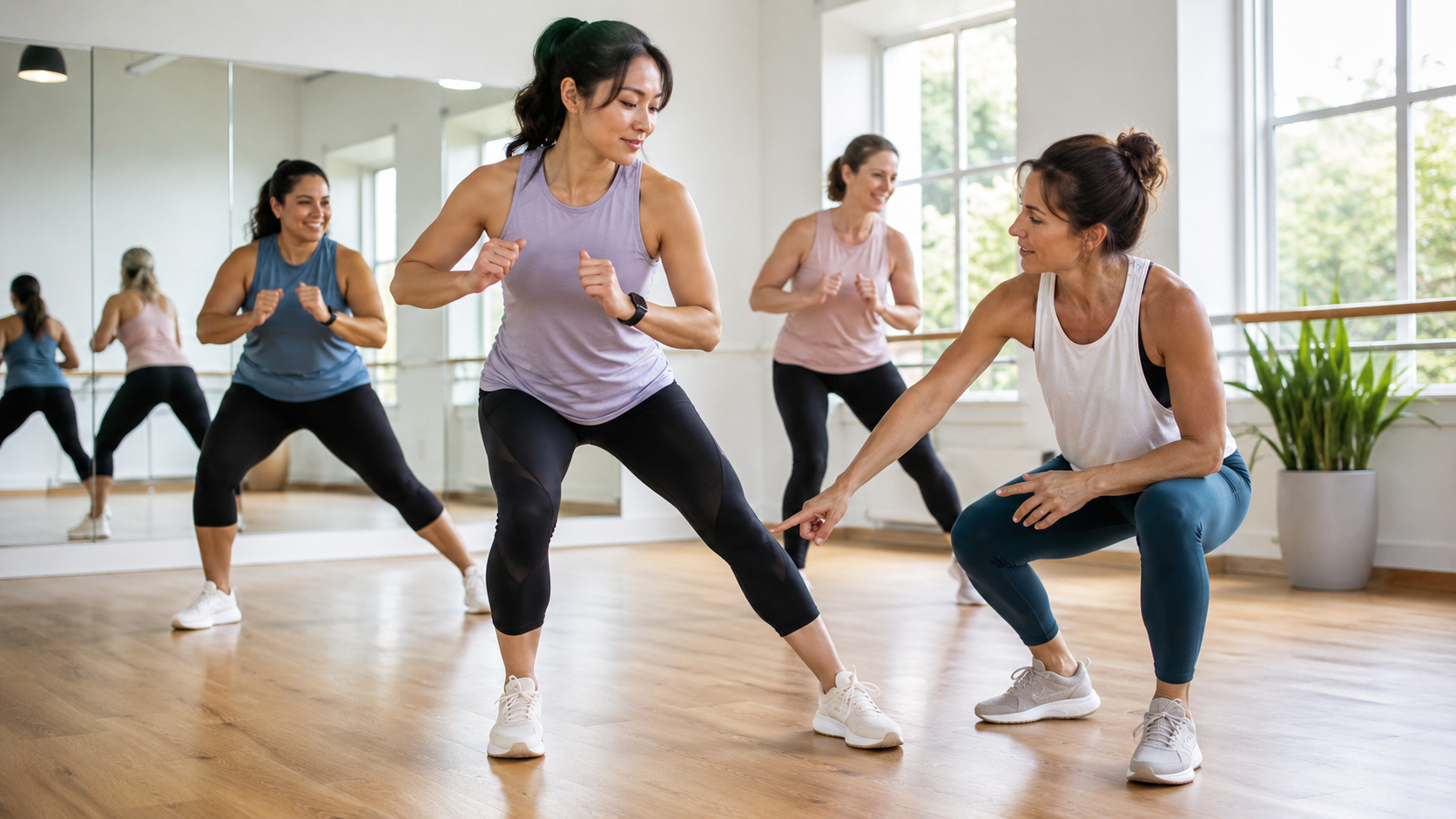
Dance Workout Precautions: How to Protect Your Knees and Ankles
Minjin Park
·
Dance workouts are one of the easiest forms of exercise to actually enjoy. The music helps, the movements feel less repetitive than a treadmill, and you can get your heart rate up without feeling like you are “just exercising.” Whether it is Zumba, hip-hop cardio, dance fitness, K-pop choreography, salsa-inspired workouts, or a simple online routine at home, dance can be a fun way to build stamina, coordination, and confidence.
But there is one thing many people underestimate: dance workouts can be surprisingly tough on the knees and ankles.
A dance class may look playful, but your joints are doing a lot of work. You may be twisting, pivoting, jumping, stepping side to side, landing quickly, or changing direction before your body is fully prepared. If your shoes are wrong, the floor is too slippery, or you push through fatigue, your knees and ankles can take more impact than you realize.
The good news is that you do not have to avoid dance workouts. You just need to move a little smarter. Here are the most important precautions to protect your knees and ankles before, during, and after a dance workout.
Why Dance Workouts Can Stress the Knees and Ankles
Dance workouts often involve quick changes in direction. You might step forward, slide back, twist your hips, turn your body, and jump into the next move within seconds. That variety is part of what makes dance fun, but it also means your lower body has to constantly stabilize you.
Your knees help control bending, landing, and direction changes. Your ankles help with balance, foot placement, and absorbing impact. When the movement gets fast, these joints have to react quickly.
The risk increases when the workout includes:
Repeated jumping
Fast pivots or turns
Side-to-side shuffles
Deep squats or lunges
Dancing on hard floors
Dancing in unsupportive shoes
Trying to copy advanced choreography too quickly
A regular strength workout may give you time to set your position before each move. Dance does not always give you that pause. That is why joint awareness matters.
You do not need to be perfect. You just need to notice how your feet land, how your knees track, and whether your body feels controlled or rushed.
Start With a Real Warm-Up
It is tempting to jump straight into the music, especially when the first song is exciting. But your knees and ankles need a proper warm-up before quick footwork or impact.
A good warm-up gradually increases blood flow, wakes up your muscles, and prepares your joints for movement. It does not have to be complicated. Even five to ten minutes can make a big difference.
Start with simple movements like marching in place, gentle step touches, shoulder rolls, slow hip circles, ankle circles, and easy side steps. Then slowly increase the range of motion. Add light squats, heel raises, and gentle lunges before moving into faster choreography.
The goal is to feel warm, not exhausted.
Pay special attention to your calves, ankles, hips, and glutes. These areas help control your knee and ankle position while dancing. If your hips and glutes are not active, your knees may collapse inward during squats, jumps, or side steps. If your calves and ankles are stiff, your landings may feel harsh.
A warm-up is not just a formality. It is your body’s preparation time.
Many people do dance workouts barefoot at home, in running shoes, or in old sneakers with worn-out soles. Sometimes that works for low-impact movement, but it can become a problem when the workout includes jumping, turning, or fast steps.
Running shoes are designed mostly for forward movement. Dance workouts often involve side-to-side motion and pivots. Some running shoes have thick, grippy soles that can catch on the floor when you turn. That can stress your ankle or knee because your foot sticks while your body rotates.
On the other hand, shoes with no support may make your feet and ankles work too hard, especially during longer classes.
Look for shoes that feel stable, supportive, and flexible enough for movement. For many dance workouts, cross-training shoes or dance fitness shoes are better than heavily cushioned running shoes. You want enough grip to avoid slipping, but not so much grip that your foot cannot turn.
Check your shoes regularly. If the sole is uneven, the heel is worn down, or the shoe feels loose, your joints may not be getting proper support.
Also tie your shoes securely. A loose shoe can make your foot slide inside, increasing the chance of ankle rolling or awkward landings.
Pay Attention to the Floor Surface
The floor can change everything.
A dance workout on a proper studio floor feels very different from dancing on concrete, tile, carpet, or a slippery kitchen floor. Your knees and ankles absorb more stress when the surface is too hard, too sticky, too slippery, or uneven.
Hard floors can make jumping and landing feel rough. Slippery floors increase the chance of losing balance. Thick carpet can catch your shoes and make pivots awkward. Small rugs are risky because they may slide under your feet.
If you are dancing at home, choose the safest space you can. Clear the area of clutter, cords, furniture edges, and anything you might step on. Make sure the floor is dry. Avoid dancing on a loose rug unless it is firmly secured.
If your floor is very hard, reduce jumping and choose low-impact versions of moves. A yoga mat is usually not ideal for dance cardio because it can shift, bunch up, or make footwork unstable. A larger exercise mat designed for movement may be better, but only if it stays flat and secure.
Your workout surface should let you move without fear. If you are constantly worried about slipping, tripping, or twisting, your body will move tensely.
When you bend your knees, land from a jump, or step side to side, try to keep your knees pointing in the same general direction as your toes. This helps reduce unnecessary twisting stress.
A common mistake is letting the knees collapse inward, especially during squats, lunges, jumps, and fast side steps. This can happen when the hips are weak, the feet are tired, or the movement is too fast.
You do not need to stare at your knees the whole time. Just check your form during slower parts of the workout. Ask yourself: are my knees tracking over my toes, or are they falling inward?
Also avoid locking your knees. Keep them slightly soft, especially during fast movements. Locked knees do not absorb impact well. Soft knees help your muscles share the work instead of sending force directly into the joints.
When in doubt, make the movement smaller. A smaller, controlled step is better than a big, dramatic move that throws your knee out of position.
Be Careful With Twists and Pivots
Twisting is common in dance workouts. You may rotate your hips, turn your body, or pivot quickly to face another direction. These moves can be fun, but they are also where knee and ankle discomfort can show up.
The key is to let your feet move with your body.
Problems happen when your upper body turns but your foot stays planted. That can create a twisting force through the knee. If the floor is sticky or your shoes grip too much, this can feel even worse.
When turning, try to pivot through the ball of your foot rather than forcing your knee to twist. Keep the movement light. Do not jam your foot into the floor.
For beginners, it is perfectly fine to remove the turn. Instead of spinning or pivoting, step in place and face forward. You can still get a great workout without doing every rotation.
If a move feels awkward, slow it down. Dance fitness should feel energetic, not dangerous.
Reduce Impact When Needed
Jumping can raise your heart rate quickly, but it also increases stress on your knees, ankles, and feet. This does not mean jumping is bad. It means you should earn it gradually and modify when needed.
Low-impact versions are not “less effective.” They are often the smarter choice, especially if you are new, exercising on a hard floor, recovering from soreness, or carrying fatigue from previous workouts.
Instead of jumping jacks, do step jacks. Instead of jumping squats, do regular squats. Instead of hopping side to side, step side to side. Instead of high knees, march with strong arms.
You can still make low-impact dance workouts challenging by using bigger arm movements, deeper but controlled steps, and steady pacing. Your heart rate can rise without pounding your joints.
The best version of a dance move is the one you can repeat safely.
Do Not Ignore Ankle Stability
Ankles are easy to overlook until something feels wrong.
Dance workouts require a lot of small balance corrections. Every time you step, turn, or land, your ankles help stabilize your body. If your ankles are weak or tired, you may feel wobbly during quick footwork.
Before class, warm up your ankles with circles, heel raises, toe taps, and gentle side-to-side steps. During class, focus on landing with your whole foot or with control through the ball of the foot, depending on the move. Avoid landing on the outer edge of your foot.
If you have a history of ankle sprains, be extra cautious with fast direction changes, single-leg moves, and slippery floors. You may need more supportive shoes or a lower-impact routine.
Balance exercises outside of dance can also help. Simple moves like standing on one leg, calf raises, and controlled step-downs can build stability over time.
Strong ankles help protect your knees too, because the body works as a chain.
Keep Your Core and Hips Engaged
Knee and ankle protection is not only about the knees and ankles.
Your hips, glutes, and core play a big role in controlling lower-body movement. If your core is relaxed and your hips are unstable, your knees and ankles may compensate.
During dance workouts, try to keep your torso lifted and your core gently engaged. This does not mean sucking in your stomach or staying stiff. It means keeping enough control that your body does not collapse into every movement.
Your glutes are especially important during squats, lunges, side steps, and landings. When they are active, your knees are less likely to fall inward.
If you often feel dance workouts mostly in your knees, it may be a sign that your hips and glutes need more support work. Adding simple strength exercises like glute bridges, side steps with a resistance band, bodyweight squats, and calf raises can make dance feel safer and more controlled.
Learn the Moves Before Going Full Speed
Dance workouts can move quickly, especially if you are following an online video or joining a class with regular participants. It can feel frustrating when everyone else seems to know the choreography.
But trying to match the speed before you understand the steps can lead to awkward foot placement.
Give yourself permission to learn slowly. Watch the move once. Try it at half speed. Then gradually add energy. If you miss a step, do not panic and rush to catch up. Just march in place until you find the rhythm again.
This is especially important for moves that involve crossing one foot over the other, turning, or changing direction quickly. These are moments when ankles can roll or knees can twist.
You are not failing if you simplify. You are training smarter.
Listen to Pain Signals
Muscle fatigue is normal. Mild burning in the thighs or calves can happen during a challenging class. Breathlessness can happen during cardio.
But sharp pain is different.
Do not ignore pain in the knee, ankle, foot, or hip. Do not keep jumping on a sore ankle. Do not push through knee pain because the song is almost over.
Pain is information. It does not always mean something serious, but it does mean you should adjust.
Stop the move, switch to a low-impact version, or take a break. If pain continues after class, avoid repeating the same workout until you understand what triggered it. Persistent swelling, instability, sharp pain, or trouble walking should be taken seriously.
A dance workout should leave you tired and energized, not limping.
Avoid Doing Too Much Too Soon
Because dance is fun, it is easy to overdo it.
You may start with one class, then suddenly want to dance every day. Motivation is great, but your joints and connective tissues need time to adapt. Knees, ankles, tendons, and calves may not be ready for daily jumping and twisting right away.
Start with a manageable schedule. Two or three dance workouts per week may be enough in the beginning, especially if they are high-impact. On other days, choose walking, strength training, stretching, or lower-impact movement.
Also vary the intensity. Not every session needs to be a full-energy cardio class. Some days can focus on rhythm, mobility, or low-impact choreography.
Progress should feel sustainable. If your knees or ankles are constantly sore, your body may be asking for more recovery.
Cool Down After the Workout
When the final song ends, do not stop suddenly and collapse on the couch.
A cool-down helps your breathing and heart rate gradually return to normal. It also gives your muscles a chance to relax after repeated impact and quick movement.
Spend five minutes doing slow steps, gentle walking in place, easy side reaches, calf stretches, quad stretches, hamstring stretches, and hip stretches. Keep it comfortable. Avoid forcing deep stretches when your body is tired.
Your calves and feet deserve attention too. Dance workouts can make them work hard, especially if there was a lot of bouncing or fast footwork.
After class, notice how your joints feel. If your knees or ankles feel irritated, use that information next time. You may need better shoes, a different floor, fewer jumps, or a more gradual warm-up.
Practical Tips for Safer Dance Workouts
Before you start, check your space, shoes, and floor. Warm up your ankles, calves, hips, and knees. Choose a workout that matches your current fitness level, not just the one that looks the most exciting.
During the workout, keep your knees soft, land quietly, and let your feet pivot with your body. Modify jumps when needed. Make movements smaller if you feel unstable. Focus on control before speed.
After the workout, cool down, stretch gently, hydrate, and pay attention to any joint discomfort. If a certain move repeatedly bothers your knees or ankles, replace it with a safer version.
Dance should feel expressive and energizing. It should not feel like you are fighting your own joints.
What to Remember
Dance workouts are a fun, effective way to move your body, but they still require care. The music may make the workout feel lighthearted, yet your knees and ankles are handling impact, twists, pivots, and quick direction changes the entire time.
The best way to protect yourself is to prepare properly and move with awareness. Wear supportive shoes. Choose a safe floor. Warm up before the first high-energy song. Keep your knees aligned with your toes. Be careful with twisting. Modify jumps when your body needs a break.
You do not have to dance perfectly to get the benefits. You just have to dance in a way your body can handle consistently.
A safe dance workout is not the one where you push through every move no matter what. It is the one where you finish feeling strong, steady, and ready to come back again.
Hi, I’m the creator and editor behind ZestyHabit. I research everyday safety, first aid, and practical wellness topics using official guidance and reliable public sources, then turn that information into clear, realistic steps for daily life.
My goal is to help readers make safer, better-informed choices at home and beyond.