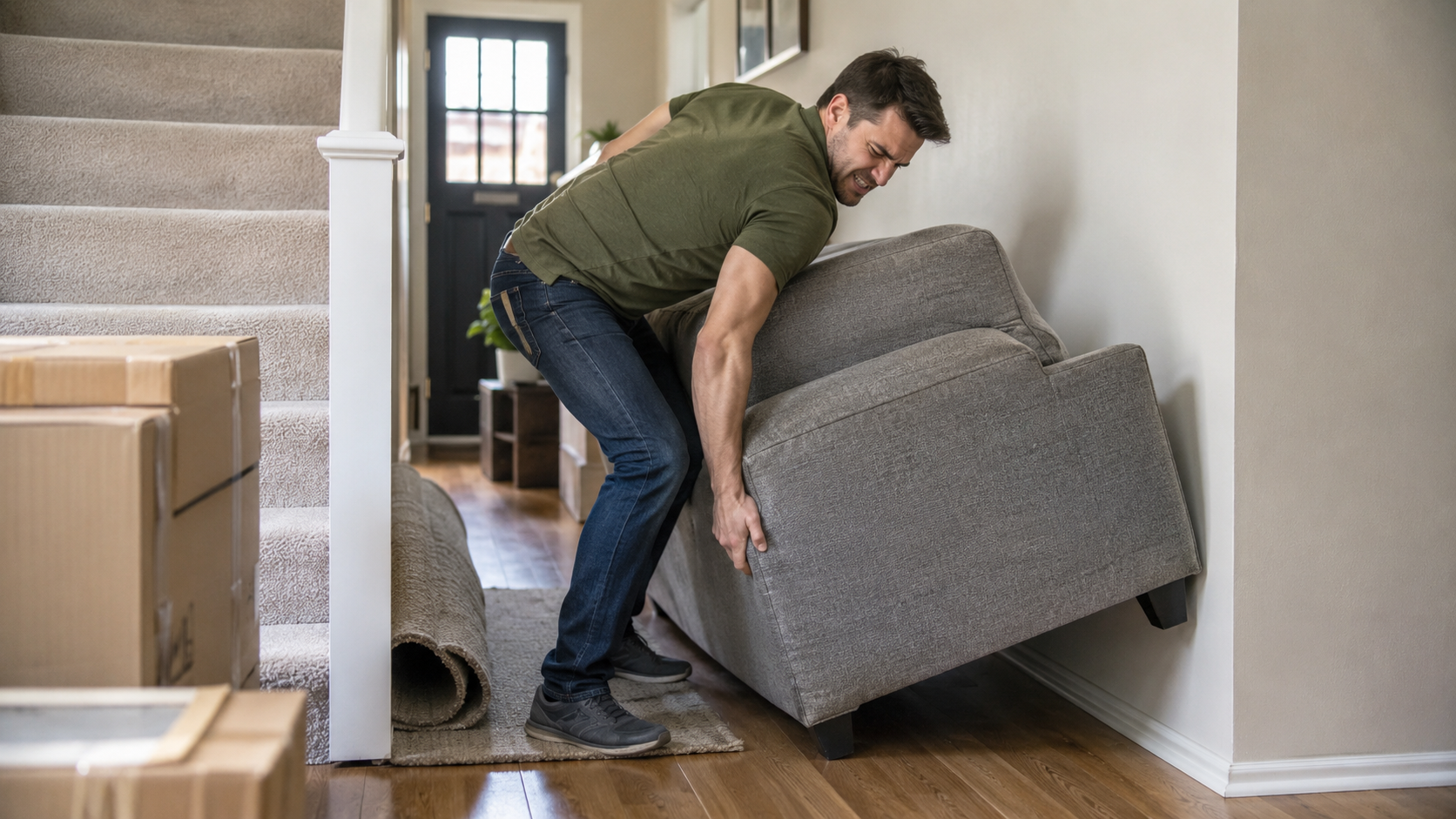
Why Moving Heavy Furniture Alone Can Be More Dangerous Than It Looks
Minjin Park
·
Moving heavy furniture by yourself may seem like a quick way to save time, but it can lead to back strain, crushed fingers, falls, damaged floors, and tip-over accidents. Learn safer ways to plan and move furniture at home.
You look at a sofa, dresser, bookcase, mattress, dining table, or TV stand and think, “It’s not that far. I can probably move it myself.”
Maybe you only need to slide it across the room to vacuum. Maybe you are rearranging furniture because the room feels cramped. Maybe a delivery box is blocking the hallway, or you need to move a cabinet before guests arrive. Asking someone for help feels inconvenient, and hiring movers feels unnecessary.
So you push. Then you pull. Then you lift one side, shuffle a few inches, and tell yourself it is almost done.
The problem is that heavy furniture is not just heavy. It is bulky, awkward, unbalanced, hard to grip, and often unpredictable once it starts moving. Unlike a gym weight, furniture does not have neat handles or even weight distribution. A dresser may be heavier on one side. A couch may catch on carpet. A bookcase may tip. A table leg may snag on a rug. A cabinet may suddenly shift when a drawer slides open.
That is why moving heavy furniture alone can lead to injuries and accidents even when the move seems small.
You do not need to be afraid of rearranging your home. But it helps to treat heavy furniture like a real household safety task, not a quick chore squeezed between other things.
Why Heavy Furniture Is Harder to Move Than It Looks
A piece of furniture may look manageable when it is sitting still. The difficulty becomes clear only after you try to move it.
Furniture weight is often uneven
A dresser with drawers, a sofa with a pull-out bed, a cabinet full of dishes, or a bookshelf with items still inside may not carry weight evenly. One side may be much heavier than the other.
When you lift or tilt it alone, the heavy side may drop suddenly. That can pull your back, twist your wrist, or crush a foot.
Big items are awkward, not just heavy
A large item can be difficult even if it is not extremely heavy. Mattresses, long tables, mirrors, bookcases, and couches are hard to control because they block your view and extend beyond your natural reach.
You may be strong enough to lift part of the item, but not able to steer it safely around corners, doorways, rugs, pets, or stairs.
Furniture can shift unexpectedly
Drawers slide. Doors swing open. Cushions fall. Shelves loosen. Table legs wobble. Wheels roll. A tall bookcase can lean farther than expected once it is tilted.
When you are moving furniture alone, you have fewer hands to control these small changes.
Floors and rugs create resistance
Furniture may slide easily for the first few inches and then suddenly stop when it hits a rug edge, floor gap, threshold, or carpet seam. Your body keeps pushing, but the furniture does not move.
That sudden stop can lead to slips, strained muscles, or a loss of balance.
The Most Common Injury Risk: Strain and Sprains
Moving furniture alone is one of those tasks that can feel fine in the moment and painful later.
You may not notice the strain right away because you are focused on finishing. Then your lower back tightens, your shoulder aches, or your wrist feels sore the next morning.
Back strain
Heavy furniture often forces people into poor positions: bent over, twisted sideways, arms extended, or leaning while pushing. These positions put extra stress on the back.
The risk increases when you try to lift one end of a dresser, drag a sofa, or pivot a heavy item while your feet stay planted.
A common mistake is thinking, “I’m not lifting the whole thing, just one side.” But lifting one side can still put a lot of uneven force on your body.
Shoulder and neck strain
Pulling furniture with one arm, pushing from an awkward angle, or trying to stop an item from tipping can strain the shoulder and neck.
This is especially common with mattresses, tall cabinets, and heavy chairs that do not have good handholds.
Wrist and hand injuries
Furniture edges can be hard to grip. When your fingers slip or bend under pressure, wrists and hands can take the force.
Trying to hold a heavy item by a small trim piece, drawer handle, or decorative edge can also be risky because those parts may break.
Knee and ankle strain
Moving furniture often involves shuffling, twisting, and stepping backward. If your foot catches on a rug or threshold, the furniture’s weight may pull you off balance.
Even a small stumble can become more serious when you are holding or pushing something heavy.
Crushing and Pinching Hazards
Heavy furniture can injure fingers, toes, and feet quickly.
Fingers can get trapped
When sliding a dresser, cabinet, or bed frame, fingers can get pinched between the furniture and the wall, door frame, floor, or another piece of furniture.
This often happens when someone tries to “guide” the item by holding a low edge while pushing from the side.
Toes can be crushed
If a heavy item drops even a short distance, your toes may be in the wrong place. Bare feet, sandals, and thin slippers offer little protection.
This is one reason moving furniture in socks or house slippers is a bad idea.
Hands can be caught during tipping
Many people tilt furniture to get it over a rug or through a doorway. If the item shifts suddenly, hands may be trapped underneath.
When working alone, it is harder to control the tilt and protect your hands at the same time.
Tip-Over Accidents Can Happen Fast
Tall furniture deserves special caution.
Bookcases, wardrobes, dressers, shelving units, cabinets, and entertainment centers can tip when moved, especially if they are top-heavy or still loaded.
Drawers make dressers unstable
A dresser may seem stable until drawers slide open during movement. Open drawers shift weight forward and can pull the furniture off balance.
Before moving any dresser, empty it and secure the drawers or remove them.
Shelving units can lean suddenly
Tall shelves may feel manageable at first, but once tilted, they can pass a point where they are hard to control. If you are alone, stopping that movement may be difficult.
This is especially risky near stairs, glass doors, windows, children, pets, or narrow hallways.
Furniture anchors may be forgotten
Some furniture is anchored to the wall for tip-over prevention. If you try to move it without checking, you may damage the wall, break the anchor, or pull the furniture in an awkward direction.
Before moving tall furniture, check whether it is attached to the wall.
Stairs Make Everything More Dangerous
Moving heavy furniture alone on stairs is one of the riskiest household tasks.
Stairs add height changes, narrow space, limited turning room, and gravity. If the item slips, it may pull you down or fall onto you.
Your view may be blocked
Large furniture can block your ability to see the steps. Even missing one step can cause a fall.
There is little room to recover
On flat ground, you may be able to step aside or set the item down. On stairs, there may be no safe place to pause.
Momentum works against you
A heavy item moving downward can quickly gain momentum. One person may not be able to stop it safely.
If furniture needs to go up or down stairs, it is usually a job for at least two capable people or professional movers.
Moving Furniture Can Damage the Home Too
Even if you avoid injury, moving furniture alone can damage floors, walls, door frames, and the furniture itself.
Scratched floors
Dragging furniture across hardwood, laminate, tile, or vinyl can leave scratches or dents. Even small grit under a furniture leg can scrape the floor.
Torn carpet or rugs
A heavy item can catch on carpet fibers, rug edges, or floor transitions. Pulling harder may tear the rug or damage the furniture leg.
Damaged walls and trim
Large items are hard to steer alone. Corners may hit drywall, baseboards, door frames, or stair railings.
Broken furniture parts
Handles, legs, trim, and decorative panels are not always designed to bear weight. If you lift or pull from the wrong spot, parts may crack or break.
A quick solo move can become more expensive than asking for help.
Common Mistakes People Make When Moving Furniture Alone
Most furniture-moving accidents come from ordinary shortcuts.
Mistake 1: Leaving items inside
Books, clothes, dishes, electronics, and random drawer contents add weight and shift around. Empty the furniture first.
This makes the item lighter and more stable.
Mistake 2: Not measuring the path
A sofa may fit in the room but not around the hallway corner. A cabinet may be too tall for a doorway angle. If you discover this while holding the item, you may be stuck in an awkward position.
Measure doorways, halls, stairs, and elevator spaces before moving.
Mistake 3: Pulling with the back
Bending over and yanking furniture toward you is a quick way to strain your back. It also gives you less control.
Use tools, sliders, and help instead of brute force.
Mistake 4: Wearing the wrong footwear
Bare feet, socks, flip-flops, and loose slippers are poor choices. Wear closed-toe shoes with good grip.
Mistake 5: Moving too fast
Rushing leads to poor decisions. Furniture should be moved slowly, with planned pauses.
Mistake 6: Moving around clutter
If the floor is covered with bags, toys, cords, rugs, or boxes, the risk goes way up. Clear the path first.
Warning Signs You Should Stop and Get Help
Sometimes the safest decision is to stop before the move gets worse.
Pause and get help if:
You cannot lift or tilt the item without straining. You cannot see where your feet are going. The furniture wobbles or starts to tip. Drawers or doors keep sliding open. The item must go up or down stairs. You feel pain in your back, shoulder, wrist, or knee. The item is wider than the doorway or hallway. You are moving over uneven flooring. You need to stand on something to control it. You are tired, rushed, or frustrated.
Stopping is not failure. It is good judgment.
How to Prepare Before Moving Furniture
A safer move starts before anyone lifts anything.
Empty the furniture
Remove books, dishes, clothes, electronics, décor, and loose items. Take out drawers if possible. Remove shelves that may slide.
This reduces weight and prevents sudden shifting.
Secure moving parts
Tape or tie doors and drawers shut if they cannot be removed. Use painter’s tape when appropriate to reduce surface damage, but do not rely on weak tape for heavy parts.
Clear the path
Move rugs, cords, shoes, boxes, pet toys, and small furniture out of the way. Make sure doors are open and doorstops are secure.
Measure first
Check the furniture size and the route. Measure narrow doorways, corners, stair turns, and elevator openings.
Protect floors and walls
Use furniture sliders, moving blankets, cardboard, or floor protection as appropriate. Be careful with cardboard on smooth floors because it can slide unexpectedly.
Plan where it will land
Know exactly where the furniture is going before you move it. Do not carry or push a heavy item while deciding where it should go.
Tools That Can Make Moving Safer
The right tool can reduce strain and protect your home.
Furniture sliders
Sliders help heavy items move across carpet or hard floors with less force. Use the type designed for your floor surface.
Even with sliders, move slowly and keep the path clear.
Moving blankets
Blankets can protect furniture, walls, and door frames. They can also provide a better surface for sliding some items, though they should be used carefully to avoid slipping.
Dollies and hand trucks
A dolly can be useful for boxes, appliances, and some furniture, but it must be used correctly. Heavy or tall items should be secured, and stairs require extra caution.
Lifting straps
Moving straps can help distribute weight between two people. They are not magic, and they still require coordination and proper technique.
Gloves
Work gloves can improve grip and protect hands from splinters, sharp edges, and pinching.
When You Should Not Move Furniture Alone
Some jobs are simply not good solo tasks.
Do not move these alone if they are heavy or awkward:
Large dressers Bookcases Wardrobes Sofas Recliners Mattresses larger than twin size Dining tables China cabinets TV stands Large mirrors Appliances Anything going up or down stairs
If the item is tall, fragile, expensive, or hard to grip, get help.
Safe Alternatives to Moving Heavy Furniture Alone
Ask one or two people for help
Even one helper can make a big difference. One person can guide while the other pushes. Both can keep the item balanced and communicate about obstacles.
Hire movers for difficult items
For stairs, large pieces, heavy cabinets, or expensive furniture, professional movers may be worth it. They have equipment and experience.
Move the room around the item
Sometimes you do not need to move the heaviest piece. Rearranging smaller items may solve the layout problem with less risk.
Break furniture down
Some furniture can be disassembled. Remove legs, shelves, mirrors, headboards, or detachable sections when possible.
If the furniture and floor allow it, sliders can reduce the need to lift. But sliding still requires control and should not be done near stairs or uneven surfaces.
Special Care With Children and Pets Nearby
Children and pets should not be in the moving path.
A child may run behind the furniture, touch a moving piece, or stand where the item could tip. A pet may walk underfoot at the worst moment.
Before moving furniture, put pets in another room and keep children away from the area. This also helps you focus.
After the Move: Check Stability
Once the furniture is in place, the job is not quite finished.
Make sure the item sits flat and does not wobble. Reinstall shelves correctly. Put drawers back carefully. Re-anchor tall furniture to the wall if it was anchored before, especially in homes with children.
Check that the furniture is not blocking exits, vents, walkways, windows, or electrical outlets.
If you moved a heavy item across carpet, make sure it did not pinch cords underneath.
A Simple Furniture-Moving Safety Checklist
Before moving:
Empty the furniture. Remove or secure drawers and doors. Measure the route. Clear floors and doorways. Wear closed-toe shoes. Use sliders, blankets, or tools when appropriate. Keep kids and pets away. Ask for help with heavy, tall, or awkward items.
During the move:
Move slowly. Keep your back from twisting. Watch your feet and hands. Communicate if working with someone. Stop if the item tips, sticks, or feels too heavy.
After the move:
Check for damage. Make sure the furniture is stable. Re-anchor tall furniture if needed. Clear leftover tools, tape, and packing materials.
This checklist takes only a few minutes, but it can prevent a lot of frustration.
Final Thoughts: Heavy Furniture Is a Two-Person Job More Often Than We Admit
Moving heavy furniture alone can feel like a small shortcut, especially when the item only needs to move a few feet. But heavy furniture is awkward, uneven, and unpredictable. It can strain your back, crush fingers or toes, tip over, damage floors, or create fall hazards.
The safer approach is simple: slow down and plan the move.
Empty the furniture first. Clear the path. Wear proper shoes. Use sliders or moving tools. Avoid stairs unless you have enough help. Keep children and pets away. And when an item is tall, heavy, fragile, or hard to control, ask for help.
There is nothing wrong with rearranging your home. Just do it in a way that respects the weight and size of what you are moving. A few extra minutes of preparation are much easier than dealing with an injury, a broken cabinet, or a scratched floor afterward.
Hi, I’m the creator and editor behind ZestyHabit. I research everyday safety, first aid, and practical wellness topics using official guidance and reliable public sources, then turn that information into clear, realistic steps for daily life.
My goal is to help readers make safer, better-informed choices at home and beyond.