Is It Dangerous to Put a Hot Pot Straight Into Cold Sink Water?
Minjin Park
·
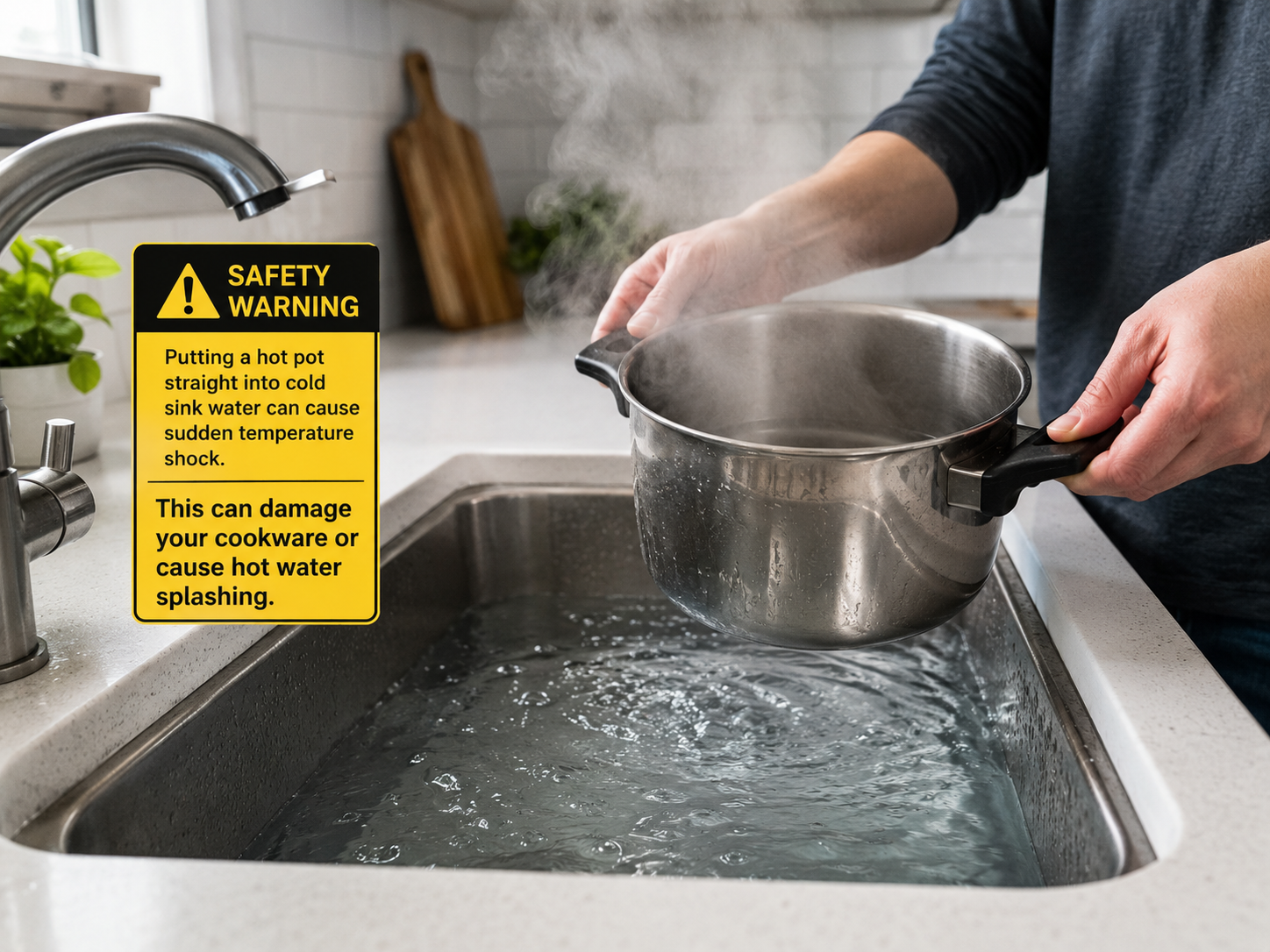
Putting a hot pot directly into cold water may seem like an easy cleanup shortcut, but sudden temperature changes can warp cookware, damage coatings, create steam, and increase burn risk. Here’s what to do instead.
After cooking, most of us want the kitchen cleaned up quickly.
The meal is done. The stove is off. The pot is still hot. Maybe there is sauce stuck to the bottom, rice clinging to the sides, or a greasy film you do not want to deal with later. So the natural instinct is to carry the hot pot to the sink and run cold water into it.
You hear the loud hiss. Steam rises. Food loosens a little. It feels like a practical shortcut.
But is it safe?
The answer is: not always.
Putting a very hot pot or pan directly into cold sink water can create a sudden temperature shock. That shock can warp metal cookware, damage nonstick coatings, crack certain materials, create a burst of steam, and make the pot harder to handle safely. It may not cause a dramatic accident every time, but it is a habit worth changing.
This is one of those everyday kitchen issues that does not look serious until something goes wrong. The safer approach is simple: let hot cookware cool down gradually before adding cold water.
What Happens When a Hot Pot Meets Cold Water?
When cookware is hot, the metal or material has expanded from heat. When cold water hits it suddenly, the surface cools and contracts quickly.
The problem is that the whole pot may not cool at the same speed. The bottom might still be hot while the inside surface cools fast. One side may contract before another. That uneven stress is what can cause trouble.
This is often called thermal shock.
You have probably seen a milder version of it in daily life. A hot glass can crack if filled with ice water. A cold dish can break if placed into a hot oven. Cookware is usually stronger than ordinary glassware, but it is not immune to temperature stress.
The effect depends on the material, thickness, construction, and how hot the pot was.
A heavy stainless steel pot may survive this habit for years. A thin pan may warp quickly. A nonstick skillet may lose performance. A ceramic-coated pan may develop tiny damage over time. A glass lid or ceramic dish may crack suddenly.
The risk is not the same for every item, but the habit is still worth avoiding.
Why This Matters in Everyday Kitchens
This is not just about protecting expensive cookware, although that matters too.
It is also about avoiding burns, steam exposure, slippery handling, and unexpected cracking. A pot that hisses violently in the sink can startle you. Steam can rise toward your face or hands. Water can splash back. A warped pan may no longer sit flat on the burner, which can make future cooking less stable.
And then there is the frustration factor.
A pan that used to heat evenly may suddenly wobble. Oil may pool on one side. Pancakes may cook unevenly. A lid may not fit right anymore. A nonstick surface may start sticking.
You may not connect those problems to the moment you put a hot pan under cold water, but repeated temperature shocks can shorten the life of cookware.
The Biggest Risk: Warping
What Warping Looks Like
Warping happens when the bottom of a pot or pan bends out of shape. Sometimes it is obvious. The pan rocks on the stovetop. The oil slides to one side. The bottom no longer sits flat.
Other times, it is subtle. The pan still looks mostly fine, but heat distribution changes. Food cooks unevenly, and the pan may feel unstable.
Thin pans are more likely to warp than thick, heavy cookware. But even good cookware can be affected by repeated sudden temperature changes.
Why Warped Cookware Can Be a Safety Issue
Warping is annoying, but it can also become a safety problem.
On a smooth electric or induction cooktop, a warped pan may not sit securely. It can spin, rock, or heat unevenly. On a gas stove, uneven contact is less of an issue than on a flat cooktop, but a warped pan can still shift more easily.
If hot oil pools on one side, it may cook food unevenly or increase splattering. If liquid gathers in one area, it can boil unpredictably.
A pan that does not sit stable is simply harder to control.
Nonstick and Coated Cookware Can Suffer Too
Nonstick pans are especially worth treating gently.
A hot nonstick skillet placed under cold water may not instantly fall apart, but the sudden temperature change can stress the coating and the metal underneath. Over time, this may contribute to reduced performance, peeling, bubbling, or uneven cooking.
Ceramic-coated cookware can also be sensitive to sudden temperature changes. The coating and the metal base may expand and contract differently. That repeated stress is not good for long-term durability.
A good rule is this: if the cookware has a coating you care about, do not shock it with cold water.
Let it cool first. Then wash with warm water and a soft sponge.
Glass Lids, Ceramic Dishes, and Enamel Cookware Need Extra Care
Some kitchen items are more vulnerable than metal pots.
Glass Lids
A glass lid that has been sitting on a hot pot can be very hot, even if it does not look dangerous. If you place it in a cold sink or run cold water over it, it may crack or shatter.
Tempered glass is designed to be stronger than ordinary glass, but it can still fail under stress, especially if it already has tiny chips, scratches, or damage.
Let glass lids cool on a dry, heat-safe surface before washing.
Ceramic and Stoneware
Ceramic dishes, stoneware, and some baking dishes can crack from sudden temperature changes. If you move a hot ceramic dish directly into cold water, you are asking the material to handle stress very quickly.
Even if it does not break immediately, small cracks may develop.
Enameled Cast Iron
Enameled cast iron is durable, but the enamel coating can be damaged by sudden temperature changes. A very hot Dutch oven placed into cold water may risk cracking or crazing the enamel over time.
These pieces are often expensive, so patience is worth it.
Steam Can Be a Real Burn Risk
One of the most immediate risks is not the pot breaking. It is steam.
When cold water hits a very hot pot, steam can rise quickly. If your hands, wrists, or face are close, the steam can be uncomfortable or even cause a burn.
This can happen fast because steam is easy to underestimate. You might lean over the sink, turn on the faucet, and suddenly get a hot cloud rising toward you.
The hiss may seem satisfying, but it is also a sign that heat is moving quickly.
If the pot has hot oil, grease, or sticky sauce inside, adding water too quickly can also cause splattering. Grease and water do not mix well, and hot residue can pop or spray.
Hot Grease and Cold Water Are a Bad Combination
This deserves its own section.
If the pot or pan has hot oil or grease in it, do not rush to add cold water.
Water can cause hot grease to splatter. Even a small amount of water hitting hot oil can pop and send droplets outward. If you are holding the pan, standing close, or reaching across the sink, that can be painful.
This is common after cooking bacon, frying food, browning meat, or making anything with a layer of oil left behind.
Let the grease cool first. Then wipe or dispose of it properly based on your local household waste practices. Avoid pouring grease down the drain, since it can contribute to clogs.
The Sink Itself Can Be Affected
Most kitchen sinks can handle normal hot water and everyday dishwashing. But dropping a very hot pot into a sink filled with cold water can still create stress.
Stainless steel sinks are generally tough, but the sudden contact can create loud popping sounds, dents if the pot is heavy, or splashing. Porcelain, ceramic, or stone sinks may be more vulnerable to impact or thermal stress, especially if they already have chips or cracks.
The bigger issue is usually not the sink melting or breaking. It is the combination of a heavy hot pot, cold water, steam, splashing, and slippery hands.
That is when accidents happen.
Common Situations Where People Do This
Burned Rice or Pasta
Rice stuck to the bottom of a pot is frustrating. So is pasta starch that dries into a sticky film. Cold water feels like the fastest fix.
But if the pot is still extremely hot, let it cool first. Once it is warm rather than scorching, add warm water and let it soak.
Sauce Burned on the Bottom
Tomato sauce, cheese sauce, gravy, curry, and chili can all stick badly. The temptation is to shock the pot right away.
Instead, move the pot off the burner and let it sit. When it is no longer dangerously hot, add warm water with a little dish soap and let time do the work.
After Frying
After frying, the pan may look dirty and greasy. But this is exactly when you should avoid cold water.
Let the oil cool. Carefully remove excess grease. Then wash the pan once it is safe to handle.
Cast Iron After Searing
Cast iron holds heat for a long time. A cast iron skillet may still be extremely hot long after the burner is off.
Running cold water over very hot cast iron can stress the pan and may affect seasoning. Let it cool gradually before cleaning.
Better Ways to Cool and Clean Hot Cookware
Let It Rest on a Heat-Safe Surface
After cooking, turn off the burner and move the pot to a cool burner, trivet, or heat-safe surface. Let it sit for a few minutes.
Do not place hot cookware on a plastic cutting board, tablecloth, laminate surface, or anything that can melt or scorch.
Use Warm Water Instead of Cold
Once the pot is no longer extremely hot, use warm water rather than cold water. Warm water is less shocking to the cookware and still helps loosen food.
For stuck-on food, warm water plus a little dish soap often works better than a dramatic blast of cold water.
Soak Instead of Shock
Soaking is boring, but it works.
Fill the cooled pot with warm water and let it sit. For stubborn food, give it 15 to 30 minutes. You can come back later with a sponge or scraper that is safe for your cookware type.
This is much gentler than temperature shock.
Deglaze While Cooking, If Appropriate
For stainless steel or cast iron pans, you may sometimes add liquid while the pan is still on the heat to loosen browned bits as part of cooking. This is called deglazing.
But there is a difference between adding a small amount of room-temperature or warm liquid intentionally during cooking and placing a scorching hot pan into a sink of cold water.
Deglazing is controlled. Sink-shocking is not.
Follow the Manufacturer’s Instructions
Different cookware materials need different care.
Nonstick, stainless steel, cast iron, carbon steel, copper, enamel, glass, and ceramic all have their own cleaning rules. When in doubt, check the manual or care guide for your specific pot or pan.
A simple habit, though, works for almost everything: avoid sudden extreme temperature changes.
What If You Already Put a Hot Pot in Cold Water?
Do not panic. Many pots survive this once or twice without obvious damage.
Let the pot cool fully, then inspect it.
Look for:
A bottom that no longer sits flat
Wobbling on the stovetop
Cracks in glass, ceramic, or enamel
Peeling or bubbling coating
New chips or rough spots
A lid that no longer fits correctly
Unusual sounds when heating later
Food cooking unevenly
If the cookware looks damaged, stop using it until you can decide whether it is safe to keep. For coated cookware, peeling or flaking is usually a sign it is time to replace it.
Warning Signs Your Cookware Has Been Damaged
It Rocks on a Flat Surface
Place the cooled pan on a flat counter. If it rocks, spins, or does not sit evenly, it may be warped.
Oil Pools to One Side
When you add oil to a pan and it immediately runs to one edge, the bottom may no longer be level.
Food Burns in One Area
Uneven cooking can happen for many reasons, but warping is one possibility.
The Coating Looks Lifted or Scratched
If a nonstick or ceramic coating is peeling, bubbling, or flaking, it may no longer be suitable for normal cooking.
Glass or Enamel Shows Cracks
Cracks, chips, or spiderweb-like lines in glass or enamel should be taken seriously. Do not keep using damaged cookware just because it “seems fine.”
Simple Habits That Make Cleanup Safer
Turn Off the Burner First
Before thinking about cleanup, make sure the burner is off. Move the pot carefully and use dry oven mitts or potholders.
Give It a Cooling Spot
Have a trivet or unused cool burner ready. This prevents the “where do I put this?” scramble while holding something hot.
Keep the Sink Clear
A cluttered sink makes it harder to set cookware down safely. Knives, cups, plates, and slippery utensils can turn cleanup into a juggling act.
Do Not Carry a Hot Pot Across the Kitchen If You Do Not Need To
If the pot is very hot, it may be safer to let it cool on the stove first instead of carrying it to the sink right away.
Warn Others
If there are other people in the kitchen, say, “This pot is hot.” It sounds simple, but it prevents someone from grabbing it too soon.
A Practical Cooling Routine
Here is an easy routine to use after cooking:
Turn off the burner.
Move the pot to a cool burner or trivet.
Leave the lid slightly off if steam needs to escape safely.
Let the cookware cool until it is warm, not scorching.
Remove grease properly if needed.
Add warm water, not cold, for soaking.
Wash with the right sponge or tool for that cookware.
This routine adds only a little time, but it protects your hands, your sink, and your cookware.
Final Thoughts: Let Hot Cookware Cool Gradually
Putting a hot pot straight into cold sink water may feel like a quick cleanup trick, but it is not the best habit. Sudden temperature changes can warp cookware, damage coatings, crack glass or ceramic parts, create steam, and make hot grease splatter.
The safer approach is simple: turn off the burner, set the pot on a heat-safe surface, and let it cool gradually. Once it is no longer extremely hot, use warm water and a little patience.
You do not have to treat every pot like fragile glass. Just avoid shocking very hot cookware with cold water.
A few extra minutes of cooling can help your pans last longer, keep your kitchen calmer, and make cleanup safer for everyone in the house.
Hi, I’m the creator and editor behind ZestyHabit. I research everyday safety, first aid, and practical wellness topics using official guidance and reliable public sources, then turn that information into clear, realistic steps for daily life.
My goal is to help readers make safer, better-informed choices at home and beyond.