Sailing Precautions: What to Know Before a Beginner Session
Minjin Park
·
Sailing has a calm, almost romantic image. A small boat moving across the water, the sound of wind in the sail, sunlight on the surface, and a quiet feeling of freedom. From shore, it can look effortless.
But once you step onto a sailboat, you quickly realize sailing is not just sitting in a boat and letting the wind do the work. You are dealing with weather, balance, ropes, moving parts, changing wind direction, sun exposure, water safety, and teamwork. Even a beginner session can feel unfamiliar at first.
That does not mean sailing is only for experts. In fact, beginner sailing lessons can be very safe, enjoyable, and confidence-building when handled properly. The key is knowing what to expect before you go. A little preparation makes the day smoother and helps you avoid common mistakes, such as dressing poorly, underestimating the sun, ignoring weather changes, or standing in the wrong place on the boat.
If you are getting ready for your first sailing session, these practical sailing precautions will help you feel more comfortable, prepared, and safe on the water.
Sailing depends on nature. Wind, waves, current, temperature, and visibility can all affect your experience. Unlike indoor sports, the conditions are not fully controlled. A gentle breeze can make sailing peaceful, while stronger wind can make the boat heel, splash, and move quickly.
Beginners may also be unfamiliar with how a sailboat behaves. The boat may tilt more than expected. The boom may swing across during a turn. Ropes may tighten suddenly. Wet surfaces can become slippery. A simple instruction from the instructor may need to be followed quickly.
Most beginner sailing sessions are designed to be manageable, but safety still matters. You do not need to know everything before your first lesson, but you should understand the basics: wear a life jacket, listen closely, protect yourself from sun and wind, move carefully, and respect the weather.
Sailing is enjoyable when you are alert without being tense. Prepared without being scared.
Check the Weather Before You Go
Weather is one of the most important parts of sailing safety. Wind is what moves the boat, but too much wind can make a beginner session harder and less comfortable.
Before going out, check the forecast for wind speed, gusts, temperature, chance of rain, and storms. Do not only look at whether it is sunny. A sunny day can still be too windy for a beginner. A cloudy day can still cause sunburn. A calm morning can turn gusty later.
Your instructor or sailing center should make the final safety decision, but it helps to understand what they are watching. Sudden storms, lightning, strong gusts, fog, and rough water are all reasons a session may be delayed, shortened, or canceled.
Do not be disappointed if a lesson is rescheduled because of weather. That is not bad luck. That is good judgment.
For your first session, mild and steady wind is usually better than strong wind. You want enough breeze to learn, but not so much that every movement feels rushed.
Wear a Proper Life Jacket
A personal flotation device, often called a PFD or life jacket, is essential for beginner sailing. Even if you are a strong swimmer, you should wear one.
Falling into open water is different from swimming in a pool. You may be surprised, wearing clothes, dealing with cold water, near a moving boat, or trying to follow instructions. A life jacket gives you extra safety and helps reduce panic.
The life jacket should fit snugly. If it is too loose, it may ride up when you enter the water. Fasten all straps and zippers properly before leaving the dock. If it feels uncomfortable, ask for help adjusting it instead of leaving it half-secured.
Children and beginners should not treat the life jacket as optional. It is one of the simplest and most important pieces of safety gear on the boat.
Wearing one does not make you look inexperienced. It makes you look responsible.
Dress for Water, Wind, and Sun
Many beginners dress for the air temperature and forget that sailing includes wind, spray, and sun reflection. What feels comfortable on land may feel cold or exposed on the water.
Wear clothing that allows movement and dries reasonably quickly. Avoid heavy cotton if possible, because it can stay wet and cold. Lightweight activewear, quick-dry layers, or sailing-friendly clothes are better choices.
Bring an extra layer even if the day seems warm. Wind over water can make you feel cooler, especially if you get splashed. A light windbreaker or waterproof jacket can be useful.
Shoes matter too. Wear closed-toe shoes with good grip, such as deck shoes, water shoes, or non-marking athletic shoes if allowed. Avoid flip-flops, slippery sandals, or shoes that fall off easily. Bare feet may not be safe on every boat because of ropes, fittings, and slippery surfaces.
Also avoid long loose scarves, dangling jewelry, or anything that could catch on equipment.
The best sailing outfit is not about looking nautical. It is about staying warm, protected, and able to move safely.
Protect Yourself From the Sun
Sun exposure can be stronger on the water because sunlight reflects off the surface. Even on cloudy days, you may get more UV exposure than expected.
Apply broad-spectrum sunscreen before the session. Pay attention to easy-to-miss areas: ears, back of the neck, tops of feet, hands, and the area around sunglasses or hat lines. Reapply if you are out for a long time, sweating, or getting wet.
A hat can help, but choose one that fits securely or has a strap. A loose hat may blow away quickly. Sunglasses are also helpful because glare off the water can be intense. Use a strap if you do not want them ending up in the water.
Lightweight long sleeves or UPF clothing can make sun protection easier. Many experienced boaters prefer covering up rather than relying only on sunscreen.
Sunburn can turn a beautiful sailing day into an uncomfortable memory. Protecting your skin is part of basic boat safety.
Listen Carefully During the Safety Briefing
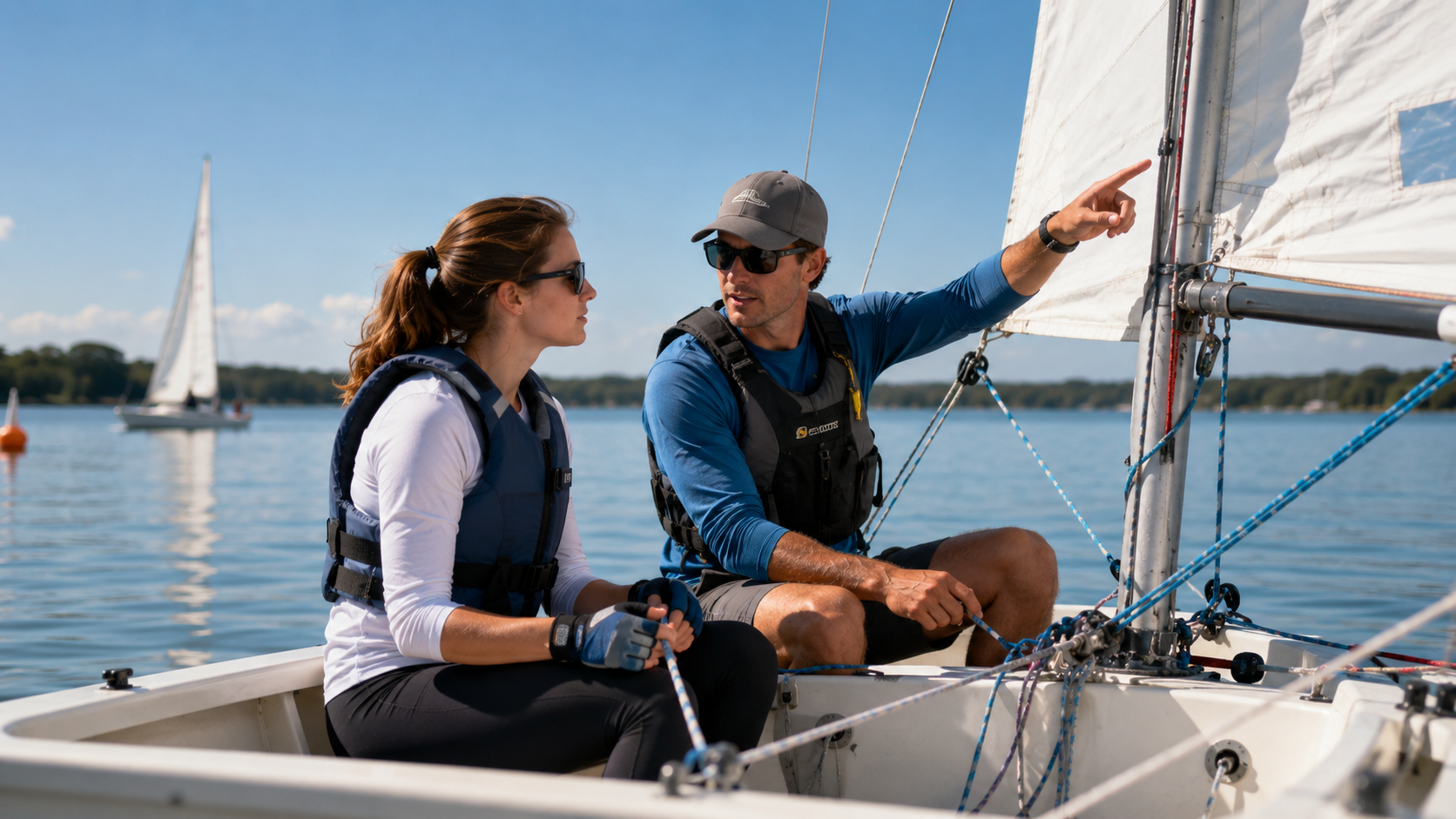
Before a beginner session, your instructor will usually explain the boat, basic commands, where to sit, what to avoid touching, and what to do if conditions change.
Pay close attention. This is not just formal talk. Sailing uses specific words and quick instructions. Even if you do not understand every sailing term yet, you should understand the safety basics.
You may hear instructions about the boom, sails, ropes, tiller, life jackets, moving around the boat, and what to do if someone falls in. If anything is unclear, ask before leaving the dock.
Do not pretend you understand just because you feel embarrassed. In sailing, clear communication is part of safety.
A beginner lesson is the right place to ask simple questions.
Watch Out for the Boom
The boom is the horizontal pole attached to the bottom of the sail. It can swing across the boat when the sail changes sides, especially during maneuvers like tacking or jibing.
For beginners, the boom is one of the most important things to respect. If you are standing or sitting in the wrong place, it can hit your head or body.
Your instructor will tell you when to duck or move. Listen for commands and stay aware. Do not stand up randomly while the boat is turning. Do not place your head near the boom path.
A good habit is to stay low and controlled when moving across the boat. Keep one hand for yourself and one hand available if you need to steady your body.
You do not need to fear the boom, but you do need to know where it is.
Move Carefully Around the Boat
A sailboat is not as stable as a dock or a floor. It moves with the wind and water. Surfaces may be wet. Ropes and hardware may be underfoot. The boat may tilt, especially when the sail catches wind.
Move slowly and deliberately. Keep your weight low. Hold onto stable parts of the boat when instructed. Avoid stepping on ropes if possible, because they may move, tighten, or roll under your foot.
Do not rush from one side to the other unless your instructor tells you exactly what to do. Quick, uncontrolled movement can throw off your balance and affect the boat.
When changing position, look where your feet are going. Beginners sometimes watch the sail or the water and forget about the deck.
Balance on a boat is a skill. It improves with practice, but early on, slow and careful movement is safest.
Understand That Heeling Is Normal
One surprising feeling for beginners is heeling, which is when the sailboat tilts to one side because of wind pressure on the sail.
The first time it happens, you may think the boat is about to tip over. In most beginner conditions, some heeling is normal and controlled. Your instructor may even explain how shifting body weight helps balance the boat.
Still, it can feel strange. Try not to panic. Stay seated where instructed, keep your feet secure, and listen to the instructor.
If the boat heels more than expected, the instructor may adjust the sail, change direction, or ask people to shift position. That is part of sailing.
Understanding heeling makes the experience less scary. The boat is not supposed to feel like a flat living room floor. It responds to wind.
Keep Your Hands Clear of Ropes Under Load
Sailing involves ropes, often called lines. They control sails and other parts of the boat. Some ropes may look harmless when loose, but they can become tight very quickly when the wind fills the sail.
Do not wrap ropes around your hand, wrist, or fingers. This is an important safety rule. If a rope tightens suddenly, it can cause injury.
Hold ropes the way your instructor shows you. Keep fingers away from blocks, cleats, winches, and other hardware unless you are taught how to use them. If a rope starts running quickly, do not grab it desperately.
Beginners should only handle lines under supervision. Sailing equipment is manageable, but it deserves respect.
Your hands are useful, but they should never be trapped in the system.
Stay Hydrated
Because sailing often feels breezy, people sometimes forget they are sweating or losing fluid. Sun, wind, and time on the water can dehydrate you faster than expected.
Drink water before the session and bring water if allowed. Avoid relying on the idea that you can simply drink afterward. If you feel thirsty, tired, dizzy, or headachy, dehydration may already be affecting you.
Be careful with alcohol before sailing. Even casual drinking can affect balance, judgment, reaction time, and coordination. For a beginner, that is not worth the risk.
Water activities require a clear head. Save alcohol for after you are safely back on shore, if at all.
Prepare for Motion Sickness
Not everyone gets motion sickness, but it can happen, especially if you are new to boats. Small boats can rock, tilt, and move in ways your body is not used to.
If you know you are prone to motion sickness, plan ahead. Eat lightly before the session, avoid heavy greasy meals, and consider asking a pharmacist or doctor about motion sickness options before the day.
While on the boat, look toward the horizon rather than staring down for long periods. Fresh air helps. Staying involved and facing the direction of movement may also reduce discomfort.
Tell your instructor early if you start feeling sick. Do not wait until you are miserable. They may be able to adjust the session, give you a better position, or return if needed.
Feeling seasick is not embarrassing. It is a common body response.
Know What to Do if You Fall In
In beginner sailing, falling overboard is not common when conditions are controlled, but you should still know what to do.
First, try to stay calm. Your life jacket will help you float. Do not waste energy by panicking or trying to swim randomly. Stay near the boat if it is safe, and follow instructions from the instructor.
Do not try to climb back in unless told how and where to do it. Boats have specific safe re-entry points, and grabbing the wrong area may be difficult or unsafe.
If you fall in while holding something, let it go unless instructed otherwise. Your safety matters more than a hat, water bottle, or loose item.
The best time to learn the man-overboard procedure is before anyone needs it. Listen during the briefing.
Respect the Instructor’s Decisions
A beginner sailing instructor is not only teaching technique. They are also watching the weather, boat behavior, student comfort, traffic, and safety.
If the instructor says to sit down, duck, switch sides, stop pulling a rope, or return to shore, follow the instruction promptly. Sailing is not the place to argue in the middle of a maneuver.
Sometimes a session may feel slower than expected. You may want to go faster, steer more, or try something exciting. But beginner sessions are built step by step for a reason.
Respecting the instructor does not mean staying silent. Ask questions when it is safe. But during active moments, listen first.
Good sailing depends on teamwork.
Be Aware of Other Boats and Swimmers
The water is shared. Sailboats, motorboats, kayaks, paddleboards, swimmers, and wildlife may all be nearby depending on the location.
Beginners may focus so much on their own boat that they forget to look around. Your instructor will handle navigation, but it is still good to stay aware.
Do not throw anything overboard. Do not lean out suddenly toward another boat. Do not distract the person steering during busy moments.
If you are steering as part of the lesson, keep your eyes up. Look where you are going, not only at your hands or the sail.
Awareness helps prevent surprises.
Keep Personal Items Secure
Wind and water are not friendly to loose belongings. Phones, sunglasses, hats, keys, and water bottles can disappear quickly.
Bring only what you need. Use waterproof bags or cases if appropriate. Secure glasses and hats with straps. Leave valuables on shore when possible.
Do not keep your phone loose in your hand while moving around the boat. If you want photos, ask when it is safe. Many beginner mistakes happen when someone is distracted by a phone.
The best sailing memories do not require risking your balance for a picture.
Start With a Beginner-Friendly Boat and Location
Not all sailing experiences are the same. A calm lesson on a small training boat is very different from going out on a larger boat in rougher water.
For your first session, choose a reputable sailing school, club, or guided beginner program. Look for instructors who explain safety clearly and provide properly fitted life jackets.
A protected bay, lake, or calm harbor is usually better for beginners than open ocean. You want enough wind to learn, but not conditions that overwhelm you.
If you are booking a session, ask what beginners should bring, what conditions are suitable, whether you may get wet, and what happens if weather changes.
A good beginner environment makes a huge difference.
Do Not Overestimate Your Swimming Ability
Being able to swim is helpful, but it does not replace boat safety. Open water can be cold, deep, windy, or disorienting. Clothing can make swimming harder. Waves and current can tire you quickly.
Wear the life jacket. Stay with the boat. Follow safety instructions.
If you are not a confident swimmer, tell the instructor before the session. They can help you choose the right life jacket, explain procedures more clearly, and make sure you feel comfortable.
There is no shame in being honest. It is much safer than pretending.
Know When to Stop or Turn Back
A good sailor respects changing conditions. If wind increases, clouds build, visibility drops, or students become cold, tired, or anxious, it may be time to return.
Beginners sometimes want to push through discomfort because they do not want to disappoint the group. But water sports require honest communication.
Tell the instructor if you feel too cold, dizzy, sick, scared, or exhausted. A session can often be adjusted. Maybe you sit in a more stable position, take a short break, or head back earlier.
Ending safely is always better than forcing a bad experience.
A Simple Beginner Sailing Checklist
Before your first sailing session, ask yourself:
Did I check the weather and understand that plans may change?
Am I wearing a properly fitted life jacket?
Do I have sun protection, including sunscreen, hat, or sunglasses?
Am I dressed for wind, spray, and possible temperature changes?
Are my shoes secure and grippy?
Did I listen to the safety briefing?
Do I know to watch for the boom?
Am I keeping my hands clear of ropes under load?
Did I bring water?
Am I ready to follow the instructor’s directions quickly?
This checklist may seem basic, but beginner safety is built on basic habits done consistently.
Final Thoughts
Sailing is a beautiful way to experience the water. It teaches patience, awareness, balance, and respect for nature. A beginner session can be exciting, peaceful, and memorable all at once.
The safest first experience starts before you leave the dock. Check the weather. Wear a life jacket. Dress for wind and water. Protect your skin from the sun. Listen carefully to the instructor. Move slowly around the boat, keep your hands clear of loaded ropes, and stay aware of the boom.
You do not need to understand every sailing term before your first lesson. You just need the right mindset: stay curious, listen well, respect the conditions, and take safety seriously.
With those habits in place, sailing becomes much easier to enjoy. Instead of worrying about every movement, you can begin to feel the rhythm of the boat, the pull of the wind, and the quiet satisfaction of learning something new on the water.
Hi, I’m the creator and editor behind ZestyHabit. I research everyday safety, first aid, and practical wellness topics using official guidance and reliable public sources, then turn that information into clear, realistic steps for daily life.
My goal is to help readers make safer, better-informed choices at home and beyond.