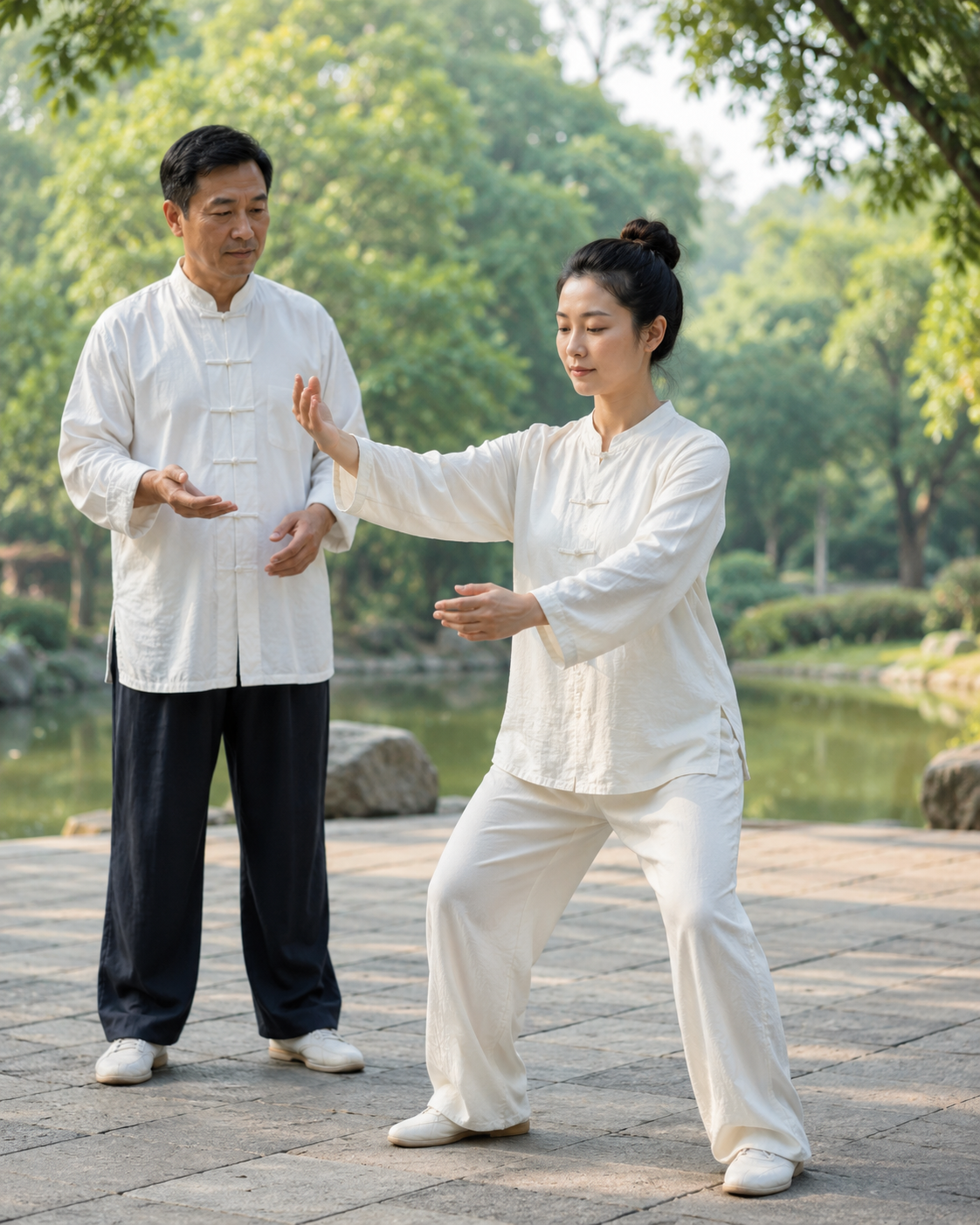

Qigong is gentle and beginner-friendly, but posture, breathing, balance, and pacing still matter. Learn practical qigong precautions for safer practice.
Qigong has a calm reputation, and for good reason. Compared with high-impact workouts, heavy lifting, or fast-paced fitness classes, qigong looks soft, slow, and almost effortless. The movements are gentle. The breathing is steady. The pace invites you to slow down instead of push harder.
For beginners, that can be one of the biggest appeals. Qigong does not require fancy equipment, extreme flexibility, or athletic confidence. You can practice in comfortable clothes, in a small room, outdoors, or even seated if standing feels difficult. It can be a peaceful way to reconnect with your body, improve awareness, and add movement to your day without feeling rushed.
But gentle does not mean careless.
Even slow movement can feel uncomfortable if your posture is forced, your knees are locked, your breathing becomes strained, or your balance is not supported. Beginners sometimes try too hard to “do it right,” holding positions stiffly or copying a teacher’s range of motion even when their own body needs less. Others assume qigong is so mild that they can practice for a long time right away, only to feel surprisingly tired afterward.
Qigong is meant to feel supportive, not stressful. The best approach is patient, relaxed, and body-aware. Here are the main precautions beginners should know before starting.
What Is Qigong, in Simple Terms?
Qigong is a mind-body movement practice that often combines slow physical movements, breathing, posture, and focused attention. Some styles are more meditative. Others feel more like gentle exercise. Many routines include flowing arm movements, weight shifting, soft knee bends, standing postures, and coordinated breathing.
For beginners, qigong can feel like a mix of stretching, balance practice, breath awareness, and moving meditation. It is usually low impact, which makes it approachable for many ages and fitness levels.
Still, the word “gentle” can be misleading if you interpret it as “nothing can go wrong.” A slow movement done with tension may still irritate the shoulders. A standing posture held too long may fatigue the legs. A balance shift done too quickly may make you feel unsteady.
The goal is not to perform qigong perfectly. The goal is to move with awareness.
Start Slowly, Even If It Feels Easy
One of the most common beginner mistakes is doing too much because qigong does not feel intense at first. Unlike running or stair climbing, qigong may not make you sweat heavily or breathe hard right away. That can make it tempting to practice for 45 minutes or an hour on your first day.
But your body may still be working in unfamiliar ways.
Slow movements can challenge small stabilizing muscles. Standing postures can fatigue the legs. Gentle arm movements may affect the shoulders and upper back if you are not used to them. Breath-focused practice can also feel mentally tiring if you are new to slowing down.
Start with 10 to 15 minutes. See how your body feels afterward and the next day. If you feel comfortable, gradually increase the length of your sessions.
There is no need to rush. Qigong is one of those practices where consistency matters far more than intensity.
Keep Your Knees Soft
Many qigong movements involve standing with slightly bent knees. This can help you feel grounded and relaxed, but beginners sometimes misunderstand the posture. They may bend too deeply, tense their thighs, or lock their knees between movements.
Try to keep your knees soft rather than rigid. A soft knee is not a deep squat. It is a gentle, comfortable bend that allows your body to move without stiffness.
When shifting weight from one side to the other, let your knees follow the direction of your toes. Avoid letting them collapse inward. If your knees feel strained, reduce the bend and make the movement smaller.
Your stance should feel stable, not forced.
If standing qigong bothers your knees, you can practice with a higher stance, take breaks, or try seated qigong. There is nothing wrong with modifying the practice. A smaller movement done comfortably is better than a larger movement done with pain.
Pay Attention to Balance
Qigong often includes weight shifting, turning, stepping, or moving the arms while standing. These movements can improve body awareness, but they may also challenge balance, especially for beginners.
Practice near a wall, chair, railing, or sturdy surface if you feel unsteady. You do not have to hold on the entire time. Just having support nearby can help you relax.
Avoid practicing on slippery floors, thick rugs, uneven ground, or cluttered spaces. Your practice area should give you enough room to move your arms without hitting furniture.
If a movement includes stepping, slow it down. Place your foot carefully before shifting weight onto it. Do not rush to match a video or instructor.
Balance improves through repetition, but it improves best when you feel safe enough to move calmly.
Do Not Force the Breath
Breathing is an important part of many qigong practices, but beginners can easily overthink it. They may try to breathe too deeply, hold their breath, or force a rhythm that does not feel natural.
Your breathing should feel smooth and comfortable. If a teacher says to inhale during one part of a movement and exhale during another, treat it as a guide, not a strict rule that makes you tense.
If coordinating breath and movement feels confusing, focus on the movement first and let your breath stay natural. Over time, the breath often begins to match the rhythm on its own.
Avoid aggressive deep breathing, especially if it makes you dizzy, lightheaded, anxious, or uncomfortable. More breath is not always better. Calm breathing is the goal.
A useful beginner cue is: “Breathe gently enough that you could keep practicing.”
Relax Your Shoulders
Many qigong movements involve raising, circling, or floating the arms. These motions are usually soft, but shoulder tension can creep in quickly.
Beginners often lift their shoulders toward their ears without realizing it. This may cause neck tightness, upper back discomfort, or fatigue in the arms.
As you move, check your shoulders. Let them drop naturally. Keep your elbows slightly soft. Imagine your arms floating rather than being held up with effort.
If your shoulders get tired, lower your arms. If a movement asks you to raise your arms overhead but that feels uncomfortable, keep them at chest height or lower. Qigong does not require you to force a range of motion your shoulders do not currently have.
Gentle movement should still respect your joints.
Keep Your Spine Comfortable
Good posture in qigong does not mean standing stiffly like a statue. It means finding a relaxed, upright position that allows you to breathe and move easily.
Try to keep the top of your head gently lifted, your chin relaxed, and your chest open without being puffed out. Let your lower back feel natural rather than exaggerated. Avoid arching too much or tucking your pelvis so strongly that you create tension.
Some teachers describe this as being “rooted and lifted” at the same time. Your feet feel grounded, while your spine feels long and easy.
If your lower back starts to ache, check whether you are leaning back, locking your knees, or holding your abdomen too tightly. Reduce the movement and return to a comfortable stance.
Posture should help you relax, not make you feel trapped.
Wear Comfortable Shoes or Practice Barefoot Safely
Qigong can be practiced barefoot, in socks, or in light shoes, depending on the surface and your comfort. The most important thing is stability.
If you practice barefoot, make sure the floor is clean, flat, and not slippery. If you wear socks, be careful on smooth floors because slipping can happen easily. Grip socks may help.
If you prefer shoes, choose flexible, comfortable shoes with a flat, stable base. Very thick, unstable, or overly cushioned shoes may make balance harder. High heels, loose slippers, or shoes that slide around are not ideal.
For outdoor practice, shoes are usually safer because they protect your feet from rough ground, stones, insects, or damp surfaces.
Your feet should feel secure. If your feet feel unstable, the rest of your body may tense up.
Avoid Practicing Right After a Heavy Meal
Qigong is gentle, but it still involves movement, breathing, and posture. Practicing right after a large meal may feel uncomfortable, especially if the routine includes bending, twisting, or deep breathing.
You do not need to practice on an empty stomach, but give your body some time after a heavy meal. A light snack is usually easier to tolerate than a full, heavy plate.
If you feel bloated, nauseous, or sluggish, choose a very gentle routine or wait until you feel more comfortable.
Qigong should leave you feeling settled, not queasy.
Modify Movements Without Feeling Like You Failed
One of the best things about qigong is that it can be adapted. You can make movements smaller, slower, higher, lower, seated, supported, or shorter.
If a teacher’s arms move high overhead, yours can stay lower. If their stance is wide, yours can be narrower. If they bend deeply, you can bend slightly. If standing feels tiring, sit down.
Beginners sometimes think modification means they are not really doing the practice. That is not true. Modification is often what makes the practice sustainable.
Your body does not need to copy someone else’s shape exactly. It needs to find a version of the movement that feels safe, calm, and useful.
Watch for Dizziness or Lightheadedness
Some beginners feel lightheaded during slow movement practices, especially when they change breathing patterns, stand still for too long, or move their head position often.
If you feel dizzy, stop. Sit down if needed. Return to normal breathing. Drink water if you are thirsty. Do not try to push through dizziness to finish a routine.
To reduce the chance of lightheadedness, avoid forcing deep breaths, locking your knees, standing too long without shifting, or practicing in an overheated room.
If dizziness happens repeatedly, consider speaking with a healthcare professional, especially if it is new, strong, or happens during other activities too.
A calm practice should not make you feel unsafe.
Practice in a Calm, Safe Space
Your environment affects your qigong practice more than you might expect. Since the movements are slow and mindful, distractions can pull you out of rhythm or make you move awkwardly.
Choose a space where you have enough room to extend your arms. Move sharp furniture, bags, cords, or clutter out of the way. If you are following a video, place the screen at a comfortable height so you are not constantly twisting your neck.
Lighting matters too. A dim room may feel relaxing, but you still need to see your surroundings. Outdoors, choose stable ground and avoid areas where you may be interrupted by bikes, pets, or uneven surfaces.
Qigong does not require a perfect studio. It only requires a space where you can move safely and breathe comfortably.
Do Not Chase a Mystical Feeling
Many people come to qigong because they want relaxation, energy, balance, or a deeper mind-body connection. Those are reasonable hopes. But beginners sometimes pressure themselves to feel something special right away.
You may feel calm. You may feel awkward. You may feel bored. You may notice warmth in your hands, or you may notice nothing at all. All of that is normal.
Try not to turn qigong into another performance. You do not have to achieve a certain feeling to benefit from the practice.
Focus on simple things: relaxed breathing, comfortable posture, steady balance, and gentle movement. The deeper benefits often come from repetition, not from forcing an experience.
Be Careful With Online Videos
Online qigong videos can be helpful, especially for beginners who want guidance at home. But not every video is suitable for every body.
Choose beginner-friendly routines with clear instructions and moderate pacing. Avoid routines that move too quickly, use deep stances, or make big claims that sound unrealistic.
If the instructor offers modifications, that is a good sign. If they remind you to move within your comfort range, even better.
Do not feel obligated to finish a video just because it is playing. Pause when needed. Repeat sections if you want. Skip movements that do not feel right.
Your screen should guide your practice, not control it.
A Simple Beginner Qigong Routine
If you are new, try a short and gentle structure like this:
Begin by standing comfortably with your feet about hip-width apart. Soften your knees. Let your shoulders relax. Take a few natural breaths.
Slowly raise your arms in front of you to chest height as you inhale gently. Lower them as you exhale. Repeat several times.
Next, shift your weight slowly from one foot to the other. Keep both feet on the ground. Let your arms move naturally, or rest your hands near your lower abdomen.
Then try gentle side-to-side turning. Let your torso rotate slightly while your arms follow softly. Keep the movement small and comfortable.
Finish by standing quietly for a few breaths, then gently shake out your arms and legs.
This can take 5 to 10 minutes. That is enough for a beginner. You can always add more later.
When to Ask for Guidance
Qigong is generally gentle, but individual needs vary. If you have a medical condition, balance problems, recent surgery, severe joint pain, unexplained dizziness, or a history of falls, it is wise to ask a healthcare professional before beginning or to work with a qualified instructor.
A good instructor can help you adjust your stance, breathing, and movement size. They can also help you avoid common habits like locking the knees, lifting the shoulders, or bending too deeply.
You do not need private lessons to start, but personalized feedback can be helpful if something feels uncomfortable or confusing.
Final Thoughts
Qigong is gentle, but it is still a real movement practice. That is what makes it valuable. It invites you to slow down, breathe, notice your posture, and move with more care.
For beginners, the safest approach is simple: start small, keep your knees soft, protect your balance, breathe naturally, relax your shoulders, and modify anything that does not feel right. You do not need to push, strain, or perform.
A good qigong session should leave you feeling more connected to your body, not more tense. With patient pacing and a comfortable practice space, qigong can become a steady, calming part of your wellness routine.
Leave a Reply