Most of us notice dust when it gathers on a TV stand, bookshelf, or coffee table. We wipe it away because it looks messy. But there is one place dust often collects quietly for months without much attention: around electrical outlets.
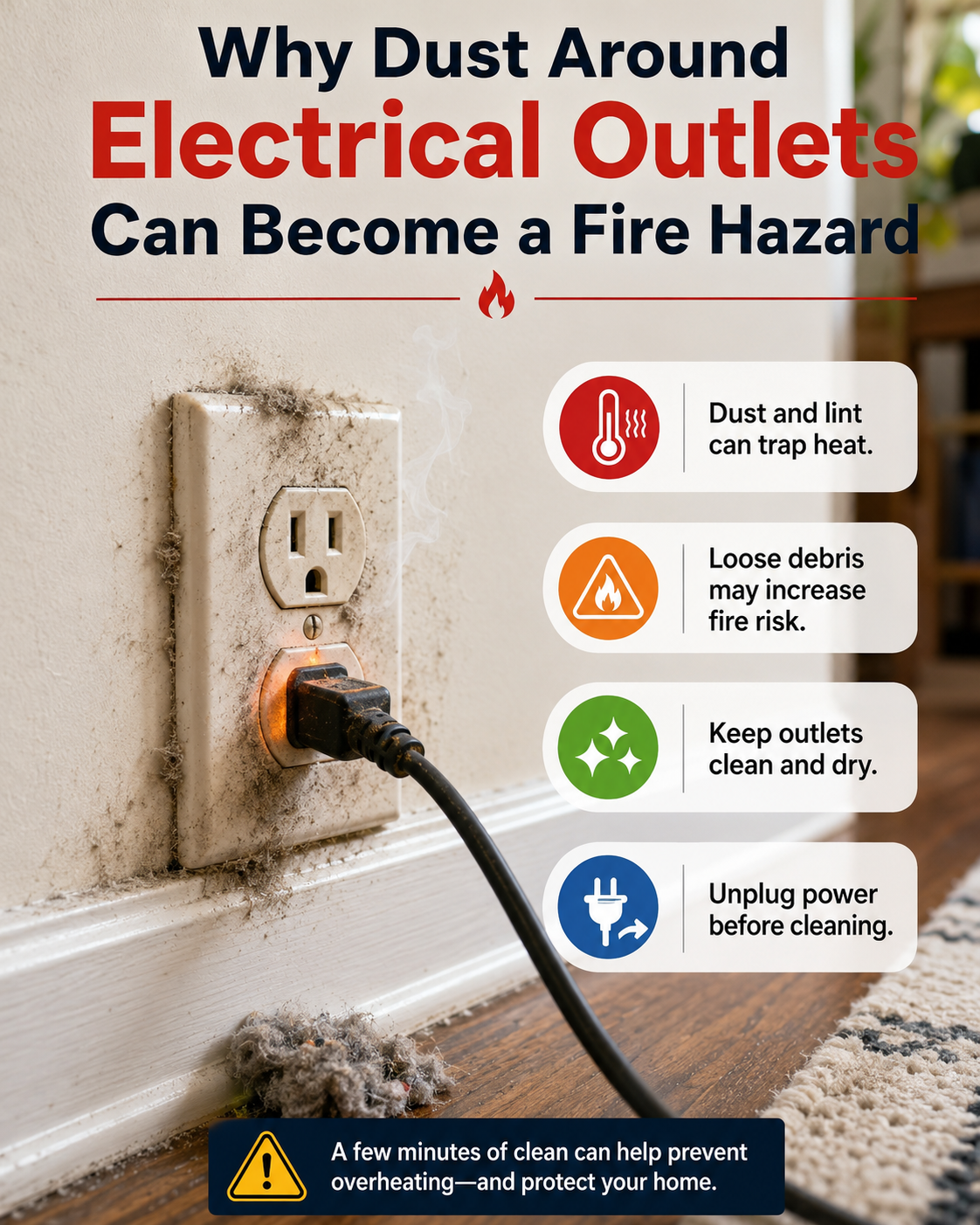
It may not seem like a big deal. A little gray fuzz behind the couch or around a wall socket can feel like ordinary household clutter. But dust near electrical outlets deserves more attention than dust on a shelf. That is because outlets involve electricity, heat, small gaps, plugged-in devices, and sometimes loose connections. When those things combine with dust, lint, pet hair, or debris, the situation can become more risky than it looks.
This does not mean every dusty outlet is about to cause a fire. Most homes have some dust, and panic is not helpful. But it does mean outlet areas should be part of normal home safety habits, especially in places where plugs stay connected for long periods.
Let’s look at why dust around outlets can matter, what mistakes make the risk worse, and how to keep these areas cleaner and safer without making it complicated.
Why Dust Around Outlets Can Be a Fire Concern
Dust is not just “dirt.” Household dust can contain fabric fibers, paper particles, hair, pet dander, skin flakes, pollen, and tiny bits of lint. Some of these materials can burn if exposed to enough heat or a spark.
An electrical outlet normally should not spark or become hot. But real homes are not always perfect. Plugs loosen over time. Outlets age. Power strips get overloaded. Furniture blocks airflow. Chargers stay plugged in all day and night. Dust settles into those hidden areas and may remain there unnoticed.
The risk usually comes from a combination of factors, not dust alone.
Dust Can Act Like Kindling
Think about lint in a dryer. A little lint may seem soft and harmless, but when it builds up near heat, it becomes a known fire hazard. Dust around outlets is not exactly the same situation, but the basic idea is similar.
Fine particles and fibers can ignite more easily than a solid object. If dust gathers around a plug, inside a power strip, or near a damaged cord, it may provide fuel if overheating or sparking occurs.
Again, dust by itself is not usually the cause of a fire. The bigger issue is that dust can make a small electrical problem more dangerous.
Outlets Can Generate Heat When Something Is Wrong
A properly working outlet should stay cool during normal use. But heat can build up when a plug does not fit snugly, a connection is loose, or a device is drawing more power than the outlet or power strip should handle.
When dust is packed around the outlet faceplate, behind furniture, or near a power adapter, heat may not escape as easily. That trapped heat can make an already poor situation worse.
This is especially common in hidden areas, such as behind a bed, entertainment center, couch, or desk. Because no one sees the outlet often, dust and heat problems can go unnoticed.
Common Places Where Dust Builds Up Around Electrical Areas
Outlets behind sofas, beds, dressers, bookshelves, and TV stands often collect dust for months or even years. These areas also tend to have plugged-in lamps, phone chargers, extension cords, or power strips.
The problem is that furniture can press against cords, bend plugs, and block airflow. If dust collects at the same time, the outlet area becomes less ideal.
Around Entertainment Centers
TVs, game consoles, routers, soundbars, streaming devices, and lamps often share the same general outlet area. This can lead to crowded plugs, power strips, and tangled cords.
Electronics also attract dust. Warm devices create air movement, and static electricity can pull dust toward cables and vents. Over time, the whole area behind a TV stand can become a nest of lint, hair, and cable clutter.
Home Offices and Desk Areas
Many people now have a work-from-home setup with monitors, laptops, chargers, printers, lamps, speakers, and phone cables. It is easy for a power strip to sit under a desk where dust gathers around it.
A power strip on the floor is especially likely to collect dust, crumbs, hair, and pet fur. If it is tucked behind a desk leg or under a pile of cords, it may not be cleaned often.
Bedrooms
Bedrooms often have outlets behind nightstands and beds. These outlets may hold phone chargers, lamps, heated blankets, humidifiers, fans, or white noise machines.
Because beds and nightstands are not moved every week, dust can collect quietly. Fabric from blankets, pillows, rugs, and clothing can also add more lint to the area.
Garages, Basements, and Utility Rooms
These spaces may have more dust, sawdust, cardboard, storage bins, tools, or seasonal decorations. Outlets in garages and basements may also power freezers, battery chargers, holiday lights, or equipment.
Any area with extra dust and stored materials should be treated with more care around electrical connections.
Everyday Mistakes That Make Dust Around Outlets Riskier
Power strips are useful, but they are not meant to be buried in dust, rugs, blankets, or clutter. When a power strip sits on the floor, it naturally collects debris.
It may also get stepped on, kicked, pushed behind furniture, or covered by bags and papers. That can loosen plugs or damage the strip over time.
A cleaner setup is to keep power strips visible, off soft surfaces, and away from heavy dust buildup whenever possible.
Plugging Too Many Devices Into One Area
Many people use one outlet to support several devices. One wall outlet may connect to a power strip, which connects to chargers, lamps, electronics, and sometimes another extension cord.
This kind of crowding can create heat and confusion. It also makes cleaning harder. Dust gets trapped between cords, plugs, and adapters.
Not every device uses a lot of power, but high-wattage items need more care. Space heaters, hair dryers, microwaves, toaster ovens, and similar appliances should not be treated like small phone chargers.
Ignoring Loose Plugs
A plug should fit firmly into an outlet. If it slips out easily, hangs loosely, or feels unstable, that is a warning sign.
Loose connections can lead to heat or arcing. Arcing is when electricity jumps across a small gap, which may create sparks. If dust, lint, or debris is nearby, the risk becomes more concerning.
If an outlet no longer holds plugs securely, it is better to stop using it and have it checked by a qualified professional.
Covering Cords With Rugs or Furniture
People sometimes hide cords under rugs to make a room look cleaner. It may seem harmless, but it can create problems. Cords under rugs can be walked on, bent, crushed, or overheated.
Furniture can also pinch cords against the wall. A damaged cord near a dusty outlet is not something to ignore.
A safer habit is to route cords where they are visible enough to inspect and not pressed tightly under heavy objects.
Forgetting About Old Chargers
Phone chargers, laptop adapters, and small power bricks can stay plugged in for months. Some may sit behind nightstands or under beds where dust gathers.
A charger that becomes unusually warm, has a frayed cable, or makes a buzzing sound should not be ignored. Cheap, damaged, or mismatched chargers can also be more concerning than people realize.
Warning Signs Around Outlets You Should Not Brush Off
A little dust is common. But certain signs suggest something more serious may be happening. These signs are worth taking seriously.
The Outlet Feels Warm or Hot
An outlet or plug should not feel hot during normal use. Slight warmth from some adapters can be normal, especially with laptop chargers or power bricks, but the wall outlet itself should not feel noticeably hot.
If the outlet, plug, or faceplate feels hot, unplug devices if it is safe to do so and avoid using that outlet until it has been inspected.
You Notice a Burning Smell
A burning, smoky, or melting-plastic smell near an outlet is a major warning sign. Sometimes the smell is faint and comes and goes. Do not assume it is nothing.
Dust can smell when heated, but electrical burning smells are different and should be taken seriously. If there is visible smoke, active sparking, or immediate danger, follow your local emergency procedures.
The Outlet Has Dark Marks or Discoloration
Brown or black marks around an outlet, plug, or power strip may suggest overheating or arcing. Discoloration is not normal wear.
Do not simply wipe it off and keep using the outlet. The mark may be a clue that something inside the outlet or plug is not working safely.
Plugs Spark Often
A tiny spark when plugging in certain devices can sometimes happen, but repeated sparking is not something to ignore. Large sparks, frequent sparks, popping sounds, or sparks from a loose outlet are warning signs.
Dust nearby can make this more concerning because sparks and dry fibers are a bad combination.
Lights Flicker When You Use the Outlet
If plugging in a device causes lights to flicker, the outlet buzzes, or the power cuts in and out, there may be a wiring or load issue. It is worth having the situation checked rather than guessing.
Simple Ways to Prevent Dust-Related Outlet Problems
The best prevention habits are not dramatic. They are simple, repeatable, and easy to add to regular cleaning.
Add Outlet Areas to Your Cleaning Routine
When you vacuum or dust a room, take a quick look at visible outlets. You do not have to deep-clean every outlet every day. Just build the habit of noticing them.
For hidden outlets, try checking behind major furniture every few months. If you have pets, carpet, or lots of electronics, you may want to check more often.
Use a dry microfiber cloth for the area around the faceplate. For dust on the floor near plugs and cords, a vacuum hose can help. Avoid spraying liquid cleaners directly onto outlets or power strips.
Unplug Before Cleaning Nearby
Before cleaning around a crowded outlet or power strip, unplug devices when practical. This makes it easier to move cords and remove dust safely.
Do not poke anything into the outlet slots. Cleaning should focus on the outside area, the wall plate, the floor, and the surrounding dust. If dust or debris appears to be inside the outlet, it is safer to have it handled properly rather than trying to dig it out yourself.
Keep Power Strips Visible and Clean
Power strips should not be buried behind piles of paper, fabric, or clutter. Try to place them where you can see them and clean around them.
If you use a power strip under a desk, consider mounting it to the side or back of the desk instead of leaving it flat on the floor. This can reduce dust buildup and make it easier to inspect.
Also check that plugs are inserted fully. Half-loose plugs collect dust and may create poor contact.
Give Heat-Producing Devices Space
Some devices naturally produce heat, including chargers, routers, computers, lamps, and power adapters. They need space around them.
Avoid covering power bricks with blankets, pillows, clothes, or papers. Do not let adapters sit in thick dust behind furniture. Heat plus dust plus poor airflow is the kind of combination you want to avoid.
Replace Damaged Cords and Old Power Strips
If a cord is frayed, cracked, crushed, or bent at a sharp angle, replace it. Electrical tape is not a long-term fix for a damaged cord.
Power strips also do not last forever. If one has burn marks, a loose switch, a buzzing sound, a melted area, or outlets that no longer hold plugs firmly, stop using it.
A power strip is cheaper to replace than the damage a bad one can cause.
Practical Room-by-Room Safety Habits
It helps to think about outlet safety by room because each area has different risks.
In the Living Room
Move the TV stand or entertainment center occasionally and vacuum behind it. Check for dust around the outlet, power strip, and cords. Make sure the cords are not crushed behind furniture.
Try not to stack multiple adapters in a tight space. If the area looks like a tangled nest of cables, take a few minutes to organize it. Cable ties can help, but do not wrap cords too tightly because that can trap heat.
In the Bedroom
Check behind nightstands and beds. This is especially important if you charge your phone overnight or use lamps, fans, humidifiers, or heated bedding.
Keep blankets, pillows, and curtains away from outlets and power strips. If your charger feels unusually hot or the cable is damaged, replace it.
In the Home Office
Look under your desk. This is one of the most common places for dust, cords, and power strips to pile up together.
Keep papers, bags, and fabric items away from power strips. If you have several electronics, make sure the power setup is not overloaded. For expensive electronics, a quality surge protector may be useful, but it still needs to be used properly and kept clean.
In the Kitchen
Kitchen outlets may be near crumbs, grease, and moisture. Keep outlet areas clean and dry. Avoid plugging too many high-power appliances into the same area.
Small appliances like toaster ovens, coffee makers, air fryers, and microwaves can draw significant power. They should be used with more care than small electronics.
In the Garage or Basement
Sweep or vacuum dust and debris around outlets. Keep cardboard, paper, rags, and sawdust away from electrical connections.
If you use battery chargers or tools, make sure they are not sitting in dust piles or near flammable clutter. Garages often have more hidden fire risks simply because storage builds up over time.
What About Outlet Covers?
Outlet covers can be helpful in certain situations, especially for child safety. But they are not a replacement for clean, well-maintained outlets.
For unused outlets, simple covers may help keep dust out of the slots. However, the area around the outlet can still collect dust. Covers should also fit properly and not create a false sense of security.
If you have small children, use child-safety products that are appropriate for your home, and follow the product instructions carefully.
A Simple Monthly Outlet Check
You do not need a complicated inspection routine. A simple monthly check can go a long way.
Walk through your home and look at the outlets you use most often. Ask yourself:
Is there visible dust, lint, or pet hair around the outlet?
Are plugs fully inserted and secure?
Does anything feel warm, smell odd, or look discolored?
Are cords bent, crushed, or frayed?
Is a power strip buried under clutter?
This quick check may take only a few minutes. The goal is not to worry over every outlet. The goal is to catch small problems before they become bigger ones.
When to Get Help
Some tasks are fine for homeowners or renters to handle, such as vacuuming dust around cords or replacing a damaged charger. But outlet problems themselves should be treated carefully.
If an outlet is loose, hot, discolored, buzzing, sparking repeatedly, or not holding plugs securely, it is wise to stop using it and contact a qualified electrician or your property manager.
For renters, report outlet problems instead of trying to repair them yourself. For homeowners, avoid DIY electrical repairs unless you are properly trained and know what you are doing.
Electricity is one of those areas where guessing is not worth it.
The Calm Takeaway
Dust around outlets is easy to ignore because it does not look dramatic. It sits quietly behind furniture, under desks, and beside power strips. But because dust can contain flammable fibers and outlets can become hot or spark when something is wrong, it deserves a place in your regular home safety routine.
The good news is that prevention is simple. Keep outlet areas clean. Do not bury power strips under clutter. Replace damaged cords. Pay attention to warmth, burning smells, discoloration, buzzing, and loose plugs. Move furniture once in a while and check the outlets hiding behind it.
You do not need to be anxious about every speck of dust. Just build a habit of noticing the places where electricity, heat, cords, and dust come together. A few minutes of cleaning and checking can make your home feel safer, calmer, and better cared for.
Hi, I’m the creator and editor behind ZestyHabit. I research everyday safety, first aid, and practical wellness topics using official guidance and reliable public sources, then turn that information into clear, realistic steps for daily life.
My goal is to help readers make safer, better-informed choices at home and beyond.
[…] a building problem only when they land on a damp surface with enough material to support growth. Dust around an air vent can provide that material, while condensation supplies the […]
Loading…
Discover more from
Subscribe now to keep reading and get access to the full archive.



[…] a building problem only when they land on a damp surface with enough material to support growth. Dust around an air vent can provide that material, while condensation supplies the […]