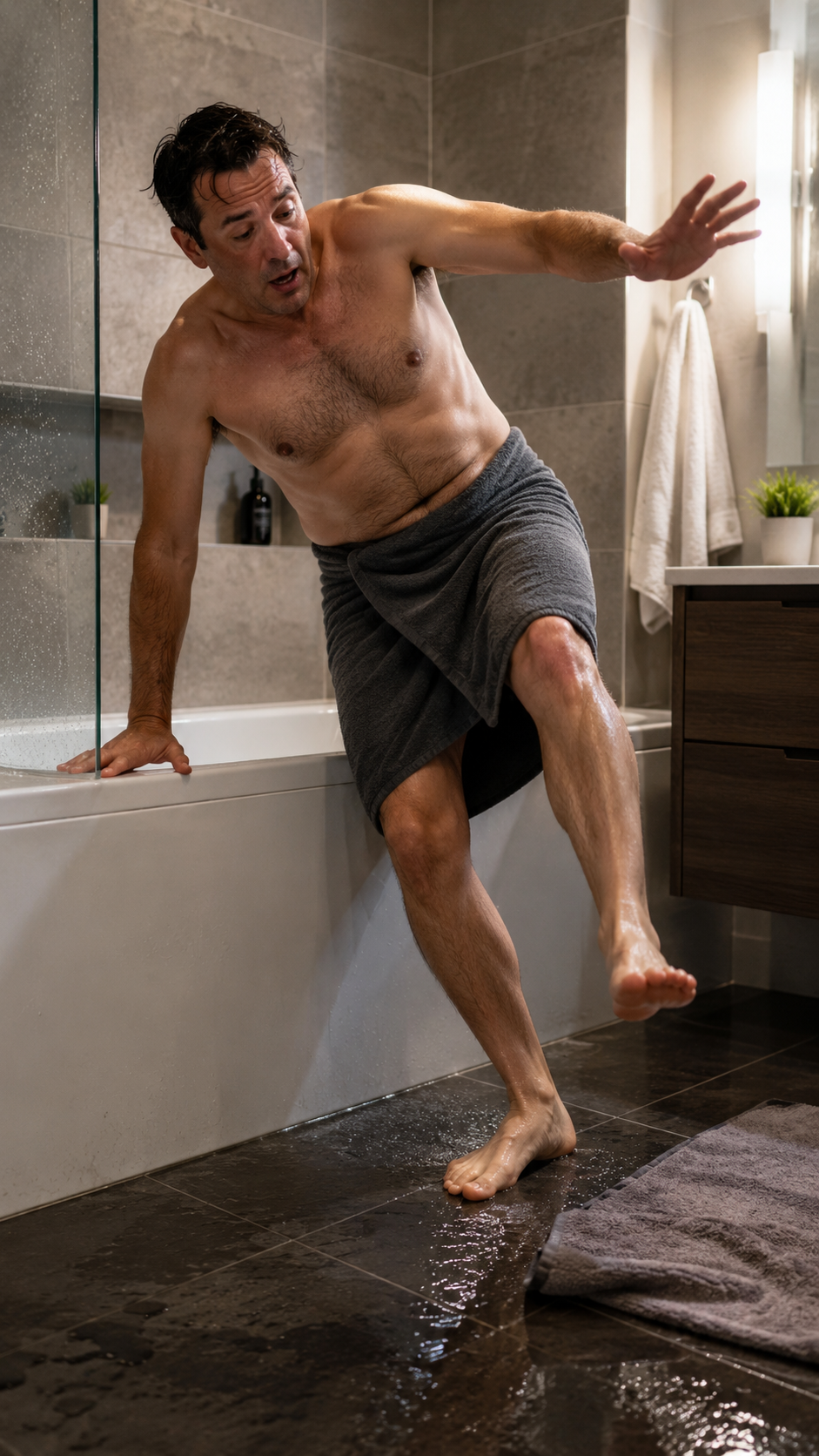
The riskiest part of taking a bath is often the moment you stand up and step out. Learn why slips happen, what warning signs to watch for, and simple bathroom safety habits that help prevent falls.

The Quietly Risky Moment After a Bath
A bath can feel like one of the calmest parts of the day.
The water is warm. The room is steamy. Your muscles feel relaxed. Maybe you stayed in longer than planned because it felt so good after a long day.
Then comes the part most people do without thinking: standing up and getting out of the tub.
That simple movement can be one of the most dangerous moments in the bathroom.
Not because bathing is unusual or scary, but because several small risks meet at once. Your feet are wet. The tub surface may be slippery. Your body has been warm and relaxed. You may feel slightly lightheaded. The edge of the tub is high enough to trip over. Soap residue, shampoo, bath oil, or conditioner may be on the floor. And if there is no stable grab bar, people often reach for whatever is nearby: a towel bar, shower curtain, sink edge, or sliding door track.
Those are not designed to support body weight.
The good news is that most bathtub slip risks can be reduced with simple habits. You do not need a full bathroom renovation to make getting out of the tub safer. You just need to understand when the risk is highest and set up the space so your body has traction, support, and time.
Why Getting Out of the Tub Is Riskier Than Getting In
Most people are careful when they get into a bathtub. They know the surface may be wet, so they step slowly.
Getting out is different. You may be relaxed, distracted, or in a hurry. You may assume the hardest part is over.
But getting out often requires more balance than getting in.
You have to shift from sitting or reclining to standing. Then you have to lift one leg over the tub wall while standing on a wet surface. At the same time, you may be reaching for a towel, turning off water, avoiding a bath mat that has shifted, or trying not to drip water on the floor.
That combination makes the exit moment tricky, especially for children, older adults, pregnant people, anyone recovering from an injury, and anyone who feels dizzy when standing.
Even healthy adults can slip if the surface is slick enough.
The Most Dangerous Moment: Standing Up Too Quickly
The riskiest moment is often not the step over the tub wall. It is the few seconds before that, when you rise from the bath.
After sitting in warm water, your body may feel loose and heavy. Warm water can make you feel relaxed, and standing too quickly may cause a brief dizzy or unsteady feeling. Some people notice this more after a hot bath, a long soak, alcohol, dehydration, fatigue, or standing up late at night.
You may not faint or feel seriously ill. You may just have a split second where your balance feels off.
That is all it takes in a slippery tub.
A safer habit is to pause before standing. Sit upright for a moment. Let the water drain if needed. Place both feet flat. Hold a stable support. Stand slowly. Pause again before stepping over the tub wall.
This may sound overly careful, but it takes only a few seconds.
Why Wet Feet and Smooth Tubs Are a Bad Combination
Bathtubs are designed to hold water, not always to provide great traction.
A tub floor can become slippery from:
Soap
Shampoo
Conditioner
Body wash
Bath oil
Bubble bath
Shaving cream
Cleaning residue
Hard water film
Mildew or biofilm
Smooth acrylic or porcelain surfaces
Even a clean tub can be slick when wet. Add conditioner or bath oil, and the surface can become surprisingly slippery.
Feet also lose grip when they are wet. If you place one foot on the tub floor and start lifting the other leg over the side, your full weight is briefly on one slippery foot. That is when many slips happen.
The Tub Wall Creates a Tripping Point
Stepping over the side of a bathtub is not like walking across a flat floor.
You have to lift your leg, shift your weight, and clear the tub edge. If your foot catches on the side, you may stumble forward, backward, or sideways.
This is especially difficult when:
The tub wall is high
The bathroom floor is wet
The bath mat has moved
You are holding a towel
You are rushing
The room is dim
You have stiff knees, hips, or ankles
You are tired or lightheaded
For many people, the safest method is to slow the movement down and use support. Step one foot out fully, place it on a stable non-slip bath mat, then bring the other foot out. Avoid twisting your body quickly while stepping over the edge.
The Problem With Grabbing the Wrong Thing
When people feel unsteady, they reach for whatever is closest.
In bathrooms, that might be:
A towel bar
A shower curtain
A glass shower door
A soap dish
A sink edge
A toilet tank
A loose shelf
A sliding door rail
The problem is that many of these are not weight-bearing supports.
A towel bar may pull out of the wall. A shower curtain can rip away. A sliding glass door can shift or break. A soap dish can crack. A sink edge may be too far away or wet.
A proper grab bar is different. It is designed and installed to support weight. If someone in the household has balance concerns, mobility issues, pregnancy-related instability, joint pain, or is aging in place, grab bars can make a major difference.
Even for younger adults, a properly placed grab bar makes bathtub exits feel more controlled.
Common Mistakes That Make Bathtub Exits Riskier
Leaving the floor wet
A wet bathroom floor can be just as dangerous as a slippery tub.
Water may drip from your body, splash over the edge, or collect near the bath mat. If the floor is tile, vinyl, or polished stone, it can become slick quickly.
Keep a non-slip bath mat outside the tub and dry puddles promptly.
Using a loose towel instead of a mat
A towel on the floor may seem like a quick bath mat, but it can slide, bunch, or twist under your feet.
Use a bath mat with a non-slip backing. If the backing is worn out, replace it.
Rushing because the room feels cold
Many slips happen because someone wants to get out quickly. The room feels cold, the phone is ringing, the doorbell rings, or a child calls from another room.
Rushing and wet surfaces are a bad mix.
Before you bathe, prepare the towel, robe, and mat so you do not feel pressured to move fast.
Bathing with the lights too dim
Soft lighting is relaxing, but a dim bathroom makes it harder to see water on the floor, a shifted mat, soap residue, or the tub edge.
Use enough light when getting in and out, even if you prefer low light while soaking.
Letting soap and conditioner build up
Conditioner is especially slippery. If it drips onto the tub floor or lingers after a shower or bath, it can reduce traction.
Rinse the tub surface after bathing. Clean the tub regularly to remove film.
Placing bottles on the tub edge
Shampoo bottles, razors, bath products, and toys on the tub ledge can fall, roll, or make you reach awkwardly.
Keep the exit area clear. You should not have to step over clutter while stepping out of the tub.
Warning Signs Your Bathtub Setup Needs Attention
Your bathtub area may be riskier than you think if:
You feel unsteady when standing up
The tub floor feels slick even after cleaning
The bath mat slides
You grab the towel bar for balance
Water pools outside the tub
The tub edge feels too high
There is no stable support nearby
Kids slip during bath time
An older adult avoids bathing because it feels unsafe
You notice dizziness after hot baths
The bathroom floor stays damp for a long time
You have to step over clutter to get out
Any one of these is worth addressing. Several together mean it is time to make the area safer.
Simple Ways to Make Getting Out of the Tub Safer
Use a non-slip mat inside the tub
A non-slip mat or adhesive traction strips can help reduce slipping inside the tub.
Choose products designed for bathtub use, and keep them clean. Mats can trap soap residue or mildew underneath if they are not lifted and rinsed regularly.
If a mat no longer sticks well or curls at the edges, replace it.
Use a non-slip bath mat outside the tub
The floor outside the tub should also have traction.
Choose a mat that stays flat and has a reliable non-slip backing. Avoid old mats with worn rubber backing. Avoid placing a towel on the floor as your main safety surface.
After bathing, hang the mat to dry if needed.
Install a proper grab bar
A grab bar should be mounted securely into studs or installed with appropriate hardware for the wall type. It should not wobble.
Suction-cup grab bars may feel helpful for light balance support, but they can lose suction and should not be trusted the same way as properly installed bars. If you use one, check it every time and understand its limits.
For real support, a fixed grab bar is better.
Keep the exit path clear
Before bathing, look at the path from the tub to the towel, robe, and door.
Move laundry baskets, scales, bath toys, trash cans, cords, and stools away from the exit area.
You want a clean, dry, predictable landing spot.
Sit up before standing
Instead of rising from a fully reclined position, sit upright first. Let your body adjust.
Place your feet firmly on the tub floor. Hold a stable support. Stand slowly.
That pause can reduce the chance of dizziness or wobbling.
Drain some water first
If the tub is full, water movement can make standing feel less stable. Draining some water before standing may help.
It also reduces splashing when you step out.
Keep towels within easy reach
You should not have to stretch, twist, or step onto a wet floor just to grab a towel.
Place a towel or robe within safe reach before you get in. But do not hang it on the grab bar if that blocks your ability to hold the bar.
Special Safety Tips for Older Adults
Older adults face higher risk from bathroom falls because balance, strength, vision, reaction time, and joint mobility can change with age.
A safer bathtub setup may include:
A properly installed grab bar
A non-slip tub mat
A non-slip floor mat
A handheld showerhead
A shower chair or bath seat
Better lighting
A lower step-over option if remodeling
A clutter-free bathroom floor
Some people also find showers safer than baths, especially if stepping out of a deep tub is difficult. Others may use a transfer bench to sit while moving in and out.
The right setup depends on the person, the bathroom, and the level of mobility. The important thing is not to wait for a fall before making changes.
Special Safety Tips for Children
Children can slip in bathtubs because they stand, play, twist, jump, or reach for toys.
For kids:
Use a non-slip mat.
Keep bath toys away from the stepping area.
Teach sitting during bath time.
Do not let children climb in or out alone if they are too young.
Dry the floor after splashes.
Keep soap and shampoo from making the floor slick.
Supervise closely.
Children may also grab towel bars or shower curtains while climbing out. Teach them to wait for help and use safe hand placement.
Hot Baths and Dizziness
Hot baths can feel wonderful, but very warm water may leave some people feeling weak or lightheaded when they stand.
This can be more noticeable if you are tired, dehydrated, hungry, drinking alcohol, taking certain medications, pregnant, or sensitive to heat.
A few practical habits help:
Keep the bath comfortably warm, not overly hot.
Avoid very long soaks if they make you lightheaded.
Sit up slowly before standing.
Keep water nearby if you tend to feel dehydrated.
Do not rush out immediately after a hot soak.
Use support when standing.
If dizziness happens often or feels severe, it is worth discussing with a healthcare professional. For everyday safety, the main point is to give your body time to adjust before stepping out.
What About Shower-Tub Combos?
Many American bathrooms have a shower inside a bathtub. These can be especially tricky because people step over the tub wall every day while the surface is wet.
If you use a shower-tub combo:
Use traction strips or a mat inside the tub.
Use a non-slip mat outside.
Keep shampoo and conditioner off the floor.
Do not step out while rinsing soap from your feet.
Hold a grab bar, not the shower curtain.
Make sure the shower curtain stays inside the tub to prevent puddles.
Keep the floor dry between uses.
A shower-tub combo may feel routine, but it has the same stepping and slipping risks as a bath.
A Safer Step-Out Routine
Here is a simple routine that works for many people:
Before bathing, place a towel and non-slip mat where you need them.
When finished, sit upright for a moment.
Drain some water if the tub is full.
Place both feet flat and steady.
Hold a stable grab bar or safe support.
Stand slowly.
Pause before stepping over the edge.
Step onto the non-slip mat with one foot.
Bring the second foot out carefully.
Dry your feet before walking away.
This may sound like a lot written out, but in real life it is just a slower, more intentional exit.
When to Reconsider Your Bathroom Setup
It may be time to upgrade safety if:
Someone has already slipped or almost fallen
An older adult struggles to get out of the tub
A child often slips during bath time
The tub is unusually deep or high
The floor is very slippery
There is no place to hold safely
The bathroom is used at night
Someone has balance, vision, or mobility challenges
Bathing has become stressful
Small upgrades can make a big difference. A mat, a grab bar, better lighting, and a clear floor are often enough to improve daily safety.
Final Thoughts: The Risk Is in the Transition
The most dangerous moment in the bathtub is often the transition: going from warm, relaxed, and seated to standing, balancing, and stepping over a wet tub wall.
That moment combines slippery feet, smooth surfaces, warm-water lightheadedness, a high tub edge, and the natural urge to move quickly.
The safer approach is simple. Slow down. Use traction. Keep the floor dry. Install real support if needed. Keep towels close. Avoid grabbing towel bars or shower curtains. Teach kids to wait and move carefully. Pay attention to dizziness after hot baths.
A bath should end as calmly as it begins. With a few practical habits, getting out of the tub can become a steady, predictable routine instead of the riskiest part of the bathroom.
Leave a Reply