Elliptical Machine Precautions: How to Use It Without Overtraining
Minjin Park
·
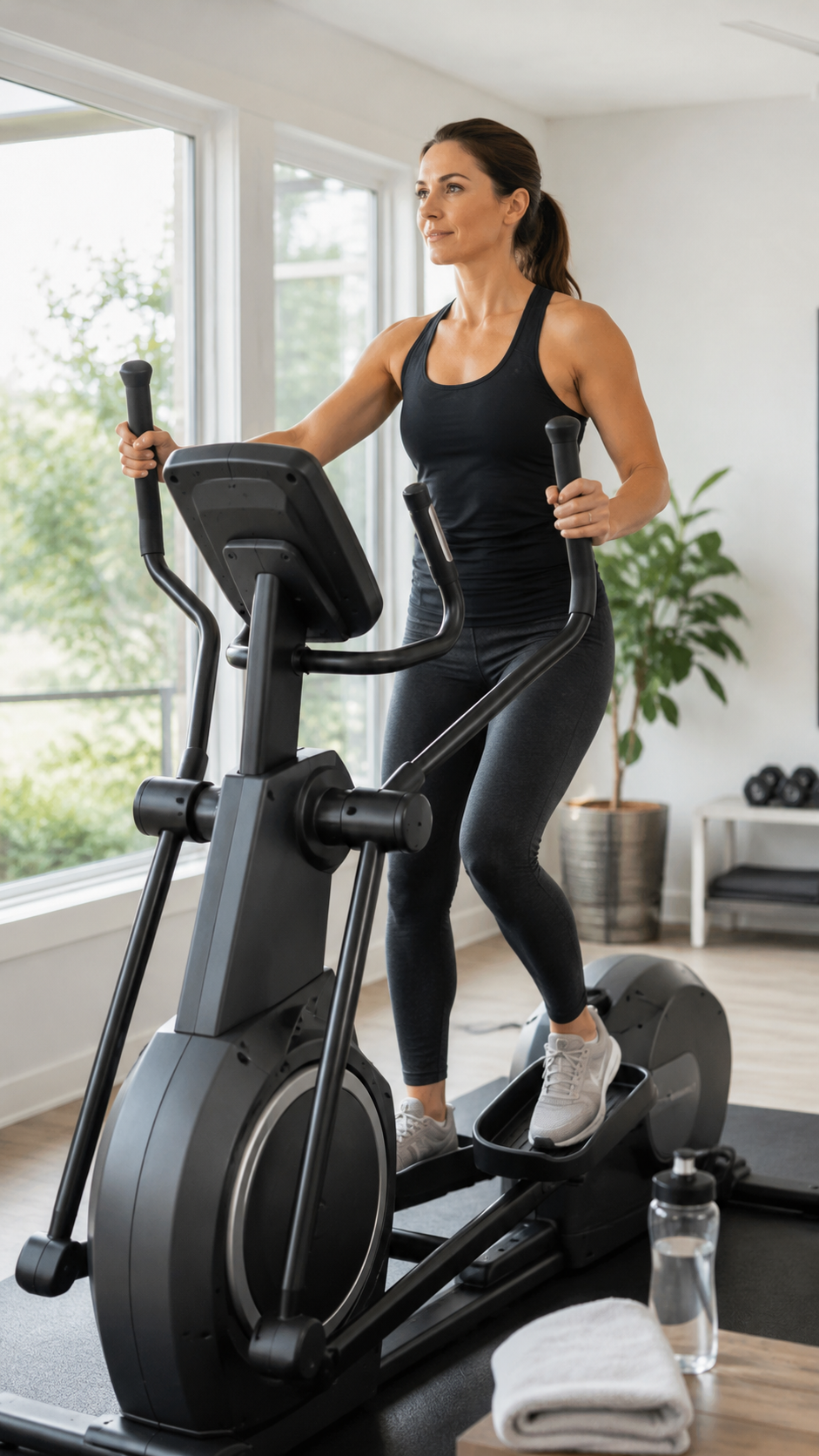
The elliptical machine is one of the most popular pieces of cardio equipment in the gym, and for good reason. It is low-impact, beginner-friendly, easy to adjust, and less intimidating than many other machines. You can step on, start moving, and get your heart rate up without needing complicated technique.
But “low-impact” does not mean “impossible to overdo.”
Because the elliptical feels smoother than running, many people stay on it longer than they planned. Others increase the resistance too quickly, lean heavily on the handles, or use it every day without enough recovery. Over time, this can lead to sore knees, tight hips, tired feet, lower back discomfort, or simply feeling worn down.
The elliptical can be a great tool for fitness, weight management, warm-ups, and general cardio. The key is using it with awareness. Resistance, posture, foot position, and weekly volume all matter.
If you are new to the elliptical or trying to use it more consistently, these precautions can help you get the benefits without accidentally overtraining.
The elliptical is gentle compared with high-impact exercises like running or jumping. Your feet stay on the pedals, so there is less pounding on the joints. That makes it appealing for beginners, people returning to exercise, or anyone who wants cardio without a lot of impact.
The problem is that smooth movement can be deceiving.
You may not feel tired right away. You may watch a show, listen to music, and keep going longer than expected. You may turn up the resistance because the machine still feels manageable. Then later, your legs feel heavy, your hips feel tight, or your energy crashes.
Overtraining on the elliptical may happen when:
You use it too frequently without rest
You increase duration too quickly
You set resistance too high
You ignore fatigue because the movement feels low-impact
You use poor posture
Your feet or knees are not positioned well
You combine hard elliptical sessions with other intense workouts
You do not eat, hydrate, or recover enough
The goal is not to fear the machine. It is to remember that cardio stress still counts, even when the workout feels smooth.
Start with a Manageable Duration
One of the easiest ways to avoid overtraining is to start with a reasonable workout length. Beginners do not need to do 60 minutes on the elliptical right away.
A good starting point may be 15–25 minutes at an easy to moderate pace. If that feels comfortable and you recover well, you can gradually add time.
A simple beginner progression might look like this:
Week 1: 15–20 minutes
Week 2: 20–25 minutes
Week 3: 25–30 minutes
Week 4: Add small changes only if your body feels good
You do not have to follow that exactly, but the principle matters: build slowly.
If you jump from no cardio to 45 minutes every day, your joints, muscles, and energy system may not appreciate the sudden change. Even low-impact exercise needs gradual adaptation.
You can organize elliptical sessions into different levels:
Easy sessions help with movement, recovery, and consistency. Moderate sessions build cardio fitness without leaving you drained. Hard sessions challenge your endurance or power, but should be used more carefully.
For most beginners, easy and moderate sessions should make up the majority of workouts. Hard sessions can be occasional, not daily.
If you finish every elliptical workout feeling exhausted, shaky, or completely depleted, you may be doing too much.
Use Resistance Carefully
Resistance is one of the main controls on the elliptical. Higher resistance makes each stride harder and can increase the work for your glutes, hamstrings, quads, and calves.
But more resistance is not always better.
If the resistance is too high, you may start pushing with poor form. Your knees may feel strained. Your hips may rock side to side. Your posture may collapse. You may grip the handles too tightly just to keep moving.
A good resistance level should feel challenging but smooth. You should still be able to maintain control and breathe steadily.
Signs the resistance may be too high:
You have to lean heavily on the handles
Your steps become choppy
Your knees feel pressure
Your lower back tightens
You cannot keep a steady rhythm
Your feet push hard into the pedals
You feel exhausted very early
Start lower than you think. Once your body adapts, increase resistance gradually.
Pay Attention to Posture
Good posture makes the elliptical safer and more effective. Poor posture can create unnecessary tension in the lower back, neck, shoulders, and wrists.
Try to stay tall while using the machine. Your chest should be open, your shoulders relaxed, and your core lightly engaged.
Avoid leaning forward heavily onto the handles. This is one of the most common elliptical habits. It may make the workout feel easier, but it can reduce the work your legs are doing and place more pressure on your wrists, shoulders, and lower back.
You do not need to stand stiffly. Just avoid collapsing into the machine.
Use the Handles Without Hanging on Them
Elliptical handles can help with balance and upper-body movement. But they should not carry your body weight.
If you are pushing and pulling aggressively with the handles, or leaning on them for support, your posture may suffer. Your shoulders and neck may also become tense.
Use the handles lightly. Let your arms move naturally. Keep your grip relaxed.
If your machine has stationary handles and moving handles, you can switch depending on your goal. Stationary handles may help you focus on lower-body control. Moving handles can add upper-body involvement. Either way, your torso should remain stable.
A simple test: if you briefly loosen your grip and feel like you might fall forward, you are probably leaning too much.
Keep Your Feet Flat and Stable
Foot position matters more than many people realize. On the elliptical, your feet stay on the pedals, but they should not slide around or press awkwardly into one area.
Try to keep your feet mostly flat on the pedals. Avoid staying high on your toes the whole time. This can increase calf fatigue and may contribute to foot discomfort or numbness.
Some heel lift may happen naturally depending on the machine and your stride, but your weight should not be jammed into your toes.
Pay attention to:
Feet centered on the pedals
Weight spread through the whole foot
Knees tracking in line with toes
No excessive ankle rolling
No gripping with the toes
Shoes staying secure
If your feet go numb, it may be from pressure, shoe tightness, long duration, or staying in one position too long. Try adjusting your foot placement, loosening your shoes slightly, or taking breaks.
Watch Your Knee Tracking
Even though the elliptical is low-impact, your knees still repeat the same motion many times. If your knees collapse inward or drift outward with every stride, discomfort can build.
Your knees should generally follow the direction of your toes. They do not need to look perfectly robotic, but they should not wobble dramatically.
Poor knee tracking can happen when:
Resistance is too high
Feet are placed unevenly
Hips are weak or tired
You are moving too fast
The machine stride length does not fit your body
You are leaning heavily on the handles
Slow down and check your form. If your knees feel better at a lower resistance or slower pace, that is useful information.
Adjust Speed Before You Lose Control
Speed can make the elliptical feel more exciting, but going too fast may reduce control. When your legs are flying and the machine is carrying your momentum, your form can become sloppy.
A fast pace is not automatically better. A controlled pace is usually more useful.
If you notice bouncing, wobbling, foot sliding, or heavy handle gripping, slow down. You should be moving the machine, not being dragged by it.
Beginners often do well with a pace that allows steady breathing and stable posture. As your fitness improves, you can add short faster intervals if your form stays clean.
Be Careful with Long Daily Sessions
Because the elliptical is easy to access, some people use it every day for long periods. This may be fine for some experienced exercisers, but beginners should be cautious.
Daily long sessions can lead to overuse, especially if you are also walking a lot, lifting weights, doing classes, or dieting aggressively.
Signs you may be doing too much include:
Legs feel heavy most days
Motivation drops suddenly
Sleep gets worse
Resting heart rate feels higher than usual
Knees, hips, or feet feel irritated
You feel unusually tired after normal activities
Performance gets worse instead of better
You dread workouts you used to enjoy
Exercise should build you up over time. If every session leaves you more depleted, your body may need less volume or more recovery.
Add Rest and Low-Intensity Days
Rest is not wasted time. It is where your body adapts.
You do not need to be completely inactive on rest days, but you should avoid making every day a hard cardio day. Gentle walking, stretching, mobility work, or light movement can support recovery without adding too much stress.
A beginner weekly plan might include:
2–4 elliptical sessions
1–2 strength training sessions
1–2 easier recovery days
Walking or light movement as desired
This is just an example. The right amount depends on your fitness level, goals, schedule, and recovery.
The main idea is to give your body room to respond.
Combine the Elliptical with Strength Training
Using only the elliptical can improve cardio fitness, but strength training helps support your joints, posture, and overall movement quality.
Strength work can help reduce overuse by making your muscles better prepared for repeated motion.
Helpful exercises may include:
Glute bridges
Bodyweight squats
Step-ups
Calf raises
Rows
Planks
Dead bugs
Hip hinges
Side steps
Light lunges, if comfortable
You do not need a complicated routine. Two short strength sessions per week can make a noticeable difference for many beginners.
Stronger glutes, hips, core, and legs can help you use the elliptical with better alignment and less fatigue.
Warm Up Before Increasing Intensity
The elliptical is sometimes used as a warm-up, but if you plan to train hard on it, you still need to ease in.
Start with 5 minutes at a low resistance and comfortable pace. Let your joints and breathing adjust. Then gradually increase speed or resistance.
Avoid stepping on the machine and immediately setting it to a high level. Your muscles may not be ready, and your form may suffer.
That beginning and ending matter. They help your body transition in and out of effort.
Use Intervals Carefully
Intervals can be useful, but they are also easy to overdo. Alternating hard and easy periods can improve fitness, but beginners should keep intervals short and controlled.
For example:
30 seconds harder 90 seconds easy Repeat 5–8 times
This is usually more manageable than doing long, intense pushes with poor form.
Avoid doing hard intervals every day. One or two interval sessions per week may be enough for many people, especially if you are also doing strength training or other cardio.
If intervals leave you drained for days, reduce the intensity, number of rounds, or frequency.
Do Not Ignore Foot Numbness
Foot numbness is a common complaint on the elliptical. It may happen because your feet stay planted in one position for a long time, pressure builds under the toes, or shoes are too tight.
To reduce numbness:
Keep your feet flat
Avoid pressing only through the toes
Shift your foot position slightly during breaks
Wear comfortable shoes
Do not tie laces too tightly
Take short pauses during longer sessions
Reduce resistance if you are pushing hard through the forefoot
If numbness continues often, try a different machine or talk with a professional. Persistent numbness should not be ignored.
Listen to Your Hips and Lower Back
The elliptical can sometimes create hip tightness or lower back discomfort, especially if the stride length does not fit your body or your posture is poor.
If your hips feel pinchy, your lower back tightens, or you feel awkward with the machine’s motion, do not force it.
Try:
Lowering resistance
Slowing down
Standing taller
Reducing workout duration
Using a different elliptical model
Taking breaks
Adding hip mobility and glute strength work
Not every elliptical feels the same. Some have longer strides, steeper paths, or different pedal angles. A machine that feels great for one person may feel awkward for another.
Avoid Using the Elliptical Only to “Burn Calories”
The calorie number on the machine can be motivating, but it is not always accurate. If you chase calorie burn every session, you may end up doing too much too often.
A healthier approach is to focus on:
Consistency
Better endurance
Good posture
Comfortable breathing
Gradual progress
Recovery
Enjoyment
The elliptical is a tool, not a punishment. Using it only to cancel out food or force weight loss can make overtraining more likely.
You can still have goals. Just make sure your body is recovering well.
Hydrate and Fuel Properly
Even though the elliptical is indoors and low-impact, you can still sweat a lot. Dehydration can make workouts feel harder and recovery worse.
Drink water before and after your session. For longer or sweatier workouts, keep a bottle nearby.
Also, avoid doing hard elliptical sessions when you are severely under-fueled. If you are dieting, exercising daily, and not eating enough, fatigue can build quickly.
A light snack before exercise may help if you feel weak or dizzy during workouts.
Know When to Stop
Pushing through mild effort is part of exercise. Pushing through warning signs is not.
Stop or reduce intensity if you feel:
Dizziness
Chest discomfort
Sharp knee or hip pain
Foot numbness that worsens
Lower back pain
Unusual shortness of breath
Nausea
Loss of balance
Extreme fatigue
You can always pause, lower the resistance, or end the session. One shorter workout will not ruin your progress. Ignoring warning signs can create bigger setbacks.
Track Recovery, Not Just Workouts
Many people track minutes, calories, distance, or resistance. Those numbers can be useful, but recovery matters too.
After your workout, ask:
Do I feel energized or drained?
Are my legs sore for too long?
Is my sleep okay?
Do I feel motivated for the next session?
Are my joints comfortable?
Am I improving gradually?
If the answer is mostly positive, your routine is probably manageable. If you feel worse week after week, adjust the plan.
Fitness should trend upward over time. More exercise is not always the answer. Better balance often is.
Final Thoughts
The elliptical machine can be a great way to build cardio fitness without the pounding of higher-impact workouts. It is smooth, convenient, and beginner-friendly. But it still needs to be used wisely.
Start with manageable sessions. Use resistance carefully. Keep your posture tall, your grip light, and your feet stable. Watch your knee tracking, avoid daily hard sessions, and give your body time to recover.
The goal is not to spend the longest possible time on the machine or max out the resistance every day. The goal is to train in a way you can repeat consistently without feeling worn down.
When you use the elliptical with control and patience, it can become a reliable part of your routine — not something that leaves you tired, sore, or overtrained.
Hi, I’m the creator and editor behind ZestyHabit. I research everyday safety, first aid, and practical wellness topics using official guidance and reliable public sources, then turn that information into clear, realistic steps for daily life.
My goal is to help readers make safer, better-informed choices at home and beyond.