
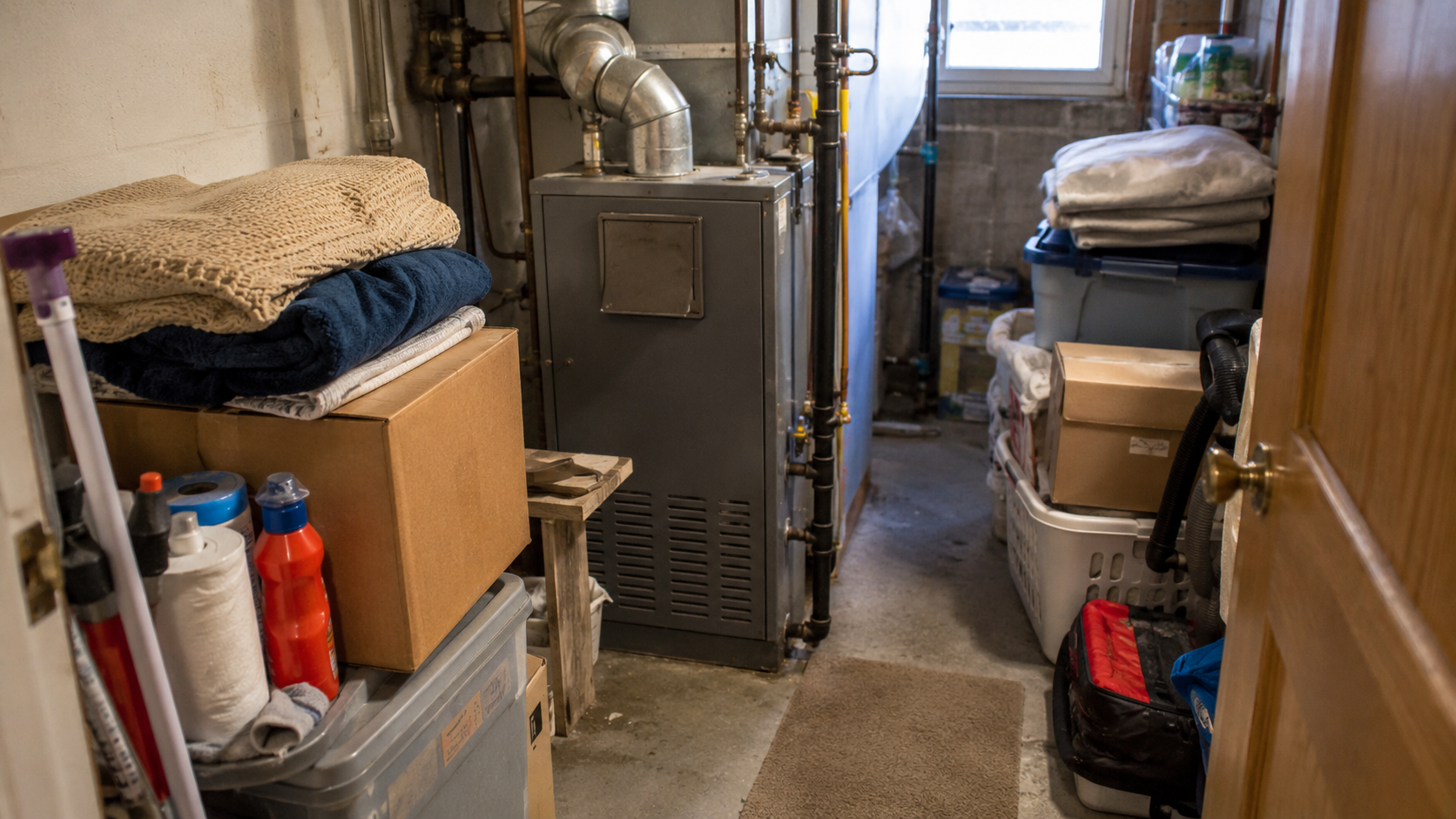

Storing boxes, cleaners, laundry, or household clutter near a boiler or furnace can create fire, airflow, and maintenance risks. Learn what to keep away and how to make your utility area safer in winter.
The Winter Storage Habit Many Homes Fall Into
Winter has a way of making storage problems worse.
Holiday decorations come out. Extra blankets appear. Snow shovels, boots, space heaters, humidifiers, wrapping paper, and storage bins all seem to need a place. Before long, the basement, garage, laundry room, or utility closet becomes a “temporary” storage zone.
And sometimes, that storage zone creeps closer and closer to the boiler, furnace, water heater, or heating equipment.
At first, it may not look like a big deal. A cardboard box next to the boiler. A laundry basket near the furnace. A few paint cans in the utility room. A stack of towels beside the water heater. Maybe the equipment has always been there, quietly doing its job, so it feels harmless.
But storing items around a boiler or furnace can create real household safety concerns. The main issues are fire risk, blocked airflow, poor access for maintenance, possible damage to equipment, and delayed response if something goes wrong.
This does not mean every utility room needs to be empty and spotless. Real homes have storage needs. But heating equipment needs breathing room, clear access, and separation from combustible items.
A safer winter habit is simple: keep the area around heating equipment clear, dry, visible, and easy to reach.
Why the Area Around a Boiler or Furnace Matters
A boiler or furnace is not just another appliance. It produces heat, often uses fuel or electricity, and may rely on proper airflow and venting to work safely.
During winter, it may run for long periods. That means small problems around it can matter more than they would in summer.
If storage blocks vents, traps heat, or crowds the equipment, the system may not operate as intended. If flammable items sit too close, they may be exposed to warmth, sparks, pilot flames, burners, hot surfaces, or electrical components. If a technician needs to inspect or repair the unit, clutter can slow them down.
The issue is not only whether something is touching the boiler. It is whether the space around it stays clear enough for safe operation and easy access.
What Kinds of Items Are Risky Near Heating Equipment?
Cardboard boxes
Cardboard is one of the most common storage items in basements and utility rooms. It is also combustible.
A box may seem safe because it is not directly on top of the boiler. But cardboard can dry out, collect dust, shift over time, or get pushed closer to equipment. It can also block airflow or make it harder to see leaks, rust, or unusual conditions.
Holiday boxes, shipping cartons, appliance boxes, and moving boxes should be stored away from heating equipment.
Paper products
Paper towels, tissues, wrapping paper, newspapers, manuals, old mail, and paper bags do not belong near a boiler or furnace.
These items are light, easy to ignite, and easy to forget. A loose sheet of paper can move with air currents and end up closer to equipment than where you originally placed it.
Laundry and fabric
Laundry baskets, towels, bedding, coats, curtains, cleaning rags, and blankets should be kept away from heating equipment.
Fabric can trap heat, absorb moisture, and collect dust. A towel placed “just for a minute” near a furnace or boiler may be forgotten.
Dryer-related items deserve extra care if the utility area also includes laundry appliances. Lint, fabric, and heat are not a great combination.
Paint, solvents, and chemicals
Paint cans, paint thinner, gasoline, lighter fluid, aerosol sprays, cleaning chemicals, pesticides, and automotive products should not be stored near boilers, furnaces, or water heaters.
Some products release vapors. Some are flammable. Some containers may leak or degrade over time. A utility room may feel like a convenient place for “garage-type” products, but heating equipment and chemical storage should be separated.
Plastic bins and bags
Plastic storage bins are tidier than cardboard, but they are not automatically safe near heat.
Plastic can soften, warp, or melt if exposed to enough heat. Plastic bags can shift, sag, or block openings. If you use plastic storage bins in a basement or garage, keep them away from the boiler or furnace and leave a clear path around the equipment.
Cleaning supplies and mops
Cleaning products, mop buckets, brooms, and dusters often end up in utility rooms. Some are fine to store in a separate area, but they should not crowd heating equipment.
Brooms, dusters, and mop heads can gather dust and fibers. Liquid cleaners may spill. Aerosols and flammable products are especially poor choices near heat sources.
The Airflow Problem: Heating Equipment Needs Space
Many heating systems need proper airflow for combustion, cooling, or ventilation.
If boxes, bins, curtains, or stored items block vents or openings, the equipment may struggle to work correctly. Poor airflow can affect efficiency, create overheating issues, or contribute to unsafe operating conditions depending on the system.
This matters even if the equipment still “turns on.” A furnace or boiler may run while still being crowded by clutter. That does not mean the setup is safe or ideal.
If your boiler or furnace has visible vents, intake openings, exhaust pipes, or service panels, keep them unobstructed. Do not lean storage bins against them. Do not hang fabric in front of them. Do not use the equipment itself as a shelf.
The Fire Risk: Small Items Can Become Big Problems
Heating equipment is designed to contain heat safely. But it still creates heat, and in some systems, flame or ignition is part of normal operation.
Combustible storage nearby increases the chance that an ordinary heating cycle becomes a problem.
Common fire-friendly clutter includes:
Cardboard
Paper
Dry leaves tracked into the garage
Rags
Old towels
Laundry
Plastic bags
Aerosol cans
Paint or solvents
Wood scraps
Holiday decorations
Dust and lint
The risk is often gradual. Things are not dangerous one day and safe forever. A stack shifts. Dust builds up. A box gets pushed closer. A child or pet moves something. A maintenance panel gets covered. A small leak goes unnoticed.
Clear space gives you a buffer.
The Maintenance Problem: Clutter Hides Warning Signs
A utility room should let you see the equipment clearly.
If the area is packed with boxes, you may miss early signs of trouble, such as:
Water around the boiler
Rust or corrosion
A strange smell
Soot or discoloration
Loose vent pipes
Damaged insulation
Dripping valves
Unusual sounds
Error lights or codes
Dust buildup
Pest activity
Many heating problems are easier to address when noticed early. Clutter makes the system harder to inspect and easier to ignore.
It also makes professional service harder. A technician needs space to remove panels, use tools, inspect pipes, check controls, and safely move around the equipment.
If someone has to spend the first 20 minutes moving storage boxes just to reach the furnace, the area is too crowded.
Winter Makes the Problem More Important
During warmer months, the boiler or furnace may sit unused or run lightly. In winter, it may operate daily.
That means:
The equipment gets hotter more often.
Small airflow issues matter more.
More dust may move through the system.
The room may be used for extra storage.
Holiday decorations may crowd the area.
People may use nearby space heaters or extension cords.
Emergency access may be more important during cold weather.
Winter is the best time to be extra careful about the utility area. But ideally, the space should stay clear year-round.
Common Household Scenarios
The basement storage wall
You store bins along the basement wall, and over time they creep toward the boiler. At first there is a wide gap. Months later, the bins are close enough that you have to squeeze sideways to reach the unit.
This is a sign to reset the space. Create a clear boundary around the equipment and keep storage outside it.
The laundry room furnace
The furnace is in the same room as the washer and dryer. Laundry baskets, dryer sheets, towels, and lint collect nearby.
This is common, but it needs attention. Keep laundry away from the furnace. Clean lint regularly. Do not hang clothes or towels near heating equipment to dry faster.
The garage utility corner
The water heater or boiler sits near paint cans, gasoline containers, garden chemicals, and cardboard.
This is a higher-risk setup. Move flammable and chemical products away from heating equipment. Store them according to their labels, in appropriate areas away from ignition sources.
The holiday decoration pile
After the holidays, boxes of ornaments, lights, wrapping paper, artificial garland, and cardboard packaging get stacked in the utility room because it is convenient.
These items are often lightweight, dry, and combustible. Store them away from the boiler or furnace, not around it.
The “just for now” pile
This is probably the most realistic one. You put a box near the boiler while cleaning another room. Then another box joins it. Then a bag of donations. Then a vacuum.
Temporary storage has a way of becoming permanent. If you place something near heating equipment “just for now,” set a habit to move it the same day.
How Much Clearance Do You Need?
The exact clearance depends on your heating equipment, fuel type, model, and local code requirements.
Your owner’s manual should list required clearances from walls, combustible materials, and service access areas. The label on or near the unit may also include clearance information.
As a general household habit, avoid storing anything directly beside, on top of, in front of, or behind the unit. Leave enough open space so the equipment can breathe, be inspected, and be serviced without moving clutter.
Do not guess if the space feels tight. Check the manual or ask a qualified heating professional during routine service.
Things You Should Never Do Around a Boiler or Furnace
Do not use the top as a shelf
The top of a boiler, furnace, or water heater is not storage space.
Do not place tools, gloves, cleaning bottles, folded laundry, boxes, paper, or decorations on top. Items can fall, block vents, trap heat, or be forgotten.
Do not hang clothes nearby to dry
It may feel practical in winter, but hanging wet clothes, towels, or rags near heating equipment is not a good habit.
Fabric can block airflow, fall onto equipment, or dry too close to heat. Use proper drying racks away from the unit.
Do not block access panels
Service panels, shutoff controls, valves, filters, vents, and gauges need to stay accessible.
If you cannot easily see or reach them, the area needs clearing.
Do not store flammable liquids nearby
Gasoline, paint thinner, solvents, lighter fluid, and similar products should be kept far away from heating equipment.
Even sealed containers can leak, spill, or release vapors. Follow product labels for storage.
Do not ignore dust and lint
Dust and lint can build up around equipment, especially in laundry areas or basements.
Keep the area clean. Vacuum or sweep around the space carefully when the equipment is off and cool enough to work near safely.
Warning Signs to Take Seriously
Clutter is not the only concern. Pay attention if you notice:
A burning smell
A gas smell or rotten egg odor
Soot, scorch marks, or discoloration
Water leaking near the boiler
Frequent system shutoffs
Unusual banging, popping, or rumbling
Error codes or warning lights
A pilot light that keeps going out
Excessive heat around stored items
Carbon monoxide alarm activation
For gas odors, carbon monoxide alarms, or signs that feel urgent, leave the area and follow local emergency guidance. For non-urgent concerns, contact a qualified heating technician.
This article is general household safety information, not a substitute for professional inspection.
A Simple Winter Utility Room Reset
A safer setup does not require a full basement makeover. Start small.
First, remove anything touching or leaning against the heating equipment.
Next, move cardboard, paper, fabric, chemicals, and plastic bins away from the unit.
Then clear a walking path to the equipment. You should be able to reach it without climbing over storage.
After that, check that vents, pipes, panels, and valves are visible.
Finally, choose a different storage zone for seasonal items. Label it clearly so the boiler area does not slowly become the default drop zone again.
What to Store Somewhere Else
Move these away from the boiler or furnace area:
Cardboard boxes
Holiday decorations
Paper products
Laundry baskets
Towels and blankets
Paint and solvents
Gasoline and fuels
Aerosol cans
Cleaning chemicals
Plastic bags
Pet supplies
Wood scraps
Tools piled against the unit
Mops and brooms
Trash or recycling
Not every item is equally risky, but none of them needs to be crowded around heating equipment.
Better Storage Habits for Small Homes
If your home is short on storage, clearing the utility room can feel frustrating. But the answer is not to use the boiler area as overflow.
Try wall shelves away from the unit, sealed bins in a separate basement corner, overhead garage storage away from heating equipment, under-bed bins, closet organizers, or a small outdoor shed for appropriate items.
For apartments or small homes, focus on keeping the heating closet clear. Do not use a furnace closet as a broom closet, pantry, laundry closet, or storage cabinet unless the space is specifically designed and allowed for that use.
Utility closets are often tempting because they have a door. But closed doors can also hide clutter until it becomes a problem.
Add Carbon Monoxide Awareness
Many fuel-burning heating systems can produce carbon monoxide if something goes wrong with combustion or venting. Keeping the area clear does not replace carbon monoxide alarms, but it supports safer operation and easier inspection.
Install carbon monoxide alarms according to manufacturer instructions and local recommendations. Test them regularly and replace them when expired.
Do not block vents, flues, or intake areas. If an alarm sounds, treat it seriously and follow emergency instructions.
Again, the goal is not anxiety. It is layered prevention: clear space, proper maintenance, working alarms, and attention to warning signs.
Schedule Routine Maintenance
A clear boiler or furnace area makes maintenance easier, but regular service is still important.
Have your heating system inspected and serviced according to the manufacturer’s recommendations. A professional can check burners, vents, pressure, controls, leaks, filters, and other parts you should not try to adjust yourself.
Before a service visit, clear the path. Move boxes, bins, and stored items so the technician has room to work. This helps them do a better job and helps you keep the habit going.
A Quick Checklist Before Winter
Before the coldest weather arrives, walk to your boiler or furnace area and ask:
Can I reach the equipment easily?
Are vents and panels clear?
Is anything stored on top?
Are cardboard, paper, or fabric items nearby?
Are chemicals or flammable liquids stored in the room?
Can I see the floor around the unit?
Is there any water, rust, soot, or strange smell?
Are smoke and carbon monoxide alarms working?
Is the path clear for a technician?
If one answer makes you hesitate, fix that first. You do not need to do everything at once.
Final Thoughts: Give Heating Equipment Room to Work
Storing things around a boiler or furnace may seem harmless, especially in winter when every corner of the home feels useful. But heating equipment needs clear space to operate, vent, and be serviced safely.
The biggest concerns are simple: combustible clutter, blocked airflow, hidden warning signs, and difficult access during maintenance or a problem.
A safer home habit is to keep the boiler or furnace area clear of boxes, paper, laundry, chemicals, plastic bags, and seasonal clutter. Do not use the unit as a shelf. Do not hang items nearby to dry. Do not let “temporary” storage become permanent.
You do not need a perfect utility room. You just need a clear, visible, accessible space around the equipment that keeps heat, airflow, and household storage from working against each other.
In winter, that small reset can make your home feel not only warmer, but better prepared.

Hi, I’m the creator and editor behind ZestyHabit. I research everyday safety, first aid, and practical wellness topics using official guidance and reliable public sources, then turn that information into clear, realistic steps for daily life.
My goal is to help readers make safer, better-informed choices at home and beyond.


