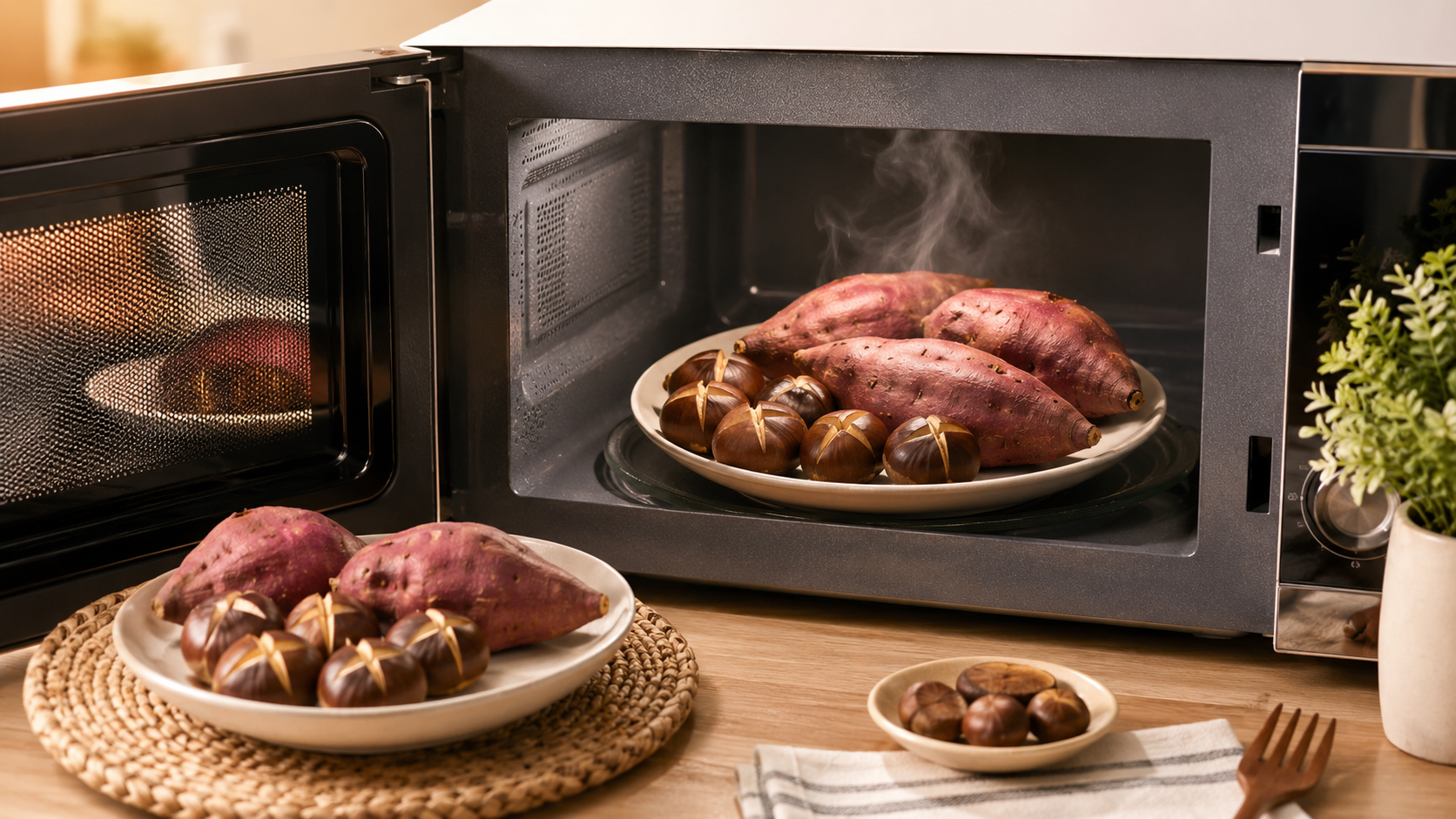
Microwave Safety for Chestnuts and Sweet Potatoes: What to Know Before You Heat Them
Minjin Park
·
Microwaving chestnuts or sweet potatoes can be quick and convenient, but trapped steam can cause splitting, bursting, burns, and messy cleanup. Learn simple safety tips before heating them at home.
Why Chestnuts and Sweet Potatoes Need Extra Care in the Microwave
Microwaves are one of the easiest kitchen tools to rely on. They save time, heat food quickly, and make simple snacks feel almost effortless. A sweet potato can go from firm to soft in minutes. Chestnuts can seem like a cozy seasonal treat without turning on the oven.
But some foods need a little more preparation before they go into the microwave.
Chestnuts and sweet potatoes are two good examples. Both are dense foods with skins that can trap steam inside. When microwaved without piercing, cutting, or proper venting, pressure may build up as moisture turns into steam. That pressure can cause the food to split, burst, or pop suddenly.
Sometimes it is just messy. Other times, it can cause hot food to spray inside the microwave or startle someone opening the door. Very hot steam can also burn fingers, hands, or the face if you handle the food too quickly.
This does not mean you should never microwave chestnuts or sweet potatoes. Many people do it safely every day. The key is to understand what can go wrong and take a few simple precautions before pressing start.
The Main Issue: Trapped Steam
Chestnuts and sweet potatoes both contain moisture. When microwaves heat them, that moisture turns into steam. Steam expands, and it needs somewhere to go.
If the steam is trapped under a tough skin or shell, pressure can build inside the food. Eventually, the food may crack open suddenly.
This is why whole potatoes, eggs in shells, sealed containers, and certain dense foods are known for microwave problems. The microwave heats water molecules inside the food, but if there is no safe escape path, the pressure can rise.
A Small Cut Can Make a Big Difference
For many foods, venting is the simplest solution. A few fork holes in a sweet potato or a proper cut in a chestnut shell can give steam a path to escape.
Chestnuts have a hard outer shell and a thin inner skin. When heated, moisture inside the nut turns into steam. If the shell is not cut, that steam can become trapped.
A chestnut that bursts in the microwave can make a loud pop, scatter pieces, and leave bits stuck to the microwave walls. If it bursts after you remove it, the risk is more personal: hot steam and nut pieces can hit your hands or face.
Chestnuts are especially important to vent because the shell is designed to protect the inside. That same protection can become a problem under microwave heat.
How to Prepare Chestnuts Before Microwaving
Before microwaving chestnuts, wash and dry them if needed. Then cut through the shell so steam can escape. Many people make an “X” cut on the rounded side or a straight slit across the shell.
The cut should go through the hard shell and inner skin, but you do not need to slice the nut in half. Use a stable cutting board and a small sharp knife. Chestnuts can roll, so take your time and keep your fingers out of the path of the blade.
After cutting, place the chestnuts in a microwave-safe dish. Some people add a small amount of water or cover them loosely with a microwave-safe lid to help with steaming, but the cover should not be airtight.
The important rule is simple: never microwave whole, uncut chestnuts.
Why Sweet Potatoes Can Split or Pop
Sweet potatoes have a skin that can hold in steam. They are also dense, moist, and uneven in shape, which means heat may build in certain areas faster than others.
If a sweet potato is microwaved whole without piercing, steam may collect under the skin. The potato can split open suddenly inside the microwave. In some cases, it may pop loudly or spray hot flesh.
Even when it does not burst, an unpierced sweet potato may cook unevenly. The outside may feel soft while the center stays firm, or hot pockets may form inside.
How to Prepare Sweet Potatoes Before Microwaving
Start by scrubbing the sweet potato under running water to remove dirt. Dry it with a towel so it is not dripping wet.
Then pierce the skin several times with a fork. Make holes on different sides, not just one spot. These holes allow steam to escape while the potato cooks.
Place the sweet potato on a microwave-safe plate. You can microwave it as is, or wrap it loosely in a damp paper towel if you want a softer skin. Do not wrap it tightly in plastic unless the packaging or wrap is clearly labeled as microwave-safe and used according to directions.
Turn the sweet potato partway through cooking if your microwave does not rotate well. Let it rest after heating so the temperature can even out.
Why This Matters in Everyday Life
Microwave accidents are often small, but they can still be frustrating and unpleasant.
A burst sweet potato can coat the microwave interior with sticky orange pieces. A chestnut that pops can leave hard bits scattered around the inside. Cleaning it is annoying, especially when food dries onto the walls.
More importantly, hot steam burns can happen quickly. Steam can be hotter than it looks, and it can escape suddenly when food is cut, opened, squeezed, or peeled.
This matters in busy homes because microwaves are often used when people are tired, rushed, or distracted. A child may heat a snack. A parent may microwave a sweet potato while preparing the rest of dinner. Someone may open the microwave door and grab food with bare hands because it “only cooked for a few minutes.”
Simple habits help prevent those everyday surprises.
Common Mistakes When Microwaving Chestnuts
Chestnuts are not as common in many American kitchens as potatoes, so people may not know how to handle them safely.
Mistake 1: Microwaving Them Without Cutting the Shell
This is the biggest mistake. Whole chestnuts need to be scored or cut before heating. The shell traps steam, and trapped steam can cause bursting.
Mistake 2: Making a Cut That Is Too Shallow
A tiny scratch on the surface may not be enough. The cut should go through the shell so steam can escape.
You do not need to cut deeply into the nut, but you do need to break the shell.
Mistake 3: Heating Too Many at Once
A crowded dish can cook unevenly. Some chestnuts may overheat while others are still undercooked. Start with a small batch until you know how your microwave handles them.
Mistake 4: Grabbing Them Immediately
Chestnuts can be very hot inside. Let them rest briefly before handling. Use caution when peeling because steam can escape from under the shell.
Mistake 5: Using an Airtight Cover
A loose cover can help contain splatter, but an airtight container can trap pressure. Do not seal chestnuts in a closed container while microwaving.
Common Mistakes When Microwaving Sweet Potatoes
Sweet potatoes seem simple, but a few habits can cause trouble.
Mistake 1: Forgetting to Pierce the Skin
Piercing the skin is a small step that helps steam escape. It also reduces the chance of sudden splitting.
A fork works well. Make several holes around the potato.
Mistake 2: Cooking One Huge Potato Like a Small One
A large sweet potato needs more time than a small one, but simply blasting it for a long time can cause uneven cooking. It is better to cook in shorter intervals, check for softness, turn it if needed, and continue.
Mistake 3: Not Letting It Rest
Microwave heat continues to distribute after cooking stops. A rest period helps the inside finish softening and reduces the chance of cutting into a very hot steam pocket right away.
Mistake 4: Squeezing It With Bare Hands
A sweet potato may look harmless, but the inside can be extremely hot. Use an oven mitt or towel, and open it carefully.
Mistake 5: Using Unsafe Plastic Wrap or Containers
Not all plastic is meant for microwave use. If you cover a sweet potato, use microwave-safe materials and avoid tight sealing. Steam needs a vent.
Warning Signs While Microwaving
It helps to know when to stop the microwave and reassess.
Loud Popping Sounds
A little cracking or soft noise may happen, especially with chestnuts, but loud popping can mean pressure is building or food is bursting. Stop the microwave and wait a moment before opening the door.
Food Splitting Open Aggressively
A sweet potato that splits slightly is not unusual. But if it bursts apart or sprays food, it may have overheated or lacked enough venting.
Burning Smell
A burnt smell means the food may be overcooking, drying out, or scorching. Stop heating and check carefully.
Smoke
If you see smoke, stop the microwave immediately and keep the door closed briefly. Once safe, check the food. Discard anything burned and clean the microwave before using it again.
Very Dry or Hard Spots
Microwaves can create uneven heating. Dry, hard, or shriveled spots may mean the food cooked too long or unevenly.
First, choose a potato that is firm and free from mold, soft spots, or a sour smell. Scrub it well and dry it.
Pierce it several times with a fork. Place it on a microwave-safe plate.
Microwave in short intervals rather than guessing one long time. For many medium sweet potatoes, starting with a few minutes, turning, and then adding more time as needed works better than overcooking all at once.
Check doneness by gently pressing with a towel or using a fork. It should feel soft through the center.
Let it rest for a few minutes before cutting. When you slice it open, keep your face and hands away from the steam.
Add toppings after it has cooled slightly. Butter, cinnamon, salt, yogurt, beans, or other toppings can make the potato hotter in spots, so stir and test carefully before eating.
How to Microwave Chestnuts More Safely
Chestnuts need a little more attention.
Start by checking them. Discard any chestnuts that are moldy, shriveled, cracked in a strange way, or smell bad.
Wash and dry them if needed. Place each chestnut flat-side down on a cutting board or hold it carefully in a stable position. Use a sharp knife to cut an “X” or slit through the shell.
Put the scored chestnuts in a microwave-safe dish. Heat in small batches and short intervals. Chestnuts can overcook or dry out quickly, so avoid setting a long time and walking away.
Let them sit briefly after heating. Peel carefully while warm, but not so hot that steam burns your fingers.
If one chestnut did not open or feels unusually hard, do not force it open toward your face. Let it cool and handle it cautiously.
Should You Cover Them in the Microwave?
Covering can help retain moisture and reduce mess, but the cover should never be airtight.
For sweet potatoes, a damp paper towel or loose microwave-safe cover can help soften the skin. For chestnuts, a loose cover may help contain small splatters, but steam still needs to escape.
Avoid sealed jars, tightly closed containers, and plastic covers without vents. Pressure buildup is the concern you are trying to avoid.
A loose cover is for moisture and cleanliness, not pressure sealing.
Why Resting Time Matters
Many microwave problems happen after the timer stops.
Food may continue cooking for a short time because heat is still moving through the inside. Steam may also remain trapped under the skin or shell.
Resting gives pressure and heat a chance to settle. It also helps the food cook more evenly.
For sweet potatoes, resting can make the center softer. For chestnuts, it can make peeling easier while reducing the shock of hot steam.
A few minutes of patience can make the food safer and better.
What About Reheating Cooked Sweet Potatoes?
Reheating cooked sweet potatoes is usually simpler than cooking them raw, but you still need to be careful.
Cut large pieces open before reheating so heat can move more evenly. Use a microwave-safe dish and cover loosely to prevent drying.
Stir mashed sweet potatoes halfway through if possible. Dense mashed foods can develop hot spots, especially if butter, sugar, or sauce is mixed in.
Let reheated sweet potatoes rest and test the temperature before serving, especially for children.
What About Roasted Chestnuts That Are Already Cooked?
Cooked chestnuts can also become hot quickly in the microwave. If reheating, use short intervals and avoid sealing them in an airtight container.
Because chestnuts are dense, the inside may be hotter than expected. Let them cool briefly before eating.
If they smell sour, look moldy, or have been stored too long, do not reheat them to “fix” the problem. Reheating does not make spoiled food fresh again.
Practical Examples From Everyday Kitchens
The Quick Lunch Sweet Potato
You are working from home and want a fast lunch. You rinse a sweet potato, place it in the microwave, and almost press start.
The safer routine takes only a few seconds more: dry it, pierce it several times, place it on a plate, cook in intervals, and let it rest before cutting.
The Holiday Chestnut Snack
You buy chestnuts for a cozy winter snack. They look small, so you assume they can go straight into the microwave.
Before heating, score every chestnut. Even small chestnuts can build steam pressure. Heat a small batch first so you can learn how your microwave handles them.
The Child Heating a Sweet Potato
Older kids may use the microwave for snacks. Teach them a simple rule: poke holes in potatoes and sweet potatoes before heating, and use a towel or mitt when removing hot food.
It does not need to be scary. Just make it part of the routine.
The Overcooked Sweet Potato
You microwave a sweet potato for too long and it comes out shriveled, dry, and extremely hot. Next time, use shorter intervals and check softness along the way.
Microwaves vary, so timing should be adjusted to your appliance and potato size.
Cleaning Up After a Burst
If a chestnut or sweet potato bursts, wait until the microwave is safe to open and the food has cooled enough to handle.
Remove large pieces first. Then wipe the inside with a damp cloth. If food is stuck on, place a microwave-safe bowl of water inside and heat it briefly to create steam, then wipe again carefully after it cools slightly.
Do not ignore food splatter. Dried bits can burn or smell the next time you use the microwave.
If there was smoke or burning, let the microwave air out and clean it before using it again.
A Simple Microwave Safety Checklist
Before microwaving chestnuts or sweet potatoes, ask yourself:
Is the food fresh and not moldy? Did I pierce the sweet potato or score the chestnut shell? Am I using a microwave-safe plate or dish? Is any cover loose or vented, not airtight? Am I using short intervals instead of one long guess? Will I let it rest before cutting or peeling? Do I have a towel or oven mitt ready?
This checklist takes less than a minute, but it helps prevent messes and burns.
When the Oven May Be a Better Choice
The microwave is quick, but it is not always the best method for texture.
Sweet potatoes often taste sweeter and softer when baked slowly in the oven. Chestnuts may peel and roast more evenly in an oven or pan when properly scored. If you have time and want better flavor, traditional cooking methods may be worth it.
But for busy days, the microwave can still be useful. Just remember that speed should not replace basic preparation.
Final Thoughts
Microwaving chestnuts or sweet potatoes can be convenient, but both foods need proper venting because they can trap steam inside. Chestnuts should be scored before heating, and sweet potatoes should be pierced several times with a fork.
The biggest risks are bursting, splattering, uneven heating, and steam burns. These problems are usually easy to prevent with simple habits: use a microwave-safe dish, avoid airtight covers, heat in short intervals, let the food rest, and handle it with a towel or oven mitt.
You do not need to avoid these foods or make the process complicated. Just give steam a safe way out and give hot food a moment to settle before cutting, peeling, or eating.
Hi, I’m the creator and editor behind ZestyHabit. I research everyday safety, first aid, and practical wellness topics using official guidance and reliable public sources, then turn that information into clear, realistic steps for daily life.
My goal is to help readers make safer, better-informed choices at home and beyond.