How to Avoid Fish Spine Pricks When Cleaning Fish: Simple Kitchen Safety Tips
Minjin Park
·
Cleaning fish at home can be slippery and sharp. Learn how to avoid fish spine pricks, handle fins and bones safely, and keep your prep area cleaner and calmer.
Why Fish Spines Deserve More Respect Than We Give Them
Cleaning fish at home can feel satisfying. Maybe you brought home a fresh catch from a weekend fishing trip. Maybe you bought a whole fish from the market and want to prepare it yourself. Or maybe you are learning how to fillet fish because it saves money and gives you more control over your meals.
But fish can be trickier to handle than they look.
A whole fish is slippery. The fins can be sharp. Small bones can hide where you do not expect them. Some fish have stiff dorsal spines, sharp gill plates, or tiny pin bones that can poke your fingers while you are cleaning, scaling, or filleting.
Most small pricks are not dramatic, but they can be painful, annoying, and preventable. They can also make food prep messy because once your hand is sore or bleeding, it is harder to keep working cleanly.
The goal is not to be afraid of cleaning fish. The goal is to slow down, set up your workspace, use the right tools, and know where the sharp parts are before your hands find them the hard way.
The Sharp Parts of a Fish to Watch For
When people think about fish bones, they often picture the bones inside the flesh. But many fish-related pokes happen before you even get that far.
Dorsal Fin Spines
The dorsal fin runs along the top of the fish. On many fish, parts of this fin can be stiff and sharp. If you grab the fish from above without looking, those spines can poke your palm or fingers.
This is especially common when the fish is wet and slippery, because your hand may slide forward unexpectedly.
Pectoral and Anal Fins
The side and underside fins can also have sharp edges or stiff points. They may not look dangerous at first, but they can catch your skin while you are turning the fish or trimming around the body.
Gill Plates
The area around the gills can be surprisingly sharp. Some fish have hard, pointed edges near the head. When cleaning a whole fish, avoid sliding your fingers blindly under the gill area.
Pin Bones
Pin bones are small bones that remain in some fillets. They are not always easy to see. You often find them by gently running your fingertips over the flesh, but this should be done slowly so you do not jab yourself.
Broken Bone Ends
If a fish has already been cut, chopped, or partially cleaned, broken bone ends may be sharper than the original bones. These can poke through flesh or packaging.
Why Fish Cleaning Accidents Happen So Easily
Fish cleaning injuries usually happen because of a mix of three things: slippery surfaces, sharp parts, and rushing.
You may be trying to finish dinner quickly. The fish keeps sliding. Your knife is wet. The cutting board moves a little. You reach to hold the fish steady and touch a fin spine without noticing.
That is a normal kitchen moment, not a sign that you are careless.
The problem is that fish prep requires more control than chopping a carrot or slicing bread. A fish does not sit flat. Its skin can be slick. The shape changes as you cut. Small bones and fins may be hidden by scales, skin, or moisture.
This is why setup matters. A stable board and good lighting can prevent many problems before the knife even touches the fish.
Start With a Clean, Stable Workspace
Before cleaning fish, clear the counter. You need room for the fish, a cutting board, tools, a trash bowl, and clean towels.
A crowded workspace makes you reach over sharp tools or move the fish too much. That increases the chance of getting poked.
Use a large cutting board that does not slide. If your board moves, place a damp towel or nonslip mat underneath it. A board that shifts while you are cutting can turn a simple task into a risky one.
Good lighting also helps. Fish bones and fin spines are easier to avoid when you can actually see them. If your kitchen lighting is dim, use a small task light or move closer to a brighter area.
Keep children and pets away from the prep area. Fish scraps, sharp fins, and small bones can fall onto the floor, and curious pets may try to grab them.
Use the Right Tools Before Using More Force
When cleaning fish, force is usually not your friend. If something is hard to cut, trim, or pull, the answer is often a better tool or a better angle.
A Sharp Fillet Knife
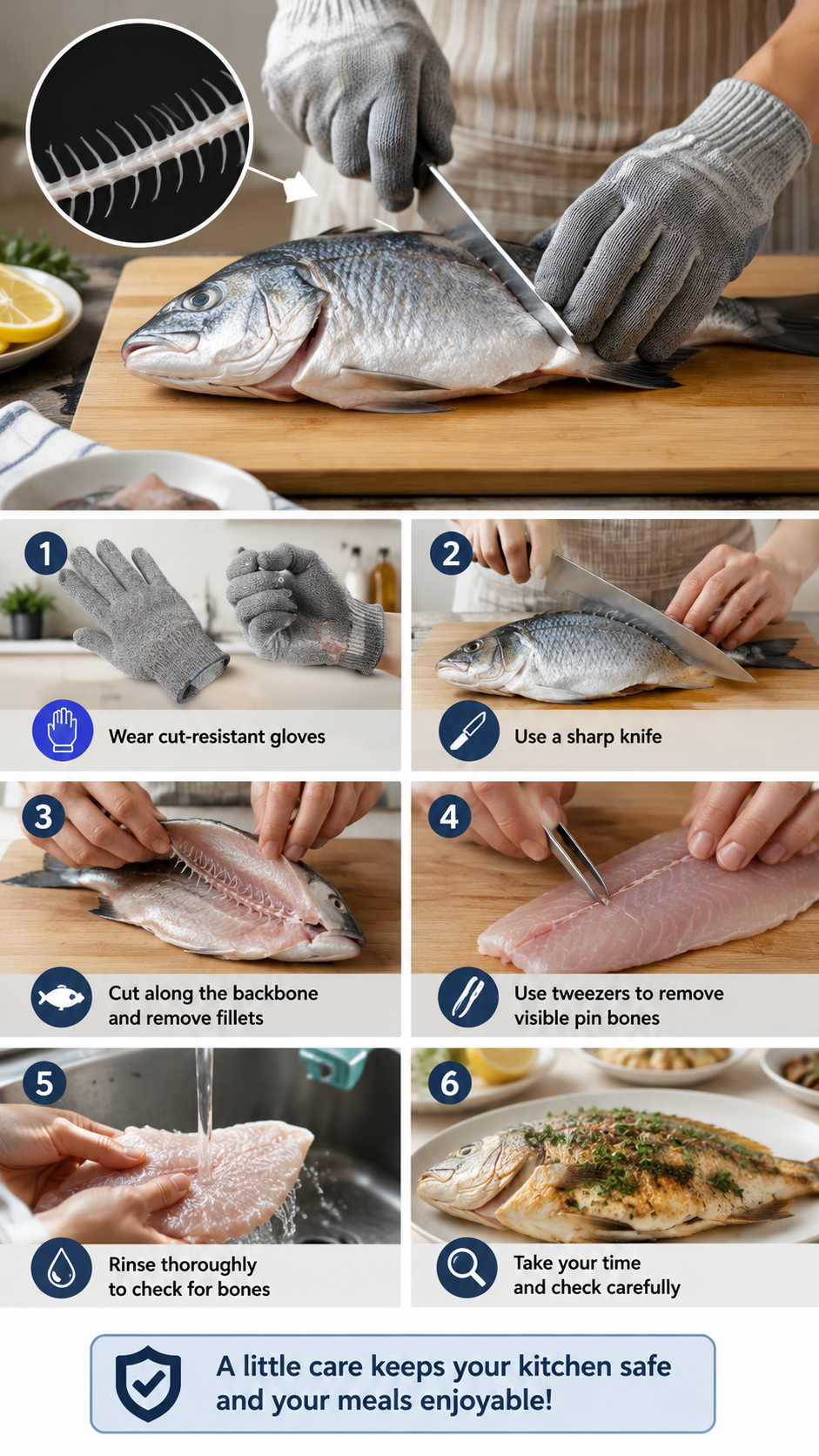
A sharp knife may sound more dangerous, but a dull knife often requires extra pressure. That pressure can cause slipping. A sharp, flexible fillet knife gives you more control when cutting along bones.
Kitchen Shears
Kitchen shears are helpful for trimming fins, cutting small bones, and opening packaging. They let you avoid forcing a knife through awkward angles.
Fish Bone Tweezers or Pliers
Pin bones are easier to remove with fish tweezers or clean needle-nose pliers used only for food. Pull bones in the direction they naturally point rather than yanking upward.
A Fish Scaler
If you are scaling fish, a scaler is safer and more effective than using a random knife edge. Scaling can send scales flying, so work slowly and rinse the area afterward.
Cut-Resistant Gloves
A cut-resistant glove can add protection, especially for the hand holding the fish. Some people also wear a food-safe disposable glove over it for cleanliness.
Gloves do not make you invincible, but they can reduce minor cuts and pokes while improving grip.
Handle the Fish With a Towel or Gloved Hand
A dry grip is a safer grip.
Fish are slippery, especially when whole, wet, or freshly rinsed. Instead of grabbing the fish with bare wet hands, use a clean towel or gloved hand to hold it steady.
Hold the fish firmly but gently. Avoid pressing your palm directly onto the dorsal fin. Position your hand on a safer area, such as the side of the fish, while keeping your fingers away from fin tips and knife paths.
If you are new to cleaning fish, take a moment to look at the fish before starting. Notice where the fins are. Notice where the gills are. Notice which parts feel sharp.
That simple pause can prevent a painful surprise.
Trim Sharp Fins First When Appropriate
For many home cooks, trimming fins first makes the fish easier to handle.
Use kitchen shears to carefully cut away sharp fins before scaling or filleting. This reduces the number of points that can poke you while you work.
Do not hold the fin with your bare fingers while cutting. Use the shears and angle the fish so your supporting hand stays away from the sharp edge.
Place trimmed fins directly into a scrap bowl or trash bag. Do not leave them scattered on the cutting board where your hand may land on them later.
Cut Away From Your Hands
This is basic knife safety, but it becomes even more important with fish.
Fish can shift suddenly. If your knife is moving toward your fingers and the fish slips, you have very little time to react.
Keep your supporting hand behind the knife whenever possible. Use long, controlled strokes instead of short, forceful stabbing motions. Let the knife do the work.
If you feel resistance, stop and check what you are cutting through. You may be hitting bone, cutting at the wrong angle, or using the wrong tool.
Do not try to “win” against the fish with pressure. Adjust your position.
Be Careful Around the Head and Gills
The head area can be one of the sharpest parts of the fish.
Gill plates may have hard edges. Teeth may be present in some species. The bones near the head can be dense, uneven, and difficult to cut cleanly.
If you are removing the head, use the right knife or shears and work on a stable board. Keep your fingers away from the gill opening and sharp plate edges.
If the head is not needed for your recipe, ask the fishmonger to remove it when you buy the fish. There is no shame in making home cooking easier and safer.
Watch for Hidden Pin Bones in Fillets
Even store-bought fillets can contain pin bones.
To check, place the fillet skin-side down on the board. Gently run your fingers over the flesh from head end to tail end. Do this slowly. You are feeling for small, firm tips.
When you find a pin bone, use fish tweezers or clean pliers to grip it. Pull it out in the same direction it is angled. This helps avoid tearing the fish.
Do not dig around with a knife tip while holding the fillet in your hand. Keep the fish flat on the board and use the proper tool.
Keep Scraps Under Control
Fish cleaning creates scraps: scales, fins, bones, skin, packaging, and paper towels. If these spread across the counter, the workspace becomes harder to manage.
Set up a scrap bowl, lined trash container, or disposable bag before you begin. Put sharp fins and bones into it immediately.
Do not leave bones on the cutting board next to the fillet. They can stick to your hand, towel, or knife.
After cleaning, tie up scraps and remove them from the kitchen if they smell strong. Wipe the counter and wash tools promptly so fish residue does not spread.
Common Mistakes to Avoid
A few habits make fish prep more difficult than it needs to be.
Working With Wet, Bare Hands
Wet hands slip. Use a towel, gloves, or both to improve control.
Using a Small Cutting Board
A board that is too small makes the fish hang over the edge. That creates instability and mess.
Grabbing the Fish From the Top
The top of the fish may have sharp dorsal spines. Hold from the side instead.
Leaving Fins and Bones on the Board
Sharp scraps should go straight into a bowl or trash bag.
Rushing Through Scaling
Scaling can be messy, and the fish may move around. Slow down and keep your supporting hand away from the scaler’s path.
Using Too Much Knife Pressure
If you need a lot of force, something is wrong. Stop and reposition.
What to Do If You Get Pricked
Even with good habits, small pokes can happen.
Stop working so you do not contaminate the food or make the injury worse. Wash the area with soap and running water. If there is a tiny visible piece of bone or spine that comes out easily with clean tweezers, remove it gently. Cover the area with a clean bandage before returning to kitchen tasks.
Do not keep handling food with an uncovered cut or puncture.
Pay attention afterward. If the puncture is deep, very painful, swelling, red, warm, draining, or you think a piece is still stuck, get professional medical advice.
This is general awareness, not something to panic over. The main point is to clean the area, cover it, and not ignore a worsening puncture.
A Simple Fish Cleaning Routine
Here is an easy routine that works for most home kitchens.
Clear the counter and set down a nonslip cutting board.
Place a scrap bowl nearby.
Prepare kitchen shears, a sharp knife, tweezers, towels, and gloves.
Look over the fish before touching it.
Trim sharp fins if needed.
Hold the fish with a towel or gloved hand.
Cut slowly and keep the knife moving away from your fingers.
Remove pin bones with tweezers.
Put scraps directly into the bowl.
Wash tools, board, counter, and hands when finished.
This routine may take a few extra minutes, but it makes the whole process calmer.
When to Ask the Fishmonger for Help
If you are uncomfortable cleaning a whole fish, ask for help at the seafood counter.
Many fishmongers can scale, gut, trim fins, remove the head, or fillet the fish for you. This can be especially helpful if you are cooking fish for guests or trying a new species for the first time.
You can still enjoy fresh fish at home without doing every step yourself.
It is also a good way to learn. Watch how the fish is prepared, ask what bones to expect, and pay attention to where the sharp parts are.
A Calm Takeaway for Safer Fish Prep
Fish spines, fins, and small bones can poke your hands because fish are slippery, uneven, and full of sharp little parts. Most problems happen when people rush, use too much force, or grab the fish without noticing where the fins and gills are.
The safer approach is simple. Use a stable board, good lighting, a towel or glove for grip, kitchen shears for fins, tweezers for pin bones, and a sharp knife for controlled cuts. Keep scraps contained and clean the area well when you are done.
Cleaning fish does not have to feel intimidating. With a slower routine and the right tools, you can reduce painful pricks, keep your kitchen tidier, and make the whole process feel much more manageable.
Hi, I’m the creator and editor behind ZestyHabit. I research everyday safety, first aid, and practical wellness topics using official guidance and reliable public sources, then turn that information into clear, realistic steps for daily life.
My goal is to help readers make safer, better-informed choices at home and beyond.
[…] enthusiasts should keep a basic first-aid kit nearby. Fish spines, hooks, knives, and shells can all cause punctures or cuts that may be exposed to seawater or raw […]
Loading…
Discover more from
Subscribe now to keep reading and get access to the full archive.



[…] enthusiasts should keep a basic first-aid kit nearby. Fish spines, hooks, knives, and shells can all cause punctures or cuts that may be exposed to seawater or raw […]