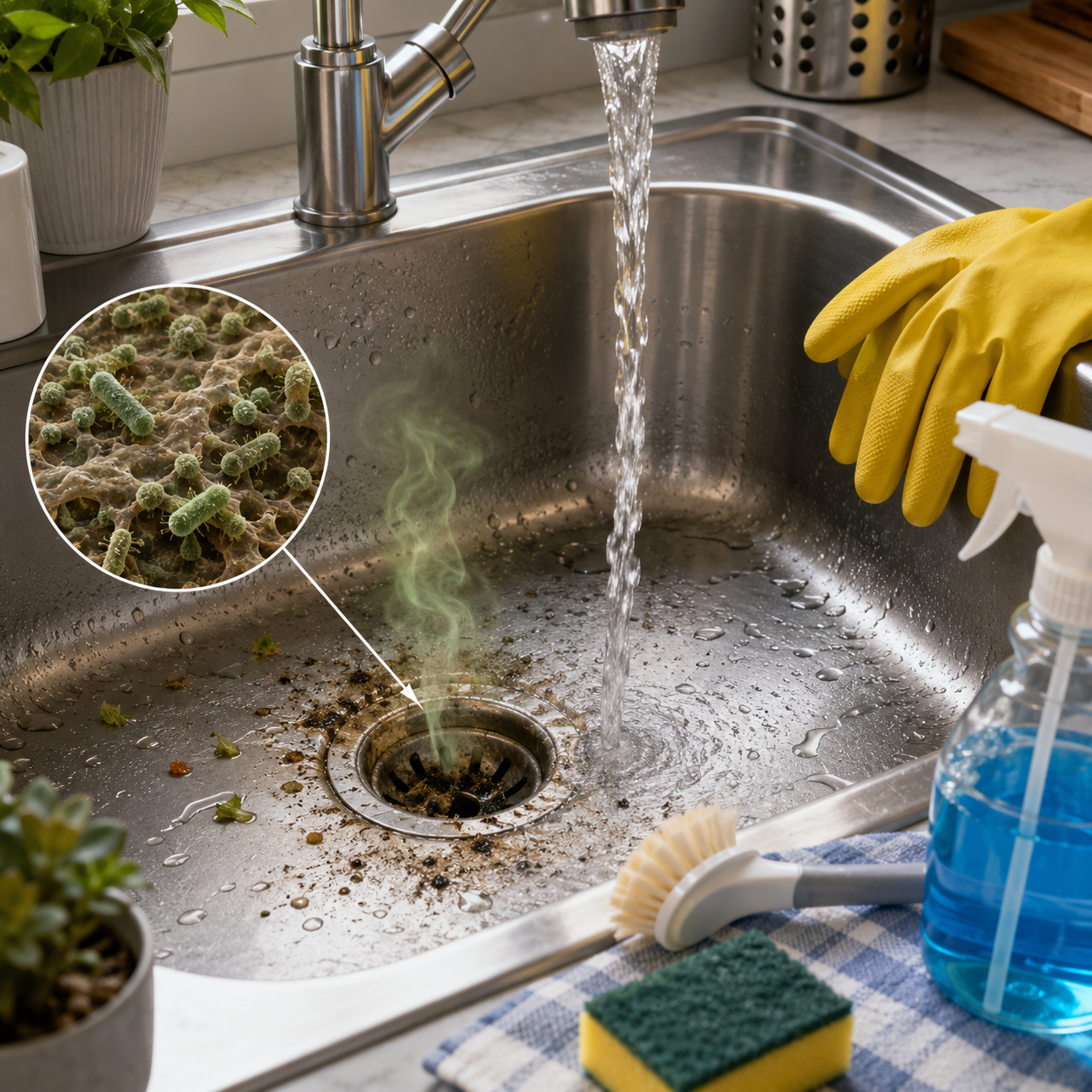
Why a Neglected Kitchen Sink Drain Starts to Smell—and How to Keep Bacteria Under Control
Minjin Park
·
Learn why kitchen sink drains develop odors and bacteria, common mistakes that make it worse, and simple habits to keep your drain cleaner and fresher.
Why Your Kitchen Sink Drain Deserves More Attention
Most of us wipe the counters, wash the dishes, and maybe give the stovetop a quick clean after cooking. But the kitchen sink drain? That often gets ignored until something smells “off.”
It is easy to understand why. The drain is mostly out of sight. Food scraps disappear down it. Soapy water runs through it every day. It feels like it should be cleaning itself.
Unfortunately, that is not quite how kitchen drains work.
Your sink drain is one of the busiest spots in the kitchen. It handles food particles, grease, sauce, coffee grounds, dishwater, and sometimes things that really should not go down the drain at all. Over time, tiny bits of organic material can stick to the inside of the drain, the garbage disposal, the strainer, and the pipes.
That buildup can trap moisture, create unpleasant smells, and provide a comfortable place for bacteria to grow.
This does not mean your kitchen is unsafe or that you need to panic every time your sink smells a little strange. But it does mean that a few simple cleaning habits can make a real difference in keeping your kitchen fresher, cleaner, and easier to maintain.
Why Sink Drains Start to Smell
A bad smell from the sink usually does not appear out of nowhere. It is often the result of food residue, moisture, and time.
Food Scraps Break Down in the Drain
Even if you are careful, small pieces of food can slip past the drain basket. Rice, pasta, vegetable peels, bits of meat, eggshell fragments, and sauce residue can cling to the inside of the drain or garbage disposal.
At first, these scraps may not seem like a big deal. But once they sit in a damp, warm area, they begin to break down. That breakdown process can create sour, musty, or rotten odors.
This is especially common after cooking meals with strong-smelling ingredients, such as onions, garlic, fish, eggs, or dairy-based sauces. If residue from those foods gets trapped in the drain, the smell may linger long after the dishes are washed.
Grease Creates a Sticky Layer
Grease is one of the biggest reasons kitchen drains get dirty.
When hot grease is poured down the sink, it may look liquid at first. But as it cools, it can thicken and stick to the inside of the pipe. That sticky coating can catch food crumbs and other debris as they pass through.
Over time, this creates a layer of buildup that can smell bad and slow water drainage.
Common sources of grease include bacon fat, butter, cooking oil, creamy sauces, gravy, melted cheese, and oily pan drippings. Even small amounts can add up when they go down the drain regularly.
A good everyday rule is simple: wipe greasy pans with a paper towel before washing them, and throw solid grease in the trash once it cools.
Moisture Helps Odors Linger
Kitchen drains are naturally damp. That moisture is part of what makes them a convenient place for odor-causing buildup to remain active.
When food residue and grease sit in a wet environment, they do not dry out quickly. Instead, they stay soft and sticky. This makes it easier for smells to develop and harder for water alone to rinse everything away.
A sink that is used often can still smell if debris is stuck inside the drain. Running water helps, but it does not always remove buildup from the sides of the drain or the hidden parts of the garbage disposal.
How Bacteria Can Build Up in a Neglected Drain
Bacteria are part of everyday life, especially in kitchens where food is prepared. The goal is not to make your sink completely sterile. That is not realistic or necessary for normal home cleaning.
The practical goal is to reduce the conditions that allow bacteria and odor-causing grime to build up.
Bacteria Like Food, Moisture, and Warmth
A kitchen sink drain can offer all three.
Food residue gives bacteria something to feed on. Moisture helps them survive. A warm kitchen, especially after cooking or running hot water, can make the area even more comfortable for growth.
This is why a drain that is not cleaned regularly may start to smell worse over time. The odor is often a sign that organic material is sitting somewhere in the drain system and breaking down.
Biofilm Can Form Inside the Drain
One reason sink drains can be stubborn to clean is something called biofilm.
Biofilm is a slimy layer that can form when microorganisms stick to a surface. In a kitchen drain, it may mix with food residue, grease, soap scum, and moisture. You may notice it as a dark, slippery film around the drain opening, under the rubber splash guard, or inside the garbage disposal area.
This film can trap smells and make the drain feel dirty even if the sink basin itself looks clean.
A quick rinse usually will not remove it completely. That is why physical cleaning, such as scrubbing the drain cover or cleaning under the splash guard, matters.
Common Mistakes That Make Drain Odors Worse
Most drain odor problems come from small habits that seem harmless in the moment.
Pouring Grease Down the Sink
This is one of the most common mistakes. Grease may disappear quickly with hot water, but it can cool and cling farther down the pipe.
A better option is to pour grease into a disposable container, let it solidify, and throw it away. For greasy pans, wipe them first before washing.
Rinsing Food Scraps Instead of Scraping Plates
If you regularly rinse leftover food into the sink, the drain has to handle more organic material than it should.
Before washing dishes, scrape plates into the trash or compost bin where appropriate. This one habit can reduce odors, buildup, and slow draining.
Forgetting the Garbage Disposal Splash Guard
If your sink has a garbage disposal, the rubber splash guard can hide a surprising amount of grime. Food particles and grease can collect underneath the flaps, where they are easy to miss.
If the sink smells bad even after running the disposal, the splash guard may be part of the problem.
Using Too Much Soap and Assuming It Cleans Everything
Dish soap helps break down grease on dishes, but it does not automatically scrub the inside of your drain. Soap residue can also mix with food particles and create buildup.
The sink basin may look clean, while the drain opening still holds grime.
Letting the Drain Basket Stay Dirty
The drain basket or strainer catches food, which is exactly what it is supposed to do. But if it is not emptied and washed, it can become a source of odor by itself.
A basket full of wet scraps can smell quickly, especially in warm weather.
Warning Signs Your Sink Drain Needs Cleaning
You do not need to wait for a serious clog before paying attention. Small signs often show up first.
A Sour or Rotten Smell
A sour smell may come from old food residue. A rotten smell may come from trapped organic matter breaking down deeper in the drain or disposal.
If the smell is strongest when you run water, that may mean water is disturbing buildup inside the drain.
Slow Draining Water
Slow draining can happen when grease, food particles, or soap residue narrow the pipe opening. It may start subtly. Water pools for a few seconds longer than usual, then gradually gets worse.
A slow drain is easier to deal with early than after a full clog develops.
Dark Slime Around the Drain
A dark or slippery ring around the drain opening is a sign that residue is collecting there. It may also appear under the drain stopper or around the garbage disposal splash guard.
This area should be cleaned regularly because it is close to where dishes, utensils, and hands often pass.
Fruit Flies or Small Gnats Near the Sink
Tiny flies around the sink may be attracted to organic matter in the drain. They can also come from overripe fruit, trash, recycling, or damp sponges, so the drain is not always the only cause.
Still, if you see them hovering near the sink, cleaning the drain is a smart first step.
Simple Steps to Keep Your Sink Drain Cleaner
Keeping the drain cleaner does not require complicated products or a long cleaning routine. The best approach is regular, simple maintenance.
Step 1: Scrape Plates Before Washing
Before dishes go into the sink, scrape leftover food into the trash or compost. This reduces the amount of food entering the drain.
Pay special attention to rice, pasta, eggs, oatmeal, and greasy leftovers. These can stick, swell, or cling to pipe surfaces.
Step 2: Use a Sink Strainer
A basic sink strainer catches food scraps before they go down the drain. Empty it often, especially after meal prep.
Wash the strainer with dish soap and a brush so it does not become the source of the smell.
Step 3: Rinse with Hot Water After Greasy Dishes
After washing greasy pans or dishes, run hot water for a short period to help move residue through the drain. This is not a fix for pouring grease down the sink, but it can help with small amounts left after normal washing.
For best results, remove as much grease as possible before washing.
Step 4: Clean the Drain Opening Weekly
Once a week, give the drain opening a more focused clean.
Use dish soap, warm water, and a small brush to scrub around the drain rim, the stopper, and the strainer. If you have a garbage disposal, carefully clean the visible parts around the splash guard. Always make sure the disposal is off before cleaning near it.
A toothbrush or small cleaning brush can help reach the tight edges where grime collects.
Step 5: Freshen the Drain Naturally
For light odors, you can use simple household methods.
Sprinkle a small amount of baking soda into the drain, let it sit for a few minutes, then rinse with hot water. Some people also use vinegar, but avoid mixing cleaning products randomly, especially bleach with other cleaners.
The most important part is not the fizz. It is the combination of loosening residue and rinsing it away.
Step 6: Run the Garbage Disposal Properly
If you have a garbage disposal, use it with plenty of cold water. Let the water run before, during, and briefly after using the disposal.
Avoid putting large amounts of food, fibrous scraps, grease, coffee grounds, bones, or hard pits into it. A disposal is helpful, but it is not a trash can.
For freshness, small citrus peels can sometimes help with odor, but they should not replace actual cleaning. Use them sparingly, and avoid overloading the disposal.
What Not to Put Down the Kitchen Sink
A cleaner drain starts with keeping the wrong things out of it.
Try to avoid sending these down the sink:
Cooking grease, oil, and fat
Coffee grounds
Large amounts of rice or pasta
Eggshells
Flour or dough
Fibrous vegetable peels
Bones, pits, and hard food scraps
Thick sauces or creamy leftovers
Paint, chemicals, or harsh household products not meant for drains
Some of these items can cause odor. Others can contribute to clogs. Many do both.
A good rule is this: if it can thicken, swell, stick, or rot, it is better off in the trash or compost than in the drain.
Everyday Prevention Tips That Actually Help
The easiest drain routine is the one you can do without thinking too much.
After Cooking
Wipe greasy pans before washing them. Scrape plates well. Empty the sink strainer. Rinse the sink with warm or hot water after dishes are done.
Check the drain basket for food scraps. Give the sink a quick rinse. Move wet sponges or dishcloths somewhere they can dry.
A damp sponge sitting beside a dirty drain can make the whole sink area smell less fresh.
Once a Week
Clean the drain cover, stopper, and sink strainer with soap and a brush. If you have a garbage disposal, clean around the splash guard carefully.
This small weekly habit can prevent the slimy buildup that causes many sink odors.
Once in a While
If the drain smells bad even after cleaning the visible areas, pay attention to whether water is draining slowly. Persistent odors, recurring clogs, or water backing up may mean there is buildup deeper in the plumbing.
For ordinary maintenance, simple cleaning is usually enough. But if the problem keeps coming back, it may be time to have the drain checked by a qualified professional.
A Simple Sink Drain Cleaning Routine
Here is an easy routine you can use once a week.
First, remove any dishes from the sink. Empty the drain strainer and wash it with dish soap. Scrub around the drain opening with a small brush.
Next, rinse the area with hot water. If there is a mild odor, sprinkle baking soda around the drain and let it sit briefly before rinsing again.
If your sink has a garbage disposal, run cold water and turn on the disposal for a short time to clear small leftover particles. Then turn everything off and carefully wipe the visible rubber splash guard area.
Finally, dry the sink edges and let sponges or dishcloths air out.
This routine is not fancy, but it works because it targets the real problem: leftover food, grease, moisture, and hidden grime.
Why This Matters for Everyday Home Safety
A smelly drain is annoying, but the bigger issue is kitchen cleanliness.
The kitchen is where food is prepared, hands are washed, dishes are cleaned, and family routines happen every day. When the sink area is dirty, it can affect the way the whole kitchen feels.
A neglected drain can also lead to slow water flow, more frequent clogs, and unpleasant odors that spread beyond the sink. Small habits now can help prevent bigger cleaning problems later.
This is especially helpful in busy households where meals are cooked often, kids rinse plates, or multiple people use the kitchen throughout the day.
Your sink drain handles a lot more than water. It collects tiny food particles, grease, soap residue, and moisture every day. When those things sit too long, odors can develop and bacteria-friendly buildup can form.
The good news is that prevention is simple.
Scrape plates before rinsing. Keep grease out of the drain. Use a sink strainer. Clean the drain opening and stopper regularly. Pay attention to early warning signs like sour smells, slow drainage, or dark slime around the drain.
None of these steps take much time, but together they make your kitchen feel cleaner and fresher.
A sink drain may not be the most glamorous part of home care, but it is one of those small household habits that quietly pays off. Keep it clear, keep it rinsed, and give it a little attention before odors have a chance to settle in.
Hi, I’m the creator and editor behind ZestyHabit. I research everyday safety, first aid, and practical wellness topics using official guidance and reliable public sources, then turn that information into clear, realistic steps for daily life.
My goal is to help readers make safer, better-informed choices at home and beyond.