
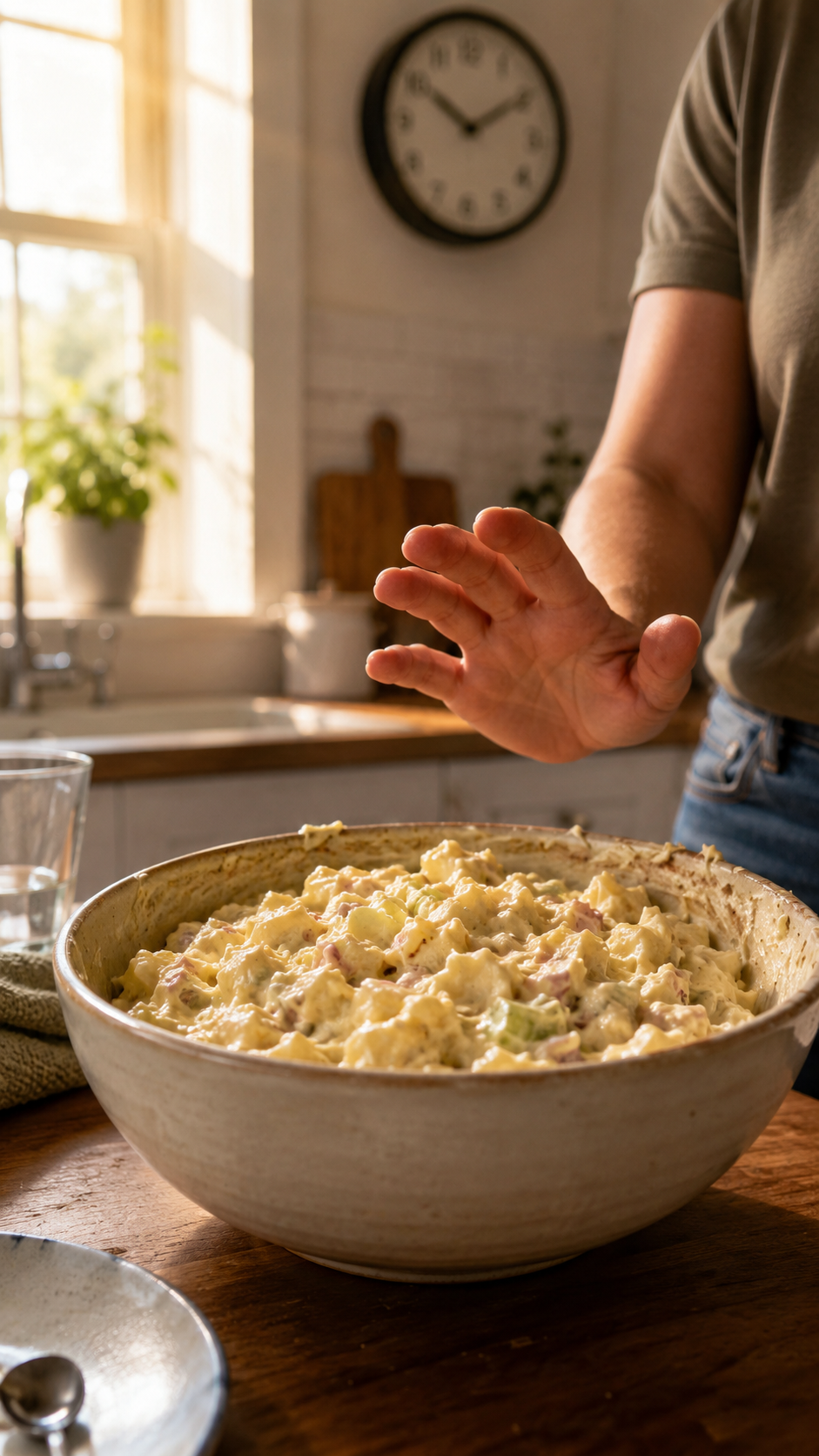
Mayo-based salads like potato salad, chicken salad, and tuna salad need careful chilling. Learn why they can become risky, common mistakes, and simple food safety habits that help.

Why Mayo-Based Salads Need a Little Extra Attention
Mayo-based salads are a comfort food staple in many American homes. Potato salad at a barbecue, tuna salad for lunch, chicken salad sandwiches for a picnic, macaroni salad at a potluck, egg salad in the fridge — these foods are familiar, easy, and often made in big batches.
They also have one thing in common: they are usually served cold and often sit out longer than we realize.
That is where the safety concern comes in.
A bowl of potato salad on the picnic table may look fine after an hour or two. It may smell normal. The texture may not change much. But if it has been sitting at room temperature, especially outdoors in warm weather, bacteria can grow faster than most people expect.
This does not mean mayonnaise is something to fear. In fact, store-bought mayonnaise is usually acidic and commercially prepared to be shelf-stable before opening. The bigger concern is the full salad: cooked potatoes, pasta, eggs, chicken, tuna, chopped vegetables, and all the moisture mixed together.
Once those ingredients are combined and left warm, the salad becomes more vulnerable.
The good news is that this is easy to manage. You do not need to stop making your favorite picnic salads. You just need to keep them cold, serve them smartly, and avoid leaving them out for too long.
Is Mayonnaise Really the Problem?
Many people blame mayonnaise whenever a potato salad or chicken salad seems risky. It makes sense at first glance because mayo looks rich, creamy, and perishable.
But the situation is a little more nuanced.
Commercial mayonnaise contains ingredients like vinegar or lemon juice, which make it more acidic than many people realize. The salad around the mayonnaise is often the bigger issue.
Think about what goes into common mayo-based salads:
Cooked potatoes hold moisture and starch.
Pasta holds moisture and can sit densely packed in a bowl.
Eggs and chicken are perishable protein foods.
Tuna and seafood salads need careful refrigeration.
Chopped celery, onions, and herbs add more surfaces where moisture can collect.
Once everything is mixed, the salad becomes a moist, nutrient-rich food. If it sits in the temperature range where bacteria grow quickly, it can become unsafe even if the mayonnaise itself was fine when it came out of the jar.
So instead of thinking, “Mayo is dangerous,” it is more accurate to think, “Mayo-based salads need to stay cold because the whole mixture is perishable.”
The Danger Zone: Why Time and Temperature Matter
Food safety often comes down to two simple things: time and temperature.
Cold foods should stay cold. Hot foods should stay hot. The trouble starts when perishable food sits in the middle range for too long.
For mayo-based salads, this usually happens when they are left on a counter, buffet table, picnic blanket, tailgate table, or backyard patio.
At room temperature, bacteria can multiply more quickly. In hot weather, that process can speed up even more.
This is why the common food safety habit is to refrigerate perishable food within two hours. If the temperature is above 90°F, that window becomes shorter — about one hour.
That matters during summer cookouts, beach days, camping trips, and backyard birthdays. A salad that seems “not that warm” may still be sitting in a risky range if it is not kept chilled.
Why Mayo-Based Salads Are Easy to Forget About
One reason these salads can become risky is that they often blend into the background of a meal.
A hot dish usually gives you clues. It cools down. Steam disappears. The texture changes.
Cold salads are different. Potato salad looks almost the same whether it has been out for 20 minutes or two hours. Chicken salad may still look creamy. Pasta salad may not smell different right away.
That can make it easy to lose track of time.
At a cookout, people may graze for hours. Someone opens the cooler, takes out the salad, serves a scoop, and leaves it on the table “just in case someone wants more.” Then conversations continue, kids run around, and no one remembers exactly when the salad came out.
This is a very normal mistake. It is also one of the easiest to prevent.
Common Mayo-Based Salads That Need Careful Chilling
Several everyday foods fall into this category.
Potato Salad
Potato salad is a classic example because it is often served outdoors and made in large bowls. Cooked potatoes, eggs, and creamy dressing make it filling and delicious, but it should not sit out all afternoon.
Chicken Salad
Chicken salad needs careful handling because cooked poultry is perishable. It should be stored cold and served in smaller portions when possible.
Tuna Salad
Tuna salad is convenient for sandwiches and meal prep, but once mixed with mayo and other ingredients, it belongs in the refrigerator until serving time.
Egg Salad
Egg salad is soft, moist, and protein-rich. It should be kept cold and not left out on a lunch table or picnic spread for long periods.
Macaroni Salad and Pasta Salad
Even if a pasta salad seems less risky than chicken or egg salad, it can still be perishable when made with mayo, cheese, meat, or chopped vegetables. Dense pasta salads can also take longer to chill if stored in a deep container.
Common Mistakes That Make These Salads Riskier
Most food safety mistakes with mayo-based salads are not dramatic. They are simple everyday habits that happen when people are busy.
Making a Big Batch and Leaving It in One Large Bowl
A big serving bowl looks nice on a buffet table, but it can warm up quickly. Every time someone opens the lid or scoops from it, the salad is exposed to warmer air.
A better approach is to keep most of the salad in the refrigerator or cooler and serve a smaller amount at a time.
Leaving It Out “Just for a Little Longer”
This is probably the most common mistake. The meal is winding down, but the salad stays out because people might want seconds.
Instead, return it to the refrigerator or cooler once people have served themselves. You can always bring it back out later with a clean spoon.
Not Using Enough Ice Outdoors
A cooler without enough ice or frozen packs may not keep food cold enough. The salad container should stay cold, not just slightly cool.
For outdoor meals, pack mayo-based salads in a cooler with plenty of ice packs. Keep the cooler closed as much as possible and place it in the shade.
Putting Warm Ingredients Straight Into the Salad
If you mix hot potatoes, hot pasta, or freshly cooked chicken directly with mayo and then put the salad in the fridge, the salad may take longer to cool.
Let cooked ingredients cool safely before mixing, and store the finished salad in shallow containers so it chills more evenly.
Reusing a Spoon That Touched Other Foods
At potlucks, serving utensils often wander. A spoon used for raw-looking foods, messy plates, or multiple dishes can introduce unwanted germs.
Give each salad its own clean serving spoon and replace it if it falls on the table or gets used for something else.
Warning Signs to Watch For
The safest approach is not to rely only on smell or appearance. Food can look normal and still be unsafe if it has been held at the wrong temperature too long.
Still, there are some warning signs that should make you cautious.
Sour or Unusual Smell
A mayo-based salad should smell fresh and like its ingredients. If it smells sour, fermented, overly sharp, or simply “off,” do not serve it.
Watery or Separated Texture
Some separation can happen naturally, especially with watery vegetables. But if the salad looks unusually loose, slimy, or broken, it may be past its best quality.
Warm Bowl or Container
If the container feels room-temperature or warm, the salad may have been out too long. A cold salad should feel cold when served.
Unknown Time on the Counter
If nobody knows how long the salad has been sitting out, it is better to be cautious. Guessing is not a great food safety plan.
Simple Rules for Serving Mayo-Based Salads
You do not need a complicated checklist. A few simple rules cover most situations.
Keep It Cold Until Serving
Store mayo-based salads in the refrigerator until right before the meal. For outdoor events, keep them in a cooler with ice or frozen gel packs.
Serve Small Portions at a Time
Instead of putting the whole batch on the table, serve a smaller bowl and keep the rest cold. Refill with a clean spoon as needed.
Watch the Clock
Do not let perishable salads sit out for more than two hours at room temperature. If the day is very hot, use the shorter one-hour guideline.
Use Shallow Containers for Storage
Large deep containers can chill slowly. Shallow containers help leftovers cool more evenly in the refrigerator.
Keep the Serving Spoon Clean
Use a clean utensil for each salad. Do not let people use their personal forks or sandwich knives to scoop from the main bowl.
How to Pack Mayo-Based Salads for Picnics and Cookouts
Outdoor meals need a little planning because refrigerators are not nearby.
Start with a chilled salad. Do not pack it while it is still warm from cooking.
Use an insulated cooler with enough ice packs to keep the food cold. Place the salad near the ice packs, not on top of warm drinks or snacks.
Keep the cooler closed as much as possible. Every time it opens, warm air gets in.
If you are driving to a picnic, keep the cooler inside the air-conditioned car rather than in a hot trunk when possible.
At the event, place the salad bowl inside a larger bowl filled with ice. This helps keep it cold while people serve themselves.
When the meal is over, return the salad to the cooler promptly. If it has been sitting out too long, it is better to discard it than save it for later.
How to Store Leftover Mayo-Based Salads
Leftovers should go into the refrigerator promptly. Use clean containers with lids and avoid leaving a large bowl uncovered.
If you made a big batch, divide it into smaller containers. This makes it easier to chill and easier to use later for lunches.
Labeling the container with the date can help, especially if your refrigerator tends to fill up with leftovers.
As a general habit, eat refrigerated mayo-based salads within a few days, and discard them sooner if they smell off, look unusual, or were left out too long before refrigeration.
Also, avoid repeatedly taking the same container in and out of the refrigerator. Scoop what you need into a small bowl, then return the main container to the fridge.
Safer Lunchbox Tips
Mayo-based salads are common lunch foods, especially tuna salad, chicken salad, and egg salad sandwiches.
If you are packing lunch for work, school, or a day trip, use an insulated lunch bag with an ice pack. Keep the sandwich or salad cold until mealtime.
If the lunch will sit in a warm car, backpack, or locker for hours, consider a different option. Shelf-stable foods, nut butter sandwiches, whole fruit, crackers, or sealed snacks may be safer choices when refrigeration is not available.
For kids’ lunches, pack cold items next to a frozen water bottle or ice pack. By lunchtime, the drink may thaw while helping keep the food cool.
What About Store-Bought Deli Salads?
Store-bought potato salad, macaroni salad, and chicken salad need the same basic care once you bring them home.
Keep them refrigerated. Do not leave them in a warm car while running errands. Serve them cold, use a clean spoon, and return leftovers to the refrigerator quickly.
If you buy deli salad for a party, keep it in the fridge until guests arrive. For longer gatherings, serve part of it at a time instead of putting the entire container on the table.
Also, pay attention to use-by dates and storage instructions on the package. Once opened and served, your handling habits matter just as much as the date on the label.
A Calm Way to Think About Mayo-Based Salads
It is easy to hear food safety advice and feel like every picnic food is a problem. That is not the goal.
Mayo-based salads are not automatically unsafe. They simply need cold storage and reasonable timing.
You can still enjoy potato salad at a barbecue, tuna salad for lunch, and chicken salad sandwiches on a summer day. The key is to avoid treating them like chips or cookies that can sit out for hours without much concern.
Cold, creamy salads belong in the “keep chilled” category.
Once you make that part of your routine, the rest is simple.
A Simple Takeaway for Everyday Kitchens
Mayo-based salads can become risky when they are left out too long because they are moist, perishable, and often made with ingredients like eggs, chicken, tuna, potatoes, or pasta. The main issue is not just the mayonnaise. It is the whole mixture sitting at the wrong temperature.
Keep these salads cold until serving. Put out smaller portions. Use clean utensils. Watch the time. Store leftovers promptly in shallow containers. Be extra careful during hot weather, outdoor meals, potlucks, and packed lunches.
These are small habits, but they make a real difference.
Food safety at home does not have to feel stressful. Most of the time, it comes down to simple routines that help you enjoy familiar foods with more confidence and less guesswork.

Hi, I’m the creator and editor behind ZestyHabit. I research everyday safety, first aid, and practical wellness topics using official guidance and reliable public sources, then turn that information into clear, realistic steps for daily life.
My goal is to help readers make safer, better-informed choices at home and beyond.


