
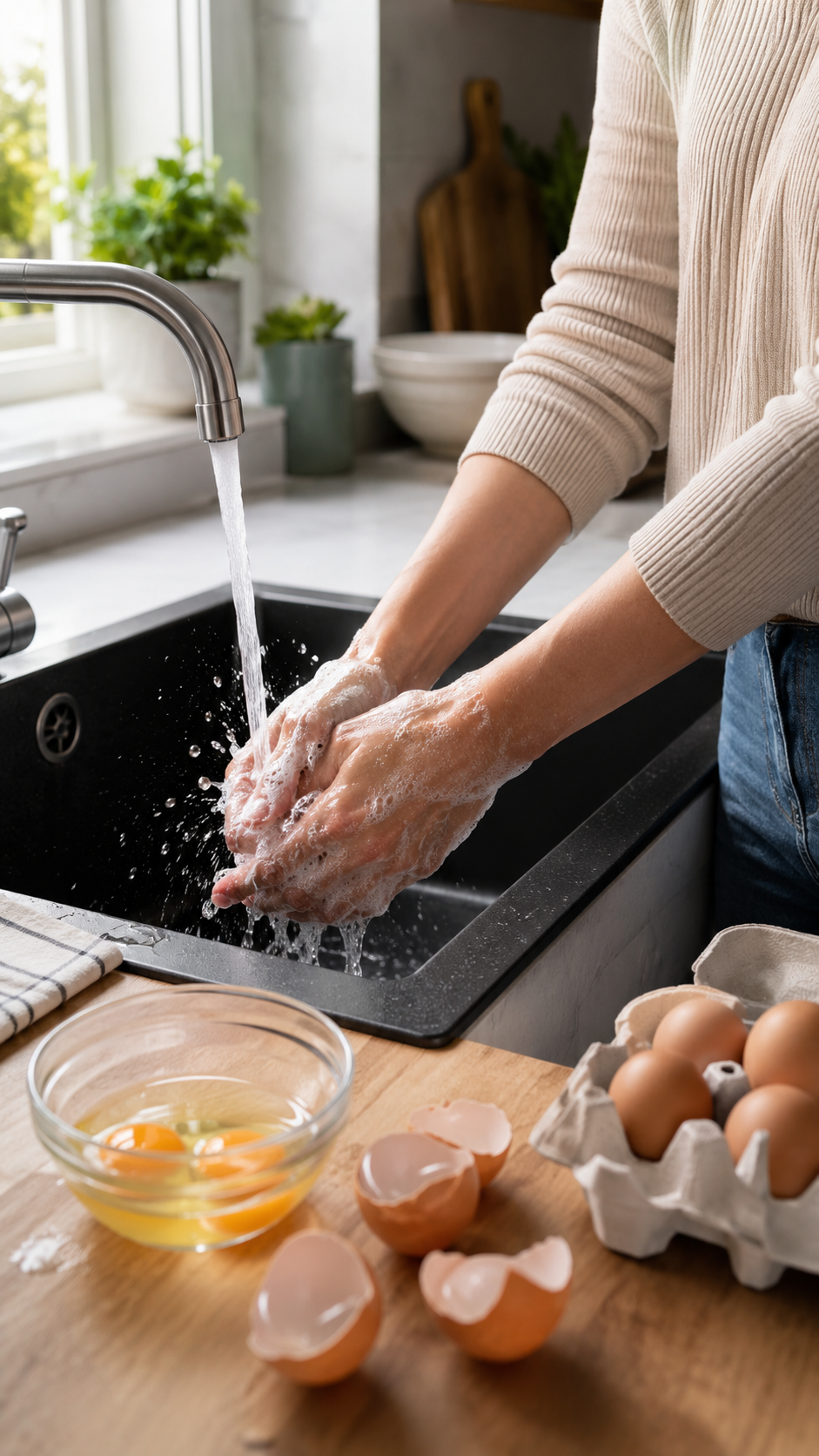
Learn why washing your hands after touching raw eggs matters, how germs can spread in the kitchen, common mistakes to avoid, and simple egg safety habits for everyday cooking.
Why Raw Eggs Need a Little Extra Care

Eggs are one of the most ordinary foods in the kitchen. We crack them into pancake batter, scramble them for breakfast, boil them for lunch, and use them in cookies, casseroles, meatballs, fried rice, and homemade sauces.
Because eggs are so familiar, it is easy to handle them casually.
You crack an egg, toss the shell away, stir the bowl, wipe your hand on a towel, and keep cooking. It feels normal. It feels harmless.
But raw eggs are one of those ingredients that deserve a little more care than they usually get. Not fear. Not stress. Just a simple habit: wash your hands after touching them.
This small step helps keep raw egg residue from spreading to faucet handles, spice jars, refrigerator doors, phones, counters, and ready-to-eat foods. In a busy kitchen, that matters more than people realize.
The Simple Answer: Yes, Wash Your Hands After Handling Raw Eggs
Any time you touch raw eggs, raw egg liquid, eggshells, or a bowl or utensil that has raw egg on it, wash your hands with soap and water before touching other foods or clean surfaces.
That includes moments like cracking eggs for breakfast, dipping chicken into an egg wash, mixing cake batter, making French toast, preparing homemade cookie dough, or cleaning up a broken egg on the counter.
It may seem like a small detail, but handwashing is one of the easiest ways to prevent cross-contamination in the kitchen.
You do not need to scrub like you are preparing for surgery. Just use soap, running water, and a little patience. A proper hand wash before moving on to the next task can make your whole cooking routine cleaner and safer.
Why Raw Eggs Can Be Risky
Raw eggs can sometimes carry germs that may cause foodborne illness. The most commonly discussed concern with eggs is Salmonella. This does not mean every egg is unsafe, and it does not mean you should stop eating eggs.
It simply means raw eggs should be treated like other raw animal-based foods in the kitchen. You handle them carefully, keep them separate from ready-to-eat foods, cook them properly, and wash your hands afterward.
The Outside of the Egg Matters Too
When people think about raw eggs, they usually think about the liquid inside. But the shell matters as well.
Eggshells pass through a lot of places before they reach your kitchen. Even commercially sold eggs in the United States are washed and processed before sale, but it is still smart to treat the shell as something that should not touch clean food or surfaces unnecessarily.
When you crack an egg, your fingers may touch both the shell and the raw egg inside. That is why washing your hands after cracking eggs is a good habit, even if your hands do not look dirty.
Raw Egg Residue Spreads Easily
Raw egg is slippery. A tiny amount can cling to your fingertips without being obvious.
You might crack two eggs into a bowl, then immediately grab the pepper shaker, open the fridge, touch the carton of milk, pick up your phone, or pull open a drawer.
That is how residue travels. It is not dramatic. It is just normal kitchen movement.
Handwashing breaks that chain.
Everyday Examples Where People Forget to Wash
Most people know to wash their hands after handling raw chicken. But raw eggs can be easier to overlook because they feel less messy.
Here are common situations where handwashing often gets skipped.
Making Breakfast in a Hurry
Morning cooking is often rushed. You crack eggs, stir them, butter toast, pour coffee, pack a lunch, and wipe the counter all within a few minutes.
If you touch raw egg and then reach for bread, fruit, or a clean plate, you may be transferring residue without thinking.
A good routine is simple: crack the eggs, throw away the shells, wash your hands, then continue with the rest of breakfast.
Baking Cookies or Cake
Baking feels cozy and harmless, but raw eggs are often part of the process.
After adding eggs to batter, people may touch the vanilla bottle, sugar bag, mixer handle, measuring spoons, or oven knob with unwashed hands.
If you bake with kids, this matters even more. Children often touch everything, lick fingers, grab utensils, and move quickly from one step to the next.
Pause after the eggs go in. Wash hands. Wipe the counter if needed. Then keep baking.
Making Egg Wash
Egg wash is used for breading chicken, coating fish, sealing dumplings, brushing pastries, or helping breadcrumbs stick.
It often involves dipping food into raw egg repeatedly. Your fingers, tongs, plate edges, and counter space can all get messy.
After working with egg wash, wash your hands before touching clean plates, cooked food, or serving utensils.
Cleaning Up a Broken Egg
Dropping an egg on the floor or counter is frustrating. Many people rush to wipe it up and then keep cooking.
But after cleaning a broken egg, your hands, towel, sponge, and nearby surface may all need attention.
Use paper towels or a washable cloth, clean the surface, wash your hands, and avoid using the same sponge on dishes afterward unless it is cleaned properly or replaced.
Common Mistakes That Spread Raw Egg Residue
Small kitchen habits can make a big difference. These mistakes are easy to make, especially when cooking quickly.
Touching the Faucet With Eggy Hands
This one happens all the time.
You crack eggs, your fingers feel sticky, and you turn on the faucet with the same hand. Now the faucet handle may have raw egg residue on it.
A simple fix is to wash your hands and then quickly wash or wipe the faucet handle too. You can also use a paper towel, elbow, or wrist to turn the water on if your hands are messy.
Wiping Hands on a Dish Towel
A dish towel feels convenient, but it is not a substitute for washing your hands.
If you wipe raw egg residue onto a towel, then later use that towel to dry clean hands, dishes, or counters, you may spread the mess around.
Keep a separate towel for drying clean hands, and use paper towels or washable cleaning cloths for raw egg spills.
Putting Eggshells on the Counter
Some people crack eggs and set the shells on the counter until they are done cooking. It seems harmless, but eggshells can leave residue behind.
It is better to place shells directly in the trash, compost container if appropriate, or a small discard bowl that can be washed afterward.
Reusing the Same Utensil
If a fork, whisk, or spoon touches raw egg, do not use it later on cooked food unless it has been washed.
For example, if you use a fork to beat raw eggs and then use the same fork to serve cooked scrambled eggs, that is a risky shortcut. Grab a clean utensil for serving.
Letting Kids Handle Eggs Without a Handwashing Routine
Cooking with kids is wonderful, but raw eggs need clear rules.
Children may crack eggs, touch the shells, poke the yolk, wipe hands on clothes, or reach for snacks. Make handwashing part of the recipe.
You can say, “Eggs are in, shells are gone, now we wash hands.” Turning it into a predictable step helps kids learn without fear.
How to Wash Hands Properly After Touching Raw Eggs
Handwashing does not have to be complicated, but it does need soap and running water.
Wet your hands, apply soap, and rub your hands together well. Pay attention to fingertips, between fingers, thumbs, and under nails if egg got there. Rinse under running water and dry with a clean towel or paper towel.
The key is not just rinsing. Water alone may remove some visible mess, but soap helps lift away residue more effectively.
If you touched raw eggs and only gave your fingers a quick splash, it is worth washing again.
What About Hand Sanitizer?
Hand sanitizer can be useful in many situations, but in the kitchen, soap and water are the better choice after handling raw eggs.
Raw egg can leave physical residue on your hands. Soap and water help remove that residue. Hand sanitizer does not clean off sticky egg the same way washing does.
If soap and water are available, use them.
Surfaces and Tools Need Attention Too
Washing your hands is important, but it is only one part of egg safety. Anything that touches raw egg should be cleaned before it touches ready-to-eat food.
Bowls and Utensils
Wash bowls, whisks, forks, measuring cups, and spoons that touched raw egg with hot, soapy water.
If you are cooking in stages, set raw-egg tools aside in the sink instead of leaving them on the counter.
Countertops
If raw egg drips on the counter, wipe it up and clean the surface. Pay attention to areas near the mixing bowl, trash can, and stove.
A small drip can be easy to miss, especially on light-colored counters.
Cutting Boards and Plates
If you used a plate for raw egg wash, do not place cooked food back on that same plate unless it has been washed.
This is especially important when breading foods. Have one plate for raw steps and a clean plate ready for cooked food.
Sponges and Cloths
Try not to use your everyday dish sponge to wipe up raw egg spills. If you do, clean it thoroughly afterward or replace it if it smells or feels slimy.
Paper towels or dedicated washable cloths are often better for messy raw egg cleanup.
Should You Wash Eggs Before Cracking Them?
For store-bought eggs in the United States, washing eggs at home is generally not necessary. Commercial eggs are already washed and processed before sale.
Washing eggs at home can also create confusion because eggshells are porous. If eggs are washed improperly or soaked, moisture may affect the shell surface in ways that are not helpful.
For everyday home cooking, focus on storing eggs properly, cracking them cleanly, avoiding shell pieces in food, cooking eggs well, and washing your hands after handling them.
If you use backyard or farm-fresh eggs, follow safe handling guidance from a reliable source, especially if eggs are visibly dirty.
Raw Egg Foods Deserve Extra Caution
Some foods are made with raw or lightly cooked eggs. Examples include homemade mayonnaise, Caesar dressing, hollandaise sauce, eggnog, mousse, tiramisu, and cookie dough.
These foods may be traditional or popular, but they require extra care. Many home cooks choose pasteurized eggs for recipes where eggs are not fully cooked.
This article is not telling you what you must or must not eat. It is simply a reminder that raw egg recipes should be handled thoughtfully, especially when serving children, older adults, pregnant people, or anyone with a weakened immune system.
For everyday family cooking, fully cooked egg dishes are usually the simpler choice.
Signs You Need to Pause and Clean Up
Sometimes you can keep cooking smoothly. Other times, it is better to stop for a minute and reset the kitchen.
Pause and clean if raw egg drips on the counter, shells fall into the bowl, egg gets on the outside of the carton, a child touches raw egg and runs off, or you realize you touched the fridge handle with eggy hands.
These are not disasters. They are just moments to clean, wash hands, and continue.
A calm cleanup is better than pretending it did not happen.
A Simple Egg Safety Routine for Home Cooks
Here is an easy routine you can repeat every time you cook with raw eggs.
First, take out only the eggs you need.
Second, crack the eggs into the bowl and throw away the shells right away.
Third, wash your hands with soap and water.
Fourth, wipe any drips from the counter or bowl.
Fifth, use clean utensils and clean plates for cooked food.
Finally, wash bowls, whisks, and surfaces that touched raw egg.
Once this becomes a habit, it does not feel like extra work. It simply becomes part of cooking.
Teaching Kids Without Scaring Them
Food safety lessons work best when they feel normal, not frightening.
Instead of saying, “Raw eggs are dangerous,” you can say, “Raw eggs are one of the foods we wash our hands after touching.”
That keeps the message calm and practical.
Kids can still help crack eggs, stir batter, and learn cooking skills. They just need a clear handwashing step afterward.
You can even make it part of the recipe instructions: crack, toss shells, wash hands, keep cooking.
A Small Habit That Protects the Whole Kitchen
Washing your hands after touching raw eggs may seem like a tiny detail, but it helps protect the flow of the kitchen.
It keeps raw egg residue away from clean plates, fresh fruit, cabinet handles, towels, and cooked food. It also helps prevent the kind of cross-contamination that happens quietly during normal cooking.
You do not need to be nervous around eggs. Eggs are useful, affordable, and part of many everyday meals. The goal is simply to treat them with the same basic care you would give other raw ingredients.
Crack the eggs. Toss the shells. Wash your hands. Clean the tools and surfaces that touched raw egg.
That calm little routine can make breakfast, baking, and family meals cleaner, safer, and much easier to enjoy.

Hi, I’m the creator and editor behind ZestyHabit. I research everyday safety, first aid, and practical wellness topics using official guidance and reliable public sources, then turn that information into clear, realistic steps for daily life.
My goal is to help readers make safer, better-informed choices at home and beyond.


[…] people know that raw eggs may contain Salmonella. Fewer people realize that ordinary flour is also a raw agricultural […]