Is It Safe to Reheat Curry and Soup More Than Once? What Home Cooks Should Know
Minjin Park
·
Learn whether it is safe to reheat curry and soup multiple times, why repeated cooling and reheating can raise food safety concerns, and simple habits for storing leftovers safely.
Curry, stew, chili, soup, and broth-based meals are some of the easiest leftovers to love.
They are warm, filling, and often taste even better the next day. A big pot of curry can turn into lunch, dinner, and another quick meal later in the week. A homemade soup can sit in the fridge waiting for busy nights when nobody feels like cooking from scratch.
Because these foods are liquid or saucy, many people assume reheating them again and again is harmless. You bring the pot to a boil, stir it, serve a bowl, cool it down, and put it back in the fridge.
The next day, you do the same thing again.
But is that actually a good habit?
The answer is a little more practical than a simple yes or no. Reheating curry or soup once is usually not the main concern when leftovers have been cooled, stored, and reheated properly. The bigger issue is repeated temperature changes: warming a large pot, letting it cool slowly, putting it back in the fridge, and doing that several times.
This pattern can give bacteria more chances to grow, especially if the food spends too much time at room temperature.
You do not need to be scared of leftovers. You just need a better routine.
The Main Risk Is Not “Reheating” Alone
Many people ask, “Is it dangerous to reheat soup twice?” or “Can I keep boiling curry every day?”
The important thing to understand is that reheating itself is not the only issue. The risk depends on the whole leftover cycle:
How long the food sat out after cooking
How quickly it cooled
How cold the refrigerator kept it
How many times it was warmed and cooled
Whether it was reheated evenly
What ingredients were in the dish
A pot of soup that is cooled quickly, stored in small containers, and reheated one portion at a time is very different from a large pot that sits on the stove all evening, gets warmed the next day, cools again for hours, and repeats the process.
The food may look the same, but its safety history is not the same.
Why Repeated Heating and Cooling Can Be a Problem
Bacteria grow best when food stays in warm, room-temperature conditions for too long. Curry and soup are moist foods, and many versions contain ingredients like meat, chicken, seafood, beans, lentils, tofu, dairy, coconut milk, cooked vegetables, or rice.
Those ingredients can make leftovers more perishable.
When you heat a whole pot, serve a small amount, and then let the rest cool on the stove, the food may spend a long time passing through temperatures where bacteria can multiply. The center of a big pot cools slowly, even if the outside feels cool.
If you do this several times, the food goes through repeated warm periods.
That repeated cycle is the real concern.
A Common Home Example
Imagine you make a big pot of chicken curry on Sunday.
On Monday, you take the whole pot from the fridge, put it on the stove, heat it, serve two bowls, turn off the burner, and leave the pot out while eating. After dinner, you put it back in the fridge.
On Tuesday, you do the same thing.
On Wednesday, you do it again.
Even if the curry tastes fine, the repeated warming and cooling is not ideal. Each time, the leftovers have another chance to sit too long at unsafe temperatures.
A safer habit is to take out only the portion you plan to eat and keep the rest cold.
Why Large Pots Cool Slowly
One of the biggest leftover mistakes is putting a large pot of soup or curry straight into the refrigerator or leaving it on the counter “until it cools.”
Both can create problems.
A large pot holds heat for a long time. Even if the surface cools, the middle may stay warm much longer. If the pot is deep and full, it can take a long time for the center to chill properly.
This matters because safe leftover storage is not only about putting food in the fridge eventually. It is also about cooling it quickly enough.
Better Cooling Method
Instead of storing the whole pot, divide the curry or soup into smaller, shallow containers.
Smaller containers cool faster. They also make it easier to reheat one serving at a time. This one habit solves several problems at once.
You waste less food, reheat less often, and avoid repeatedly warming the whole batch.
Curry Can Be Tricky Because It Is Thick
Soups and curries do not always cool or reheat the same way.
A thin broth-based soup may heat quickly and evenly. A thick curry, creamy soup, chili, stew, or lentil dish can heat unevenly. The edges may bubble while the center is still only warm.
That is why stirring matters.
When reheating thick foods, stir often and make sure the whole portion becomes hot throughout. Do not rely only on bubbles around the edge of the pot.
Microwave Reheating Can Also Be Uneven
Microwaves are convenient, but they can create hot spots and cold spots. A bowl of curry may be steaming on top while the middle is cooler.
For thick leftovers, pause halfway through microwaving and stir. Then continue heating until the entire bowl is hot.
Letting the food sit for a short moment after microwaving can also help the heat distribute more evenly before eating.
Ingredients Matter
Not all soups and curries carry the same level of concern.
A plain vegetable broth may be different from a seafood chowder. A simple tomato soup may be different from a chicken curry with rice, cream, and potatoes.
The more perishable ingredients a dish contains, the more careful you should be with storage and reheating.
Meat and Poultry
Chicken curry, beef stew, turkey chili, and meat-based soups should be cooled and refrigerated promptly. Meat adds protein and moisture, both of which require careful handling after cooking.
Seafood
Seafood soups, fish curries, clam chowder, and shrimp-based stews are best treated with extra caution. Seafood leftovers can spoil quickly and may not hold quality well after repeated reheating.
Dairy and Coconut Milk
Creamy soups and coconut milk curries can separate, thicken, or change texture after repeated reheating. While texture is not the same as safety, these ingredients are another reason to reheat only what you need.
Rice, Noodles, and Pasta
Soups with rice, noodles, or pasta can become mushy after reheating. Rice also has its own food safety concerns if it sits out too long.
If possible, store rice or noodles separately from the soup and combine them when reheating.
Potatoes and Beans
Potatoes, lentils, beans, and chickpeas can make soups and curries hearty, but they also make the dish thicker. Thick dishes cool more slowly, so portioning becomes even more important.
Is Boiling the Pot Every Day Enough?
Some households have a habit of boiling soup or stew once a day and leaving it on the stove between meals. This may feel familiar, especially with big batches of broth, curry, or stew.
Boiling can kill many bacteria, but it does not always undo problems caused by poor storage. Some bacteria can produce toxins that are not easily fixed by reheating. Also, the food still spends long periods cooling and sitting between each boil.
A better habit is to refrigerate leftovers promptly and reheat only what you plan to eat.
Instead of reheating the whole pot, scoop one or two servings into a smaller saucepan or microwave-safe bowl. Keep the rest in the refrigerator.
This reduces the number of times the main batch warms up. It also keeps the texture better and makes leftovers last more predictably.
What This Looks Like in Real Life
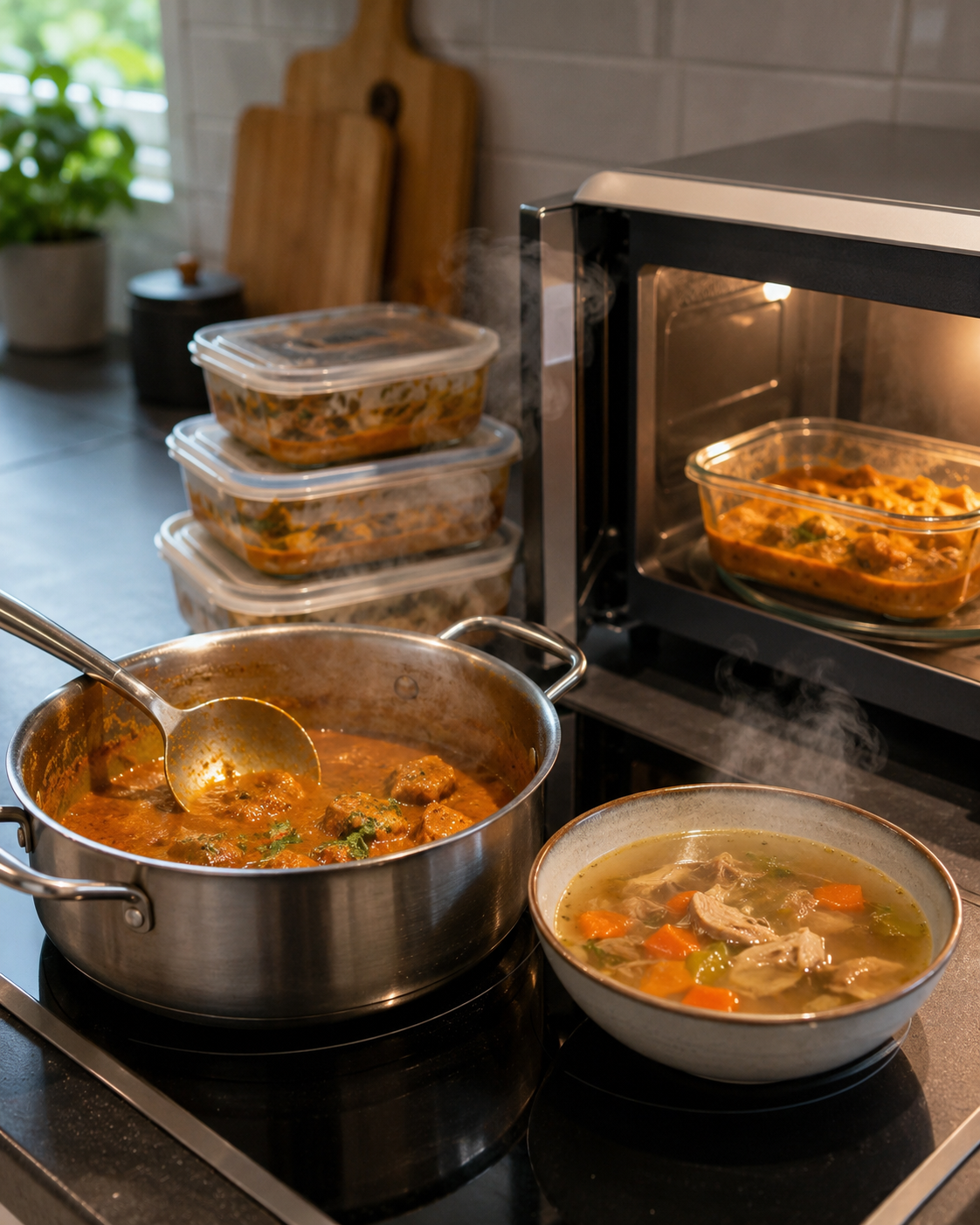
After cooking a large pot of curry, divide it into containers:
One container for tomorrow’s lunch
One container for dinner later in the week
One container for the freezer
One small portion for someone who wants seconds later
Now, when you want curry, you heat one container. The rest stays cold.
That is much better than reheating the entire pot every time.
How Long Should Curry and Soup Sit Out?
A practical everyday habit is to avoid leaving cooked food at room temperature for more than about two hours. If the kitchen is hot, the time should be shorter.
This includes the time after cooking, during serving, and before refrigeration.
It is easy to forget that the clock keeps running while food sits on the stove with the lid on. A covered pot may stay warm for a long time, but not necessarily hot enough to be safely held.
After a Family Dinner
If dinner is at 6:30 and everyone finishes around 7:15, do not leave the pot on the stove until 10:00.
Good storage makes reheating much easier and safer.
Use Shallow Containers
Shallow containers help food cool faster than deep pots. They also stack neatly in the fridge and make portion control easier.
Leave Room for Cooling
Do not overfill containers to the top. Leave a little space so the food can cool more evenly and the lid can close properly.
Label the Date
A simple date label saves you from guessing later.
It is surprisingly easy to forget whether the soup was made two days ago or six days ago. Masking tape and a marker are enough.
Refrigerate Promptly
Once the food has stopped steaming heavily, move it into the refrigerator. Do not wait for it to become completely cold on the counter.
Freeze Extra Portions
If you made a large batch and know you will not eat it soon, freeze some portions early. Do not wait until the leftovers are already several days old.
Freezing works especially well for many curries, bean soups, chili, broth-based soups, and stews. Creamy soups may change texture, but they can still be useful if you do not mind stirring them well after reheating.
How to Reheat Curry and Soup Properly
Reheating should be simple, but it should not be rushed.
On the Stove
Place one portion in a small pot. Heat it over medium heat, stirring occasionally. For thick curry or stew, stir more often to prevent scorching and cold spots.
Make sure the food is hot throughout before serving.
In the Microwave
Use a microwave-safe bowl. Cover it loosely to reduce splatter, but do not seal it tightly. Heat, stir, and heat again if needed.
For thick curry, chili, or creamy soup, stirring halfway through is especially important.
Avoid Slow Warm-Ups
Do not leave a pot on very low heat for a long time while you get distracted. Slow warming can keep food in a lukewarm range longer than needed.
Heat the portion intentionally, serve it, and refrigerate any untouched leftovers promptly.
What About Adding Water and Boiling Again?
Many people add water to thick curry or soup and bring it back to a boil. This can help texture, especially when leftovers have thickened in the fridge.
Adding water is fine for texture, but it does not erase poor storage history.
If the food was cooled and refrigerated properly, adding water and reheating can work well. If the food sat out too long or has been reheated several times already, adding water does not make it safe again.
Think of water as a texture fix, not a safety fix.
Signs Curry or Soup Should Be Thrown Away
Sometimes leftovers clearly tell you they are no longer good. Other times, they do not.
Food waste is frustrating, but questionable leftovers are not worth keeping.
The better solution is to store smaller portions from the start so less food becomes questionable later.
Common Mistakes People Make With Curry and Soup
Most leftover mistakes come from convenience.
Keeping the Whole Pot on the Stove
The pot feels safe because it is covered. But covered does not mean protected from bacteria growth if the food sits too long.
Reheating the Whole Batch Every Day
This is one of the most common problems. Each cycle gives the food another chance to spend time in the wrong temperature range.
Putting a Deep Pot Straight Into the Fridge
A deep pot cools slowly. Smaller containers are better.
Letting Food Cool All Night
Some people leave soup out overnight because it is “too hot for the fridge.” This is not a good habit. Divide it into smaller containers so it cools faster.
Using the Same Spoon Repeatedly
A tasting spoon, serving spoon, or ladle that goes from mouth to pot can introduce bacteria. Use clean utensils, especially if leftovers will be stored.
Forgetting About Ingredients
A plain vegetable soup, chicken curry, seafood stew, and creamy chowder do not all behave the same. More perishable ingredients need more careful handling.
Special Situations to Think About
Meal Prep
If you cook curry or soup for meal prep, portion it right away. Store the portions you will eat within a few days in the fridge and freeze the rest.
Meal prep works best when food is divided before it becomes a giant leftover problem.
Potlucks and Family Gatherings
Large pots of soup, chili, or curry can sit out for a long time at gatherings. People serve themselves slowly, the lid comes on and off, and nobody knows exactly how long it has been out.
For gatherings, serve smaller amounts at a time and keep extra portions refrigerated or properly hot until needed.
Kids and After-School Meals
If kids or teens reheat leftovers after school, make the safe choice easy. Store curry or soup in single-serving containers so they do not need to handle the whole pot.
Add a simple label like “Heat one bowl” or “Use by Wednesday” if that helps your household.
Work Lunches
If you pack soup or curry for lunch, keep it cold with an ice pack if there is no refrigerator available. Reheat it until hot before eating.
Avoid leaving a lunch container in a warm car, backpack, or desk drawer for hours.
A Simple Leftover Routine That Works
Here is an easy routine for curry, soup, stew, and chili:
1. Serve the meal
Enjoy the food while it is freshly cooked.
2. Portion leftovers soon after eating
Do not wait until bedtime to deal with the pot.
3. Use shallow containers
Smaller portions cool faster and reheat better.
4. Refrigerate promptly
Move leftovers into the fridge once they are no longer steaming heavily.
5. Reheat only one portion
Keep the rest of the batch cold.
6. Stir while reheating
This helps the food heat evenly.
7. Do not repeatedly cool and reheat the same batch
If a portion has already been reheated, try to eat it then rather than saving it again.
8. Freeze what you will not eat soon
Frozen portions are easier and safer than forgotten fridge containers.
So, Is It Okay to Reheat Curry and Soup More Than Once?
Occasionally reheating a leftover portion is not automatically a problem if the food was handled well. But repeatedly reheating and cooling the same large pot is not a good everyday habit.
The safest and simplest approach is to avoid multiple reheating cycles whenever possible.
Portion first. Refrigerate promptly. Reheat only what you need. Throw away anything that sat out too long or has been warmed and cooled several times.
That is the practical answer.
Final Thoughts: Leftovers Are Useful, But They Need a Routine
Curry and soup are some of the best leftovers to have in the fridge. They make busy nights easier, reduce food waste, and often taste wonderful the next day.
But they should not be treated like food that can sit around indefinitely and be boiled back to safety over and over.
The real risk comes from repeated warming, slow cooling, and long periods at room temperature. A big pot that is reheated every day and left to cool again is much less ideal than small portions that stay cold until needed.
The good news is that the safer method is also more convenient. Divide leftovers into shallow containers, label them, refrigerate them promptly, and reheat one serving at a time.
With that simple routine, curry, soup, chili, and stew can stay part of your practical home cooking life without unnecessary worry.
Hi, I’m the creator and editor behind ZestyHabit. I research everyday safety, first aid, and practical wellness topics using official guidance and reliable public sources, then turn that information into clear, realistic steps for daily life.
My goal is to help readers make safer, better-informed choices at home and beyond.