What Can Happen When You Use Too Much Air Freshener in a Small Room?
Minjin Park
·
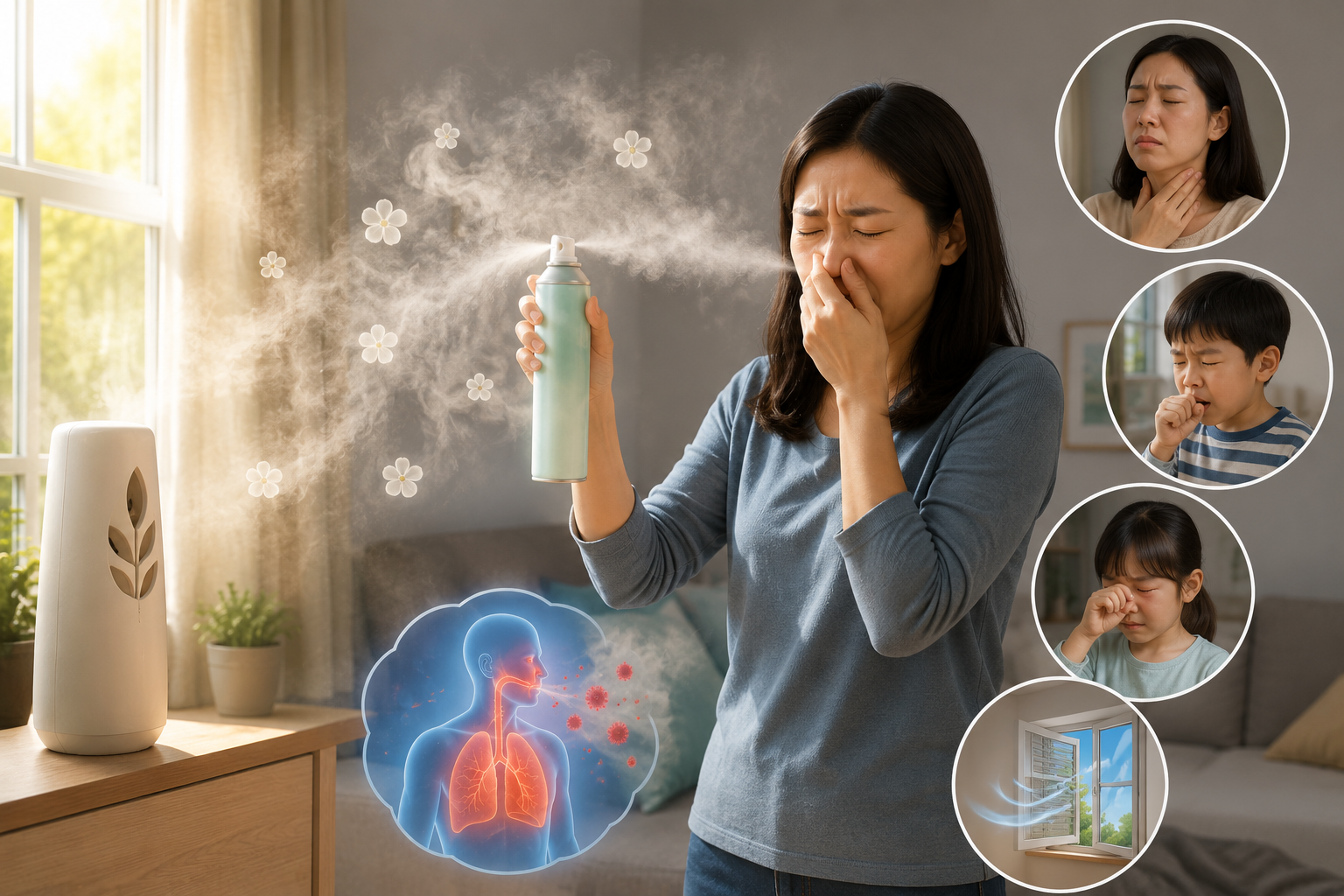
Using too much air freshener in a small room can make the air feel heavy, trigger irritation, and hide the real source of odors. Learn practical ways to keep your room smelling fresh without overdoing it.
The Small Room Smell Problem Most People Try to Fix Fast
A small room can hold onto smells in a way that feels unfair.
A bedroom gets stuffy overnight. A bathroom smells damp after a shower. A home office starts to feel stale after a long workday. A closet, laundry corner, or guest room may develop a musty smell if the door stays closed too often.
So the quick fix is obvious: spray some air freshener.
At first, it works. The room smells cleaner, brighter, maybe even cozy. But then the scent fades, the original odor comes back, and you spray again. Or you plug in a stronger fragrance. Or you add a reed diffuser, scented beads, fabric spray, and a candle because the room still does not smell “fresh enough.”
That is where the problem starts.
Air fresheners can be useful when used lightly and thoughtfully. But in a small room, too much fragrance can quickly become overwhelming. Instead of making the room feel fresh, it can make the air feel thick, heavy, or irritating. It can also hide the real reason the room smells bad, which means moisture, dirty fabrics, trash, mildew, or poor airflow may keep getting worse in the background.
A pleasant scent should be a finishing touch, not the main cleaning strategy.
Why Small Rooms Hold Fragrance So Strongly
Small rooms are different from open living spaces. They have less air volume, fewer airflow paths, and often fewer windows.
A few sprays in a large living room may disappear quickly. The same amount in a small bathroom or bedroom can linger much longer.
Less air means stronger concentration
When you spray air freshener, fragrance particles and other ingredients spread into the air. In a small room, there is simply less air to dilute them.
That means the scent can feel stronger than expected, even if you used the same amount you always use.
This is why one extra spray in a tiny bathroom can feel like too much, while two sprays in an open kitchen may barely register.
Closed doors trap smells
Many small rooms stay closed for privacy, quiet, heating, cooling, or storage. Bedrooms, bathrooms, closets, and offices often have doors shut for hours at a time.
When the door is closed, fragrance has fewer places to go. If there is no open window or working exhaust fan, the scent can build up.
Soft surfaces absorb fragrance
Bedding, curtains, rugs, clothing, cushions, towels, and upholstery can hold onto scent. That may sound nice at first, but it can also make fragrance accumulate over time.
A room may smell strongly scented even when you have not sprayed anything recently because fabrics are releasing the fragrance back into the air.
The Main Problem: Fragrance Can Become Air Clutter
A fresh scent can feel pleasant when it is light. But when it becomes too strong, it stops feeling clean and starts feeling like air clutter.
You may notice the room feels:
Heavy Stuffy Sharp Sweet in a cloying way Hard to breathe in comfortably Artificial rather than clean
The strange thing is that overuse often happens because the room does not smell clean enough. But the more products you add, the less natural the air may feel.
A truly fresh room usually smells neutral first. Fragrance can add a nice touch, but it should not have to fight against trapped odors.
Common Issues From Using Too Much Air Freshener
Overusing air freshener in a small room can create several everyday problems. Not everyone reacts the same way, but many people notice at least one of these effects when scent is too concentrated.
Headaches or discomfort
Strong fragrance can bother some people quickly. A scent that felt pleasant in the store may become overwhelming in a closed bedroom.
People may describe it as a headache, pressure, nausea, dizziness, or just “I need to get out of this room.”
This can happen with sprays, plug-ins, essential oil diffusers, scented candles, wax melts, and other fragrance products. Natural-sounding scents can still feel too strong in a small space.
Eye, nose, or throat irritation
If a room has too much scent in the air, it may irritate the eyes, nose, or throat. You might notice watery eyes, sneezing, a scratchy throat, coughing, or a burning feeling in the nose.
This does not mean every air freshener is dangerous in normal use. It means concentration matters, especially in a small room with poor ventilation.
Worsening stuffiness
Air freshener does not add fresh air. It adds scent.
That may sound obvious, but it matters. If a room is stuffy because air is not circulating, fragrance will not solve the real problem. In fact, it can make the air feel even more crowded.
A stale bedroom with too much fragrance may feel less breathable than a stale bedroom with no fragrance at all.
Scent overload for guests
You may get used to a fragrance you use every day. Guests, however, walk into it fresh.
What smells “normal” to you may feel intense to someone else. This is especially common with plug-in air fresheners, strong room sprays, and heavy laundry fragrance.
If someone says, “Wow, it smells strong in here,” that may be a useful sign, not an insult.
Triggering sensitivities
Some people are more sensitive to fragrance than others. This can include children, older adults, people with asthma or allergies, migraine-prone people, and anyone who simply reacts poorly to strong scents.
A small guest room, bathroom, or office that is heavily scented may be uncomfortable for someone even if you personally enjoy it.
Irritation for pets
Pets experience smells differently from humans. Dogs and cats may be bothered by strong fragrance, especially in small spaces close to the floor or near bedding.
Birds can be especially sensitive to airborne products. If you have pets, it is wise to be careful with sprays, diffusers, candles, and strongly scented products around them.
Keeping fragrance light and ventilating well is a safer everyday habit.
Air Freshener Can Hide the Real Problem
One of the biggest downsides of overusing air freshener is that it can cover up a problem instead of fixing it.
A bad smell is information. It tells you something needs attention.
Maybe the trash needs to go out. Maybe towels are not drying. Maybe the carpet has absorbed moisture. Maybe the litter box needs cleaning. Maybe food crumbs are trapped under furniture. Maybe there is mildew around a window or bathroom vent.
If you keep covering the smell with fragrance, the source may stay there.
Musty smells usually need airflow or moisture control
A musty smell often points to dampness, poor ventilation, or materials that are not drying fully. Spraying a floral scent over it may make the room smell like “flowers plus mildew,” which is not really fresh.
The better fix is to dry the area, increase airflow, wash fabrics, and check for moisture sources.
Trash smells need removal, not perfume
A small bathroom trash can, diaper pail, pet waste bin, or office trash basket can smell quickly. Air freshener may cover the odor for a few minutes, but the source remains.
Emptying the trash, cleaning the bin, and using liners correctly will do more than repeated spraying.
Fabric odors need washing
Bedding, curtains, rugs, towels, gym clothes, and upholstery can all hold odor. A fabric spray may help lightly refresh clean fabric, but it should not replace washing when fabric is actually dirty.
If a bedroom smells stale, start with sheets, pillowcases, laundry, and airflow before adding scent.
Different Types of Air Fresheners and Their Small-Room Problems
Not all air fresheners behave the same way. The product type affects how easily you can overdo it.
Aerosol and pump sprays
Sprays give an instant scent boost. The problem is that it is easy to use too much because the effect is immediate but temporary.
In a small room, one or two sprays may be enough. Spraying repeatedly into the air, onto curtains, onto bedding, and into corners can make the room feel harsh.
Sprays can also create a mist that people breathe in more directly, especially if used in a closed space.
Plug-in air fresheners
Plug-ins release fragrance continuously. They are easy to forget because they work in the background.
In a small room, a plug-in on a high setting may be too much. The scent can build up over hours or days, especially with the door closed.
If you use one, choose a low setting and pay attention to whether the room smells strong when you enter from outside.
Reed diffusers
Reed diffusers can be gentler, but they still release fragrance constantly. A large diffuser in a tiny room can become overpowering.
You can reduce the intensity by using fewer reeds or moving the diffuser to a larger space.
Essential oil diffusers
Essential oils may sound softer or more natural, but they still add scented compounds to the air. Too much can irritate some people, and certain oils may be unsuitable around pets.
Use short sessions, good ventilation, and caution in small rooms.
Scented candles and wax melts
Candles and wax melts add fragrance and, in the case of candles, an open flame. In a small room, they can quickly become strong.
Candles also need basic fire safety. Keep them away from curtains, bedding, paper, and pets. Do not leave them unattended.
If the main goal is odor control, a candle should not be the first solution.
Gel beads and solid air fresheners
These can seem mild, but they still release scent over time. In a closet, small bathroom, or car-sized room, even a small container may become strong if the space is closed most of the day.
Warning Signs You Are Using Too Much
Your nose may get used to a scent, so it helps to watch for clues.
You may be overusing air freshener if:
The smell hits you immediately when you open the door. Guests comment that the room smells strong. You feel better after leaving the room. The scent lingers on clothing or bedding. You spray again because the “fresh” smell fades quickly. The room smells like fragrance mixed with something unpleasant. You get headaches or irritation in that room. Pets avoid the space after spraying. The air feels heavy even though the room smells “nice.”
A room does not need to smell like a hotel lobby to be clean. A light, barely noticeable freshness is usually better for daily life.
Common Mistakes People Make in Small Rooms
Mistake 1: Spraying without ventilating
If the room already has stale air, spraying fragrance into it does not solve the problem. Open a window, run a fan, or keep the door open first.
Mistake 2: Using multiple scented products at once
A plug-in, scented candle, fabric spray, carpet powder, laundry fragrance, and room spray can all combine into one heavy cloud.
Layering scents may sound cozy, but in a small room it often becomes overwhelming.
Mistake 3: Trying to cover damp smells
Mustiness needs moisture control. Fragrance will only mask it temporarily.
Mistake 4: Using strong scents near sleep areas
A bedroom should feel easy to breathe in. Strong fragrance near pillows, blankets, or nightstands can become irritating during sleep.
Mistake 5: Forgetting pets
Spraying low to the floor, near pet beds, or around litter boxes can expose pets to concentrated scent. It is better to clean the source and ventilate.
Mistake 6: Assuming “natural” means harmless
Natural fragrance can still be strong. Essential oils, botanical sprays, and incense may bother sensitive people or animals.
Better Ways to Freshen a Small Room
The best way to freshen a small room is to start with the basics: remove odor sources, improve airflow, and use scent lightly.
Open the room daily
Even a short airing-out can help. Open a window if possible, or leave the door open to let air move through.
If the room has no window, use a fan or exhaust fan when available. Air movement matters.
Wash odor-holding fabrics
In bedrooms, wash bedding regularly. In bathrooms, wash towels and bath mats before they smell sour. In offices or guest rooms, check curtains, rugs, blankets, and upholstered chairs.
Soft surfaces often hold more odor than hard surfaces.
Empty trash often
Small trash cans smell faster because they hold odor in a small area. This is especially true in bathrooms, nurseries, offices, and pet areas.
Clean the inside of the bin occasionally too. A fresh liner does not fix a dirty can.
Control moisture
Moisture is a major reason small rooms smell bad. After showers, run the fan or open the door. Do not leave wet towels piled up. Check window sills for condensation.
If a room always feels damp, fragrance will not fix it.
Use baking soda or odor absorbers thoughtfully
Odor absorbers may help in closets, shoe areas, and small enclosed spaces. They work differently from perfumes because they aim to reduce odor rather than cover it.
Still, they need to be replaced or refreshed according to instructions.
Keep shoes and laundry managed
Shoes, gym bags, damp clothes, and laundry baskets can quickly affect a small room. Keep sweaty items out of closed rooms when possible, and dry damp fabrics before tossing them into a basket.
How to Use Air Freshener More Safely and Effectively
You do not have to give up fragrance completely. The goal is to use it lightly and in the right order.
Start with clean air first
Before spraying, ask: “Does this room need scent, or does it need air?”
If it feels stuffy, ventilate first. Then decide whether fragrance is still needed.
Use the smallest amount
In a small room, one short spray may be enough. For plug-ins or diffusers, use the lowest setting or fewer reeds.
You should notice the scent gently, not feel surrounded by it.
Avoid spraying directly on bedding or pillows
A light fabric refresh may be fine for some washable items if the product is meant for that use, but avoid making sleep surfaces heavily scented.
Your face is close to pillows for hours. Strong fragrance there can become uncomfortable.
Give the room time to clear
After spraying, leave the door open for a while. Let the scent settle and air circulate before sitting or sleeping in the room.
Choose one scent source
Use one product at a time. If you already have a plug-in, skip the spray. If you lit a candle, do not also run a diffuser.
A simple scent profile feels cleaner than a mix of competing fragrances.
Read product directions
Use products as labeled. Some sprays are meant for air only. Some are meant for fabric. Some should not be used around pets, children, or certain surfaces.
The label may not be exciting, but it is useful.
Special Care in Bedrooms
Bedrooms are small rooms where people spend many hours at a time. That makes air quality especially important.
A strongly scented bedroom may feel nice for a few minutes but become uncomfortable overnight. Heavy fragrance can cling to sheets, pajamas, curtains, and pillows.
For a fresher bedroom, start with:
Clean sheets Airing out the room Dry laundry A clean trash can Less clutter Good airflow
Then, if you want scent, use something light and occasional. A bedroom should not need constant fragrance to feel pleasant.
Special Care in Bathrooms
Bathrooms are the room where people often overuse air freshener the most.
Because bathroom odors can be embarrassing, many people spray heavily after each use. But repeated spraying in a small bathroom can make the air unpleasant quickly.
Better habits include:
Running the fan Leaving the door open when appropriate Cleaning the toilet regularly Emptying the trash Washing bath mats Drying towels properly Checking for mildew
A small spray can be used after that, but it should not replace ventilation or cleaning.
Special Care in Home Offices
Home offices can smell stale because people sit in them for hours with the door closed. Coffee cups, snack wrappers, dust, carpet, and electronics can all contribute.
Instead of relying on a plug-in all day, try short ventilation breaks. Empty cups and trash daily. Vacuum or dust regularly. Keep laundry and food out of the room.
If you use fragrance, keep it mild. A scent that is pleasant at 9 a.m. may feel tiring by 3 p.m.
A Simple Fresh-Room Routine
Here is a practical routine for small rooms:
Open the door or window first. Remove trash, laundry, or damp items. Check for moisture or mildew. Wash fabrics that hold odor. Let air circulate. Use a small amount of fragrance only if needed. Avoid layering multiple scented products. Pay attention to how the room feels, not just how it smells.
This approach helps you create a room that feels genuinely fresh instead of heavily perfumed.
Final Thoughts: Fresh Should Feel Light, Not Overpowering
Air fresheners can be helpful, but they work best when used lightly. In a small room, too much fragrance can quickly become uncomfortable. It may cause headaches, irritation, stuffiness, scent overload, or problems for sensitive family members and pets. It can also hide the real source of odors instead of solving it.
The better habit is simple: clean the source first, improve airflow, and use fragrance as a finishing touch.
A small room does not need to smell strongly perfumed to feel clean. In fact, the freshest rooms often smell almost neutral: clean fabric, dry air, no trash, no dampness, and just a subtle hint of scent if you like it.
The next time a small room smells off, pause before reaching for the spray. Open the door. Check the trash. Look for damp towels. Let the air move. Then, if you still want a little fragrance, use the lightest amount that does the job.
Fresh air should make a room easier to breathe in, not harder.
Hi, I’m the creator and editor behind ZestyHabit. I research everyday safety, first aid, and practical wellness topics using official guidance and reliable public sources, then turn that information into clear, realistic steps for daily life.
My goal is to help readers make safer, better-informed choices at home and beyond.